
Found 0 posts
Companies have many options when it comes to how to build and structure their sales strategies and approaches, and one important decision they will have to make will be whether to invest in inside sales or outside sales. To weigh the benefits and advantages of each sales approach, it’s important to clearly identify what each option entails.
Inside sales are generally done “inside,” from a single location. Inside sales do not take place in person, and they can include interactions ranging from phone calls to emails, chats, social media, and even texts.
Outside sales refers to situations in which a sales rep makes in-person, face-to-face contact with the customer. This can include door-to-door sales, sales made through visits to customers’ homes, offices and local businesses, or retail sales.
Both inside and outside sales can offer advantages to companies wanting to maximize revenue and keep costs manageable. To achieve the absolute best sales and customer acquisition results, companies should pursue a mixture of both. When optimized, inside and outside sales can support each other, helping companies acquire more customers, improve their overall conversion rate, earn greater revenue from customers, and build stronger relationships with the customers that could support better customer retention.
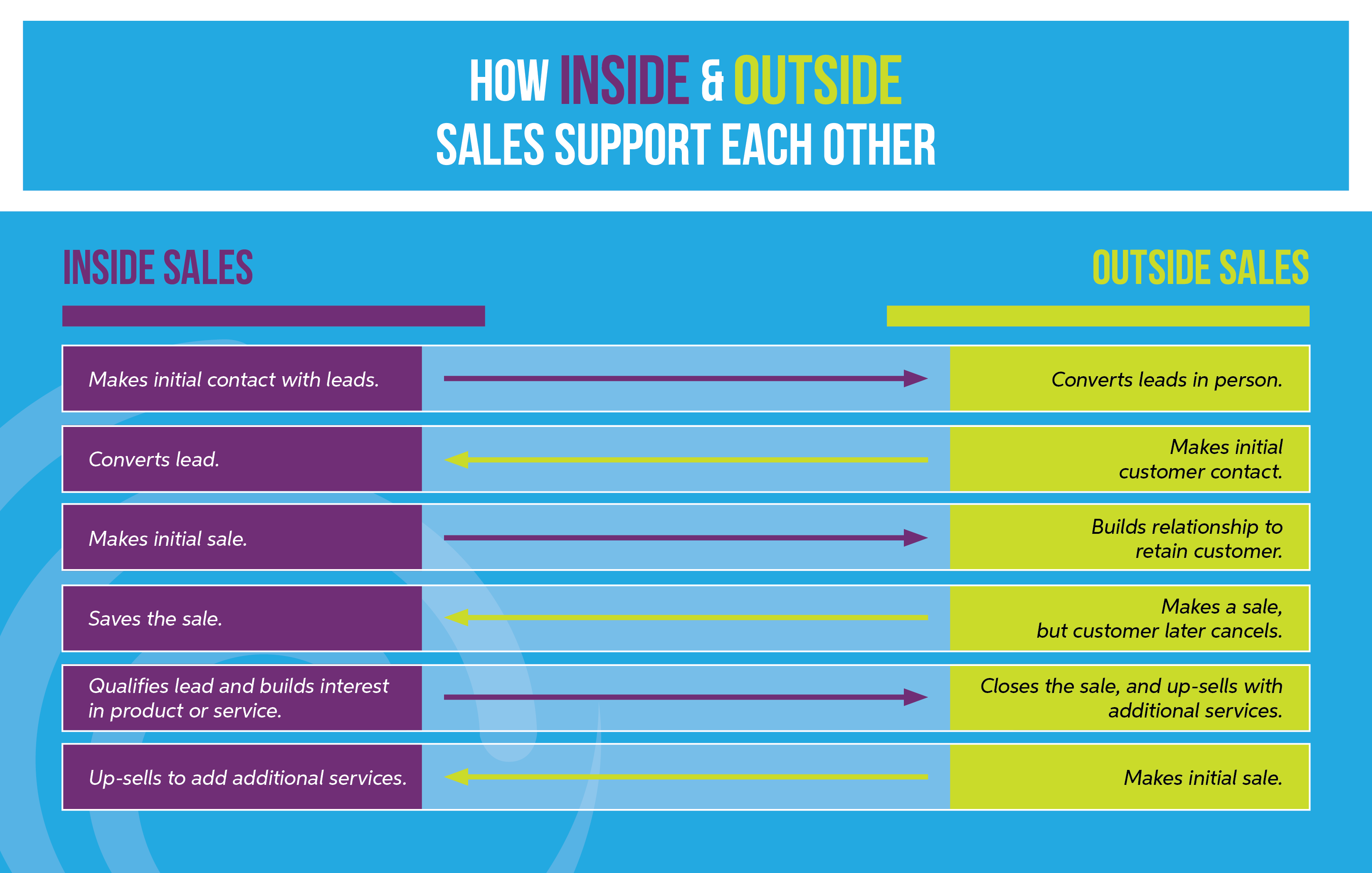
How do inside and outside sales teams work together? Customers who are first contacted by an outside field rep, for example, may have some interest in a product or service, but he or she may ultimately decide against making a purchase. In cases like this, an inside sales rep may be able to follow up with this customer by phone or email to find out why he or she decided against the product or service, and by offering additional information, the sales rep may be able to change the customer’s mind. The inside sales rep may also be able to present alternative products to the customer, such as a different service package, that might better fit the customer’s needs.
Alternatively, the inside sales rep might be able to refer customers to outside sales reps after making initial contact. This customer now has some awareness of a product or service and has built a relationship with the brand. The outside sales rep may then be able to work one-on-one with the customer to find a product or service solution that fits their needs.
These are just a few ways inside and outside sales teams can work in partnership to drive better overall sales results for your company.
Other ways inside and outside sales may be able to work together are:
Customers are individuals, and not all customers will respond the same way to the same sales approach. By enlisting both inside and outside sales, you give your company more flexibility to communicate with the customer at a variety of touchpoints and in a variety of ways. By incorporating both sales channels, you can acquire more customers, more easily address weaknesses in your sales funnel, gather more valuable data and customer insights, and boost revenue by giving the customer more information and more options.
Below is a breakdown of the advantages each sale method offers:
Both inside and outside sales offer major benefits, and a winning strategy for sales revenue growth is one that combines the two, allowing them to work in partnership to deliver the best possible results. A sales program that includes both inside and outside sales can interact with the customer at multiple stages of the sales cycle, building product knowledge, strengthening the relationship with the customer, growing trust, fostering interest, and gaining valuable insights about what the customer needs and wants.
To reap the advantages of both inside and outside sales, the smartest organizations are partnering with companies like Cydcor, a leader in outsourced sales and marketing. Cydcor has experience building full-service sales and customer acquisition programs that combine effective outside sales, with inside sales techniques. Cydcor drives high sales volume using traditional feet on the street sales methods, and it supports these efforts through multi-channel and tele-sales techniques to capture, retain, or upsell leads with which the outside sales team has already made contact. By entrusting a company like Cydcor, with expertise and experience in both outside and inside sales tactics, companies benefit from a tested, disruptive, and winning formula that consistently delivers results.
Entrepreneurship is an exciting opportunity for those, with the right attitude and pioneering spirit, to build something from the ground up, take ownership of their time and decisions, and potentially, achieve financial independence. But what are the characteristic of successful entrepreneurs? Why do some succeed while some don't?
Becoming a successful entrepreneur requires unwavering focus and commitment to your craft, strong relationships, and an open mind to new perspectives. We asked a group of entrepreneurs about what drives them and what they believe it takes to achieve success. What we discovered, is that even when you do everything right, success is not guaranteed, but the thrill of the journey, the chance to influence and support others, and the potential payoff are what drive daring entrepreneurs to venture down this career path time and again.
COMMON CHARACTERISTICS OF SUCCESSFUL ENTREPRENEURS
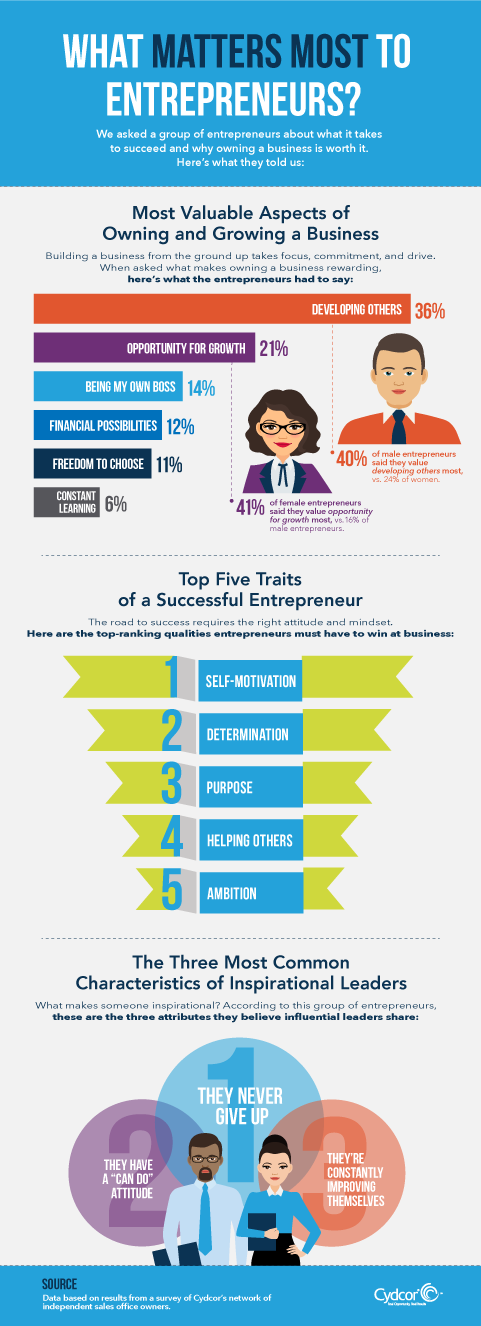
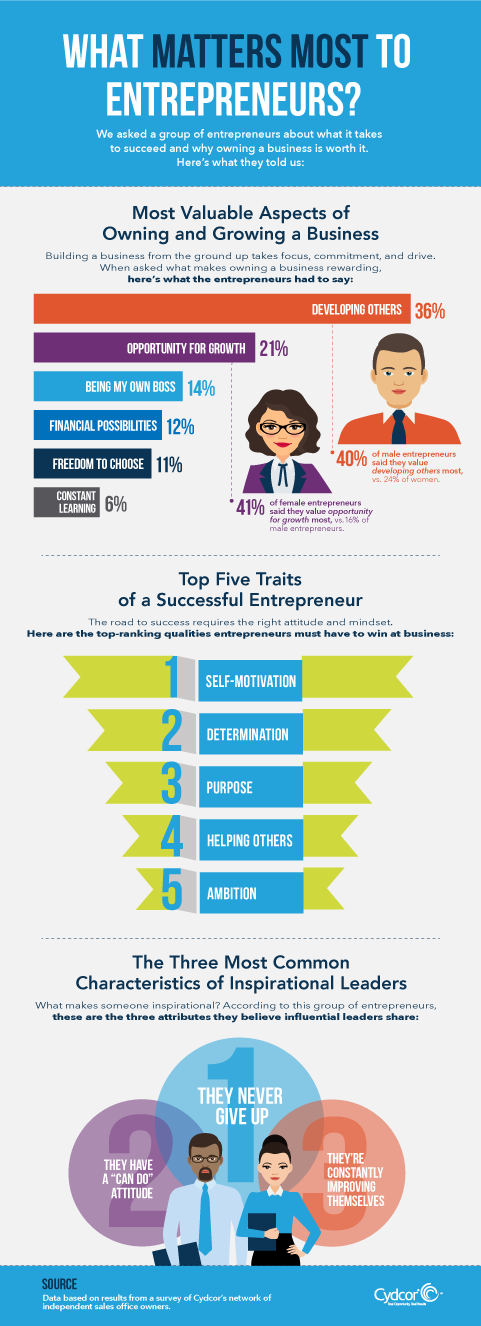
What sets entrepreneurs apart is not their mastery of specific hard skills such as writing, programming, or public speaking. From our discussions with independent business owners, we learned that the top characteristics of successful entrepreneurs are rooted in soft skills shaped by the right attitude and mindset, seen in the infographic below.
Self-Motivation
It’s easy to talk about building a business, but it’s entirely another thing to do it. The number one characteristic of successful entrepreneurs is self-motivation—the ability to put ideas into action. Think about some of the best-known entrepreneurs. Steve Jobs, for instance, didn’t wait for a company to come looking for him to build a new kind of personal computer. Instead, he partnered with the right people, turned his ideas into real-life products, and convinced the public that they needed the Apple Computer. Self-motivation can mean the difference between dreaming and achieving.
Determination
Our business owners identified determination as another major characteristic of successful entrepreneurs. This important trait is the drive that helps us follow through once we start. It’s what pushes us back up when we fall, and keeps us moving through uncertainty until we reach our long term goal.
THE BENEFITS OF ENTREPRENEURSHIP
Going from ideas to great products or startup to corporation is a remarkable feat that requires passion, focus, and resilience. It’s not a straight path, and there will often be twists, turns, and moments of uncertainty. We wanted to understand what makes it all worth it? What is it about the life of an entrepreneur that continues to drive so many to brave those, sometimes, stormy waters?
Developing Others
The majority of entrepreneurs said the most valuable benefit of entrepreneurship is the opportunity to help others grow and develop. Think about it. At one point, these entrepreneurs were employees, too. At the helm of a business, an entrepreneur has the experience to recognize greatness in others, and the leadership expertise to inspire them to get there.
Opportunity for Growth
Have you ever felt like you’re not getting anywhere in your current role, or looked up the organizational chart and didn’t like what you saw? Another major benefit of entrepreneurship is the opportunity for growth. And not just career growth, but personal growth, as well. Taking a chance on yourself and pursuing your passions will test your comfort zone, but the freedom to be your own boss and do what you love is an unparalleled experience and a unique benefit of entrepreneurship.
See what else entrepreneurs had to say about why owning and growing your own business is worth it.
Building a successful business of your own is not something that happens overnight. It takes unwavering dedication, unshakable focus, and a healthy dose of endurance. It’s an accomplishment, much like a marathon, that is achieved one step at a time. But for those who stick with it and embrace the adventure, the benefits of entrepreneurship can be life-changing.
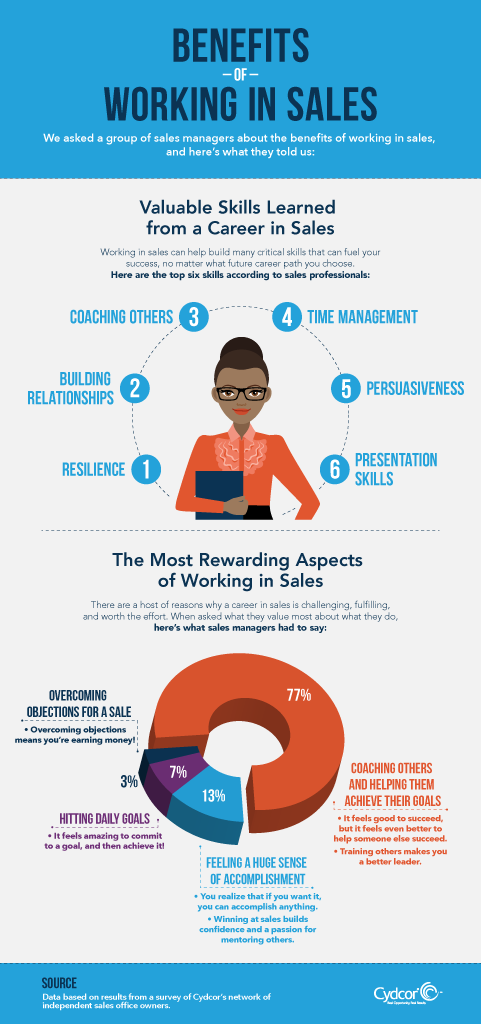
We Asked About Careers in Sales; Sales Managers Answered.
Whether you're pursuing a career in sales, or you’re considering one, working in sales is exciting, challenging, and highly rewarding! A career in sales can benefit you by helping you find focus, teaching you to set ambitious goals and achieve them, and by showing you the value of helping others reach their goals, as well. We asked a group of sales managers about what they believe to be the best and most rewarding aspects of working in sales, and the results are in. Check out our findings in the sales infographic below:
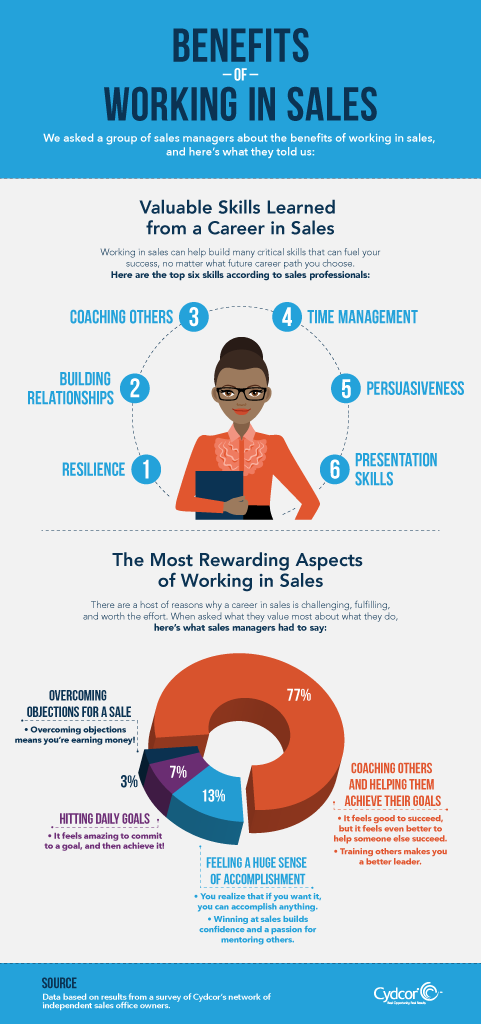
A career in sales can have a profound impact on you and your future success. Even if you only work in sales for a short time, gaining sales experience can increase your value to a potential employer by expanding and improving your skillset. It can also bolster your leadership ability by putting you in a position to mentor others, to help them achieve their own career goals and aspirations.