
Found 0 posts

Celebrating three innovative game-changers.
Here at Cydcor, we foster and celebrate a community of entrepreneurial ass kickers, while priding ourselves on being unmatched in our drive to help emerging companies achieve their goals. And while our expertise is what we believe sets us apart from the rest, this article shifts the focus to industry giants who are now changing the lives of others.
It’s easy for titans such as the three people below to celebrate their global success and ride off into the sunset, but the mark of a great leader lies in inspiring others to hit the heights they themselves once aspired to achieve.
At Cydcor; “we’re a people-helping-people business.” The following three entrepreneurs have followed suit, building brands that have resulted in thousands of jobs being created - while also making the world a better place.

Jessica Alba’s Honest is currently disrupting the multiple consumer product market all while creating a community for conscious customers. Having stepped down from her role as CEO in early April 2024, she continues to provide strategic advice to the company she founded as a labor of love.
Valued at $550m in 2022, Honest has been led by Alba’s dedication to accountability and integrity. Much like her career in the Hollywood spotlight, she admits to putting pressure on herself to achieve optimal results. “The business kept me in a constant state of pressure, sort of like a hamster wheel,” she reflects.
Alba’s decision to start from scratch came from an innate desire to find that fearlessness she experienced as an up-and-coming actress. “You can’t really fail if you try,” she points out. “Besides, there were no real expectations for me to be successful at anything.”
With her staunch mantra that ‘women can excel in life, and should be treated with fairness,’ Alba created Honest with the goal to introduce products that women can trust. “I knew {when I started} that there needed to be someone to show the world the importance of equity, diversity, and inclusion with regards to brand values,” Alba says. “I’m glad I could fill that void.”

A first-generation Iranian-American entrepreneur, Leila Hormozi first came to prominence as a top-selling fitness trainer in the Orange County region of California. After helping to scale hubby Alex’s fourth business, and each one after that she branched out to the software, service, e-commerce, and brick & mortar industries, rising to brand positions in each of those companies while co-founding Acquisition.com.
The holding company for all of her brand ventures, Acquisition prides itself on ‘making real business education available to everyone’ with Hormozi’s philosophy that “the true measure of a leader is the ability to create other leaders.”
With the company generating over $200m in annual revenue, Hormozi’s unbridled work ethic - likened to a ‘wartime’ battle, is matched only by her ability to let others in to celebrate the victories. “A win for one is a win for the other,” she told Entrepreneur.
Hormozi’s no-frills, transparent approach to her businesses has resulted not only in the generating of millions in revenue but also a workplace culture that thrives on overcoming adversity. “Rather than shying away from hard work and responsibility, we encouraged it,” she shares. “We buckled down to reinforce our internal team culture to ensure there would be no error. Ultimately, we never want to make promises to our suppliers that we can’t keep.”

Serena Williams is new to the entrepreneurial game but is turning heads with her approach to the cosmetics industry.
Having founded the appropriately named Wyn Beauty in early 2024, the former Grandslam tennis champion may have taken a step off center court but is well in the trenches when it comes to providing a service for those who are constantly on the run.
“I needed something for my active lifestyle that included hours on the court,” she admits. “Wyn is long-lasting and designed for an active lifestyle that includes sweating and daily living.”
And while stamina is the name of the game in the tennis industry, Williams cites her patience as a transferable quality to her brand endeavors. “I’ve learned to not rush things,” she says. “It took a long time to find ingredients that were clean, but the key is not to introduce a brand until I have it right.”
Stating her gratitude for having ‘the gift’ of a mentor, Williams believes it’s important for young women entrepreneurs to have an established woman to look up to. Williams leads by example, also leading a venture fund that primarily invests in businesses that are started by women of color.
—
As these three entrepreneurs continue to kick ass and further their impact on the world, we at Cydcor will continue to do the same.
The entrepreneurial journey is never easy, but investigating the success of others is a great way to see what’s possible and push the limits yourself!
By: Gary Polson, CEO
I was so inspired by Senator John McCain’s life and death. His life is a reminder of America’s greatest values: service, devotion, sacrifice and honor. He is a real American hero.
Actually, he was more than a hero. He was a loving father. In her eulogy, Meghan McCain shared how she loved her father and felt his love. John McCain committed to Washington, DC and traveled the world in his role as a Senator. Yet, he found a way to be a wonderful father. He is a role model of how you can make a big contribution in your career AND have a meaningful family life. Rest in peace.
Gary Polson is Chief Executive Officer and Chairman at Cydcor, the market leader in outsourced sales. With more than 25 years of business operations experience in accounting, legal and senior management, Gary has propelled Cydcor to unprecedented achievement with clients, culture and philanthropy since 2001. Under his leadership, Cydcor has increased its revenue more than six-fold since 2001 and has been recognized as “…the most respected sales outsourcing company in the world” by Datamonitor and The Black Book of Outsourcing, and one of the “Best Places to Work” by the Los Angeles Business Journal for eight consecutive years. Gary’s passion for excellence and never-satisfied approach has led Cydcor to earn both industry and employer recognition. With Gary at its helm, Cydcor has built its reputation on maintaining long term relationships with clients by consistently delivering results and by going above and beyond to help Cydcor’s clients gain market share and grow.


Shirley Levine was an incredible educator that I had the pleasure to work with and learn from. She once asked some teachers, “What is your job?”
The teachers responded, “Teach the kids.”
Shirley said, “That is not it.”
The teachers responded with, “Educate the kids,” and similar concepts.
Shirley said, “That is not it either.”
After a while, when the teachers were perplexed, she said, “Your job is to get the kids to learn. There is a big difference. If your job is to teach, once you deliver your great lesson, you are done. If your job is to get them to learn, you are not done after the lesson. You are only done when they learn the material. Also, kids can learn a variety of ways. They can learn on their own, from their peers, from a book.”
I frequently need to remind myself of this concept. I too often get into teaching mode. My eldest daughter reminded me of this hearing me go over one of my presentations. She thought it was bad. I asked why. She said, “I felt like you were talking at me, not involving me. Millennials like to be involved to learn.”
After the initial shock of her dissatisfaction with a presentation I have given for over 25 years, I remembered this quote frequently attributed to Benjamin Franklin: “Tell me and I forget. Teach me and I remember. Involve me and I learn.”
Did Benjamin Franklin know about millennials 250 years ago? Or, is it always that we learn best when we are involved? It is much easier to teach than find a way to involve. But who wants easy?

Gary Polson is Chief Executive Officer and Chairman at Cydcor, the market leader in outsourced sales. With more than 25 years of business operations experience in accounting, legal and senior management, Gary has propelled Cydcor to unprecedented achievement with clients, culture and philanthropy since 2001. Under his leadership, Cydcor has increased its revenue more than six-fold since 2001 and has been recognized as “…the most respected sales outsourcing company in the world” by Datamonitor and The Black Book of Outsourcing, and one of the “Best Places to Work” by the Los Angeles Business Journal for eight consecutive years. Gary’s passion for excellence and never-satisfied approach has led Cydcor to earn both industry and employer recognition. With Gary at its helm, Cydcor has built its reputation on maintaining long term relationships with clients by consistently delivering results and by going above and beyond to help Cydcor’s clients gain market share and grow.

By Dwight Coates, Chief Information Officer | Cydcor
Building a department’s strategy, holding meetings, and orchestrating the delivery of technology to our business are not the only ways people can build leadership skills. In fact, one of the most effective ways for team members to learn critical leadership skills is by helping others. There is a myriad of benefits to volunteering. Volunteering takes team members out of their everyday routines and out of the office environment. It shakes up typical work groups, team structure, and processes and it challenges team members to think differently, look to each other for input and guidance, and unite behind a shared purpose. While volunteering, team members aren’t focused on getting ahead; they are focused on completing tasks, overcoming obstacles, and accomplishing goals—which is exactly why community service projects are such powerful teaching experiences.
1.Volunteers Connect with the Whys of Life: While serving others or working on behalf of the environment, volunteering can remind team members of their own values and help them reflect on the things that are most important to them. This process helps build more empathetic future leaders, and encourages team members to engage their hearts, not just their minds, in their work. It also helps team members see the bigger picture, to realize that thier work can have an impact far beyond any single project.
2. Enables Networking: Volunteering can have an equalizing effect, mixing high-level executives with employees fresh out of college. These volunteer activities give employees the opportunity to break out of their typical work circles and meet people from whom they may be able to learn valuable leadership skills or who may be able to offer support to help them grow their careers. While volunteering, team members often form lasting friendships and partnerships.
3. Teaches the Importance of Having a Vision: When teams volunteer, they unite behind a shared vision and commit, as a team, to shared goals. Because the stakes are often so high, it is easy to create alignment within the team, and team members can see how that level of alignment can pay off in the form of rapid results. When people band together behind ideas and trust in a single vision, it is astounding how much they can accomplish, and this experience can translate back to how a team works together on behalf of company goals as well.
4.Volunteer Work Energizes: When employees are stressed, doing work that benefits others, the community, or the planet releases endorphins and lifts spirits better than any sports game or team wine night. Volunteering reinvigorates overworked employees, reignites their passion for their work, repairs bonds between team members, and makes them more efficient and productive by challenging them to solve new kinds of problems and follow different processes.
5.Trains Great Mentors: As volunteers, team members benefit by offering guidance and support to each other in different ways than they might as part of their everyday role.Volunteer work gives team members a voice who may not always have one, and allows them to step up and show leadership skills and benefits they can offer the team that may not be as easy to recognize while at the office.
6.Exposes Employees to Other Cultures and Other Ways of Working: While volunteering, teams may have to follow new systems or processes than they do as part of their daily work, and this helps to challenge their thinking and adaptability. Team members are sometimes also asked to work with people who come from different countries, cultures, and backgrounds, and this helps team members learn new skills and improve their abilities to bridge communication gaps and relate to others regardless of differences.
7. Fosters Collaboration: Volunteering encourages partnerships between those who may not normally work together. While participating in philanthropy projects with my teams, I often intentionally assign employees to tasks that force them to work alongside team members they’re not used to working with to help bridge those communication gaps and force employees to break through barriers to find solutions together.
Besides the leadership skills volunteering imparts, spending time helping others can change the way team members feel about their work. Employees want to work for organizations that stand for something, and showing a dedication to service may help to improve employees’ outlook on the company as a whole, which may support team member retention. An additional benefit of volunteering includes strengthened bonds between team members, helping them to function better as a team and produce better results. Community service and philanthropy, beyond their clear benefit to the community, are invaluable team member development experiences that no department head should overlook as you strive to help your people be their best.

Dwight Coates, Chief Information Officer, Cydcor
Dwight Coates is the technology driver for Cydcor’s customer relationship management solutions. With more than two decades of leadership experience, Dwight has had the opportunity to see, first-hand the impact community service activities can have on IT and other professional teams as they work together to achieve outstanding results.

By Gary Polson, Chairman and CEO | Cydcor
1. Take Control
Whenever I have struggled, made excuses, wanted something, or quit something, my Mom would tell me, “God helps them who help themselves.” Benjamin Franklin’s famous words teach us that we all control our destiny. A related Franklin quote is, “He that is good at making excuses is seldom good for anything else.”
2. Be Prepared
“By failing to prepare, you are preparing to fail.” This is truly a lesson to live by from Benjamin Franklin. In every endeavor, the more I prepare, the better I do. I even use the Franklin Covey planning system.
3. Maintain a Student Mentality
“An investment in knowledge pays the best interest.” Franklin’s focus on self-development is a major theme in his autobiography. It inspired me when I read it in college. It taught me the leadership lesson that you can learn anything in business if you have the right student mentality.
4. Be a Doer
“Well done is better than well said.” As a great businessman, statesman, scientist, and philanthropist, Franklin did a lot.
5. Work Hard and Stay the Course
“Energy and persistence conquer all things.” Without either of these qualities, there is no success.
Gary Polson is Chief Executive Officer and Chairman at Cydcor, the market leader in outsourced sales. With more than 25 years of business operations experience in accounting, legal and senior management, Gary has propelled Cydcor to unprecedented achievement with clients, culture and philanthropy since 2001. Under his leadership, Cydcor has increased its revenue more than six-fold since 2001 and has been recognized as “…the most respected sales outsourcing company in the world” by Datamonitor and The Black Book of Outsourcing, and one of the “Best Places to Work” by the Los Angeles Business Journal for eight consecutive years. Gary’s passion for excellence and never-satisfied approach has led Cydcor to earn both industry and employer recognition. With Gary at its helm, Cydcor has built its reputation on maintaining long term relationships with clients by consistently delivering results and by going above and beyond to help Cydcor’s clients gain market share and grow.

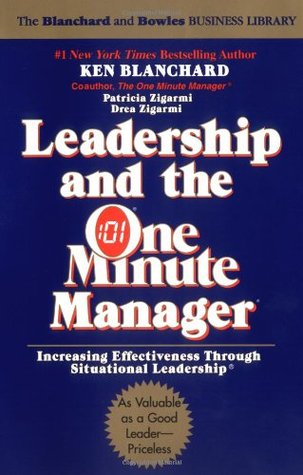
This article is the fifth in a series of five blog posts from management expert, and Cydcor Chief People Officer, Jeannie Finkel. In this series, Jeannie recommends the Top Five Books she believes can help you transform your management style and become a better, more effective leader.
Managers, especially those leading a team for the first time, sometimes mistakenly believe that to be effective leaders, they must shape their team members' work styles and thinking to their own. But Ken Blanchard, the author of Leadership & The One Minute Manager, is a proponent of and helped develop the concept of Situational Leadership, a leadership style in which leaders adjust their own style to meet the needs and development levels of those they manage. It focuses on flexibility, adaptability, and an awareness of the competencies and individual strengths of those on your team. Leaders who are versed in Situational Leadership come to understand that there is no single best or right way to lead, but that what’s important is using the right leadership approach for each team member.
Below Jeannie Finkel recommends the book Leadership and the One Minute Manager by Ken Blanchard to managers and leaders as a tool to help them become more effective and capable of leading more productive teams.
Book #4 Leadership & The One Minute Manager
Author: Ken Blanchard
Short summary: Ken Blanchard is one of the best-known modern “Management Guru’s”, with a global management development consultancy and over 40 books published and millions of copies sold. One of the first and most famous is the One Minute Manager, followed by this one, which provides a simple framework to help managers use the techniques from the One Minute Manager to tailor their management styles to the unique situation and individuals they’re working with. As with many of Blanchard books, this one is written as a fable, with a fictional entrepreneur consulting the One Minute Manager for advice as she’s finding she’s unable to get everything done by herself but also unhappy with her team’s results. As the One Minute Manager sends her out to talk to people on his team, she discovers the various leadership styles an effective manager uses to work with people at all development levels. She learns what she needs to, to become a Situational Leader.
What you’ll learn: Without giving away this book’s great secrets, you’ll learn the key skills of a Situational Leader, which are: setting goals together to be sure you’re both on the same page; accurately diagnosing your team member’s development level on the particular goal or task (are they experienced or novice, for instance); and then matching your leadership style to the person’s development level. You’ll also learn the four key style choices leaders have to match with: Directing; Coaching; Supporting; and Delegating – and what sort of behaviors go with each. Throughout the book, you’ll find little phrases such as, “when I slow down I go faster” or “you can expect more if you inspect more,” which are also some of the “aha moments” the entrepreneur has as she goes through her learning journey with the various managers in the story. They are also illuminated as nuggets of management wisdom, wrapped around the core principles I just outlined.
Why it’s a must read: Every manager should learn and master Situational Leadership, preferably early on in their career. I personally learned it during my first two years of corporate life many years ago, and I use it to this day. Two of the biggest challenges first-time managers face are: time management and delegation. Situational Leadership helps address both. What I like best about it (besides the fact that it works) is that it’s collaborative. This is especially important even for seasoned managers who take on a new team. You won’t know right away what your new team members know or don’t know – but the simple act of asking someone what level of guidance they need from you, or how comfortable they feel with a project or task, immediately helps someone feel that you care about them and want them to be successful. Using Situational Leadership principles, to create a sense of partnership and ongoing, open communication with your team, stacks the deck in your favor as a manager!
While many management courses out there are pricey and inconvenient, you can get the same invaluable experience in these books for managers written by industry leaders. Read these other posts in this series to learn about other books every manager should have on his or her bookshelf: Encouraging the Heart, Leadership is an Art, The Elements of Style, and 13 Fatal Errors Managers Make and How You Can Avoid Them.
To find out more about Cydcor, check us out on Facebook, LinkedIn, Instagram, and Twitter.

Jeannie Finkel, Chief People Officer at Cydcor, the recognized leader in outsourced sales, has more than twenty-five years of business experience, managing human resources and administration at top firms. Jeannie served for nearly twelve years as a Senior Vice President of Human Resources at Charles Schwab & Co. Jeannie was also Head of Human Resources and Administration for a leading asset management firm, and served as Managing Director, Talent Management Systems and Strategies for a Fortune 100 organization. Jeannie later became a Partner with leading global retained search firm, Heidrick & Struggles. With years of experience managing teams and overseeing organizations, Jeannie is a seasoned expert in management, administration, and leadership.
This article is the fourth in a series of five blog posts from management expert, and Cydcor Chief People Officer, Jeannie Finkel. In this series, Jeannie recommends the Top Five Books she believes can help you transform your management style and become a better, more effective leader.
What really motivates people? What is that drives people to do their best work and be the most effective version of themselves? As a manager and leader, it pays to not just be able to confidently answer these questions but to lead in a way that inspires and fosters that passion to execute. While we all work to earn money, there are myriad rewards and benefits of a career that go far beyond monetary needs, and leaders who understand how to encourage employees and feed their emotional needs as well, have the opportunity to unlock hidden talents and potential – the kind that only emerge when employees love what they do.
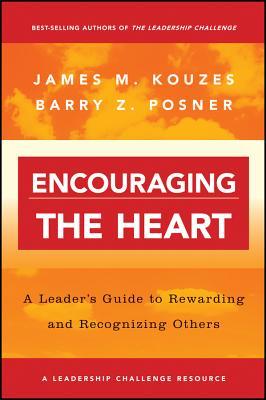
Below Jeannie Finkel recommends the book Encouraging the Heart by James Kouzes and Barry Posner to any manager looking to motivate his or her employees and help team members reach their potential through encouragement and inspiring leadership.
Book #4 Encouraging the Heart
Author: James Kouzes & Barry Posner
Short summary: This is a wonderful book about the art of rewarding and recognizing others, that opens up a world of possibilities beyond just monetary rewards. The book helps us explore what really motivates people and makes them feel appreciated. The authors are best known for their major works on leadership. First was The Leadership Challenge, published in 1987, and the associated leadership development program and assessment instrument they created, used by major multinational companies. The second was Credibility, which examines what makes leaders credible, based on years of research. This book is based on one of the “5 Leadership Practices” identified in The Leadership Challenge, and it’s the only one the authors chose to build out in such detail. Kouzes and Posner recognize that one of the hardest, but most vital, things for leaders to do is excel in meeting those basic needs we all have: to be respected for who we are and recognized for what we do. This book is a “how to” manual that will help and inspire you to become great at not just meeting those needs but also unleashing truly high performance and commitment.
What you’ll learn: As with the other Kouzes and Posner books, this one starts with some foundational research, principles, and introspection. You’ll take a self-test to see how you score on the “Encouragement Index” (and might learn, to your dismay, that you’re not as good at this as you could be!). The bulk of the book takes you through the “7 Essentials of Encouraging the Heart: Set Clear Standards; Expect the Best; Pay Attention; Personalize Recognition; Tell the Story; Celebrate Together; and Set the Example.”
In the concluding section, the authors revisit introspection, with a few thought-provoking pages on “Finding Your Voice”. And finally, they provide 150 suggestions for ways to get started!
Why it’s a must read: Honestly, all three of Kouzes and Barry Posner’s books should be read by anyone who aspires to be a leader. This one, in particular, is special because it speaks to those basic needs we all have, and what we hope we will experience from this thing called “work”. As the authors say, “To us, leadership is everyone’s business. Leadership is not about a position or a place. It’s an attitude and a sense of responsibility for making a difference.” Anyone who has to work with others to get things done can benefit from the wisdom and wealth of practical suggestions in this small volume. If we put them into practice, we can make our workplace a better place…and hopefully a BEST place!
If you found this book recommendation valuable, check back to read the upcoming and final post in this series. These books can help you become the kind of leader who inspires the passion, drive, and innovation necessary for organizations to produce extraordinary results. In case you missed it, don’t forget to read last week’s post about the book Leadership is an Art.
To find out more about Cydcor, check us out on Facebook, LinkedIn, Instagram, and Twitter.
Jeannie Finkel, Chief People Officer at Cydcor, the recognized leader in outsourced sales, has more than twenty-five years of business experience, managing human resources and administration at top firms. Jeannie served for nearly twelve years as a Senior Vice President of Human Resources at Charles Schwab & Co. Jeannie was also Head of Human Resources and Administration for a leading asset management firm, and served as Managing Director, Talent Management Systems and Strategies for a Fortune 100 organization. Jeannie later became a Partner with leading global retained search firm, Heidrick & Struggles. With years of experience managing teams and overseeing organizations, Jeannie is a seasoned expert in management, administration, and leadership.
This article is the third in a series of five blog posts from management expert, and Cydcor Chief People Officer, Jeannie Finkel. In this series, Jeannie recommends the Top Five Books she believes can help you transform your management style and become a better, more effective leader.
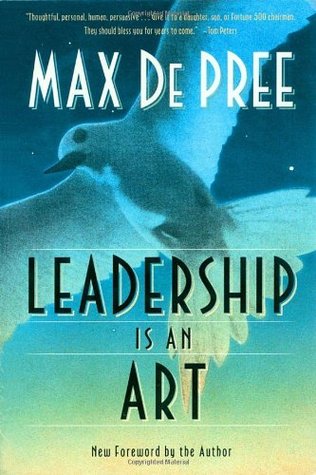
There are some clear cut skills that can help anyone become a better manager, but it can take a harder-to-define set of qualities to be a strong leader. Management expert Jeannie Finkel recommends Max De Pree’s Leadership is an Art to anyone looking to find out how to establish your unique point of view as a leader, fill your organization with passion, and foster loyalty and drive within your organization. Great managers show enormous faith in the potential of their people, and this book can help you discover how to lead by establishing relationships based on mutual trust, building a culture of inclusiveness, and by offering constant support.
Below, Jeannie Finkel explains why every manager and aspiring manager should read Max De Pree’s book on leadership, to build their identity as a leader and help shape their vision for their organization:
Book #3: Leadership is an Art
Author: Max De Pree
Short summary: This is a beautifully written collection of leadership principles written by Max De Pree, son of the founder and former CEO and Chairman of Herman Miller, Inc. Herman Miller is a nearly 100-year-old company, but it has consistently been recognized throughout its history as one of the best companies to work for in America, as well as one of the best managed and most innovative.
If you’re looking to understand how leaders can create a culture and set of principles that can stand the test of time, this book is a great place to start.
De Pree opens with a story about his father as a young manager whose experience with the death of a long-time employee shaped his philosophy of leadership. De Pree’s father went on to weave those ideas into the fabric of his company and the hearts and minds of his sons, who ran the company after him. The various chapters, each written as a little essay, bring this philosophy to life, starting with the question everyone asks at one point or another: “What is Leadership?”
What you’ll learn: The most important aspect of this book is the humanity and belief in the potential of people and the human spirit that it expresses. If you are not familiar with the concept of servant leadership, by the time you finish reading, you will be, and hopefully will be inspired by it.
De Pree also lays out his ground rules for how work relationships should operate based on mutual accountability. He looks at the capitalist system and helps us imagine how it could be enhanced through a more inclusive mindset where everyone participates. He provides guidance on how to stimulate innovation by recognizing and supporting “giants”, and he reminds us of the importance of sharing culture, values and shared history through storytelling. De Pree also offers techniques for becoming alert to the signs of complacency in ourselves, and he teaches us how to recognize the signals of organizational entropy, as well.
Every time I read this book (which is about once a year!) I take something new away from it.
Why it’s a must read:
This is an enduring classic. I came upon this one because I fell in love with Herman Miller’s products and services, and their exquisite attention to design, aesthetics, functionality and harmony in creating a work environment in which people were inspired and enabled to do their best. I had the privilege to have HMI as a client when I was in the recruiting business, and in order to do my best work and find the right people for them, I had to understand the culture. The manager I worked with encouraged me to study the company and read the book – and I was captivated. It helped me visualize the kind of company I hoped to be a part of and the kind of leadership I wanted to practice. It left me with a sense of my obligations as a leader which I’ve tried hard to live up to ever since.
And on top of everything else, the writing is absolutely beautiful – it’s like reading poetry!
If you found this book recommendation helpful, make sure to check back for upcoming posts in this series to learn about two more books that can help managers build their skills, earn the trust of their team, and lead their organizations to success. In case you missed it, don’t forget to read last week’s post about the book The Elements of Style.
To find out more about Cydcor, check us out on Facebook, LinkedIn, Instagram, and Twitter.
Jeannie Finkel, Chief People Officer at Cydcor, the recognized leader in outsourced sales, has more than twenty-five years of business experience, managing human resources and administration at top firms. Jeannie served for nearly twelve years as a Senior Vice President of Human Resources at Charles Schwab & Co. Jeannie was also Head of Human Resources and Administration for a leading asset management firm, and served as Managing Director, Talent Management Systems and Strategies for a Fortune 100 organization. Jeannie later became a Partner with leading global retained search firm, Heidrick & Struggles. With years of experience managing teams and overseeing organizations, Jeannie is a seasoned expert in management, administration, and leadership.
This is the second in a series of five posts on tips and books for managers, and Cydcor Chief People Officer, Jeannie Finkel. In this series, Jeannie recommends the Top Five Books she believes can help you transform your management style and become a better, more effective leader.
Writing well isn’t just a nice talent you can use to impress friends and colleagues. Sure, it can do that as well, but effective writing is much more important than that. Clear, concise writing is essential to be an effective communicator, a skill you must have if you ever hope to succeed in a leadership or management role. The way you write and communicate can mean the difference between getting the job or not, gaining approval for a critical project, earning the confidence of your team or organization, and the ability to explain yourself in cases when your actions are not as well received or understood. Effective writing ability is not just nice, it’s critical. It can directly impact your ability to survive and thrive in the workplace and your future growth potential.
Below, Jeannie Finkel recommends a book she believes any manager must have to help improve writing ability and communication:
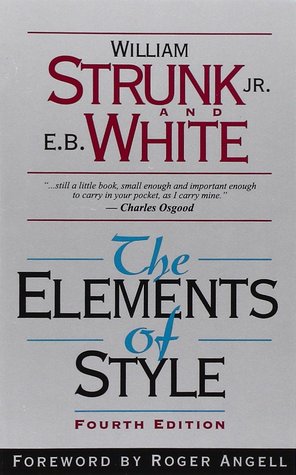
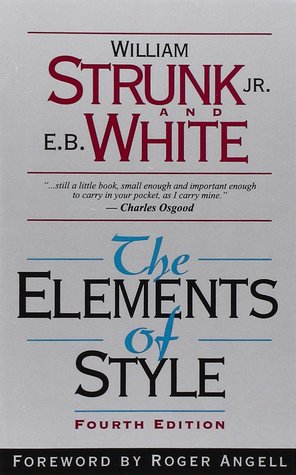
Book #2: The Elements of Style
Author: William Strunk Jr. and E.B. White
Short summary: If any aspect of your work involves written communication – beyond texting – and you want the quality of your writing to stand out, this little book will teach you what you need to know to master the core principles of writing clearly. It focuses on the fundamentals, clearly explaining proper usage and composition, and helping explain and address the rules of good writing that are most frequently violated.
This really isn’t a book you “read” per se. Rather, it’s a great reference tool that everyone who aspires to write well, or needs to influence, explain, or inspire would do well to study. It’s less than 100 pages, divided into three segments. The first segment is two chapters which give a set of “rules” for English usage and composition (you’ll remember grammar class in grade school!). Then there’s a terrific section about words and expressions that are most often misused – EVERYONE should review this part. The book ends with a set of 21 tips to keep in mind as you create your own writing style.
What you’ll learn: What you learn from this book really depends on what you need. If you’re newer to business and fresh from writing college papers, you might have to change your style to adapt to the brevity required for business writing, such as reports, PowerPoints, and emails. Find excellent advice to guide you through this transition under the sections entitled “Use definite, specific, concrete language” and “Omit needless words”.
Or, if you’ve been in the business world for some time and now need to or communications for publication, you’ll benefit from reviewing the chapter entitled, “Misused Words and Expressions”. We don’t notice many of these in our everyday conversations with friends, but they really stick out in a written piece!
Dip into the book enough and you’ll experience a true appreciation of the beauty and richness of our language, and realize the professor who wrote the original book truly loved his subject and hoped to pass on the art of communication to future generations.
Why it’s a must read: This is a desk reference I’ve kept with me ever since a rather embarrassing experience with a boss many years ago. I had just been promoted to my first Vice President level assignment, working for someone who had a reputation for being extremely tough. I was a literature major in college, and I thought I wrote pretty well. I wanted to impress him and show I was worthy of the big new job and title, so I wrote a lengthy memo about something I thought he should consider changing. But, I was afraid to be too direct in case he thought I was overstepping. Instead, I made it so indirect and wishy washy that (as I realized later) it was impossible to figure out what I was trying to say.
Thankfully, rather than ripping up what I’d written and leaving it in shreds on my desk, he said nothing. Instead, after lunch, I came back to a little brown paper bag from the bookstore down the street with this book in it, sitting on top of a copy of my memo. I opened it up and looked at the content. My boss had gone so far as to check off the sections he thought I should read, and underline several key sentences in red ink. This was the President of a key business unit who’d taken the time to go out and get this book for me and do this!! After I got over feeling mortified, I rewrote the memo (it was probably two pages shorter) and went in to thank him and make my case, this time much more directly, confidently, and clearly. We went on to be a great team and work together for many years, and we are still good friends today. I credit him, and this book, with setting me on a path to becoming an effective business writer! Maybe it will do the same for you.
Look out for upcoming posts in this series to learn about three more books every manager must have on his or her bookshelf to bolster professional growth and personal development. In case you missed it, don’t forget to read last week’s post about the book 13 Fatal Errors Managers Make and How you can Avoid Them.
To find out more about Cydcor, check us out on Facebook, LinkedIn, Instagram, and Twitter.
Jeannie Finkel, Chief People Officer at Cydcor, the recognized leader in outsourced sales, has more than twenty-five years of business experience, managing human resources and administration at top firms. Jeannie served for nearly twelve years as a Senior Vice President of Human Resources at Charles Schwab & Co. Jeannie was also Head of Human Resources and Administration for a leading asset management firm, and served as Managing Director, Talent Management Systems and Strategies for a Fortune 100 organization. Jeannie later became a Partner with leading global retained search firm, Heidrick & Struggles. With years of experience managing teams and overseeing organizations, Jeannie is a seasoned expert in management, administration, and leadership.
This is the first in a series of five posts by management expert, Jeannie Finkel. In this series, Jeannie weighs in on the top five books for managers, featuring one book each week.
Being a great manager is a skill that benefits from constant honing and refinement. While some are born with the innate ability to influence others, inspire action, and drive results, most leaders require a great deal of training, practice, and studying to become as effective as they hope to be. There are many incredible management training courses available, but they can be very pricey. Luckily, there is a wealth of information that can help you transform the way you lead and manage your team available for free, from the local library.
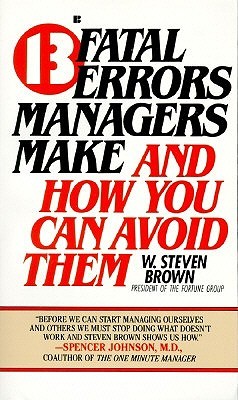
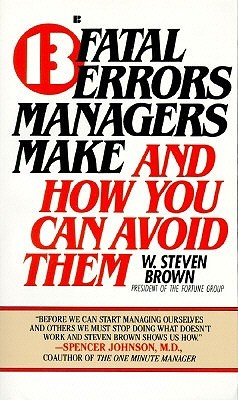
Book #1: 13 Fatal Errors Managers Make and How You Can Avoid Them
Author: W. Steven Brown
What it’s all about: Brown draws on his years of experience as a sales and management coach and consultant, working with Fortune 500 companies, to identify the top errors managers tend to make repeatedly, so we can recognize and stop doing them, or better yet, avoid committing them in the first place. The good and somewhat surprising news he shares is that there really aren’t that many – just 13 of them! He describes each one clearly, illuminating why the error gets in the way of achieving our goals as managers, and provides stories, examples, and suggestions to help us understand what the error looks like and how to correct it. He also ends chapters with helpful tools and a workbook section to create an action plan, summarize your key learnings, and think about how you’ll apply them.
What You’ll Learn: Whether you’re a new manager or one who’s been around a long time, there’s something in this little book for everyone. For newer managers, especially if you’ve been promoted from among a group of your former friends and peers, the transition to the role of “boss” and having to hold your friends accountable, can be very tough. For those in this tricky situation, the chapter, “Fatal Error #8: Be a Buddy, Not a Boss,” might really help.
For more experienced managers, who find yourselves wishing you could get your team to be more productive, there are great insights in the chapters “Fatal Error #3: Try to Control Results Instead of Influencing Thinking,” and “Fatal Error #7: Concentrate on Problems Rather than Objectives.” Or, maybe you’ve always been a top performer, and even though you set a high bar for your team, somehow, you know they can do even better. The chapters, “Fatal Error #5: Manage Everyone the Same Way,” and “Fatal Error #12 Recognize Only Top Performers,” could provide some good tips!
Why it’s a Must Read: I bumped into this book soon after it was first published, when I was a young manager. It was a godsend to me, as the firm I worked for did not provide any management training so I had to figure things out for myself. I discovered that I was committing most of these errors, and I quickly realized that the suggestions the author provided actually work. When I applied them to my own role, I became a much better leader of people, in large part because of the simple lessons this book offers.
This is a top management book I revisit every so often, and I recommend it to any new manager who’s just starting their leadership journey, as well as more experienced managers looking to strengthen their leadership skills. It’s really easy to read – you can probably finish it on a cross country plane flight or quiet Sunday afternoon – but the wisdom sticks with you long afterwards!
Look out for more book recommendations from management expert, Jeannie Finkel, as we continue our series on The Top Five Books for Managers. No matter where you are in your career, feeding your student mentality with advice from the top management experts can only aid you in your quest to reach your current and future goals and achieve success.
To find out more about Cydcor, check us out on Facebook, LinkedIn, Instagram, and Twitter.
Jeannie Finkel, Chief People Officer at Cydcor, the recognized leader in outsourced sales, has more than twenty-five years of business experience, managing human resources and administration at top firms. Jeannie served for nearly twelve years as a Senior Vice President of Human Resources at Charles Schwab & Co. Jeannie was also Head of Human Resources and Administration for a leading asset management firm, and she served as Managing Director, Talent Management Systems and Strategies for a Fortune 100 organization. Jeannie later became a Partner with leading global retained search firm, Heidrick & Struggles. With years of experience managing teams and overseeing organizations, Jeannie is a seasoned expert in management, administration, and leadership.
There are no better examples of leadership than the legacies of our great historical leaders. While they achieved tremendous fame, they did not do so without facing the occasional failure and enduring hardship. As we strive to become better leaders and learn how to inspire others, we would do well to reflect on the greatest leaders from history to see the characteristics, mentality, and habits that allowed these most revered leaders challenge norms, empower the oppressed, galvanize action, and spark change.
Lesson One: Learn from the Past
The best sources for what works in leadership are the lessons of the past. The trials and tribulations of historical leaders, while sometimes on a grander scale than our own lives, can teach us how to succeed or fail. We can learn how to lead effectively from reading about or watching movies on history, and anyone hoping to become a better leader should make a habit of it. Why make your own mistakes when you can benefit from the lessons learned by those who eventually achieved greatness? Study their lives, follow in their footsteps, and apply their leadership approaches as you drive your own team to reach its goals.
Lesson Two: Character Matters
The greatest historical leaders knew that character can often matter even more than ideas when it comes to leading others to find the greatness in themselves. Benjamin Franklin identified Thirteen Critical Virtues necessary for a successful live and vowed to exemplify them. George Washington is admired for his honesty, and Gandhi demonstrated remarkable restraint and self-discipline in his use of non-violent protest to drive change. Whether reading about George Washington, Ben Franklin, Mahatma Gandhi, Martin Luther King or Nelson Mandela, their character stood out and earned them respect, built trust with others, and translated to a highly-regarded reputation.
Lesson Three: Take Risks
You must be bold, and you must accept that you will sometimes fail. Failing can be an important stop on route to success. Lincoln lost a number of elections, including the Illinois Senate race in 1858, yet he ran for President in 1860. Washington struggled to win a major battle against the British for years, yet he had the courage to stay the course. Gandhi, King and Mandela were humiliated for many years on their paths toward civil rights and representation. Facing the occasional failure is a sign that you took on challenges, pushed yourself outside of your comfort zone, and it is an opportunity to prove your resilience and willingness to learn from your mistakes.
Lesson Four: You are Not a Victim of Your Circumstances
We can rise above poverty, lack of education, or lack of support to achieve greatness. Charlie Chaplin grew up in the direst circumstances, reminiscent of a Dickens novel, yet he revolutionized silent film. Men and women who had once been slaves and peasants, overcame the odds to become generals, emperors, and queens. While challenges can sometimes feel insurmountable, the stories of remarkable historical leaders prove that even when things seem hopeless, determination, passion, and grit can overcome the odds.
Lesson Five: Self Discipline is a Must
Lincoln had just one year of formal education, but he read constantly to feed his curiosity and continued to expand his knowledge. Franklin devised ways to improve his character by evaluating himself daily, assessing one character trait each day. Michael Jordan and Kobe Bryant were relentless in their routines to develop their skills and conditioning. The stories of great leaders of the past up to the present teach that our potential is boundless if we are willing to push ourselves. Achieving greatness as a leader means having the passion and drive to continuously transform yourself and expand your boundaries. Nobody will do that for you. To become a leader that can inspire others and provoke action, you must first be willing to lead yourself.
History is full of incredible stories of leaders who rose above their circumstances, exemplified character, and endured and overcame setbacks on their path to success. By studying their stories and seeking to understand which qualities and actions allowed them to achieve greatness, you can improve your own chances of doing the same. The stories of historical leaders are a goldmine from which I have learned so much about the kind of leader I hope to be.
To find out more about Cydcor, check us out on Facebook, LinkedIn, Instagram, and Twitter.
Gary Polson is Chief Executive Officer and Chairman at Cydcor, the market leader in outsourced sales. With more than 25 years of business operations experience in accounting, legal and senior management, Gary has propelled Cydcor to unprecedented achievement with clients, culture and philanthropy since 2001. Under his leadership, Cydcor has increased its revenue more than six-fold since 2001 and has been recognized as “…the most respected sales outsourcing company in the world” by Datamonitor and The Black Book of Outsourcing, one of the “Best Places to Work” by the Los Angeles Business Journal for eight consecutive years. Gary’s passion for excellence and never-satisfied approach has led Cydcor to earn both industry and employer recognition. With Gary at its helm, Cydcor has built its reputation on maintaining long term relationships with clients by consistently delivering results and by going above and beyond to help Cydcor’s clients gain market share and grow.