
Found 0 posts

Cydcor recently wrote on Life Hacks for Left-Brain Thinkers, but what about those of us who identify as “right-brain” thinkers? People who excel in creative arts, love to experiment and tinker and learn better when things are explained visually are considered “right-brain” dominant. However, along with these positive attributes, right brain dominant individual are often thought to be easily distracted and unorganized.
Being a visual-spatial learner means your brain learns best through visual clues and observation. Long, complicated mathematical problems or block-text can often cause right-brained individuals to tune out.
Cydcor is hiring! Head over to the Cydcor CareerBuilder page for our latest job openings.
Right-brain dominant people often like to work in groups, but it’s also good to give your left brain some exercise as well. To do so, encourage yourself to work alone whenever possible. While team tasks can be great creative opportunities, it’s also important to learn how to be able to tap into your left-brain by giving yourself some quiet space to focus on the task at hand.
Visual-spatial learners don’t do well under pressure. Give yourself as much time as possible to finish a project, and avoid procrastination by scheduling this time and ensuring ample opportunity to get things done without time pressure setting in.
Encourage yourself to draw webs and links while taking down notes, rather than writing things in a more linear fashion. Draw pictures if it helps illustrate a point—even something as a simple doodle can reinforce the information.
Managers can assist right-brain thinker by showing the whole picture for facts that need to be memorized, versus just handing out a document for them to read and memorize. Visual supports such as pictures and maps help with ideas and facts. In addition to providing information verbally, use colors, charts and other visual aids to help them commit information you need to know by memory.
Learn more about Cydcor at our profile on Hoover's.

Those who identify as “left-brain” thinkers tend to be more on the analytic and logical side of the spectrum of thought. Law, finance, engineering and the sciences are some of the many industries that those analytical types tend to fall into. But in an age of innovation, those more systematic thinkers might need a kick-start for creativity to keep up. While there are distinct verbal and analytic styles of thinking associated with different hemispheres of the brain, that doesn’t mean that they aren’t able to delve into more creative areas.
Unfortunately, a large portion of the population believes left-brain thinkers struggle with creativity or aren’t able to generate new ideas. While one might become set in a pattern, it is still possible to break out of this limited method of thinking.
For more information about Cydcor, be sure to follow us on Instagram here: http://instagram.com/cydcor.
Author Daniel Coyle’s book The Talent Code describes in detail what physically happens to the brain when someone develops a new skill. In order to properly build up your brain to receive and keep new thought processes, knowledge and skills, Coyle calls for a need of what he names deep practice, which is exactly what it sounds like: practice. Learning and performing a new action involves firing an electrical signal through a neural pathway. Every time this happens, it thickens the myelin sheath that surrounds nerve fibers. The thicker the myelin sheath around the neural pathway, the more easily and effectively we use it.
What are ways we can “hack” our right-side brain and begin to let it out of the box? Some tips to start thinking creatively are simple:
Sign your name in the way you’ve developed, then re-sign it—backwards. Just the mere motion of attempting to break out of what you would normally do fires the right brain hemisphere. Try signing your name in different writing styles. Upside down. In a spiral. In loops. Repeat this until you are able to sign in all different designs and directions.
The right hemisphere aids in your ability to move in an unfamiliar way—such as dance. Just as we must take steps to learn new moves—a yoga position, a straighter posture, or running style—our brains must use a similar process to learn how to think differently.
Begin the art of deep practice by conquering any unaccustomed task, attempting challenges and feeding stray information into your right brain's database. Before you know it, you will see new ideas begin to emerge.

"If you work just for money, you'll never make it, but if you love what you're doing and you always put the customer first, success will be yours."
-Ray Kroc, businessman
Money is not the be-all and end-all of success. First, love what you are doing and take full gratification in pledging yourself entirely to your work and the needs of your client or business. This outlook on your work can transform the level of success and happiness you achieve throughout your life.
"The secret to productive goal setting is in establishing clearly defined goals, writing them down and then focusing on them several times a day with words, pictures and emotions as if we've already achieved them."
-Denis Waitley, author and motivational speaker
Creating a clear plan is key. Start by envisioning yourself experiencing success every day of your life. You are more likely to commit to keeping promises and staying on your goal path by visually focusing on them daily.
"It is not what we get. But who we become, what we contribute... that gives meaning to our lives."
-Tony Robbins, life coach
A large part of being successful means remembering others in your lives and how each person helped you get where you are today. True happiness and self-satisfaction is not measured by material wealth or possessions. Rather, it is the way you influence others and how you developed your character that makes life significant.
"Life is a succession of lessons which must be lived to be understood."
-Helen Keller, author
Why do some things happen one way while other things happen differently? In order to fully understand why events occur the way they do, you must experience them first hand. Never just take someone else’s word for it; go out and live life to the fullest.
To learn more about Cydcor, the recognized leader in outsourced sales services, check out Cydcor's channel on YouTube.


When it comes to handling stress on the job, studies have found that 90% of top performers in the workplace are able to overcome negative reactions by managing their emotions in times of stress. The odd thing about stress is that it is an imperative feeling to have in order to make decisions, as our brains are wired in the way where it may be difficult for one to take action if not under at least some level of this emotional state.
It’s easy to let stress overwhelm you, and as the research suggests, it’s how one manages such stress that can be the key toward success.
The University of California in San Francisco has conducted multiple studies into how people handle stress. Their research shows that one quality many who handle stress well have in common is their ability to say “no.” Always saying “yes” can place heaps of seemingly unending responsibilities onto a person and can add unnecessary strain on both workload and emotions. Know and understand when you cap out on the job as far as your tasks, and be sure to communicate to your team or managers when you feel you are at the peak of your capacity. Don’t be afraid to speak up!
Exercise is an important factor in keeping stress under control, as when stress comes up at work, it’s usually the first thing that goes in one’s routine. Get your body moving at some point during the day--even ten minutes can greatly help release tension and get you motivated to conquer.
Another huge step in managing stress involves managing the negative self-talk one might engage in. Ruminating on negative thoughts, even ‘what ifs’ that might have occurred can compound stress unnecessarily.
Check Cydcor out on Bloomberg Businessweek for more information.


Musical leaders are responsive and energetic, always aware of changes in their own industry, adapting accordingly, and knowing what their audience understands and expects from them. There are a great many things one can take away from the stage into an office workplace.
Adapt
An old adage reads, “a smooth sea never made a skilled sailor.” Musicians often have to respond to surprises and adversity, since music like freestyle and jazz is all about how you react and adapt. Making a business run smoothly is always the goal; however, hurdles often can come and disrupt your plans; learning how to acclimate and react swiftly can often save a company.
Support
The best musical artists in the world know how to bring out the very best in their bands and support teams involved in setup and stage presentation. While there are times to rock out as a soloist, always remember to take a step back and let others on your team shine. As a leader, it’s important to understand that if your team did a fantastic presentation or project, see that they rocked out together, and let them know you appreciate their collaboration. Work with your team to encourage creativity in the workplace and showcase examples of solo excellence as well as teamwork.
Check out these 8 Great Work Habits on Cydcor's SlideShare today!
Audience
Musicians often create music first and foremost for themselves, but the ultimate goal is to let it be heard to a larger audience. Knowing the audience is key, especially once musicians become known for a particular musical genre. If they are known for rock ‘n roll, but play a new slower jazz piece in the middle of a concert, their audience might be less than thrilled. Your clients are the same. Know your own audience and the expectations they have for the service you are providing. Always work to provide them with something they want to keep coming back for, whether it be a fantastic product or simply great service.
Learn more about Cydcor at our website: https://www.cydcor.com/.
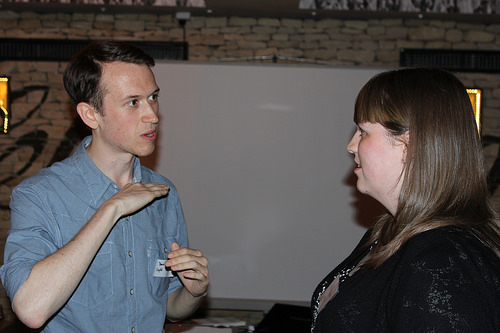
To run successful business, it’s essential to reach out to prospective partners and clients on a regular basis. However, many of us dread the idea of walking into a room and introducing ourselves to strangers—so making those initial connections can be tough.
Networking is a great opportunity to make business contacts and recruit new prospects. While it might seem like a difficult task, in reality it doesn’t have to be an uncomfortable experience.
To ease yourself into a “networking mind-set,” speak to people everywhere you go. This is a great way to practice conversation, as well as your active listening skills. Get into the habit of chatting with folks without the stressor of needing to do a sales-pitch or the pressure of fellow colleagues around you. This will help you get comfortable with more casual conversation and will make it much easier when the time comes to go to a convention or event.
Make a positive impression by having an upbeat attitude, as people wish to work and connect with those who are confident as well as optimistic. This assertiveness will increase your chances of a lasting impression; however, always remember to remain genuine. Being overly gung-ho or coming across fake can turn off those around you.
Cydcor is on Twitter! Follow us for company news and sales advice at @Cydcor.
Follow up with those you connect with. At many events and opportunities, business cards can be rapidly exchanged. Keep track of those cards and when you have a new contact, be sure to contact with them via email or connect with them on a social site such as LinkedIn within twenty-four hours. A simple, “It was fantastic to chat with you yesterday!” can go a long, long way.
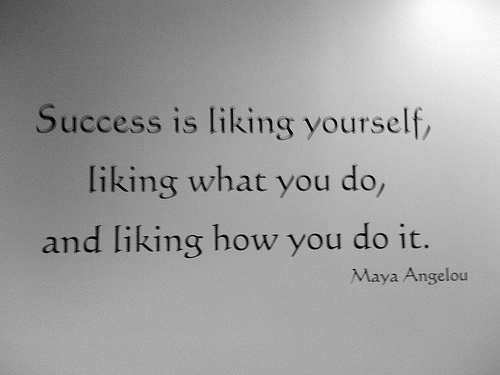
In a business environment, we all try to put our best foot forward when interacting with our co-workers, managers and clients. However, not everyone is immune from traits that might be off-putting, either consciously or subconsciously. In order to achieve long-term happiness and achievement, it is critical to be self-aware of not only your best traits, but also of ones that need improvement.
Negative Thinking
A lot of pessimists in the world consider themselves realists rather than “negative minded thinkers.” However, for others it can be difficult to be around those who speak incessantly of problems and issues, and who are stubborn to see the positive side of situations.
Being pessimistic is one thing—but remaining in a perpetually negative mind-set can frustrate those around you. Think carefully about how what you say might be phrased in a less negative light and try to see a problem as a new challenge to take the lead on.
Validation
Everyone loves to be appreciated and acknowledged for his or her efforts and accomplishments at work. However, those who constantly strive for validation are exhausting to be around. Those individuals get caught up in the need to prove their worth and to win those around them—to the point that they can over-attach to projects and be unintentionally draining.
It isn’t about what you achieve in the eyes of the group. It is about the journey, what you’re learning, and how you help those around you. Support comes from your team, and with a great assembly behind you, they will all learn and grow in the process.
Perfectionism
Author Michael Law once said, “At its root, perfectionism isn’t really about a deep love of being meticulous. It’s about fear. Fear of making a mistake. Fear of disappointing others. Fear of failure. Fear of success.” There is a lot of truth to those statements, and as a culture we tend to reward perfectionists for setting high standards. And perfectionists frequently are high achievers; however the price they pay for that success can be a source of great dissatisfaction.
Underneath it all, perfectionists have a high drive to succeed, however they need to realize the at times that “perfect” is an unrealistic goal. Such an effort towards perfectionism can often get in the way of the bigger picture, so figure out what “good enough” is, and be happy by letting go of unnecessary and unproductive pressures.
For more information about Cydcor, connect with us on LinkedIn.


Great businessmen and women know how to lead, inspire, and motivate their team—and more importantly, they know when to seek advice. No one has all the answers, and the best leadership experts agree that they’ve honed their skills through experience, advice and mentorships with others in the biz. So what do top experts say about leadership?
Michael Talve, the Founder and Managing Director of The Expert Institute:
"My best leadership tip is to think of leadership as a responsibility as much as an opportunity. Effective leaders understand that they are responsible for everyone that they are leading, and consider that responsibility as the main concern of their position. If you ever lose empathy for, and dedication to, the people you are leading, you are not being a leader."
Cydcor is on Twitter! Follow us today @Cydcor for additional business advice.
Frank Sonnenberg, author of Follow Your Conscience
"Leaders with character are highly effective. They have no need to pull rank or resort to command and control to get results. Instead, they're effective because they're knowledgeable, admired, trusted, and respected. This helps them secure buy-in automatically, without requiring egregious rules or strong oversight designed to force compliance."
Jeff Harmon, author of The Anatomy of the Principled Leader and founder of Brilliance Within Coaching and Consulting
"Repeat the words, 'It's not about me!' every day, multiple times a day. Don't make your leadership about being in charge, being right, getting promoted, or looking the best. Make leadership about the cause of the organization, serving the legitimate needs of those you're leading, and not taking yourself so darn seriously. You'll have people lining up to work for and with you and the results will follow."
Check out the latest video on Cydcor's YouTube about our headquarters move to Agoura Hills, CA: Cydcor Offices - Built for Results.
Peter Barron Stark, a consultant, speaker, and author
“When you're leading a new team or joining a new organization, honor the new team/organization's past, and then build them a bridge to the future. Too many leaders inherit a new team and want to tell everyone how much success they had in the past, and how good their old organization/team was. When leaders disrespect their new team, team members start asking each other the following questions: If your old organization or team was so good, why did you leave? If your old organization is so good, why don't you go back?"
Do you have any favorite leaders or leadership quotes? Share your thoughts with us in the comments below!

In a corporate environment, you might feel your creativity for motivating your team members is limited to kind words and small incentives. Traditional motivators include such things as gift cards and corporate swag like coffee cups and pencil holders. Larger incentives on the other hand, such as promotions and bonuses, tend to be in short supply. Here are some out-of-the-box incentives to offer your team members.
Parking
In the corporate world, especially in a heavily populated city, parking is a coveted perk in an office building. Whether you offer free parking, paid parking options, or assigned parking, there are several options you can offer to your workers as an incentive for top performances. A month of free parking? An assigned spot nearest the door? Covered parking options? These offer great appeal to many employees and can definitely be a motivator.
Split Schedule
Allowing a person to leave mid-afternoon to work from home for the rest of the day can be a tremendous reward. Often times a break from the monotony of the same schedule day in and day out is a bonus in and of itself. Allowing an employee to leave early so they can greet the kids as they get home from school, run errands, or even beat the traffic on a Friday can be especially appealing.
Personalized Gifts
A lot of employees appreciate a kind word from their boss, along with a small token such as a gift card, but you can always be a bit more creative. Instead of giving a generic gift card for something such as coffee, personalize it for that individual employee. Do they enjoy sports? Video games? A great non-fiction book? When you tailor a gift for an employee they will likely appreciate it more; even more importantly, they will take into account that you took an extra step for them, that you care and pay attention to their interests.

“On average, loyal customers are worth up to 10 times as much as their first purchase.”
- White House Office of Consumer Affairs
In 2011, American Express conducted a survey of their customers, which revealed that 3 out of 5 customers are willing to walk away from their favorite brand if they received poor customer service. Many entrepreneurs and businesspeople struggle with various aspects of customer service, but it’s clear that customer service can certainly make or break a business. In addition to the American Express survey, another research report showed that 90% of Americans are willing to spend more if it means excellent service.
Fantastic customer service can help a business rise in the ranks, and the loyalty of a client base that appreciates you and what you have to offer is paramount. Loyal customers are familiar with you and your brand, and therefore are much more likely to check out new products or recommendations you make.
“Brand ambassadors” are popular, especially on social media, where Tweets, photo posts and hashtags make it easy for customers to share a great experience—or a bad one. Keeping your customers happy, with quick responses to their questions or concerns, gives them a positive experience they wish to share. If they love your service or product, they will speak up and share, and word-of-mouth marketing is an extremely powerful channel.
Having brand ambassadors can assist you in creating new customers, as they are taking a recommendation of a friend or family member who mentions your services. This is a much lower cost to acquire, as most business need to advertise and market, offering free product samples or discounts in order to attract new customers. By providing great customer service, you create an experience others will want to share. And as a reward, they will sell others on your business.

Looking for an engaging presentation to truly inspire you or your team? TED Talks are a great way to start, with speakers ranging from musicians to entrepreneurs to authors and comedians. Their slogan, “Ideas Worth Spreading,” looks to inform, engage and educate.
There are nearly 2,000 TED Talks that would be considered business-centric, and Cydcor has checked into some of the top Talks, which explore the range of motivation, healthy work-play balances and how to inspire your workers. We recommend the following three TED Talks to inspire you in work and life:
Nigel Marsh: How To Make Work-Life Balance Work
This is a wonderfully humorous and inspiring TED Talk that explains how doing well in the business world can negatively impact your personal life if one doesn’t take steps to manage that success. Marsh is an author of inspiration and career advice books, and gives personal anecdotes on how being successful caused him to initially neglect his family. In his TED Talk, he discusses in detail how he took steps to take control of his work-play balance.
Simon Sinek: How Great Leaders Inspire Action
Cydcor has written previously on Sinek’s book, Start With Why, which provides research analysis on world-leaders and their ability to motivate. With Sinek’s TED Talk, he looks to expand upon his research, daring people to “think, act and communicate” in ways that are “the complete opposite of everyone else.”
Start With Why is a motivational classic, and hearing Sinek speak passionately on how communicating “from the outside in” is truly inspiring.
Tony Robbins: Why We Do What We Do
Tony Robbins is a tremendously successful inspirational speaker and business coach that has been speaking for over three decades on the power of motivation. His classic talk is one of the most viewed videos in TED Talk history, and Robbins’ energy is palpable on stage.
Robbins shows the importance of understanding emotions, and posits that to lead properly you have to understand what those around you truly need in order to get the best from them. The self-proclaimed ‘why guy’ will ask you to understand “why you do what you do.” Do you know the answer?