
Found 0 posts


Musical leaders are responsive and energetic, always aware of changes in their own industry, adapting accordingly, and knowing what their audience understands and expects from them. There are a great many things one can take away from the stage into an office workplace.
Adapt
An old adage reads, “a smooth sea never made a skilled sailor.” Musicians often have to respond to surprises and adversity, since music like freestyle and jazz is all about how you react and adapt. Making a business run smoothly is always the goal; however, hurdles often can come and disrupt your plans; learning how to acclimate and react swiftly can often save a company.
Support
The best musical artists in the world know how to bring out the very best in their bands and support teams involved in setup and stage presentation. While there are times to rock out as a soloist, always remember to take a step back and let others on your team shine. As a leader, it’s important to understand that if your team did a fantastic presentation or project, see that they rocked out together, and let them know you appreciate their collaboration. Work with your team to encourage creativity in the workplace and showcase examples of solo excellence as well as teamwork.
Check out these 8 Great Work Habits on Cydcor's SlideShare today!
Audience
Musicians often create music first and foremost for themselves, but the ultimate goal is to let it be heard to a larger audience. Knowing the audience is key, especially once musicians become known for a particular musical genre. If they are known for rock ‘n roll, but play a new slower jazz piece in the middle of a concert, their audience might be less than thrilled. Your clients are the same. Know your own audience and the expectations they have for the service you are providing. Always work to provide them with something they want to keep coming back for, whether it be a fantastic product or simply great service.

Here's Cydcor's review of 'Thinking, Fast and Slow' by Daniel Kahneman!
About Thinking, Fast and Slow: Thinking, Fast and Slow is written by Daniel Kahneman, a renowned psychologist and winner of the Noble Prize in Economics. This book is also the winner of the National Academy of Science Best Book Award in 2012. Kahneman takes us through a tour of the mind and explain the two systems that drive the way we think. He explains the profound effect of cognitive biases on everything from playing the stock market to planning our next vacation—each of these can be understood only by knowing how our minds shape our judgments and decisions.
Why Cydcor recommends this book to future leaders: Thinking, Fast and Slow takes the reader on a very gentle tour during which he or she will see the pitfalls of inner workings of the mind. Kahneman's text is a very fluent page-turner, and without diving into deep and obscure details of academic journals, it gives a very good overview of one of the most important and radical research programs of the 20th century.
Want to learn more about Cydcor? Head over to our CareerBuilder page for additional information!
Our favorite part: Kahneman introduces two mental systems: one is fast and the other slow. Together, they shape our impressions of the world around us and help us make choices. System 1 is largely unconscious and it makes snap judgments based upon our memory of similar events and our emotions. System 2 is painfully slow, and is the process by which we consciously check the facts and think carefully and rationally.
About Zero to One: In this #1 New York Times bestseller, Peter Thiel speaks of the great secret of our time: that there are still uncharted frontiers to explore and new inventions to create. In Zero to One, Thiel shows readers how they can find singular ways to create those new things.
Thiel begins with the contrarian premise that we live in an age of technological stagnation, even if we’re too distracted by television, computers and mobile devices to notice. Information technology has improved rapidly, but there is no reason why progress should be limited to computers or Silicon Valley. Progress can be achieved in any industry or area of business. It comes from the most important skill that every leader must master: learning to think for yourself.
For additional information about Cydcor, check out our profile on CrunchBase!
Why Cydcor recommends it to future leaders: At its core, Zero to One is a refreshing intellectual exploration into motives behind entrepreneurship. It makes the reader ask the hard questions, which if one wishes to be in business or become an entrepreneur, are critical for being honest and prepared for the industry.
Our favorite part: Thiel suggests that the entrepreneurs who stuck with Silicon Valley learned four big lessons from the dot-com crash that still guide business thinking today:
1. Make incremental advances.
2. Stay lean and flexible.
3. Improve on the competition.
4. Focus on products, not sales.
"These lessons have become dogma in the start-up world; those who ignore them are presumed to invite the justified doom visited upon technology in the great crash of 2000. And yet the opposite principles are probably more correct."
Learn more about Cydcor at our website: https://www.cydcor.com/.
To run successful business, it’s essential to reach out to prospective partners and clients on a regular basis. However, many of us dread the idea of walking into a room and introducing ourselves to strangers—so making those initial connections can be tough.
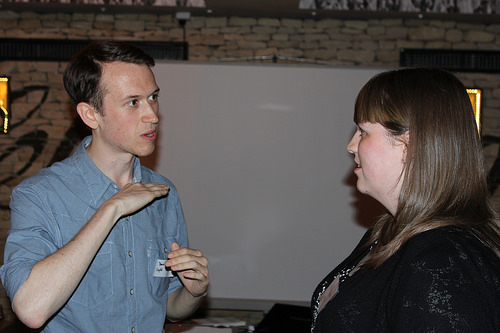
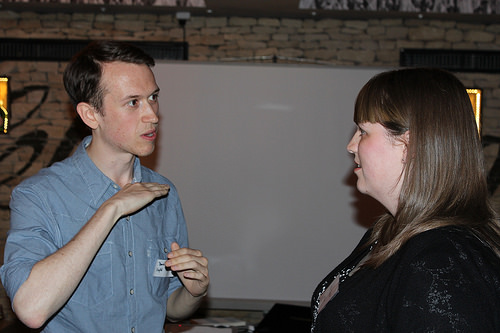
Networking is a great opportunity to make business contacts and recruit new prospects. While it might seem like a difficult task, in reality it doesn’t have to be an uncomfortable experience.
To ease yourself into a “networking mind-set,” speak to people everywhere you go. This is a great way to practice conversation, as well as your active listening skills. Get into the habit of chatting with folks without the stressor of needing to do a sales-pitch or the pressure of fellow colleagues around you. This will help you get comfortable with more casual conversation and will make it much easier when the time comes to go to a convention or event.
Make a positive impression by having an upbeat attitude, as people wish to work and connect with those who are confident as well as optimistic. This assertiveness will increase your chances of a lasting impression; however, always remember to remain genuine. Being overly gung-ho or coming across fake can turn off those around you.
Cydcor is on Twitter! Follow us for company news and sales advice at @Cydcor.
Follow up with those you connect with. At many events and opportunities, business cards can be rapidly exchanged. Keep track of those cards and when you have a new contact, be sure to contact with them via email or connect with them on a social site such as LinkedIn within twenty-four hours. A simple, “It was fantastic to chat with you yesterday!” can go a long, long way.
Here's Cydcor's review of 'The Power of Habit: Why We Do What We Do in Life and Business' by Charles Duhigg:
About The Power of Habit: Written by Pulitzer Prize-winning business reporter Charles Duhigg, The Power of Habit explores the scientific discoveries that explain how and why habits exist—and more importantly, how they can be changed.
Duhigg takes the reader through engrossing narratives that travel from the boardrooms of Procter & Gamble to the sidelines of the NFL and even to the frontlines of the Civil Rights Moment.
At its core, it contains a single argument: The key to who we are, from our successes, failures and productivity, comes down to habits and understanding how they work.
Why Cydcor recommends this book to future leaders: Duhigg explains how habits operate in the brain, how companies use them, and even how retailers and businesses use their understanding of human habits to their advantage as a business model to drive sales and profits. For future leaders, understanding this concept is critical to success.
Our favorite part: Market researchers will certainly love this book, as Duhigg explains the habits of consumers and gives predictive models. The stories on how Target and Febreeze have used habits is especially engaging. These tales of corporate manipulation are among Duhigg's most persuasive.
Not only does he explain how to create habits for yourself, but he also explains how one could potentially capitalize on them in the business world.
Cydcor Reviews has recently reviewed Lean In: Women, Work And the Will to Lead By Sheryl Sandberg With Nell Scovell:
About Lean In: Author Sheryl Sandberg is the chief operating officer of Facebook and is ranked on Fortune’s list of the 50 Most Power Women in Business. She was also recognized as one of Time’s 100 Most Influential People in the World—no small task. It’s safe to say, Sandberg knows the world of business, and offers a unique perspective for women to relate to.
Through personal anecdotes, hard data and compelling research, Sandberg digs deep into women’s roles in business and leadership positions. She discusses her own decisions, mistakes and daily struggles to make the right choices regarding her career, her family and for herself.
Cydcor is on Twitter! Follow us today! https://twitter.com/cydcor
Why Cydcor recommends this book for future leaders: Sandberg gives practical advice on negotiation techniques, mentorship and how to build a satisfying career. While mainly focused on her own perspective as a woman lending advice to other women, it’s hard not to find pieces of her wisdom that men wouldn’t be able to take away.
Written with humor and inspiring calls to actions, Sandberg describes specific steps women can take to combine professional achievement with personal fulfillment, and also describes how men can benefit as well by supporting women in both the workplace and home-life.
Our favorite part: Sandberg is perhaps best known outside of the business realm for her compelling TEDTalk, which she described how women unintentionally hold themselves back in their careers. Her talk has been viewed on YouTube more than a million times and her speech contains core elements of her book. Lean In is designed to change the conversation from what women can’t do to what they can.
Check out the latest video on the Cydcor Sales YouTube Channel: Cydcor Results - Built for Success!


Great businessmen and women know how to lead, inspire, and motivate their team—and more importantly, they know when to seek advice. No one has all the answers, and the best leadership experts agree that they’ve honed their skills through experience, advice and mentorships with others in the biz. So what do top experts say about leadership?
Michael Talve, the Founder and Managing Director of The Expert Institute:
"My best leadership tip is to think of leadership as a responsibility as much as an opportunity. Effective leaders understand that they are responsible for everyone that they are leading, and consider that responsibility as the main concern of their position. If you ever lose empathy for, and dedication to, the people you are leading, you are not being a leader."
Cydcor is on Twitter! Follow us today @Cydcor for additional business advice.
Frank Sonnenberg, author of Follow Your Conscience
"Leaders with character are highly effective. They have no need to pull rank or resort to command and control to get results. Instead, they're effective because they're knowledgeable, admired, trusted, and respected. This helps them secure buy-in automatically, without requiring egregious rules or strong oversight designed to force compliance."
Jeff Harmon, author of The Anatomy of the Principled Leader and founder of Brilliance Within Coaching and Consulting
"Repeat the words, 'It's not about me!' every day, multiple times a day. Don't make your leadership about being in charge, being right, getting promoted, or looking the best. Make leadership about the cause of the organization, serving the legitimate needs of those you're leading, and not taking yourself so darn seriously. You'll have people lining up to work for and with you and the results will follow."
Check out the latest video on Cydcor's YouTube about our headquarters move to Agoura Hills, CA: Cydcor Offices - Built for Results.
Peter Barron Stark, a consultant, speaker, and author
“When you're leading a new team or joining a new organization, honor the new team/organization's past, and then build them a bridge to the future. Too many leaders inherit a new team and want to tell everyone how much success they had in the past, and how good their old organization/team was. When leaders disrespect their new team, team members start asking each other the following questions: If your old organization or team was so good, why did you leave? If your old organization is so good, why don't you go back?"
Do you have any favorite leaders or leadership quotes? Share your thoughts with us in the comments below!

In a corporate environment, you might feel your creativity for motivating your team members is limited to kind words and small incentives. Traditional motivators include such things as gift cards and corporate swag like coffee cups and pencil holders. Larger incentives on the other hand, such as promotions and bonuses, tend to be in short supply. Here are some out-of-the-box incentives to offer your team members.
Parking
In the corporate world, especially in a heavily populated city, parking is a coveted perk in an office building. Whether you offer free parking, paid parking options, or assigned parking, there are several options you can offer to your workers as an incentive for top performances. A month of free parking? An assigned spot nearest the door? Covered parking options? These offer great appeal to many employees and can definitely be a motivator.
Split Schedule
Allowing a person to leave mid-afternoon to work from home for the rest of the day can be a tremendous reward. Often times a break from the monotony of the same schedule day in and day out is a bonus in and of itself. Allowing an employee to leave early so they can greet the kids as they get home from school, run errands, or even beat the traffic on a Friday can be especially appealing.
Personalized Gifts
A lot of employees appreciate a kind word from their boss, along with a small token such as a gift card, but you can always be a bit more creative. Instead of giving a generic gift card for something such as coffee, personalize it for that individual employee. Do they enjoy sports? Video games? A great non-fiction book? When you tailor a gift for an employee they will likely appreciate it more; even more importantly, they will take into account that you took an extra step for them, that you care and pay attention to their interests.

“On average, loyal customers are worth up to 10 times as much as their first purchase.”
- White House Office of Consumer Affairs
In 2011, American Express conducted a survey of their customers, which revealed that 3 out of 5 customers are willing to walk away from their favorite brand if they received poor customer service. Many entrepreneurs and businesspeople struggle with various aspects of customer service, but it’s clear that customer service can certainly make or break a business. In addition to the American Express survey, another research report showed that 90% of Americans are willing to spend more if it means excellent service.
Fantastic customer service can help a business rise in the ranks, and the loyalty of a client base that appreciates you and what you have to offer is paramount. Loyal customers are familiar with you and your brand, and therefore are much more likely to check out new products or recommendations you make.
“Brand ambassadors” are popular, especially on social media, where Tweets, photo posts and hashtags make it easy for customers to share a great experience—or a bad one. Keeping your customers happy, with quick responses to their questions or concerns, gives them a positive experience they wish to share. If they love your service or product, they will speak up and share, and word-of-mouth marketing is an extremely powerful channel.
Having brand ambassadors can assist you in creating new customers, as they are taking a recommendation of a friend or family member who mentions your services. This is a much lower cost to acquire, as most business need to advertise and market, offering free product samples or discounts in order to attract new customers. By providing great customer service, you create an experience others will want to share. And as a reward, they will sell others on your business.
Here is Cydcor's review of The Manager’s Bookshelf : A Mosaic of Contemporary Views by Jon L Pierce and John W Newstrom.
About The Manager’s Bookshelf: This book is aimed towards undergraduate and graduate university students who are majoring in Management or Business. However, it also provides a practical guide to current and aspiring industry professionals outside of a college setting.
The Manager’s Bookshelf is a collection of objective summaries from a broad sampling of bestselling books. Described in the title as “A Mosaic of Contemporary Views,” this book presents readers with a collage of information to improve knowledge of management practices from various sides of business industries. It introduces philosophies, views and experiences from several authors and is compelling read for today’s management community.
Why Cydcor recommends this book to future leaders: This book has had multiple editions, so it has had many revisions to keep it as contemporary as possible. For any aspiring leader, reading the thoughts and ideas of multiple managers and authors shows different styles of high-performing organizations, goals, motivation, empowerment and participation. There is a heavy focus on the value of team members as well as teamwork and managing diversity in the workplace.
These are all “must-knows” for any leader, and serve as great ways to introduce basic concepts in an interesting, multi-viewed angle.
Our favorite part: The fact that the book is compiled using the thoughts and opinions of multiple individuals makes this a great read, and the concept as a whole is our favorite part. It contains a rich array of pieces with a focus on ethics, global perspectives and organizational culture. Reading advice on multiple business aspects from a variety of people is very insightful and will help you determine which approach works best for you.
Cydcor is the worldwide leader in outsourced sales. Join the Cydcor team today!
Here is Cydcor's review of Capital in the Twenty-First Century by Thomas Piketty.
About Capital in the Twenty-First Century:
Thomas Piketty is a French economist who shows that modern economic growth and the diffusion of knowledge have allowed us to avoid inequalities. Piketty is arguably the world’s leading expert on income and wealth inequality, and does more than document the growing concentration of income in the hands of a small economic elite. He makes a powerful case that we’re on our way back to “patrimonial capitalism,” in which the commanding heights of the economy are dominated by inherited wealth.
Why Cydcor recommends Capital in the Twenty-First Century to future leaders:
This book is a beast; it’s just over seven hundred pages and has seventy-seven pages dedicated just to endnotes. But despite its length, the book is engaging and, at the moment, Piketty is currently the most talked about economist in the world. His book spans across nations as he analyzes tax records and data from the United States, France, Germany and Japan, among others.
Financial Times and McKinsey have named Capital in the Twenty-First Century their business book of the year. Strategy+Business magazine also named Piketty’s book as one of the best books of 2014. It is backed by remarkably detailed data and analysis, and his historical proofs and economic analysis make a fantastic book, and is a must-read for any business leader to truly understand present-day economics.
Our favorite part:
The most admirable part of Piketty’s book is how he takes tremendously complex data and simplifies it in a way that the layman can understand. Piketty's book is commendable both in its content and its attitude. Its content is straightforward. It is a bold analysis of a tremendous effort by Piketty and other scholars to collect data on income distribution and capital accumulation and distribution over many years and many countries. Whatever one thinks of the analysis, this data collection effort is an important contribution to our knowledge about our modern economy and its history.
Head to Cydcor's SlideShare for business, leadership, and productivity tips!


Written by Nia Bowers
Some leaders arrive at the top of a company. Vera Quinn built her way there.
She got her start over 25 years ago as a door-to-door sales representative within the outsourced sales industry. What followed was an impressive ascent in business leadership when she joined Cydcor (a leader in the outsourced sales arena): VP of Operations, Senior VP of Sales Operations, Chief Operating Officer, President, and finally CEO in 2020.
Founded in 1994 and headquartered in Agoura Hills, California, Cydcor is a trusted provider of outsourced customer acquisition solutions. Through its network of independently owned and operated sales companies, Cydcor offers Fortune 500 and emerging brands a blend of personal connection and technology that has kept clients coming back year after year.
When Quinn took over as CEO, the world was six weeks into a pandemic that had effectively outlawed the face-to-face sales model Cydcor’s business was built on. Many companies in that position played defense. Quinn led Cydcor’s corporate team to develop and launch touchless selling technologies, equipping the network of independent sales companies with entirely new strategies for customer acquisition and enabling the business to evolve and thrive.
It wasn't a pivot born of desperation. It was the kind of move that only happens when a leader knows the machinery well enough to rebuild it under pressure.
Since becoming CEO, Quinn has led Cydcor through consistent revenue growth, expansion into new industry verticals, and recognition on the Inc. 5000 list of America’s fastest-growing private companies. In 2025, Cydcor posted double-digit revenue growth for the fourth consecutive year, continued to serve long-standing clients, and saw its network scale their own businesses and develop new entrepreneurs.
Quinn talks about culture the way most executives talk about strategy as the thing everything else depends on.
"If you want great results, you have to invest in the people around you," she says. "It’s about giving them the tools, the clarity, and the belief that they can achieve more than they thought possible."
That belief isn’t decorative. At Cydcor, it operates as a management principle, one that runs through how the corporate team functions, how Cydcor approaches its relationship with the network of independently owned and operated sales companies that carry out field execution, and how it maintains the client relationships that have, in many cases, lasted decades.
"Clients stay with us because we’re consistent and because we do what we say we’ll do," Quinn explains. "They trust the integrity of our team and the strength of our network."
Cydcor has earned the DIRECTV Dealer of the Year Revolution Award for nine consecutive years. That kind of sustained recognition is less about any single campaign and more about what happens when accountability is baked into how a company operates at every level.
Under Quinn’s leadership, Cydcor has also been named a Best Place to Work in Los Angeles 13 times, a reflection of a corporate culture that doesn’t treat growth and team investment as competing priorities.
The accolades of the past few years read less like a peak and more like a confirmation of something that's been compounding for a long time.
Quinn was honored by Comerica and the Los Angeles Lakers with their Women of Business Award, named CEO of the Year by the Los Angeles Business Journal Valley Women's Leadership Awards, and was an honoree of the LA Times Studios Inspirational Women Forum & Leadership Awards - recognized for her focus on driving sustained business growth and building a high-performance, opportunity-based culture.
The Valley Women's Leadership Symposium spotlights influential leaders across the San Fernando Valley and greater Los Angeles who are driving innovation, cultivating inclusive workplaces, and shaping the future of business. Quinn's inclusion wasn't a lifetime achievement moment, it was a recognition of something actively in motion.
Quinn also serves as Executive Director of Liberty Children’s Home in Belize extending the same investment-in-people philosophy that defines her leadership at Cydcor into work that has nothing to do with revenue targets. Through Cydcor and its network, the company’s relationship with Operation Smile has helped fund nearly 4,000 smile-restoration surgeries for children, with over $1,000,000 raised.
It's a pattern worth noting: the leaders who build durable companies tend to be the ones who aren't only building companies.
Quinn has spent more than two decades learning within the industry and leading through a period that would have broken a less prepared successor. The numbers reflect it. So does the culture. And so, increasingly, does the industry recognition that keeps finding her, not because she's chasing it, but because the results keep demanding it.
Vera Quinn is the President and CEO of Cydcor, a leader in outsourced sales headquartered in Agoura Hills, California. Learn more at cydcor.com.