
Found 0 posts
Cydcor is the leading provider of outsources sales team worldwide. Learn more about Cydcor by visiting us on Flickr (https://www.flickr.com/photos/cydcor/)
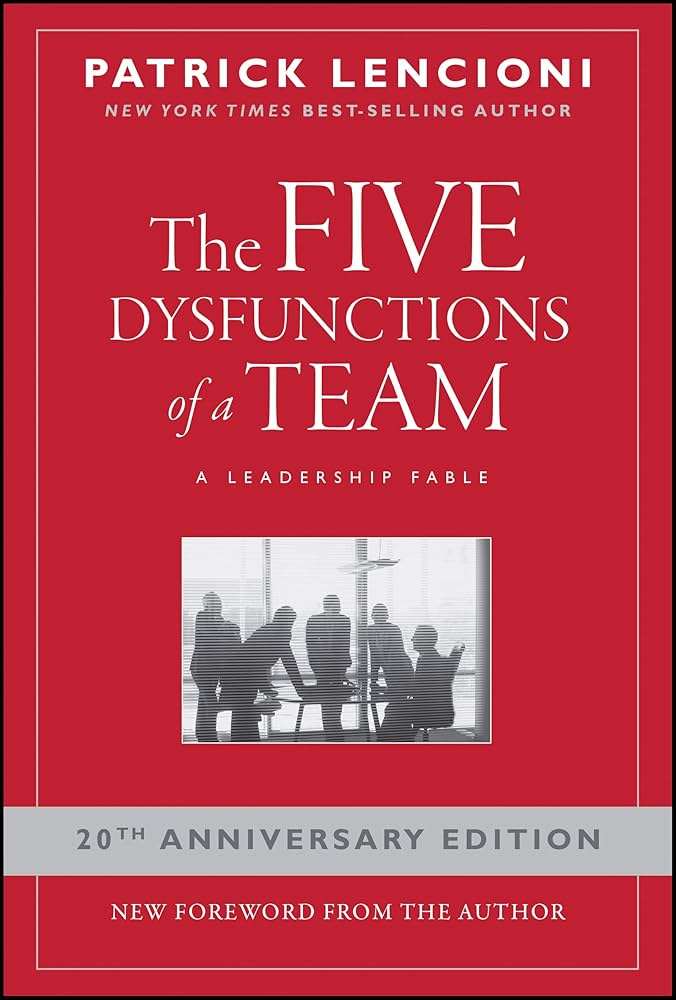
About The Five Dysfunctions of a Team: A Leadership Fable by Patrick Lencioni
The Five Dysfunctions of a Team isn’t your average book of business advice. Author Patrick Lencioni has crafted another excellent leadership fable to go along with his previous bestsellers, The Five Temptations of a CEO and The Four Obsessions of an Extraordinary Executive. In this book, Lencioni focuses his intellectual storytelling on the fascinating and complex world of team building. The Five Dysfunctions of a Team follows Kathryn Petersen, CEO of start-up Decision Tech, and how she handles a difficult leadership crisis: uniting her team when it begins to threaten the integrity of the whole company. Lencioni's gripping corporate tale serves as a timeless reminder that leadership requires as much courage as it does insight. Just as with his other books, Lencioni has written a captivating story with a simple message for all those who strive to be the best leader they can be.
Why Cydcor Reviews recommends this to future leaders:
Anyone who has had difficulty with leading and getting a group of co-workers to work together will find value in this book. The model that Lencioni lays out consists of five tiers that describe the five dysfunctions of a team. These include an absence of trust, a fear of conflict, a lack of commitment, an avoidance of accountability, and inattention to results. These are all dealt with accordingly and can open a leader’s eyes to some good ways to start making a difference. Although this is a fictional account of a leadership situation, it’s still possible to see yourself and your team in this business fable. Lencioni leads readers through the right steps to take and how to move a team from dysfunction to smooth operation. The examples are eye opening and will be useful to compare to your team’s last meeting.
Our favorite part:
The Five Dysfunctions of a Team offers practical advice as well as exercises that are easy to implement in any workplace team. Disagreements occur frequently while collaborating, but a leader needs to keep going no matter the problem to unite everyone. The story told in this book can help the reader visualize typical workplace dysfunctions while offering effective advice on how to overcome them.
The Five Dysfunctions of a Team seeks to identify and alleviate the problems that arise for many work teams. The success of a company depends greatly on how willing its leadership is to face issues head-on.

About Emotional Intelligence 2.0 by Travis Bradberry & Jean Greaves
Professionals are always on the lookout for new ways to be better co-workers, managers, and employees. Today’s world is fast-paced, and competition is fierce. The best and most effective tools allow others to manage, adapt, and get ahead of the pack.
One of these tools is emotional intelligence. Emotional intelligence allows a person to recognize their own emotions and differentiate between feelings and behavior. Your EQ (emotional quotient) is the foundation for a large number of soft skills that include flexibility, time management, trust, anger management, and change tolerance. Emotional Intelligence 2.0 delivers a step-by-step program for increasing their emotional quotient and enabling a person to achieve their fullest potential.
Why Cydcor Reviews recommends this to future leaders:
Emotional Intelligence 2.0 has a self-contained, step-by-step program to determine your current level of EQ, while also providing suggestions on how to improve it. You will learn what may be holding you back and which of the book's strategies can help increase your emotional intelligence the most. This is the kind of book you’re looking for if you need both diagnosis and treatment options. Bradberry and Greaves do an excellent job of helping readers discover their strengths and find strategies that work on their weaknesses. It also provides a quick online assessment that can help you see where you currently stand on emotional intelligence.
Our favorite part:
The step-by-step program for increasing emotional intelligence through four core skills can be quite valuable. These skills include self-awareness, self-management, social awareness, and relationship management. The book’s single purpose is to increase emotional intelligence, and this is the perfect place to start. The chapter “The Big Picture” explains what EQ is and what it is not, while also giving tips to manage stress and increase your tolerance for change. Emotional Intelligence 2.0 gives abundant and practical insights to ensure readers can follow along and improve their emotional intelligence skills.
Cydcor Reviews is a website dedicated to recommending business-related books to professionals and aspiring entrepreneurs. Learn more about Cydcor by checking out our page on Flickr.
About Pitch Anything: An Innovative Method for Presenting, Persuading, and Winning the Deal by Oren Klaff
Delivering an excellent pitch to potential sales clients doesn’t come naturally to everyone. Enter Pitch Anything author Oren Klaff, who knows a thing or two about making a sale. Over the past decade and more, Klaff has utilized his pitching method to raise more than $400 million. In Pitch Anything, Klaff describes his formula to help any business professional with any sale pitch.
According to Klaff, crafting and executing the perfect pitch isn’t art; it’s more centered on science. By applying the latest scientific findings and discussing real-life examples, Klaff describes how the brain makes decisions and responds to sales pitches. By learning how the method works and what you’ve been doing wrong, it’s much easier to understand how a successful pitch is done. Whether you're presenting to new investors, locking down some new business, or even negotiating for a higher salary, Pitch Anything has you covered when it comes to perfecting the pitch.
Why Cydcor Reviews recommends this to future leaders:
Learning the method of a successful pitch isn’t too difficult, but many people fail the first step: getting the attention of potential buyers or clients. Attention requires the combination of two things working together: desire and tension. Not only do you need the person to be interested in what you’re selling, but you also need them thinking that they would be lucky to have the product or service. Be sure to let the client know that you have the best service or product and that they would be missing out by not buying. You have to be passionate about what you are selling and get other people to be passionate about buying.
Pitch Anything has great insights on how the brain processes simple information and how to take advantage of this with clients. Klaff has done the required research to prove his points, while still bringing something new to the table.
Our favorite part:
The sales method that Klaff discuses in Pitch Anything is simple to understand and apply. The “STRONG” method of pitching can be put to use immediately by any business professional. The steps include setting the frame, telling the story, revealing the intrigue, offering the prize, nailing the hookpoint, and finally, getting a decision. Applying these tactics and strategies will help to engage and persuade the person you’re pitching to, and you'll find more agreement and support than you ever thought possible.
Cydcor is the market leader in outsourced sales. Learn more about Cydcor by visiting our profile on Flickr.
About Getting Things Done: The Art of Stress-Free Productivity by David Allen
What most people typically do to be productive does not work as well as it used to. In Getting Things Done, veteran coach and management consultant David Allen shares the best ways for people to figure out a system that works for them. His advice has helped thousands of people across the country since the book was first published in 2002. Allen's method isn’t difficult to understand: productivity is strongly tied to how well we can relax. The key to freeing up more time for leisure and bettering ourselves is to have a clear mind, unleashing our creative potential. Allen has created an excellent guide on taking the right steps to getting back on track.
Why Cydcor Reviews recommends this to future leaders:
Although it will take some discipline and determination to make real changes to productivity, Getting Things Done is a great starting point. From core principles to proven tricks, this book can transform the way a person does their job from day-to-day. It shows the best ways to pick up the pace without exhausting yourself. The more meaningful points of the book deal with reassessing goals, staying focused in new environments, planning projects the correct way, overcoming anxiety when overwhelmed, and positively accepting what is currently going on. This is an excellent read for business professionals looking for more control of their daily life, and it lays the groundwork for being an excellent leader.
Our favorite part:
If there’s anything to take away from Getting Things Done, it’s that every task, promise, or assignment has a place and a time. With everything organized in its own space, you feel more in control and can replace the time spent on anxiety with effective and timely effort. This in turn can lead to more accomplishments and growth as pressure starts to fall. Allen gives down-to-earth advice for anyone who wants to truly be more constructive. This book may not be for everyone, but many leaders can walk away with learning a few new things. Applying these rules can lead to a much more stress-free day.
Here's the latest book review from Cydcor, The Magic of Thinking Big.
About The Magic of Thinking Big by David J. Schwartz
Over four million readers have religiously taken notes on The Magic of Thinking Big. This book is a great starting point on how to achieve things most people want: financial security, power, influence, a dream job, a happy life. Dr. David J. Schwartz, an excellent expert on motivation, crafted this book to help anyone sell and manage better, earn more money, and—most important of all—find happiness.
First published in 1959, many of the suggestions to think big that Schwartz suggest are still great ideas 56 years later. Schwartz presents a carefully designed program for getting the most out of a professional career, romance, and family life, as well as the local community. You don’t need to be a genius to find great success and satisfaction—but you do need to learn and understand the habit of thinking and behaving in ways that can get you there.
Why Cydcor Reviews recommends this to future leaders:
The Magic of Thinking Big is arguably one of the best books ever written about the road to success. This is one of those books that you come back to again and again to find new inspiration. Success is most definitely determined by how we think and how we react to situations that occur in our lives. This is an excellent book for leaders due to its many chapters of encouragement, inspiration, and real life stories of people who made the decision to see things positively and had their lives change for the better. This book can teach leaders that in order to overcome fear or obstacles in life, a person must have an optimistic and confident attitude.
Our favorite part:
Throughout The Magic of Thinking Big, Schwartz lays out the steps that are required to acquire the secrets of success. He also describes three “diseases” that people can suffer from that lead to failure: excuse-itis, detail-itis and procrastination. This book can help build anyone’s confidence and mentality, while still inspiring them to think differently. In short, making smarter decisions and avoiding negativity are key to discovering the importance of thinking big in all facets of our lives.
Welcome to Cydcor Reviews, a website dedicated to recommending interesting and insightful books to business professionals wolrdwide.
About First, Break All the Rules: What the World’s Greatest Managers Do Differently by Marcus Buckingham and Curt W. Coffman
Managers come in all shapes and sizes, and everyone has their own style of doing things to reach their goals. No manager is the same as any other, but many managers share the same traits: the ability to break any past rules and try new ways of thinking to reach the results they want. Marcus Buckingham and Curt W. Coffman have put together a book based on a study by the Gallup Organization made up of 80,00 managers in 400 different companies. Their findings present an enormous, in-depth study of great management, including those who did well at turning employee talent into real performance.
The main point found in First, Break all the Rules is that the key to attracting and retaining the best employees is excellent management. This book explains how the best managers use the talent of employees to set the bar for skills and experience, create clear expectations, and motivate and develop people to their full potential.
Why Cydcor Reviews recommends this to future leaders:
Management is difficult to narrow down to a set of guidelines and best practices. Often, what works at one company doesn’t work everywhere else. This book presents a firm belief in an excellent principle of management that works: focus on the strengths of people to achieve the wanted results. Building a perfect team from scratch usually doesn't work because it’s difficult to find the right people for the right role. First-line managers are the key to an organization’s success. They are the vital link between company shareholders and employees. What separates a great manager from a mediocre manager is the ability to recognize and develop talented individuals right from the initial point of employment. Buckingham and Coffman do an excellent job of conveying their study’s findings in a way that is easy to understand but still insightful.
Our favorite part:
The essence of the data found in this book forms the four keys of great managers. These key points state that managers must find the correct match between talent and roles, turn talent into performance, concentrate on strengths and not on weaknesses, and assign roles to employees that give them the greatest chance of success. First, Break All the Rules also dives into the 12 questions that give organizations the information they need to attract, focus, and keep the most talented employees. The authors group these questions into various categories and explain why they are important to keep in mind.
About The Advantage: Why Organizational Health Trumps Everything Else In Business:
Who would have thought that the most unexploited opportunity in modern business was organizational health? Patrick Lencioni’s The Advantage is a daring proposal on why an organizational health focus can have a positive affect on your business. Lencioni’s writing style aids in making the case that businesses need to attack mixed messages within the organization while also cutting down on any dysfunctional politics. There are too many leaders today who still focus on looking for advantages in marketing, strategy, and technology. However, Lencioni is quick to point out that there is a potential gold mine that is in plain sight. Instead of trying to become smarter than the competition, Lencioni believes that leaders and organizations need to focus on becoming healthier. It’s important that they tap into the more-than-sufficient intelligence and expertise they already carry.
Why Cydcor Reviews recommends this to future leaders:
Lencioni argues that the key to success in any organization is to make sure it’s healthy. To express his point of view, he walks his readers through a process in which we can assess the health of our own organizations and take steps to improve it. When putting Lencioni's tips and exercises to use, any organization can see noteworthy progress in each of the key areas of health that he names. The majority of organizations today have more intelligence, experience, and knowledge than they need to be successful. The health of an organization is neither attention grabbing nor quantifiable, and that's probably the reason why more people aren’t taking advantage of it. However, improved health will not only create a competitive advantage and better bottom line, but it also can boost morale within the organization.
Our favorite part:
Lencioni introduces four basic steps to organizational health: building a unified leadership team, creating clarity, over-communicating the clarity, and reinforcing the clarity. Through examples of experiences he and others have faced, Lencioni addresses the behaviors that he looks for in a healthy organization. These include a cohesive team, solid peer-to-peer accountability, handling office politics and bureaucracy, and how organizations need to strive to improve people’s lives. With the right modifications, this model for organization business can have great value for leaders in any company, whatever its size.
Keep up with more blogs from Cydcor by following us on WordPress! Head over to http://cydcor.wordpress.com/ and keep a look out for new blogs weeks.
About Leaders Eat Last: Why Some Teams Pull Together and Others Don’t by Simon Sinek
The world today contains many people who do not feel fulfilled or valued in their job. Fortunately, there are many great leaders who are creating environments in which people naturally work together to do remarkable things. While traveling the world, Simon Sinek noticed that some teams have built a great deal of trust, so much that they would put their lives on the line for each other. He also noticed that great leaders sacrifice their own comfort—even their own survival, such as in the military—for the good of those in their care. Sinek illustrates his ideas with fascinating true stories, from the military to manufacturing, from government to investment banking. When it matters most, leaders who are willing to eat last are rewarded with deeply loyal colleagues. These are the people leaders should be looking for because they stop at nothing to look out for their leader’s, and company’s, vision.
Why Cydcor Reviews recommends this to future leaders:
Sinek explores the unique ability for leaders to work with others and make things happen. This book has the potential to reframe the way people look at business as a whole. The leader plays a service role in their group by protecting it from external threats while still nurturing it. Sinek also explores the emotions that are essential for leaders to connect with. To do this, the book serves as a scientific study on the chemistry that is necessary for good management. It’s a worthy guidebook to navigating the road to becoming a better leader.
Our favorite part:
Although it’s difficult to pick the most outstanding part, there are a few chapters that will stick with most people. In Chapter 8 (“The Ceramic Cup”) Sinek deeply explores the meaning of a speech that the Under Secretary of Defense gave regarding the perks of a rank you receive and that they are meant for the position and not the person. The final chapter, titled “Becoming a Leader,” gives a final bit of advice on getting the ball rolling to become an effective leader.
For our latest job openings, be sure to head over to Cydcor on CareerBuilder.
About In Search of Excellence: Lessons from America’s Best-Run Companies by Thomas J. Peters and Robert H. Waterman, Jr.
First published in 1982, In Search of Excellence is one of the best selling business books of all time, selling nearly 3 millions copies in its first four years. The book continues to be influential for business professionals and is considered a classic. In this book, Peters and Waterman, Jr. explore the science and art used by the management of some of the most successful companies of the 1980s. By examining how companies such as Boeing and The Walt Disney Co. were able to be innovative and excel, this book puts strategies that work for management in the forefront.
Why Cydcor Reviews recommends this to future leaders:
The book is an excellent recommendation for anyone in business management. Many people have called In Search of Excellence the most influential business book in the last 20 years. The bulk of the book focuses on 43 companies thought to be excellent at the time. Although this book was written more than thirty years ago, many of the points Peters and Waterman, Jr. make about excellent companies make are still relevant. Great companies struggle to remain on top over an extended period of time, but the excellent ones succeed. This is a good foundational read to build skills based on what it takes to be a company of excellence.
Our favorite part:
This book lays out the eight characteristics of excellent companies that readers can follow along with. These characteristics include a bias for action, close to the customer, autonomy and entrepreneurship, productivity through people, hands-on and values driven, stick to the knitting, simple form and lean staff, and simultaneous loose-tight properties. These eight characteristics are all still relevant today, and many companies still have difficulty implementing them. After the book was such a success, Peters went on to become a star in the field of management entertaining. This speaks volumes to how much of an effect this book had on subsequent business-oriented books.
About Competitive Advantages: Creating and Sustaining Superior Performance by Michael E. Porter
This book looks in-depth at the foundations of building a competitive advantage over the business competition. Competitive Advantage introduces a new way of thinking about what a company does. Porter shows how competitive advantage can be found through the efforts of the company, but also the efforts of the company’s customers. Competitive Advantage also provides the tools to build a strategy that works and set yourself apart from the opposition. Competitive Advantages has helped countless companies and business school students understand where competition comes from.
Why Cydcor Reviews recommends this book to future leaders:
A competitive advantage is the key to a company's performance in different markets. This is very important in today's global markets where companies must compete against others around the world. The book explains how a business can build and sustain a competitive advantage. In particular, the book bridges the gap that many companies have between creating a strategy and implementing it. The book is a critical read for leaders who play a part in their business’s strategy and for students studying strategic management.
Our favorite part:
The book highlights the need for every aspect of a company to play a role in creating a competitive advantage. Production, marketing, finance, human resources, and others all play essential roles for a business. Porter describes how a firm can put the three generic competitive strategies of leadership, differentiation, and focus into practice. Even if you're not a business-school-type, there is much value to find in this book. It'll also give you a useful framework for studying what your business is doing right and wrong, where it’s vulnerable, and how it relates to the rest of the market. This is key to really find a competitive advantage.

Since retiring from General Electric in 2001, Jack Welch has stayed busy. Welch led the company for forty years, challenging the competition and learning the best ways to run a large company successfully. With Winning, Welch has written the bible of business, examining the answers to the most difficult challenges people run into on the job and in their personal lives. Welch's words speak to people at every level of business, no matter the size of the company or the importance of the role. Welch's optimistic, no excuses, get-it-done mind-set keeps readers engaged. Winning offers deep insights and solutions to the problems that many people in business face today.
Why Cydcor Reviews recommends this book to future leaders:
Welch begins Winning with an introductory section called "Underneath It All," which describes his business philosophy. He explores the importance of values, candor, differentiation, and voice and dignity for all. Those interested in the human side of great leaders will find this last section especially appealing. In it, Welch answers the most interesting questions that he's received in the last several years while traveling the globe addressing audiences of executives and business school students. Perhaps the funniest question in this section comes at the very end, posed originally by a businessman in Frankfurt, who queried Welch on whether he thought he'd go to heaven (we won't give away the ending). Welch's down-to-earth writing style that helps you understand these timeless principles in a fresh way. As you're reading, you can almost picture him speaking the words in some business school auditorium or a Fortune 100 management retreat.
Our favorite part:
The bulk of Winning is devoted to real situations that many run into while working in business, and it’s split into three sections. The first section analyzes the company, from leadership to choosing employees who can make change happen. The second section looks outside at the competition, with chapters on different strategies that work. The final section of the book, arguably the most important, is about taking your career to the next level. This includes finding the perfect job and achieving a solid work-life balance.