
Found 0 posts

Management and leadership are two sides of the same coin, and both are necessary for a business to succeed. Learning the difference between management and leadership is important for developing effective management skills.
Great leadership is about inspiring enthusiasm and drive, while great management is about building highly efficient teams that produce impressive results. Managers are experts at getting things done and meeting targets and deadlines; leaders know how to evolve people and organizations and help them meet their potential. Each is a unique discipline that helps teams meet their short- and long-term goals, while also fostering commitment to a shared vision and outside the box thinking.
Management skills are concerned with assigning tasks, committing to deadlines, and creating systems, while leadership is focused on defining a purpose and uniting individuals behind big ideas. Managers ensure teams meet their deadlines and deliver what’s expected of them, while leaders focus on the future and how teams might prepare for challenges on the horizon. Management is about limiting risk, while leadership encourages bold action. Leadership is primarily about engagement, while management has more to do with execution. Management focuses on performance, while leadership focuses on development. Managers develop processes and create smooth operations, while leaders build relationships, encourage communication, and build trust. The most successful businesses are built with an ideal balance of management skills and leadership skills.
Scenario 1: Suzy Business Owner has promised a new client 2,000 flyers by the end of the month, but she recently lost two employees, and she knows it’s going to be a stretch. She creates a workflow document that helps remaining team members understand when they must complete their portion of the project, and she meets with each team member one-on-one to train them on the new system. By following the workflow correctly, the team is able to meet their deadline.
Is this an example of management or leadership?
Answer: Management
Suzy is faced with a short-term business challenge, and by managing her overstretched team correctly, she’s able to help them successfully achieve their goal.
On the other hand…
Suzy should be careful. Her team is being pushed beyond its limits. To continue her team’s successful streak, Suzy must also lead. She has to remind team members that accepting these kinds of challenges can help them transform the organization, leading to a more successful future for everyone involved.
Scenario 2:
Jim Entrepreneur is hoping to push his company to become the leader in its industry within the next five years. He knows it’s possible if everyone gets on board. He calls a team meeting where he presents his long-term vision and asks team members to imagine what it will feel like to someday be the best of the best. He hands out paper and crayons and asks everyone to draw a picture of one thing the company can start doing differently to help towards its goals. The team eagerly participates and many turn in more than one idea.
Is this an example of management or leadership?
Answer: Leadership
While Jim’s meeting may not produce any tangible results immediately, it serves to unite the team and get everyone excited about the company’s potential. His brainstorm encourages creativity, and it reminds each team member that his or her ideas matter. The meeting also helps inspire people to focus on the big picture rather than just short-term results.
On the other hand…
Jim has a talent for getting his team fired up, but this effect could fade if his team members start to notice that he’s all talk and no action. Jim will need to use his management skills to prove that he can translate ideas into tangible business systems.
Scenario 3:
Eric the Executive grows concerned when the company does not hit its goals for the quarter. He schedules one-on-one meetings with each member of his team to investigate the problem. One team member, who has struggled to meet his deadlines, says he’s been having trouble with the company’s current software, and he has been leaving work 10 minutes early every day to take a training class on another software he was hoping to pitch as a replacement. Eric tells the team member he’s sorry to hear the current software is challenging, but he asks the employee to consider dropping the class to allow him the extra time needed to finish his daily tasks. The employee agrees to focus on his work.
Is this an example of management or leadership?
Answer: Management
Eric is doing a great job using his management skills to monitor the bottom line and ensure his company is meeting its quarterly goals. He understands that every team member must be contributing 100 percent of what is expected of them if the company hopes to produce the results it has promised.
On the other hand…
While Eric has solved the problem in the short term, he may be missing longer term opportunities to help the company operate more efficiently. If he had found a way to help the team member stay in the class, Eric would have provided the employee with a chance to develop himself while also exploring a new software solution which might improve company operations far into the future.
Scenario 4:
Brenda the Boss has discovered that her team’s projects have consistently come in over budget, and the executive team has suggested that if Brenda can’t curb spending, they may have to reduce her department’s budget for next quarter. Brenda can think of a few ways she could reduce spending, but instead of implementing those ideas automatically, she decides to throw the problem to her team, asking them to brainstorm some solutions to cut costs.
Is this an example of management or leadership?
Answer: Leadership
By empowering her team to find solutions, Brenda encourages them to think outside the box and demonstrates confidence in their abilities to problem solve. She also shows that her priority is not implementing her ideas, but rather, finding the solutions that are best for the team.
On the other hand…
Brenda will still need to make sure the solutions her team comes up with will deliver as promised. If they cannot reach their cost cutting goals, the whole team will suffer under a slashed budget, so Brenda may have to nix more creative ideas if they don’t seem likely to reach the goal.
Every business needs both great management and bold leadership in order to achieve its goals. Vision without action is ineffectual, and efficiency without a purpose is a recipe for maintaining the status quo. Managers help businesses function like well-oiled machines, while leaders help organizations evolve and take giant leaps forward. Innovative companies can count on their managers to work out the kinks, lower costs, and increase volume, while well-managed companies benefit from the creativity, passion, and unity leaders inspire. Whether it’s achieved by one executive or a team of one hundred, the most successful companies will be those who recognize the difference between management and leadership see the two as complementary and inseparable parts of any thriving business.


Building great teams starts with great leadership. As a manager, your job is about more than just delivering results. Your team members depend on you to help them keep their eyes on the prize. They look to you for support, encouragement, and most of all, for the motivation to deliver more than what is expected of them. Your passion for the work will inspire theirs, and by helping your team stay energized, positive, and driven toward your shared goals, you can position yourself and your team members for unprecedented success.
1. Listen Up: It’s easy to make assumptions about what employees want and who they are, but to truly motivate your employees, you’ll have to start listening. Spend one-on-one time with each team member to learn more about their goals, dreams, and challenges. Take a pause before responding with your own ideas to ensure you’ve fully absorbed what they’ve told you.
2. Ask Questions: Ask team members questions to help figure out what motivates them and what is holding them back. Instead of telling them why they should care, help them discover for themselves what drives them.
3. Create a Positive Work Environment: It’s simple. Happy employees are motivated employees, and unhappy employees find it challenging to stay engaged. Examine the culture at your office, and ask yourself if you were a team member, would you feel supported and excited to come to work? If the answer is no, start brainstorming ways you might be able to change things. If you get stuck, enlist the help of your employees. The simple act of including them in the process may motivate employees to work even harder.
4. Take a Personalized Approach: One size does not fit all when it comes to motivation. Relate to your employees on an individual level and adjust your leadership approaches according to what works best for each of them.
5. Set High Expectations: It’s hard to feel motivated when your supervisor does not seem to believe in you and expects you to fail. Instead of focusing on what the employee is doing wrong, reassure your team member that you know he or she can blow it out of the water.
6. Earn their Trust: Employees need to believe you when you say you have their interests at heart. Managers who expect employees to work hard just because it makes them look good, quickly foster resentment that can infect and demotivate the whole team. Make it clear that you want them to succeed, not for your benefit, but for theirs.
7. Offer to Help: Setting clear expectations is great, but employees also like to know that their managers have their backs. Let employees know you’re there to support them in any way they need.
8. Focus on Growth: Studies have shown that money alone, is not an effective incentive to drive performance. While it may seem counterintuitive, employees are far more motivated by autonomy, mastery, and purpose. To get your employees charged up, talk about their hopes and dreams for the future, recognize their improvements, and rally around your purpose as an organization.
9. Check in Often: Motivation is not something you can set and forget. Let employees know you’re paying attention. Acknowledge progress, praise accomplishments, and help team members look for potential solutions to their challenges.
10. Be a Good Example: Wanting your team to perform is a no brainer, but are you leading by example? You can’t expect your employees to feel motivated if you’re not fully invested too. Give employees something to aspire to by maintaining a positive attitude and by constantly looking for ways to go above and beyond.
Remember that high-performing, motivated teams start with great leaders. Most employees want to do well. They just need good managers who can help them keep their eye on the things that matter. Following these simple steps can help fuel your team members’ drive to succeed.
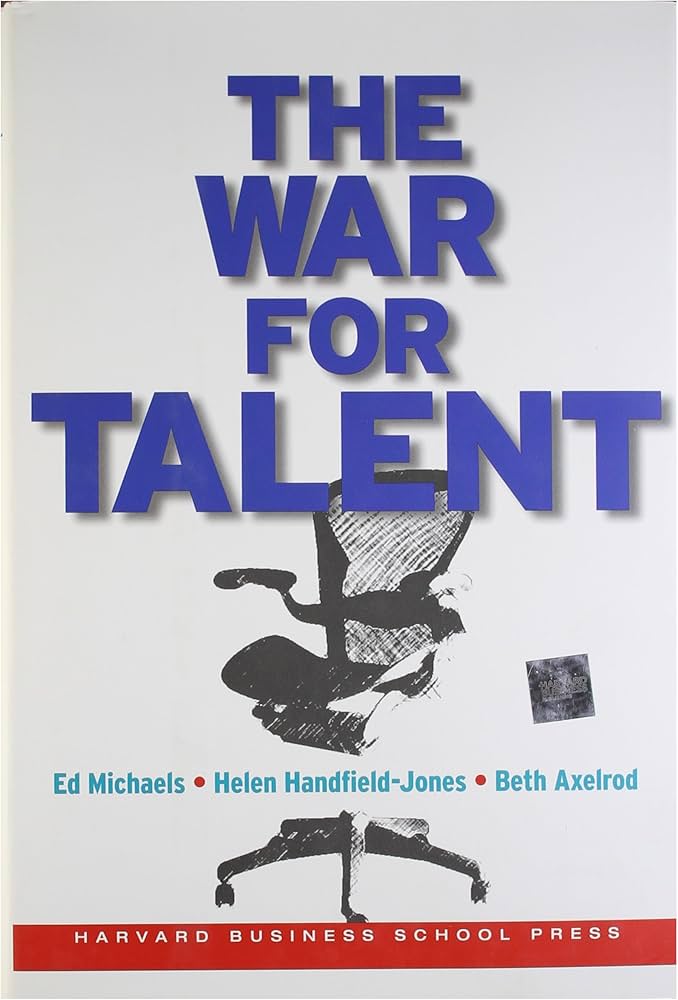
Title: The War for Talent
Author: Ed Michaels, Helen Handfield-Jones, and Beth Axelrod
Review by: Suzzanne Fleet
Description of this book: This book uses information from thousands of executives from dozens of companies on how to keep a high level of talent and performance from employees. Acquiring, retaining and developing talented individuals is essential for companies to succeed. It is important to pinpoint high performers and low performers, reward high performers, and move low performers out of the organization. The book talks about keeping a "talent mindset" that keeps recruiters and managers focused on developing talented employees. It is also important to bring in talent from other companies at multiple management levels. The book details how to design performance reviews for team members, as well as a recognition system. Authors also discuss how create incentives to make your company attractive to top level jobseekers. Cydcor works to develop our talented team of sales professionals, which is why we are frequently chosen as on of L.A. County's Best Place to Work
Why read this: Managers and recruiters alike will benefit from this book by refreshing the priorities of developing people within their organization. In an age where many employees bounce around in their career, fostering talent is an easy and important aspect of both retention and productivity.
My favorite part: There are some great case studies in the book that provide real life stories and philosophies. For example, Dee Hock, founder of Visa, tells the authors, “Without integrity, motivation is dangerous; without motivation, capacity is impotent; without capacity, understanding is limited; without understanding, knowledge is meaningless; without knowledge, experience is blind.”
About the reviewer: Suzzanne Fleet is the director of human resources at Cydcor, so managing talent is her area of expertise.