
Found 0 posts

What do CEOs John Paul DeJoria, Warren Buffet and Howard Schultz all have in common? They all cut their teeth in sales, and they have used that knowledge to help propel their success! A background in sales can provide you with invaluable skills, as you can see from the work histories of some of the top CEOs out there. Sales teaches tenacity, leadership, discipline, communication skills and so much more. All of the skills you learn in sales can help to fortify you as you move forward in your career path. People who work in sales learn how to persevere against the odds, inspire their teammates, stay on-task and truly listen to the needs of those around them. These top-performing CEOs put their background in sales to good use, and so can you!
John Paul DeJoria, cofounder and CEO of John Paul Mitchell Systems, is truly a self-made marvel. To help support his family at only nine years old, he began selling Christmas cards and newspapers with his older brother. In fact, this CEO’s work history is full of sales jobs early in his career. He worked as a door-to-door encyclopedia salesman as well as an insurance salesman. The job that got him started in hair care was in sales also. While selling Redken hair products door to door in the middle of a gas crisis, DeJoria was making only $600 a month! His tenacity paid off, however. He and his partner Paul Mitchell started John Paul Mitchell in 1980 with a loan of $700 while DeJoria was living in a 20-year-old Rolls Royce automobile. After a few rough years starting out, DeJoria’s sales background truly paid off. Today, Paul Mitchell products can be found on the shelves of over 150,000 salons.
“The biggest hurdle is rejection… When 10 doors are slammed in your face, go to door number 11 enthusiastically, with a smile on your face.” ―John Paul DeJoria
Warren Buffett is a name that is synonymous with success. Chairman and CEO of Berkshire Hathaway Inc. since 1970, Buffett is widely acknowledged as one of the most successful and wise investors of the modern era. As of June 2018, his net worth stands at $84 billion! This makes him the third wealthiest person in the world. Before all the attention, however, Buffett had an early background in sales. As a child he was inspired by a book he borrowed from the public library, One Thousand Ways to Make $1000, and he undertook one of his first business ventures selling chewing gum, Coca-Cola bottles and weekly magazines door-to-door. Other childhood ventures like working as a paperboy and selling a horse-racing tip sheet helped to inform Buffett’s first adult job after college, selling securities at Buffett-Falk & Co in the early 1950s. His sales background helped propel his career forward. With communication skills and business knowledge gained from sales, in less than 20 years Buffet became a CEO.
“The most important investment you can make is in yourself.” ―Warren Buffett

Howard Schultz, the CEO of Starbucks from 1986-2000 and again from 2008-2017, has his roots firmly set in the world of sales. This CEO’s work history starts after college with Xerox Corporation as a sales representative. There he learned the importance of listening to his clients and networking as well as how to lead. This job led him to become the general manager of Swedish drip coffee manufacturer Hammarplast. Schultz knew his product at the time exceptionally well―like any good salesman should! He became curious as to why one of his customers, a fledgling coffee-bean shop in Seattle called Starbucks, ordered so many plastic cone filters. He was incredibly impressed with the shop’s knowledge of coffee, so much so that he stayed in contact with them over the next year and eventually took a position as their Director of Marketing. During this time, he took a trip to Italy where he fell in love with the coffee shop culture and developed the aesthetic for which Starbucks would become known. He eventually left the marketing position to open his own coffee shop. Not long after, Starbucks management decided to switch focus and sell off their retail division to Schultz. Schultz aggressively grew the Starbucks empire to the over 28,000 international locations they boast today.
"I am convinced that most people can achieve their dreams and beyond if they have the determination to keep trying." ―Howard Schultz

As all of these CEOs’ work histories attest, a sales background can be beneficial no matter what industry you choose. To learn more about how a background in sales can accelerate your career―and for other professional advice―be sure to visit the Cydcor blog today.

What would have happened if Walt Disney gave up animation after being fired from one of his first jobs? What if J.K. Rowling let depression keep her from picking up a pen? What if Steven Spielberg let self-doubt stop him from making Jaws? While we’ve all heard the expression “overnight success,” but stories of instant fame and wealth are the exception, not the rule. More often than not, the most successful celebrities and entrepreneurs in the world endured at least one, if not a string, of setbacks, failures, and blows to their egos before hitting it big. Remarkably, they all kept at it, and went from failure to fame, achieving success beyond anyone’s expectations, even their own. Had they let those temporary roadblocks hold them back, however, they might have allowed those failures to define them. Most of us will fail at some point in our lives, and we’ll probably do it more than once. But, letting the occasional defeat stop you from pursuing your passion could mean denying yourself the opportunity to achieve more than you ever dreamed possible. Each of these, now famous, celebrities started out just like you.

It’s hard to imagine now that he’s one of the richest and most powerful entrepreneurs in the world, but those who met Gates right after his first company, Traf-O-Data failed in 1980, might not have been too impressed with his business acumen. The company, which he created while he was in his senior year of high school with business partner Paul Allen, seemed like a clever solution for gathering traffic-flow data, except for one problem, they didn’t have any customers. Gates and Allen got so caught up in the technology, they forgot to do any market research. Don’t feel too bad for Gates though, as of September 2017, the Microsoft Corporation cofounder is the richest person in the word, with an estimated net worth of $84.8 billion, according to Wikipedia.

He may be the father of the world’s most beloved animated mouse and the founder of what would grow into a multi-billion-dollar, mega-empire, but as a young cartoonist, not everyone could see his potential. In 1919, the Kansas City Star newspaper fired Disney because, according to his editor, he “lacked imagination and had no good ideas.” Lucky for Disney, his creative drought would eventually end, allowing him to go from failure to fame after coming up with a few good ideas that just happened to change entertainment forever, including Mickey Mouse, the multi-plane camera, and Disneyland. This one-time labeled, “creative dunce” also holds the record for most Academy Awards as a film producer.
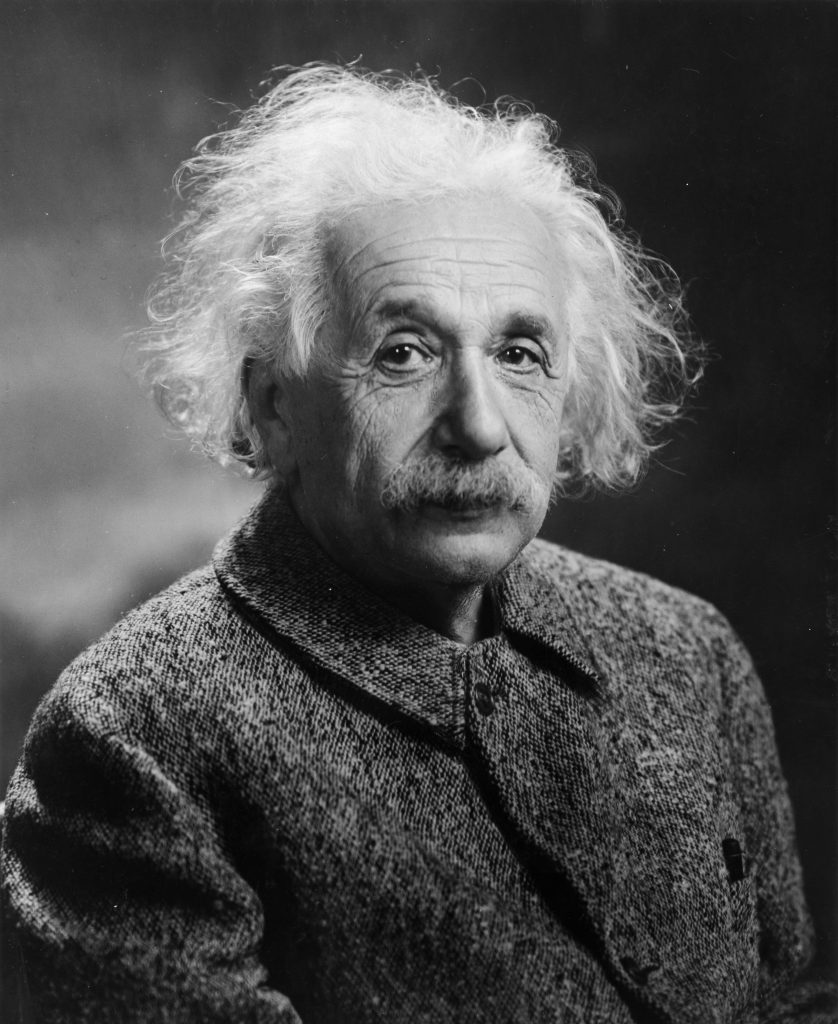
He might be the most recognizable and best-know scientific genius of all time, but as a child, Albert Einstein was so far behind developmentally, that teachers were concerned he might have been mentally disabled. The Nobel-prize-winning physicist didn’t speak until he was four years old and didn’t read until he was seven. He would later be expelled from one school and refused admittance to another one in the years before he took the physics world by storm.

She may be mom to the world’s favorite boy wizard, but before that, Rowling was a broke mom. Recently divorced, on welfare, and clinically depressed, she struggled for five years to complete the first Harry Potter book, writing while her new baby napped. The book was rejected twelve times before finding a publisher, and the rest is history. Fighting her way from failure to fame, today, J.K. Rowling is wealthiest author of all time, and one of the richest women in the world.

While women all over the world fantasize about their dream wedding, themselves picture-perfect in a designer, Vera Wang gown, Wang herself dreamed of representing the United States as part of the 1968 US Olympic figure-skating team. But, after years of intense training, she failed to make the team. Later, after serving 15 years as a senior editor at Vogue magazine, she was overlooked when it came time to name the magazine’s new editor-in-chief. It wasn’t until she was 40 years old that she began her designing career, and the rest is history. Today, Vera Wang’s brand is worth over $1 billion, and the average Vera Wang wedding gown can sell for upwards of $13,000.

Before becoming the master of suspense he is today, Stephen King had more than a little trouble getting his writing career off the ground. A few publishers apparently thought Kings first novel, Carrie, wasn’t up to par – 30 to be exact. King got so fed up with the constant string of rejections that he threw the manuscript for Carrie in the trash. Lucky for horror fans around the world, King’s wife, confident in her husband’s talent, retrieved the book and encouraged him to keep going. Eventually, the writer would discover that one or two people were actually interested in what he had to say; King has published more than 50 novels and has sold more than 350 million copies of his books. His work has also been transformed into dozens of award winning movies and series including The Shining, The Shawshank Redemption, Misery, and the story he, himself, once trashed, Carrie.

Jaws. E.T. Close Encounters of the Third Kind. Jurassic Park. They’re probably some of your favorites, and you’re not alone. Steven Spielberg’s movies include some of the highest grossing blockbusters of all time. In fact, he is said to have invented the concept of summer blockbuster with the release of Jaws, for the first time, creating the kind of fan fervor, and lines around the block, we often see today. He’s won multiple academy awards, and he is possibly the most recognizable film director in the world. As a young, aspiring director and film student, however, Spielberg was rejected from USC’s top-ranked film school three times, because of his mediocre grades. Don’t feel too bad for poor Steven though, the school would eventually award him an honorary degree in 1994, after making some generous donations, that most likely didn’t put a dent in his $3 billion estimated net worth.
The next time someone tells you to give up, calls you untalented, or rejects your idea, remember you know best what you are capable of. Take your failures in stride and realize that each one is just bringing you one step closer to your destiny. You can become your own success story. Don’t give up on you dreams, Instead, use those naysayers to fuel your desire to persevere and make your dreams a reality. Give it everything you’ve got, and remember that today you might feel like a failure, but the only way you truly fail is by giving up. Brush yourself off, stay committed, and live to fight another day, and you might be surprised what you can achieve.

Here is Cydcor's review of The Personal MBA: Master the Art of Business by Josh Kaufman.
About The Personal MBA: This is a pocket version of what you would learn in business school. Getting an MBA is a big commitment of both time and money. One book can’t replace an education, but The Personal MBA provides tools and resources to get you in the right direction to become a successful business leader. Josh Kaufman founded PersonalMBA.com as an alternative to the business school boondoggle. His blog has introduced hundreds of thousands of readers to the best business books and most powerful business concepts of all time. Now, he shares the essentials of entrepreneurship, marketing, sales, negotiation, operations, productivity, systems design, and much more, in one comprehensive volume. The book argues that true leadership comes from self-driven individuals and not from school.
Cydcor recommends this book to future leaders because: It explains the big concepts of navigating both the corporate world and the path of entrepreneurship. These concepts include The Iron Law of The Market (being limited to the size of your market and how to identify large, unsaturated ones), The 12 Forms of Value (many ways to create value for customers), The Pricing Uncertainty Principle (knowing how to support charging more), and 4 Methods to Increase Revenue (the ways in which you can earn more money for your business). The book covers the nuts and bolts of running a company, large or small.
Our favorite part: Kaufman provides a long list of examples of people who did not need an MBA to succeed in business. Quotes from prominent businessmen to motivate you is also a great help, and when you want more information, the book also contains a list of the “99 Best Business Books” for further learning.
Cydcor is the global leader in outsourced sales. Follow Cydcor today for more information on careers, sales and other business information.
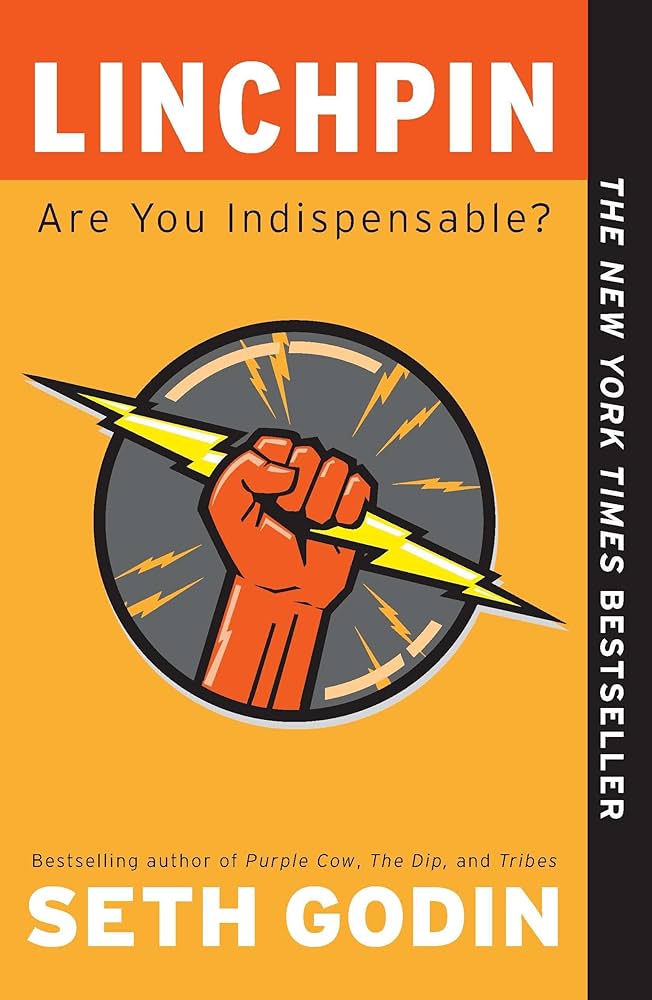
This week, the Cydcor team highlights another Seth Godin treasure, Linchpin. For more Seth Godin wisdom, see our Cydcor review on Permission Marketing.
Description of this book: Linchpin was written by marketing expert Seth Godin, who believes that finding career success today depends on learning how to market one’s self. Linchpins are an upcoming role in the world of tech, start-ups and the age of entrepreneurship. The linchpins are those that come up with new solutions, break the mold, and foster creativity in companies. Linchpin is about learning how to break out of the systemic roles traditionally in the workplace and implement new ideas where you work. Often, the linchpins are the indispensable people in the background, empowering others, but staying out of the spotlight. They often have a less specific role in the company, but rather focus on specific needs as the work scape morphs and changes. Godin believes everyone has something brilliant to offer, and being able to harness that brilliance and bring it to the workplace can equal success and happiness.
Cydcor recommends this book to professionals because: Godin has written many bestselling books on how marketing works and how companies behave, this book is specifically how to manage your career and create success and satisfaction at work. Godin explains that everyone must strive to be a linchpin, to become indispensable, or suffer. The job markets today are focused on efficiency and creativity, so only those making the most impact will get ahead.
Our favorite part: “There are no longer any great jobs where people tell you exactly what to do”. Godin highlights the importance of taking initiative, learning to work autonomously and bridging those gaps between being managed and over-managing. Flexibility and motivation are the new keys to success.
Do you like our reviews? Follow Cydcor on Pinterest or other popular social media platforms for more inspiration and leadership advice.