
Found 0 posts
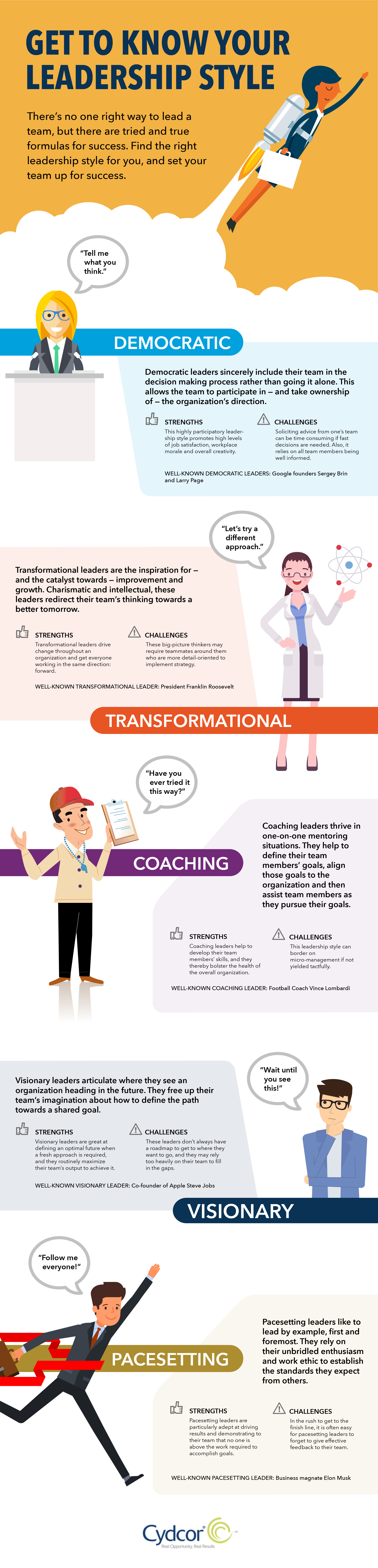
There’s no one right way to lead a team, but there are tried and true formulas for success. As you grow in your career, you’ll get more and more experience leading people. An understanding of different well-known and proven types of leadership can help you find the right path that resonates for you. Find the right leadership style for you, and set your team up for success.
Democratic Leadership Style
Democratic leaders strive to sincerely include their team in the decision making process rather than going it alone. This type of leadership allows the whole team to participate in―and take ownership of―the organization’s direction. This highly participatory style promotes high levels of job satisfaction, workplace morale and creativity. Everyone feels connected to the overall health and well-being of the organization. However, just like any leadership style, it does have its drawbacks. Soliciting advice from one’s team can be time consuming if decisions are needed quickly. Also, it relies on all team members being well informed. Democratic leaders need to strike a balance within their team of both decisive action and rich participation.
Transformational Leadership Style
Transformational leaders work with their team to implement improvement and growth. Charismatic and intellectual, these leaders redirect their team’s thinking towards a better tomorrow. The transformational leader solicits input from her team to identify what areas of the organization require change, creates the vision to guide that change, and then works with her team to execute the redirection. These big-picture thinkers may require teammates around them who are more detail-oriented to implement processes, and they need to develop strategies for soliciting their teammates’ assistance.
Coaching Leadership Style
Coaching leaders thrive in one-on-one mentoring situations. They help to define their team members’ goals, align those goals to the organization and then assist team members as they pursue their goals. The coaching style of leadership can be thought of as a sort of win-win relationship between the leader and her teammates. Coaching leaders help their team members to develop professionally, and they also thereby bolster the health of the overall organization. However, it can be easy to go overboard with this type of leadership and engage in behaviors that border on micromanagement. Coaching leaders need to yield their influence tactfully.
Visionary Leadership Style
Visionary leaders articulate where they see an organization heading in the future. They craft compelling―and often unheard-of―visions of what an organization can become. This style of leadership acts to inspire the team towards a shared goal. The internal drive they spark in their team members frees up creativity, and that freedom allows all the team members to delve into innovative strategies on how to get from Point A to Point B. However, visionary leaders need to keep in close contact with their team and stay involved in the team’s progression. Such an approach keeps everyone grounded as they strive towards the future.
Pacesetting Leadership Style
Pacesetting leaders like to lead by example, first and foremost. They rely on their unbridled enthusiasm and work ethic to establish the standards they expect from others. They are the roll-up-the-sleeves-and-get-dirty types. Pacesetting leaders are particularly adept at driving results, because they set the bar so high. They demonstrate to their team that no one is above the work required to accomplish goals. Pacesetting leaders should be cautious, however, and strive not to become single-minded. Narrowing one’s vision down to a single goal―or several―can mean that effective feedback and mentoring get neglected. Pacesetting leaders need to check in with their team members or a regular basis.
It is likely that you recognize one or more of these types of leadership in your own style. It’s rare that any one individual engenders just one leadership style. Explore which styles resonate with you. By cultivating a dynamic leadership style that encompasses a number of different approaches, you can find the right tools within yourself to tackle even the largest challenges.

Leadership is a popular topic in business, which means leadership myths abound. After all, a company cannot survive for very long without strong, consistent, visionary leadership providing direction to the team. Good leaders affect everything from big-picture growth to the daily details of operations. So, what constitutes good leadership? You may be surprised to learn that conventional thinking has shifted in the office environment. The following outmoded leadership mantras are counterproductive to building an effective, cohesive team. Being aware of these team-leading myths—and correcting them—can have considerable impact on your bottom line over time. How many of these leadership myths are still accepted as fact at your company?
Leadership Myth #1: A Leader Directs
While this statement is true to a certain degree, it’s just the tip of the iceberg. This team-leading myth evokes the distant, hands-off approach that is increasingly seen as out of touch by the workforce of today. To define effective, well-rounded leadership, the sentence should read: A leader directs by encouraging active communication and engaging employees in coming up with solutions.
Leadership Myth #2: Strong Leaders Must Always Be Right
Being able to admit when you’re wrong shows those around you that you are not unreasonably rigid and are able to adjust your views when new information becomes available. Mistakes are part of the journey, and good leaders grow into great leaders by acknowledging mistakes and improving because of them. Infallibility is not a quality that defines effective leadership.
Leadership Myth #3: Winning Leaders Motivate Through Fear
Using intimidation as a means for obtaining results is one of the fastest ways to lose the engagement of your staff. While you may have their full attention while you’re wildly gesticulating, issuing ultimatums, or otherwise creating emotional mayhem in the office, what you’re really doing is undermining your own authority by losing your employees’ respect. Instead, lead by example, with empathy.
Leadership Myth #4: Natural Leaders Command Attention
This leadership myth presupposes that leaders must be in the spotlight—getting or seeking attention—to operate effectively. In fact, effective leadership recognizes that the spotlight is best and most valuable when shared. Attention should naturally shift to various members of a well-balanced team as circumstances dictate to give each team member their moment to shine and have a unique impact on results.
Leadership Myth #5: True Leaders Are Extroverts
This fallacy incorrectly assumes that only extroverts can be natural leaders. Some of the top names in tech, such as Bill Gates, Marissa Mayer, and Elon Musk (admitted introverts all), shoot that team-leading myth right out of orbit.
Leadership Myth #6: Legitimate Leaders Have a Certain Position or Job Title
Leadership is an attitude, not a specific position. Employees at any level within an organization can demonstrate leadership, and their efforts to provide guidance to their teams should be valued. The best, most effective companies help employees hone and grow those skills to turn budding leaders into the results-driving executives of tomorrow.
Want to be a more effective leader? Start by rejecting false assumptions about the true meaning of leadership. Everyone wins when leaders encourage, challenge, and acknowledge their team in the effort to motivate them to be the best they can be. Effective leaders seek balance, learning from and admitting their mistakes. They work hard while also delegating wisely, and they lead by example. So, what are you waiting for? The most important trait of an effective leader is the willingness to step up and try.
By Gary Polson, Chairman and CEO | Cydcor
1. Take Control
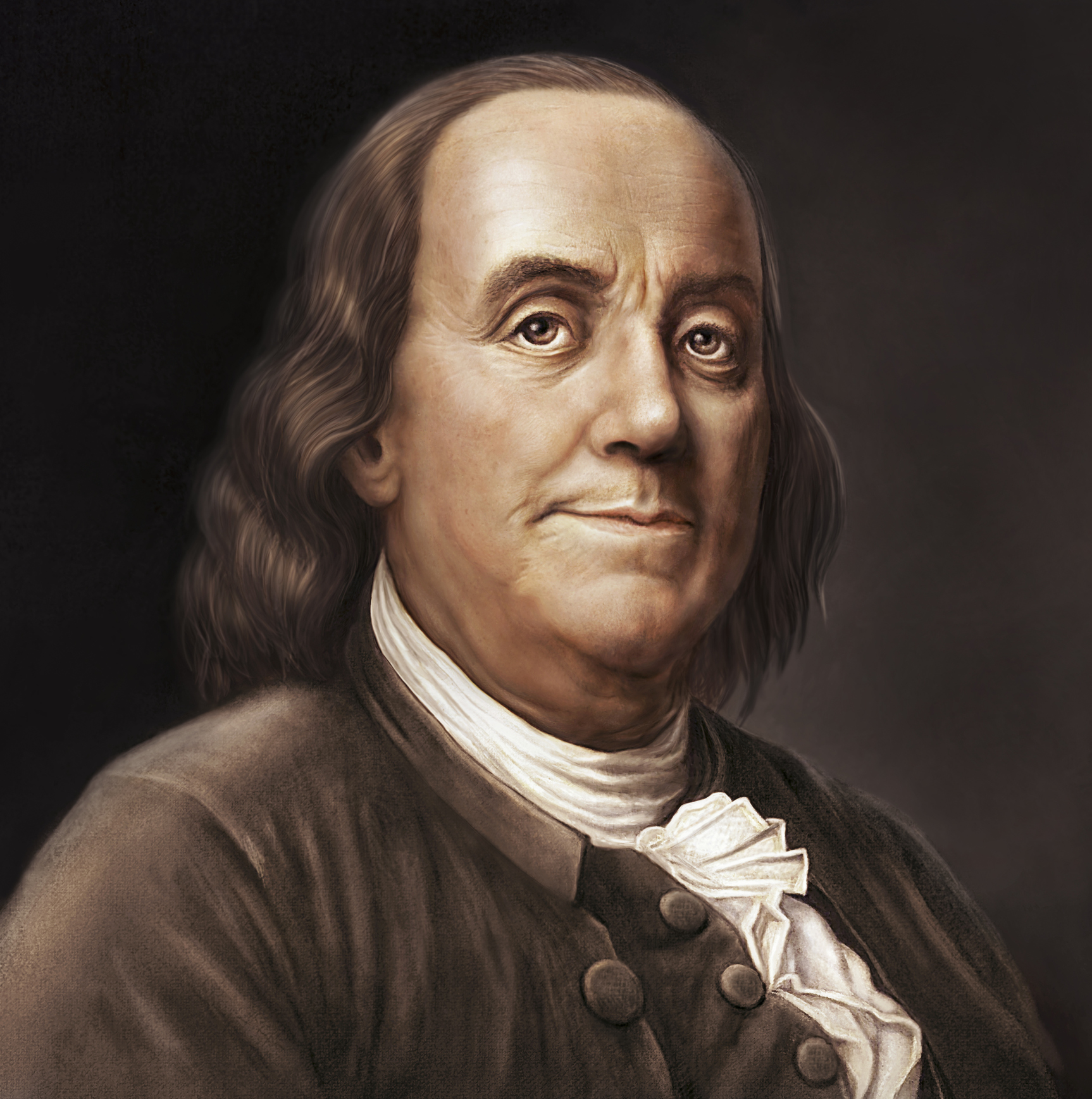
Whenever I have struggled, made excuses, wanted something, or quit something, my Mom would tell me, “God helps them who help themselves.” Benjamin Franklin’s famous words teach us that we all control our destiny. A related Franklin quote is, “He that is good at making excuses is seldom good for anything else.”
2. Be Prepared
“By failing to prepare, you are preparing to fail.” This is truly a lesson to live by from Benjamin Franklin. In every endeavor, the more I prepare, the better I do. I even use the Franklin Covey planning system.
3. Maintain a Student Mentality
“An investment in knowledge pays the best interest.” Franklin’s focus on self-development is a major theme in his autobiography. It inspired me when I read it in college. It taught me the leadership lesson that you can learn anything in business if you have the right student mentality.
4. Be a Doer
“Well done is better than well said.” As a great businessman, statesman, scientist, and philanthropist, Franklin did a lot.
5. Work Hard and Stay the Course
“Energy and persistence conquer all things.” Without either of these qualities, there is no success.

Gary Polson is Chief Executive Officer and Chairman at Cydcor, the market leader in outsourced sales. With more than 25 years of business operations experience in accounting, legal and senior management, Gary has propelled Cydcor to unprecedented achievement with clients, culture and philanthropy since 2001. Under his leadership, Cydcor has increased its revenue more than six-fold since 2001 and has been recognized as “…the most respected sales outsourcing company in the world” by Datamonitor and The Black Book of Outsourcing, and one of the “Best Places to Work” by the Los Angeles Business Journal for eight consecutive years. Gary’s passion for excellence and never-satisfied approach has led Cydcor to earn both industry and employer recognition. With Gary at its helm, Cydcor has built its reputation on maintaining long term relationships with clients by consistently delivering results and by going above and beyond to help Cydcor’s clients gain market share and grow.