
Found 0 posts
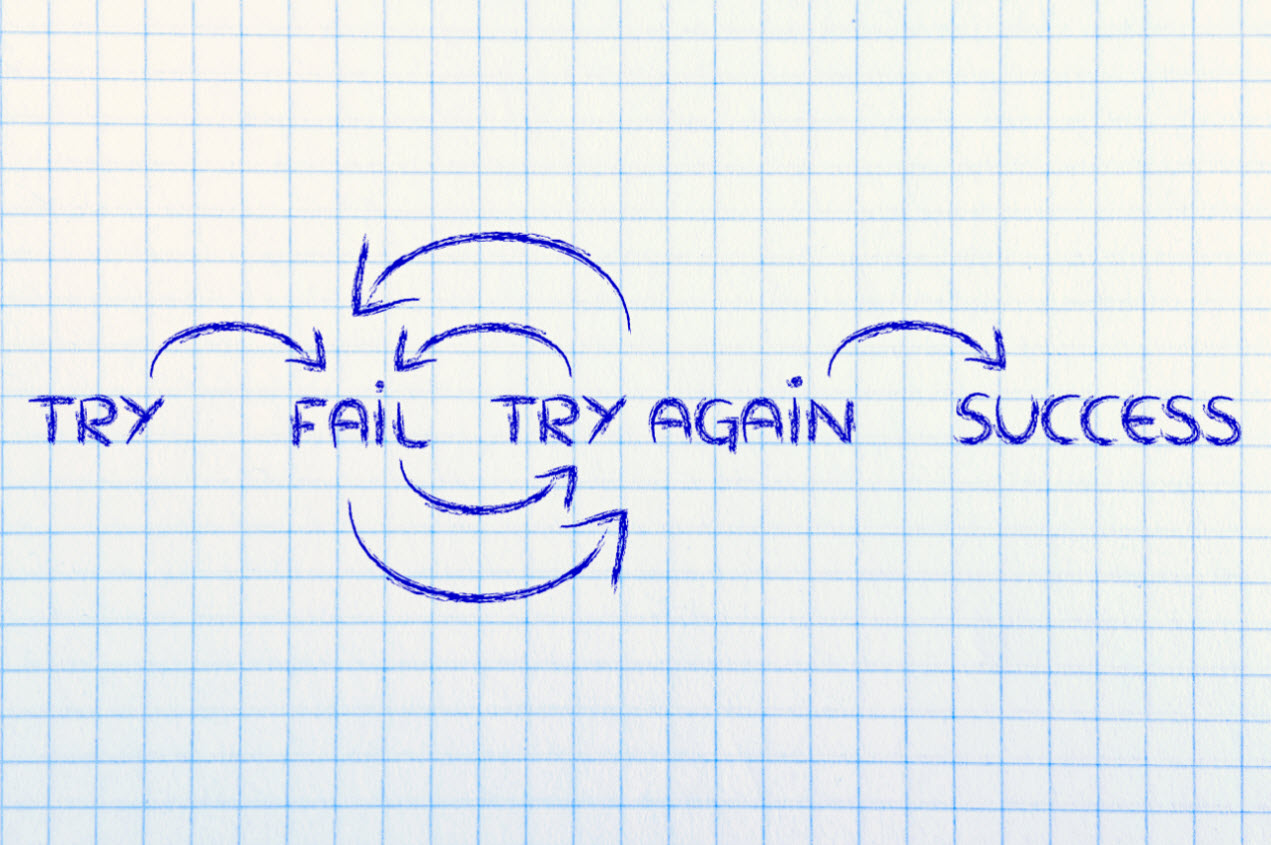
“Only those who dare to fail greatly can ever achieve greatly.” - Robert F. Kennedy
Growing up, we learned that all failures are bad. So when we did fail, it hung over our heads as an unpleasant reminder of what happens when we try something new. But failure can be good when we learn from it, and embracing the “fail fast and fail often” mentality, which focuses on risk-taking and innovation, can turn one step backward into two steps forward. Failure is a powerful teacher. It shows us what doesn’t work, so we can more quickly find our way to what does. Failing in sales and business can often be an effective and even necessary route to mastering the art of the pitch and closing more deals.
Learning from failure is a powerful skill that takes confidence in our abilities and strength to admit fault. Here are some strategies to turn a setback into a comeback:
Don’t Worry About What You Can’t Control
You can’t change what’s out of your control, and worrying about it will only make things worse. Take stock of what you can control, such as your planning and skillset, and use it to re-evaluate your process to prepare for a better outcome.
Own it
Everybody fails. Own it and forgive yourself, then learn from it and turn this negative into a positive. The best thing to do is to be honest with yourself and set your mind on improving, and the only way you can truly do that is taking responsibility for the missed opportunity.
Revise the Plan
Before you set out, what was your plan? Often times, the cause of failure is a simple oversight or misplaced effort in the planning phase. Focus on everything that happened before the failure and see what can be changed; there may be one or two things you could’ve done that’ll seem obvious with hindsight.
Seek an Outside Perspective
Sometimes we’re unable to see the cause of our failure because we lived it. An outside perspective from someone you trust, such as a mentor who is in a better position to see where things went wrong, might provide helpful guidance. Be open and honest with them about your failure; it’ll make you feel better to talk about it, and your mentor will respect you for seeking honest feedback and learning from it.
Believe in Yourself
Something went wrong, so trust yourself to make it right. It’s too easy to dwell on failure and beat ourselves into submission. A failure doesn’t make you a failure if you learn from it. Believe in your abilities and your strength to move forward because you will get better. Take risks. Expand your comfort zone. One day, you’ll look back on this and be glad it happened because it made you realize your true potential.
Try Again
The worst thing to do after a failure is stop trying. Failure can be a gift when it provides insights that help you perform better on the next attempt. When you give up, you waste that valuable information. Learn, grow, and keep moving, and this time you might just win big. There’s only one way to find out.
Setbacks are stressful, and can keep us from chasing our goals if we let them, but the courage to own it and learn from failure helps us pivot onto stronger ground for new opportunities. Millionaires and celebrities are no strangers to this; they’ve all experienced failure. Can you imagine if Steven Spielberg quit making movies after being rejected from film school? The most important thing to do after a failure is to learn from it and try again.
With the help of these strategies, your feelings of failure will subside and you’ll become even more confident in reaching your goals.

The following is a review by a Cydcor employee of How Will You Measure Your Life? by Clayton Christensen!
About How Will You Measure Your Life?
From the world’s leading thinker on innovation and New York Times bestselling author of The Innovator’s Dilemma, Clayton Christensen, comes an unconventional book of inspiration and wisdom for achieving a fulfilling life.
Christensen’s The Innovator’s Dilemma, notably the only business book that Apple’s Steve Jobs said “deeply influenced” him, is widely recognized as one of the most significant business books ever published. Christensen’s How Will You Measure Your Life is with a book of lucid observations and penetrating insights designed to help any reader—student or teacher, mid-career professional or retiree, parent or child—forge their own paths to fulfillment.
Why Cydcor recommends this book to future leaders: Christensen is known as a deep thinker, as well as a thoughtful writer, and his traits of deep integrity, thought and consideration comes through How Will You Measure Your Life. His main aim is to find the purpose and happiness in your life, which any individual can relate to. He examines how businesses thrive and fail and can also be resurrected, as an example of life lessons for personal lives.
Our favorite part:
Christensen offers three keys to success:
Whether you are looking for happiness in work, family or relationships, Christensen speaks to where challenges, not rewards, offer greater pleasure in our lives. Work, recognition and responsibility tends to increase our satisfaction in a job position, and while ‘rewards’ such as benefits, vacation and money merely reduce dissatisfactions.
This book is not a “self-help” book, but a book for people wanting to think about how to help themselves, and Christensen provides excellent resources and tools to become the best you can be.
For additional information regarding Cydcor, head to our Facebook page!
About Zero to One: In this #1 New York Times bestseller, Peter Thiel speaks of the great secret of our time: that there are still uncharted frontiers to explore and new inventions to create. In Zero to One, Thiel shows readers how they can find singular ways to create those new things.
Thiel begins with the contrarian premise that we live in an age of technological stagnation, even if we’re too distracted by television, computers and mobile devices to notice. Information technology has improved rapidly, but there is no reason why progress should be limited to computers or Silicon Valley. Progress can be achieved in any industry or area of business. It comes from the most important skill that every leader must master: learning to think for yourself.
For additional information about Cydcor, check out our profile on CrunchBase!
Why Cydcor recommends it to future leaders: At its core, Zero to One is a refreshing intellectual exploration into motives behind entrepreneurship. It makes the reader ask the hard questions, which if one wishes to be in business or become an entrepreneur, are critical for being honest and prepared for the industry.
Our favorite part: Thiel suggests that the entrepreneurs who stuck with Silicon Valley learned four big lessons from the dot-com crash that still guide business thinking today:
1. Make incremental advances.
2. Stay lean and flexible.
3. Improve on the competition.
4. Focus on products, not sales.
"These lessons have become dogma in the start-up world; those who ignore them are presumed to invite the justified doom visited upon technology in the great crash of 2000. And yet the opposite principles are probably more correct."