
Found 0 posts

There are only so many hours in a day, and you only have so many resources at your command. Luckily, there are a number of productivity tips you can embrace in order to get more done. Learn how to save time, increase productivity, and take control of your day. Incorporating these five productivity hacks into your routine can make all the difference in achieving your goals.
It’s fairly common knowledge that it is vital to create long term goals for yourself, to give yourself something to strive for. What you may not have considered is that giving yourself a deadline to work against can actually improve productivity! If there is an end date you need to have a project completed by, it’s much harder for you to procrastinate.
To get an early jump on your day, start planning for it the evening before. You should examine your schedule for the upcoming day to start planning out how you are going to organize work hours. Do all of your appointments make sense as they are scheduled? Do you have any materials you need to review ahead of time?
Set aside blocks of time to make phone calls or to complete tasks between meetings. Once you have the general shape of your day mapped out, write out your to-do list for the day. Capture all the important tasks that you want to complete the next day and rank them by level of priority. Choose your outfit and set it aside. You may even want to take 15 minutes and make your lunch ahead of time. That way you can get up and go immediately without any lost time.
It’s easy to get caught up in the mentality of working wherever and whenever you can manage to. Time management and being productive when you're working from home is just as important as workplace productivity. While a stop at the coffee shop to knock out a few items on the to-do list may be helpful, it’s important for you to make your home workspace your own.
Start by decluttering your space. A space free of clutter sets the appropriate mental tone to maintain your focus. This should also help to minimize distractions that may take you off task. Consider using a program to block social media and other websites where you like to spend personal time. It can be really easy to get lost in your friends’ vacation pictures when you should be taking care of business.
The first thing many of us do when we wake up is check our email. Don’t! Break yourself of this time draining habit. Stay on top of your correspondence, yes, but don’t let it dictate your schedule. Part of learning how to increase productivity is to taking control of your time. Set aside a predetermined amount of time early in the day to address emails. Start with the most critical ones, and work downwards by level of importance. If you don’t get to a lower priority email during your allotted time, it can wait until later in the day after you have completed your most crucial tasks.
You may be tempted to go full force without stopping to achieve your daily goals. However, in order to be more productive overall, MIT Senior Lecturer Bob Pozen suggests that a bit of a break allows your brain the opportunity to take advantage of one of our body’s built-in productivity hacks. That time lets your brain switch modes so it can actually process and organize all the information that has been flowing through it.
Try setting aside a period of time once a week for to conduct a review of all of your activity from the previous week. This can give you the opportunity to clean up any lingering action items, get up to date on your progress towards your goals, and gives you some time to think creatively about how you want to invest your energy going forward. Giving yourself space to breathe and collect yourself is an important step in learning how to increase productivity in a sustainable manner.
In order to truly master your life and your time, it’s important to stay focused on what you need to do and how you need to do it. These productivity hacks will help you master your own potential and stay in the present moment. Practice them every day, and soon you will be unstoppable!

Cydcor recently wrote on Life Hacks for Left-Brain Thinkers, but what about those of us who identify as “right-brain” thinkers? People who excel in creative arts, love to experiment and tinker and learn better when things are explained visually are considered “right-brain” dominant. However, along with these positive attributes, right brain dominant individual are often thought to be easily distracted and unorganized.
Being a visual-spatial learner means your brain learns best through visual clues and observation. Long, complicated mathematical problems or block-text can often cause right-brained individuals to tune out.
Cydcor is hiring! Head over to the Cydcor CareerBuilder page for our latest job openings.
Right-brain dominant people often like to work in groups, but it’s also good to give your left brain some exercise as well. To do so, encourage yourself to work alone whenever possible. While team tasks can be great creative opportunities, it’s also important to learn how to be able to tap into your left-brain by giving yourself some quiet space to focus on the task at hand.
Visual-spatial learners don’t do well under pressure. Give yourself as much time as possible to finish a project, and avoid procrastination by scheduling this time and ensuring ample opportunity to get things done without time pressure setting in.
Encourage yourself to draw webs and links while taking down notes, rather than writing things in a more linear fashion. Draw pictures if it helps illustrate a point—even something as a simple doodle can reinforce the information.
Managers can assist right-brain thinker by showing the whole picture for facts that need to be memorized, versus just handing out a document for them to read and memorize. Visual supports such as pictures and maps help with ideas and facts. In addition to providing information verbally, use colors, charts and other visual aids to help them commit information you need to know by memory.
Learn more about Cydcor at our profile on Hoover's.
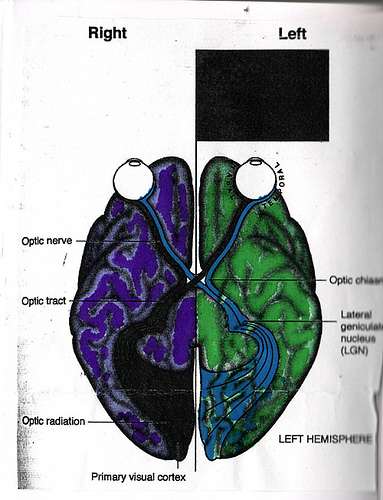
Those who identify as “left-brain” thinkers tend to be more on the analytic and logical side of the spectrum of thought. Law, finance, engineering and the sciences are some of the many industries that those analytical types tend to fall into. But in an age of innovation, those more systematic thinkers might need a kick-start for creativity to keep up. While there are distinct verbal and analytic styles of thinking associated with different hemispheres of the brain, that doesn’t mean that they aren’t able to delve into more creative areas.
Unfortunately, a large portion of the population believes left-brain thinkers struggle with creativity or aren’t able to generate new ideas. While one might become set in a pattern, it is still possible to break out of this limited method of thinking.
For more information about Cydcor, be sure to follow us on Instagram here: http://instagram.com/cydcor.
Author Daniel Coyle’s book The Talent Code describes in detail what physically happens to the brain when someone develops a new skill. In order to properly build up your brain to receive and keep new thought processes, knowledge and skills, Coyle calls for a need of what he names deep practice, which is exactly what it sounds like: practice. Learning and performing a new action involves firing an electrical signal through a neural pathway. Every time this happens, it thickens the myelin sheath that surrounds nerve fibers. The thicker the myelin sheath around the neural pathway, the more easily and effectively we use it.
What are ways we can “hack” our right-side brain and begin to let it out of the box? Some tips to start thinking creatively are simple:
Sign your name in the way you’ve developed, then re-sign it—backwards. Just the mere motion of attempting to break out of what you would normally do fires the right brain hemisphere. Try signing your name in different writing styles. Upside down. In a spiral. In loops. Repeat this until you are able to sign in all different designs and directions.
The right hemisphere aids in your ability to move in an unfamiliar way—such as dance. Just as we must take steps to learn new moves—a yoga position, a straighter posture, or running style—our brains must use a similar process to learn how to think differently.
Begin the art of deep practice by conquering any unaccustomed task, attempting challenges and feeding stray information into your right brain's database. Before you know it, you will see new ideas begin to emerge.