
Found 0 posts
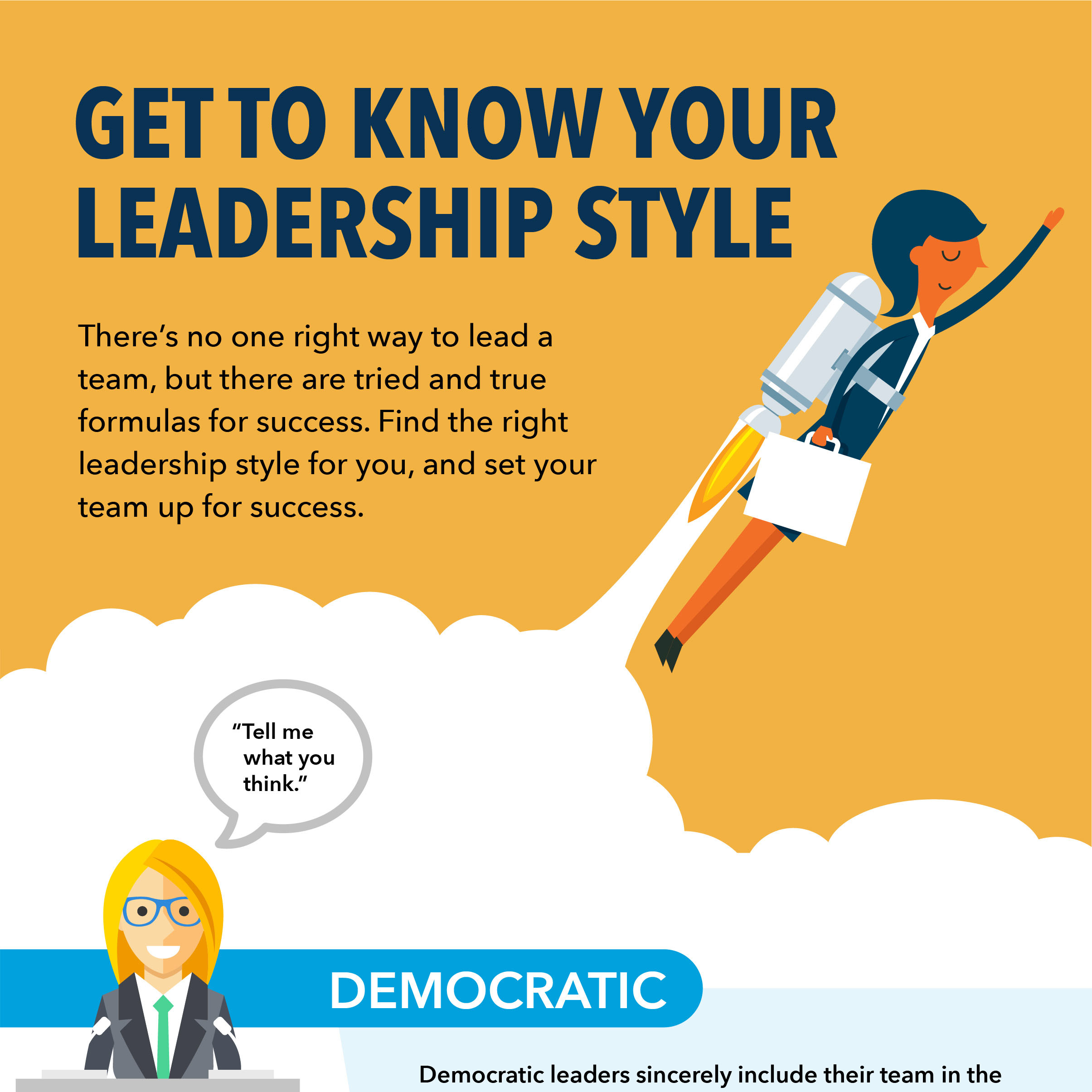
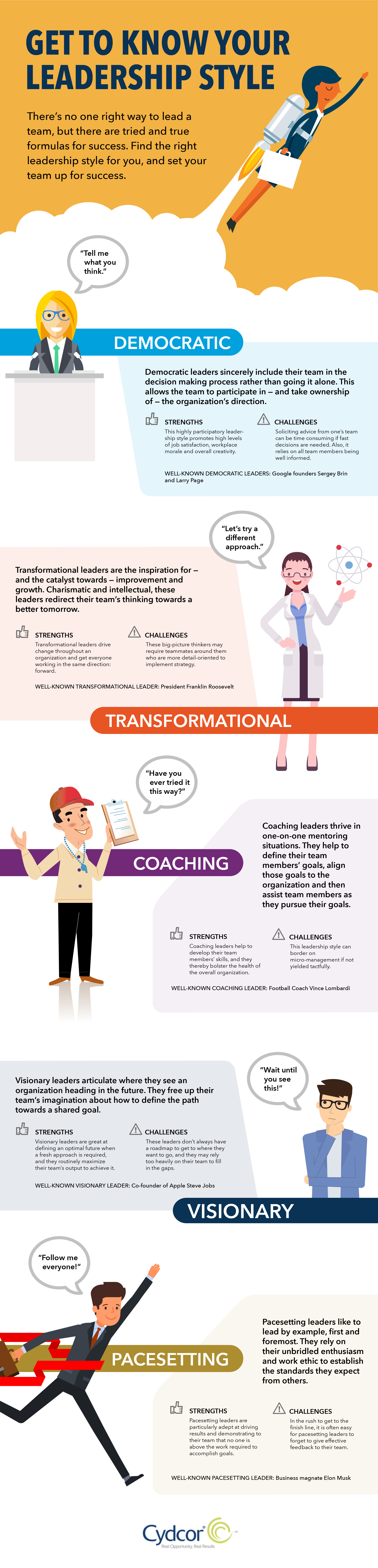
There’s no one right way to lead a team, but there are tried and true formulas for success. As you grow in your career, you’ll get more and more experience leading people. An understanding of different well-known and proven types of leadership can help you find the right path that resonates for you. Find the right leadership style for you, and set your team up for success.
Democratic Leadership Style
Democratic leaders strive to sincerely include their team in the decision making process rather than going it alone. This type of leadership allows the whole team to participate in―and take ownership of―the organization’s direction. This highly participatory style promotes high levels of job satisfaction, workplace morale and creativity. Everyone feels connected to the overall health and well-being of the organization. However, just like any leadership style, it does have its drawbacks. Soliciting advice from one’s team can be time consuming if decisions are needed quickly. Also, it relies on all team members being well informed. Democratic leaders need to strike a balance within their team of both decisive action and rich participation.
Transformational Leadership Style
Transformational leaders work with their team to implement improvement and growth. Charismatic and intellectual, these leaders redirect their team’s thinking towards a better tomorrow. The transformational leader solicits input from her team to identify what areas of the organization require change, creates the vision to guide that change, and then works with her team to execute the redirection. These big-picture thinkers may require teammates around them who are more detail-oriented to implement processes, and they need to develop strategies for soliciting their teammates’ assistance.
Coaching Leadership Style
Coaching leaders thrive in one-on-one mentoring situations. They help to define their team members’ goals, align those goals to the organization and then assist team members as they pursue their goals. The coaching style of leadership can be thought of as a sort of win-win relationship between the leader and her teammates. Coaching leaders help their team members to develop professionally, and they also thereby bolster the health of the overall organization. However, it can be easy to go overboard with this type of leadership and engage in behaviors that border on micromanagement. Coaching leaders need to yield their influence tactfully.
Visionary Leadership Style
Visionary leaders articulate where they see an organization heading in the future. They craft compelling―and often unheard-of―visions of what an organization can become. This style of leadership acts to inspire the team towards a shared goal. The internal drive they spark in their team members frees up creativity, and that freedom allows all the team members to delve into innovative strategies on how to get from Point A to Point B. However, visionary leaders need to keep in close contact with their team and stay involved in the team’s progression. Such an approach keeps everyone grounded as they strive towards the future.
Pacesetting Leadership Style
Pacesetting leaders like to lead by example, first and foremost. They rely on their unbridled enthusiasm and work ethic to establish the standards they expect from others. They are the roll-up-the-sleeves-and-get-dirty types. Pacesetting leaders are particularly adept at driving results, because they set the bar so high. They demonstrate to their team that no one is above the work required to accomplish goals. Pacesetting leaders should be cautious, however, and strive not to become single-minded. Narrowing one’s vision down to a single goal―or several―can mean that effective feedback and mentoring get neglected. Pacesetting leaders need to check in with their team members or a regular basis.
It is likely that you recognize one or more of these types of leadership in your own style. It’s rare that any one individual engenders just one leadership style. Explore which styles resonate with you. By cultivating a dynamic leadership style that encompasses a number of different approaches, you can find the right tools within yourself to tackle even the largest challenges.
This is the second in a series of five posts on tips and books for managers, and Cydcor Chief People Officer, Jeannie Finkel. In this series, Jeannie recommends the Top Five Books she believes can help you transform your management style and become a better, more effective leader.
Writing well isn’t just a nice talent you can use to impress friends and colleagues. Sure, it can do that as well, but effective writing is much more important than that. Clear, concise writing is essential to be an effective communicator, a skill you must have if you ever hope to succeed in a leadership or management role. The way you write and communicate can mean the difference between getting the job or not, gaining approval for a critical project, earning the confidence of your team or organization, and the ability to explain yourself in cases when your actions are not as well received or understood. Effective writing ability is not just nice, it’s critical. It can directly impact your ability to survive and thrive in the workplace and your future growth potential.
Below, Jeannie Finkel recommends a book she believes any manager must have to help improve writing ability and communication:
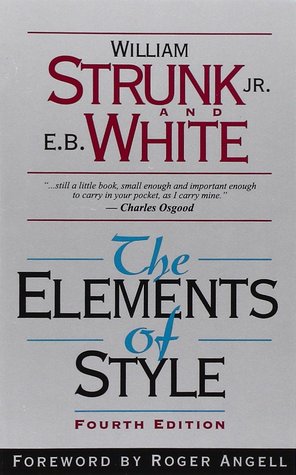
Book #2: The Elements of Style
Author: William Strunk Jr. and E.B. White
Short summary: If any aspect of your work involves written communication – beyond texting – and you want the quality of your writing to stand out, this little book will teach you what you need to know to master the core principles of writing clearly. It focuses on the fundamentals, clearly explaining proper usage and composition, and helping explain and address the rules of good writing that are most frequently violated.
This really isn’t a book you “read” per se. Rather, it’s a great reference tool that everyone who aspires to write well, or needs to influence, explain, or inspire would do well to study. It’s less than 100 pages, divided into three segments. The first segment is two chapters which give a set of “rules” for English usage and composition (you’ll remember grammar class in grade school!). Then there’s a terrific section about words and expressions that are most often misused – EVERYONE should review this part. The book ends with a set of 21 tips to keep in mind as you create your own writing style.
What you’ll learn: What you learn from this book really depends on what you need. If you’re newer to business and fresh from writing college papers, you might have to change your style to adapt to the brevity required for business writing, such as reports, PowerPoints, and emails. Find excellent advice to guide you through this transition under the sections entitled “Use definite, specific, concrete language” and “Omit needless words”.
Or, if you’ve been in the business world for some time and now need to or communications for publication, you’ll benefit from reviewing the chapter entitled, “Misused Words and Expressions”. We don’t notice many of these in our everyday conversations with friends, but they really stick out in a written piece!
Dip into the book enough and you’ll experience a true appreciation of the beauty and richness of our language, and realize the professor who wrote the original book truly loved his subject and hoped to pass on the art of communication to future generations.
Why it’s a must read: This is a desk reference I’ve kept with me ever since a rather embarrassing experience with a boss many years ago. I had just been promoted to my first Vice President level assignment, working for someone who had a reputation for being extremely tough. I was a literature major in college, and I thought I wrote pretty well. I wanted to impress him and show I was worthy of the big new job and title, so I wrote a lengthy memo about something I thought he should consider changing. But, I was afraid to be too direct in case he thought I was overstepping. Instead, I made it so indirect and wishy washy that (as I realized later) it was impossible to figure out what I was trying to say.
Thankfully, rather than ripping up what I’d written and leaving it in shreds on my desk, he said nothing. Instead, after lunch, I came back to a little brown paper bag from the bookstore down the street with this book in it, sitting on top of a copy of my memo. I opened it up and looked at the content. My boss had gone so far as to check off the sections he thought I should read, and underline several key sentences in red ink. This was the President of a key business unit who’d taken the time to go out and get this book for me and do this!! After I got over feeling mortified, I rewrote the memo (it was probably two pages shorter) and went in to thank him and make my case, this time much more directly, confidently, and clearly. We went on to be a great team and work together for many years, and we are still good friends today. I credit him, and this book, with setting me on a path to becoming an effective business writer! Maybe it will do the same for you.
Look out for upcoming posts in this series to learn about three more books every manager must have on his or her bookshelf to bolster professional growth and personal development. In case you missed it, don’t forget to read last week’s post about the book 13 Fatal Errors Managers Make and How you can Avoid Them.
To find out more about Cydcor, check us out on Facebook, LinkedIn, Instagram, and Twitter.

Jeannie Finkel, Chief People Officer at Cydcor, the recognized leader in outsourced sales, has more than twenty-five years of business experience, managing human resources and administration at top firms. Jeannie served for nearly twelve years as a Senior Vice President of Human Resources at Charles Schwab & Co. Jeannie was also Head of Human Resources and Administration for a leading asset management firm, and served as Managing Director, Talent Management Systems and Strategies for a Fortune 100 organization. Jeannie later became a Partner with leading global retained search firm, Heidrick & Struggles. With years of experience managing teams and overseeing organizations, Jeannie is a seasoned expert in management, administration, and leadership.
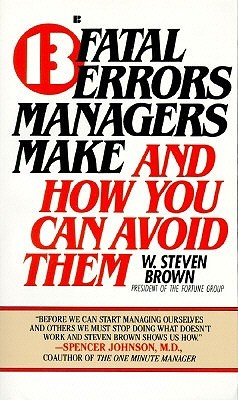
This is the first in a series of five posts by management expert, Jeannie Finkel. In this series, Jeannie weighs in on the top five books for managers, featuring one book each week.
Being a great manager is a skill that benefits from constant honing and refinement. While some are born with the innate ability to influence others, inspire action, and drive results, most leaders require a great deal of training, practice, and studying to become as effective as they hope to be. There are many incredible management training courses available, but they can be very pricey. Luckily, there is a wealth of information that can help you transform the way you lead and manage your team available for free, from the local library.
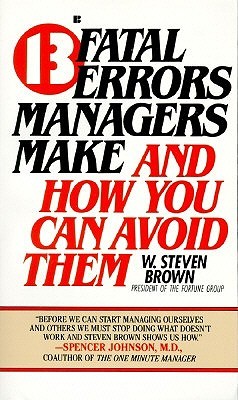
Book #1: 13 Fatal Errors Managers Make and How You Can Avoid Them
Author: W. Steven Brown
What it’s all about: Brown draws on his years of experience as a sales and management coach and consultant, working with Fortune 500 companies, to identify the top errors managers tend to make repeatedly, so we can recognize and stop doing them, or better yet, avoid committing them in the first place. The good and somewhat surprising news he shares is that there really aren’t that many – just 13 of them! He describes each one clearly, illuminating why the error gets in the way of achieving our goals as managers, and provides stories, examples, and suggestions to help us understand what the error looks like and how to correct it. He also ends chapters with helpful tools and a workbook section to create an action plan, summarize your key learnings, and think about how you’ll apply them.
What You’ll Learn: Whether you’re a new manager or one who’s been around a long time, there’s something in this little book for everyone. For newer managers, especially if you’ve been promoted from among a group of your former friends and peers, the transition to the role of “boss” and having to hold your friends accountable, can be very tough. For those in this tricky situation, the chapter, “Fatal Error #8: Be a Buddy, Not a Boss,” might really help.
For more experienced managers, who find yourselves wishing you could get your team to be more productive, there are great insights in the chapters “Fatal Error #3: Try to Control Results Instead of Influencing Thinking,” and “Fatal Error #7: Concentrate on Problems Rather than Objectives.” Or, maybe you’ve always been a top performer, and even though you set a high bar for your team, somehow, you know they can do even better. The chapters, “Fatal Error #5: Manage Everyone the Same Way,” and “Fatal Error #12 Recognize Only Top Performers,” could provide some good tips!
Why it’s a Must Read: I bumped into this book soon after it was first published, when I was a young manager. It was a godsend to me, as the firm I worked for did not provide any management training so I had to figure things out for myself. I discovered that I was committing most of these errors, and I quickly realized that the suggestions the author provided actually work. When I applied them to my own role, I became a much better leader of people, in large part because of the simple lessons this book offers.
This is a top management book I revisit every so often, and I recommend it to any new manager who’s just starting their leadership journey, as well as more experienced managers looking to strengthen their leadership skills. It’s really easy to read – you can probably finish it on a cross country plane flight or quiet Sunday afternoon – but the wisdom sticks with you long afterwards!
Look out for more book recommendations from management expert, Jeannie Finkel, as we continue our series on The Top Five Books for Managers. No matter where you are in your career, feeding your student mentality with advice from the top management experts can only aid you in your quest to reach your current and future goals and achieve success.
To find out more about Cydcor, check us out on Facebook, LinkedIn, Instagram, and Twitter.
Jeannie Finkel, Chief People Officer at Cydcor, the recognized leader in outsourced sales, has more than twenty-five years of business experience, managing human resources and administration at top firms. Jeannie served for nearly twelve years as a Senior Vice President of Human Resources at Charles Schwab & Co. Jeannie was also Head of Human Resources and Administration for a leading asset management firm, and she served as Managing Director, Talent Management Systems and Strategies for a Fortune 100 organization. Jeannie later became a Partner with leading global retained search firm, Heidrick & Struggles. With years of experience managing teams and overseeing organizations, Jeannie is a seasoned expert in management, administration, and leadership.