
Found 0 posts

Design thinking builds a creative mindset that improves problem-solving skills and deepens communication and understanding between team members
As creatures of habit, we develop routine ways of completing tasks. After time has passed, a once efficient routine can sometimes become a relentless rut. Transition from routine to rut is gradual and sometimes we fail to notice when it happens until we’re stuck in an unproductive loop without recognizing our situation.
A rut leads nowhere. It’s cramped, uncomfortable, and even though it’s familiar, you start to feel bad about being there. Spending too much time stuck in a rut can lead to a negative outlook on life and poor performance at work.
In order to prevent yourself from falling into a rut you need a new toolbox: one that contains innovative and inspiring processes for solving problems. Design thinking is that toolbox. It’s a problem solving process initially created by designers who were tasked with creating solutions to complicated problems.
Design thinking requires that you access your imagination, intuition, logic, and reasoning. Your goal is to establish a new mindset for creating solutions to your problems. Use the following steps to craft a design thinking process that works for you.
Identify the Problem
You need to get your problem out of your head and into the world so you can look at it and begin your problem-solving process. Schedule a specific time to identify the problem. Give yourself 30 minutes to simply analyze the situation and identify the problem and how it impacts your process at work.
Think About the Problem
Don’t just do something—sit there. It’s time to stop using routine and unproductive approaches to problem solving. Engaging a design thinking mindset requires that you actually think about the problem. Do your research. Brainstorm with the team. Investigate possible causes and pain points.
Create a Problem Profile
Assemble your materials into a clear profile of the problem. The shape of the problem becomes clear when you list the negative impacts it has on your team, your department, and your company. We often fail when we try solving problems because we haven’t identified the actual problem, just its impact or symptoms.
Imagine Your Solutions
Review the material you have gathered and begin creating solutions to the problems. Consider the positive and negative impacts of each proposed solution. Identify the solutions that offer the best outcomes for your problem and company and make sure that they’re in alignment.
Make a Decision and Act On It
At some point you have to put your solution into action. Work with your team members and monitor the results of your solution. The powerful quality of design thinking is that it allows you to test and retest solutions. Observe how the new process works and make changes as required using your new design thinking mindset.
Build a Parking Lot
Using a parking lot of ideas allows you to save important ideas that may not be related to the problem you’re trying to solve but might have potential for solving other problems. Use a notebook, sticky notes, an idea board, or a spreadsheet. Consider keeping your parking lot in view. A glance at it while you’re pondering a problem might provide inspiration you need at that moment.
What approach do you use for problem solving? How does it impact your productivity at work? Your experience is important to us. Please comment or this page or tell your story on Twitter and follow us @Cydcor, and please share this article with your friends.
We are Cydcor, the recognized leader in outsourced sales services. From our humble beginnings as an independent sales company based in Canada, to garnering a reputation as the global leader in outsourced sales, Cydcor has come a long way. We’ve done this by having exceptional sales professionals and providing our clients with proven sales and marketing strategies that get results.
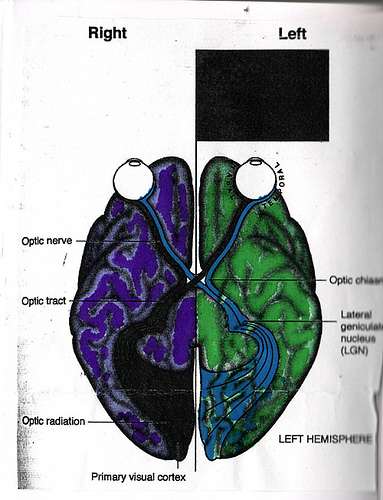
Those who identify as “left-brain” thinkers tend to be more on the analytic and logical side of the spectrum of thought. Law, finance, engineering and the sciences are some of the many industries that those analytical types tend to fall into. But in an age of innovation, those more systematic thinkers might need a kick-start for creativity to keep up. While there are distinct verbal and analytic styles of thinking associated with different hemispheres of the brain, that doesn’t mean that they aren’t able to delve into more creative areas.
Unfortunately, a large portion of the population believes left-brain thinkers struggle with creativity or aren’t able to generate new ideas. While one might become set in a pattern, it is still possible to break out of this limited method of thinking.
For more information about Cydcor, be sure to follow us on Instagram here: http://instagram.com/cydcor.
Author Daniel Coyle’s book The Talent Code describes in detail what physically happens to the brain when someone develops a new skill. In order to properly build up your brain to receive and keep new thought processes, knowledge and skills, Coyle calls for a need of what he names deep practice, which is exactly what it sounds like: practice. Learning and performing a new action involves firing an electrical signal through a neural pathway. Every time this happens, it thickens the myelin sheath that surrounds nerve fibers. The thicker the myelin sheath around the neural pathway, the more easily and effectively we use it.
What are ways we can “hack” our right-side brain and begin to let it out of the box? Some tips to start thinking creatively are simple:
Sign your name in the way you’ve developed, then re-sign it—backwards. Just the mere motion of attempting to break out of what you would normally do fires the right brain hemisphere. Try signing your name in different writing styles. Upside down. In a spiral. In loops. Repeat this until you are able to sign in all different designs and directions.
The right hemisphere aids in your ability to move in an unfamiliar way—such as dance. Just as we must take steps to learn new moves—a yoga position, a straighter posture, or running style—our brains must use a similar process to learn how to think differently.
Begin the art of deep practice by conquering any unaccustomed task, attempting challenges and feeding stray information into your right brain's database. Before you know it, you will see new ideas begin to emerge.

Here's Cydcor's review of 'Thinking, Fast and Slow' by Daniel Kahneman!
About Thinking, Fast and Slow: Thinking, Fast and Slow is written by Daniel Kahneman, a renowned psychologist and winner of the Noble Prize in Economics. This book is also the winner of the National Academy of Science Best Book Award in 2012. Kahneman takes us through a tour of the mind and explain the two systems that drive the way we think. He explains the profound effect of cognitive biases on everything from playing the stock market to planning our next vacation—each of these can be understood only by knowing how our minds shape our judgments and decisions.
Why Cydcor recommends this book to future leaders: Thinking, Fast and Slow takes the reader on a very gentle tour during which he or she will see the pitfalls of inner workings of the mind. Kahneman's text is a very fluent page-turner, and without diving into deep and obscure details of academic journals, it gives a very good overview of one of the most important and radical research programs of the 20th century.
Want to learn more about Cydcor? Head over to our CareerBuilder page for additional information!
Our favorite part: Kahneman introduces two mental systems: one is fast and the other slow. Together, they shape our impressions of the world around us and help us make choices. System 1 is largely unconscious and it makes snap judgments based upon our memory of similar events and our emotions. System 2 is painfully slow, and is the process by which we consciously check the facts and think carefully and rationally.