
Discover practical advice, inspiration, and insights to help you succeed in business and grow both personally and professionally.
Found 0 posts


Most highly successful people share one important trait: focus. They know what their purpose is and what they want to achieve, and everything they do and say aims to bring them closer to their goals. But maintaining that intense level of dedication and drive takes effort.
When striving toward any goal, it’s important to find ways to remind yourself why that goal is so important to you so you can stay focused. Creating a personal mission statement gives you a way to identify your values, commit to your goals, and put yourself on a path toward success.
QUESTIONS FOR CREATING A PERSONAL MISSION STATEMENT
To create your own personal mission statement, start by asking yourself these questions:
THE BENEFITS OF HAVING A PERSONAL MISSION STATEMENT
There are many benefits to creating a mission statement to help you reach your goals:
PERSONAL MISSION STATEMENTS FROM NAMES YOU MIGHT RECOGNIZE
High achievers in many industries live by a personal mission statement. Here are a few:
Gary Polson, CEO, Cydcor
“As CEO of Cydcor, I will assure the long-term growth and health of Cydcor and the opportunity by 1) attracting, developing, motivating and recognizing our people; 2) developing a culture of sustainable success; 3) overseeing the strategy; 4) focusing on the financial health of the field; and 5) building relationships with our key people and connecting with the newer people.”
Richard Branson, CEO, The Virgin Group
“To have fun in (my) journey through life and learn from (my) mistakes.” (Motivated Magazine, 2011)
Oprah Winfrey, CEO OWN
“To be a teacher. And to be known for inspiring my students to be more than they thought they could be.” (Oprah.com, 2009)
Amanda Steinberg, CEO, Dailyworth.com
“To use my gifts of intelligence, charisma, and serial optimism to cultivate the self-worth and net-worth of women around the world.” (Forbes, 2014)
Creating a personal mission statement is just one more way you can position yourself to reach your goals. Writing down your goals, values, and vision for your future is a form of commitment in itself, but creating a mission statement does not guarantee success. In order to make your mission statement work to your benefit, you must imbue it with importance. Whether daily, weekly, or monthly, check in with and remind yourself of your mission statement to keep yourself faithful to its message. Consider keeping it by your bedside, taped to your bathroom mirror, or posted at your desk. You could even use your mission statement as part of your social media profile as way to subtly invite others to hold you accountable as well.
While the act of creating a personal mission statement can help you learn a lot, committing to its message could help you transform it from words into reality.
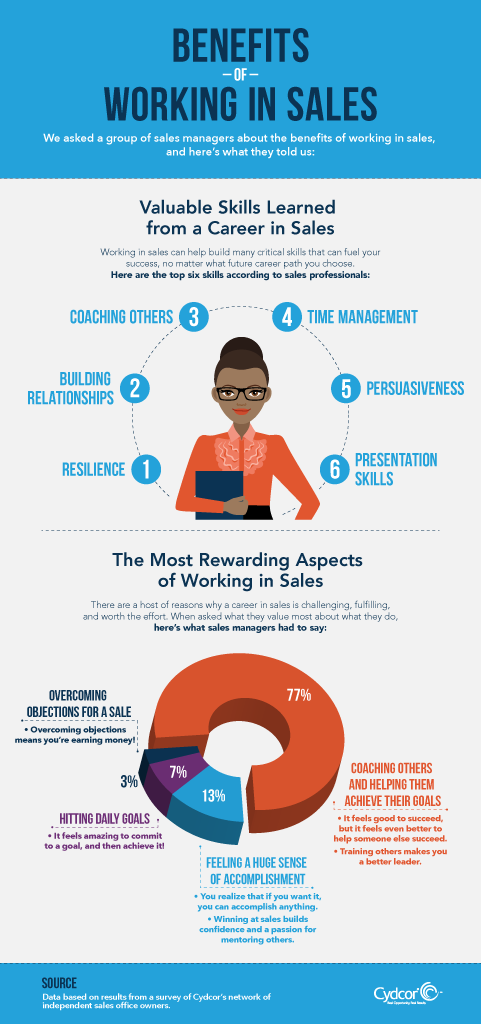
We Asked About Careers in Sales; Sales Managers Answered.
Whether you're pursuing a career in sales, or you’re considering one, working in sales is exciting, challenging, and highly rewarding! A career in sales can benefit you by helping you find focus, teaching you to set ambitious goals and achieve them, and by showing you the value of helping others reach their goals, as well. We asked a group of sales managers about what they believe to be the best and most rewarding aspects of working in sales, and the results are in. Check out our findings in the sales infographic below:
A career in sales can have a profound impact on you and your future success. Even if you only work in sales for a short time, gaining sales experience can increase your value to a potential employer by expanding and improving your skillset. It can also bolster your leadership ability by putting you in a position to mentor others, to help them achieve their own career goals and aspirations.


What does it take to be a successful salesperson? One of the best ways to unlock your real sales potential is to look at the traits of successful people in other fields. Whether it’s astrophysics or technology or sports, there are a number of traits that successful people share. Discover what those traits are here, and find out how you can utilize them to become the most successful salesperson you can be.
Passion
It’s nearly impossible to be successful in any arena if you aren’t passionate about what you do. It takes long hours and hard work to get to the top of any field. If you’re not passionate about what you do, it makes it that much harder to put in the effort. But when you love what you do, all those sacrifices you make for the job no longer seem like work. They feel worth it, because this is what you were meant to do.
Innovation
Innovation is one of the main traits of successful people that pops up in nearly every field. But how, exactly, do you tap into the creativity that leads to innovation? Try looking at the obstacles in your life. It may seem counterintuitive, but every obstacle has an upside. It provides you with a way to find a solution. Ideas are born from the combination of a need to accomplish a task and a fresh perspective. Keep your eyes open for novel solutions that others may not see. Keep your ears open to listen for obstacles that others might have. Ask questions that can uncover the root of the obstacle, and you’ll unleash your inner innovator in no time.
Self-Improvement
Think about your favorite sports figure for a moment. They are exciting to watch—thrilling even. You root for them and you’re disappointed when they lose. Now imagine if you found out they no longer showed up to training and refused to practice. It wouldn’t take long for you to find someone else to cheer for, would it? Self-improvement is a process that never ends. There’s always room for you to be grow, improve your skills, and become a more successful salesperson. There really is no such thing as a plateau, because there is always more to learn. Maintain a student mentality to avoid becoming complacent. Look for ways to further your education, your technique, and your motivation to ensure long-term success!
Self-Reliance
Successful people don’t become successful through luck. Luck is merely means being prepared when an opportunity arrives. You have to develop your skills and position yourself in a space where opportunity exists. That way you are ready, available, and capable to meet your opportunities head on. Remember that a successful salesperson can thrive in any market, because when you are living up to your potential, you create your own success.
Provide Value
You’re never really selling goods or services; what you are always selling is solutions. Your clients have problems that they need resolved, and you have the means to resolve them. Listen carefully to your client, and ask them questions that get to the root of what their issues are. Then, you are poised to add value to their day-to-day life. Think about Martha Stewart. She mastered the skill of making a beautiful home, and in turn, she sold the solutions she discovered along the way to millions of people across the country and benefitted their lives.
Persistence
Failure is inevitable, and the ability to work through it and keep yourself dedicated to your goals is one of the defining traits of successful people. There are countless examples of this. Sir James Dyson created 5,126 failed prototypes before creating a bagless vacuum that worked. Dyson Vacuums is now valued at billions of dollars. Theodor Seuss Geisel, better known as Dr. Seuss, had his first book rejected by 27 different publishers. Stephen King threw away an entire early draft of Carrie because he was unsatisfied with his product. His wife saved it from the trash and it eventually launched his career. Every failure is a chance to learn, to adapt, and to refine your approach.
Self-Control
A successful sales person doesn’t need anyone other than themselves to hold them accountable. Similarly, you are the only person who truly knows just how valuable you are to a team. While your manager will set certain expectations of you based on your potential, to really excel, you should set even higher standards for yourself. You know what you are capable of. You have the discipline to achieve success. You must answer to yourself at the end of every day.
Exceed Expectations
There’s an old sales saying, “under-commit and over-deliver.” But what happens when you over-commit and still over-deliver? Successful people do more than what is asked of them. They think of their job description as where their job starts, and then they look to add even more value to their team. In addition to proving to others that they are a team player, their work really stands out.
Goal-Oriented
Across all disciplines, it is a proven trait of successful people to remain goal-oriented in spite of any and all surrounding circumstances. The key to obtaining the goals you set for yourself is to approach them strategically. Differentiate short term goals from long term goals and prioritize your progress accordingly. Realize that long term goals are often made up of a number of more easily actionable short term goals. Tackle those short-term goals one by one, and soon you will discover you have achieved the success you deserve.
Be sure to check the Cydcor Blog regularly for more tips on how to become the successful salesperson you are meant to be!


Self-confidence is a quality that can affect almost every part of your life including peer perceptions, decision-making, job performance, and growth opportunities. Learning to feel comfortable in your own skin and believe in yourself can do much more than just improve your well-being, it can directly impact the course of your career. Having low self-confidence can prevent you from accepting challenges that might help you get ahead, stop you from asking for the salary or title you know you deserve, and hamper your journey toward roles of greater leadership and responsibility. Learning to build self-confidence and helping others develop their own self-confidence, can improve you and your team’s prospects for success. Learn how to build confidence in yourself and others with these helpful tips.
If you doubt your own qualifications or question whether you deserve your job, you’re not alone. What you’re feeling is called “imposter syndrome,” and it affects many successful people, from executives to founders, causing them to doubt their abilities no matter how many great accomplishments they have achieved. You have earned your place, and nobody can take away the work it took to get there. Here are a few small steps you can take to start acting like you belong right now: hold your head high, make eye contact when speaking with coworkers, and shake hands firmly. Body language goes a long way toward conveying to coworkers that you belong there, and not only will it build confidence in yourself, it will build others’ confidence in you, as well.
Confident people always seem to know what they’re talking about, and that’s because many confident people maintain a student mentality. They constantly seek out and absorb vital information to strengthen their expertise and provide more value to others. When you know your stuff, you’re prepared for tough questions, and your coworkers and team members will notice. Being an expert in your field holds a lot of credibility, and being knowledgeable helps your team members feel more confident about your leadership and about their own chances for success as part of your team.
Mentoring others can help you gain confidence in your abilities. Helping others master critical job skills forces you to hone your own knowledge of those skills, while also improving your ability to communicate essential information to others. Collaboration and coaching also builds confidence in others by helping them feel well prepared and informed to conquer the tasks ahead of them.
When someone lacks confidence, even the slightest mistakes can haunt them. When you or members of your team make mistakes, avoid placing blame or dwelling on what went wrong. Instead, work together to develop a strategy to move forward and avoid that same mistake in the future. The process will help boost your confidence as a leader or colleague, and it will help your team member feel supported and reassured that making mistakes is part of the learning process. Knowing that you have their back can make team members and colleagues feel more self-assured and confident about the work environment and their chances of success.
As you work with your team, you’ll see the value each of your team members bring, whether that be a skillset or mindset. Recognize team members’ individual contributions, and they will bring that value more confidently to the table. People love to be recognized for things they do well, and they appreciate being coached to overcome their weaknesses. By recognizing things your team members do well, they’ll do the same for you, helping to build confidence for the entire team.
People don’t like to admit it, but self-doubt is normal. Everyone has doubts and worries about not being the best, the smartest, or the most liked, and even the most confident people struggle to keep those doubts from derailing their goals. Once you recognize that, it levels the playing field. No longer is that keynote speaker an unapproachable business guru, he’s just another person trying to make it, just like you. Remember that your doubts and insecurities are just feelings, and they don’t define you or represent your real potential. Don’t let them stop you from stepping out of your comfort zone or going after your long-term goals and dreams.
Learning how to build confidence starts with just acting the part. Practice using confident body language, even when you’re feeling uncertain inside. Sometimes, the image we present on the outside, helps us begin to feel the part on the inside as well. Use the tips above to bolster your own feelings of self-confidence, and whenever possible, help to support others who may also be feeling uncertain. By focusing on others’ journeys toward growth, you distract from your own self-doubt while helping someone else achieve his or her goals. Throughout that process, you’ll discover that, not only will they become more confident, but you will as well.


Who doesn’t want to be more influential? People who are influential can drive others to accomplish more and achieve goals, they can inspire action, effect change, and transform people and organizations. Influential people are powerful. They command attention and they garner respect. Being influential means that what you say and do matters, because it sets the tone for others who will strive to follow in your footsteps.
You don’t have to be a billionaire or a genius to influence others. Influence is about moving and motivating others through effective communication. Anyone can build influence by focusing on the way they present themselves and how they deliver their message. Becoming an influential leader is about much more than getting your way. It can make you an invaluable asset to a business by helping to unite teams, get employees on board with new projects, earn investments, realign thinking, and strengthen partnerships. By practicing the tips above, you may be surprised by your own power to move others to action, and no matter your goals, being more influential is a critical step toward becoming an effective leader and getting things done through and with others.

Movies are more than just great entertainment. They can challenge our thinking, ignite our passions, feed our fears, stir our emotions, and inspire our dreams. They allow us to escape, but they also allow us to imagine ourselves into the lives we fantasize about. The silver screen can provide valuable wisdom we can carry back with us into the real world, as we work to create our own happy endings.
1) "Don't ever let someone tell you, you can't do something. Not even me. You got a dream, you got to protect it. People can’t do something themselves, they want to tell you you can’t do it. You want something, go get it. Period. All right?" – Chris Gardner, The Pursuit of Happyness (2006)

Sure to fire up anyone who’s ever felt like an underdog, this inspiring sales quote from Will Smith, as real-life homeless man-turned-stock broker, Chris Gardner, sums it up beautifully. Anything is possible when you work hard and believe in yourself. As this motivational quote warns, you should never let critics, naysayers, or even well-meaning friends and family convince you that your dreams are impossible. Setting goals is the first step in turning outlandish dreams into reality, so think big, aim high, and believe with your whole hear that you can accomplish anything. You can.
2) "Show Me the Money." – Rod Tidwell, in Jerry Maguire (2006)

Cuba Gooding Jr.’s famous line from this movie about the world of sports agents, is not just one of the best movie quotes of all time, but it’s also the perfect, succinct reminder, that if you aren’t willing to ask for what you want and what you believe you deserve, you can’t expect to get it. As the best salespeople know, negotiating doesn’t have be complicated, and it doesn’t even need to be subtle. Sometimes, being direct is all it takes to get the deal done.
3) "Well, it's no trick to make a lot of money... if all you want to do is make a lot of money." – Bernstein, Citizen Kane (1941)

This Everett Sloane quote, from what is possibly the greatest movie of all time shines light on the fact that there’s a lot more to being a successful person than making money. Depending on the individual, true success might encompass independence, accomplishment, influence, helping others, healthy relationships, and let’s not forget, happiness – something many have said money can’t buy.
4) "There is no such thing as a no sale call. A sale is made on every call you make. Either you sell the client some stock or he sells you a reason he can't. Either way a sale is made, the only question is who is gonna close? You or him? Now be relentless, that's it, I'm done." – Jim Young, Boiler Room (2000)
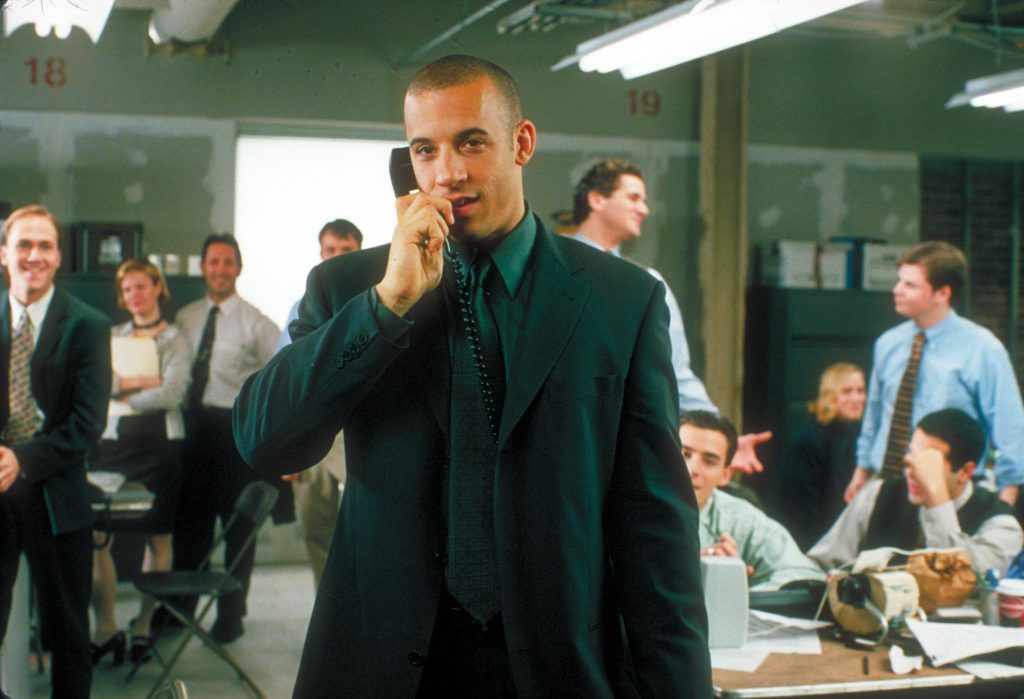
This insightful sales quote by Ben Affleck’s less-than-scrupulous character is an apt description of the dance that takes place during any sales negotiation. A sales pitch involves two people making a case, and only one will win the argument. It’s up to the salesperson to decide who the winner will be. While this film doesn’t paint a flattering picture of salesmen, this quote is spot on.
5) “Success is a menace. It fools smart people into thinking they can’t lose.” – Bill Gates, Pirates of Silicon Valley (1999)

Bill Gates, played by Anthony Michael Hall, in this movie about the cutthroat battle between Apple and Microsoft for software supremacy, makes a great point. It’s tempting to dream about reaching a level of success and wealth at which you can just sit back and enjoy what you’ve built. While there’s nothing wrong with celebrating your wins along the way, it’s never a good idea to take your hands entirely off the wheel. There will always be bumps in the road, no matter how long you’ve been in business. You must always keep your head in the game if you hope to achieve lasting success.
6) "A-B-C. A-Always, B-Be, C-Closing. Always be closing." – Blake, Glengarry Glen Ross (1992)

In Glengarry Glen Ross, Alec Baldwin plays Blake, a not-so-nice sales trainer sent to pump up a team of real estate salesmen. Baldwin’s character is far from being warm and fuzzy, but this line, from one of the best sales movies of all time, is an irresistibly quotable reminder to keep your eye on the target, stay focused, and get the job done.
7) “Do or do not. There is no ‘try’.” – Yoda, Star Wars (1980)

Star Wars may not be a movie about sales, or even business, but Yoda has it right. Saying you’ll try is as good as accepting failure before you’ve even begun. Say you’ll do, and you will. Who needs Tony Robbins when you've got an adorable and eternally wise space creature to guide you?
8) “Smile. It enhances your face value.” – Truvy Jones, Steel Magnolias (1989)

Who knew that a beautician, Truvy Jones played by Dolly Parton, could offer such on point sales wisdom? The punny quote holds true for beauty and for closing deals. Smiling is one easy way to make yourself, and your product, more appealing to the customer.
9) “Money is not the prime asset in life. Time is.” – Gordon Gekko, Wall Street: Money Never Sleeps (2010)

We all know that time is money, and this quote from the sleazy but slick Gordon Gekko, played by Michael Douglass, drives the point home perfectly. Time is a critical factor in making sales, whether you’re offering a product or service to save the customer time, letting them know that time is running out to act, or offering some luxurious item to help them enjoy their time more. Time is everything, and keeping that in mind can help you make more sales.
10) "The driver has to work harder than anyone. He's the first to show up, and the last to leave. When his buddies are all out drinking beer, he's up in his room studying pictures of turns." – Coach Irv, Cool Runnings. (1993)

Who would have thought that a goofy John Candy comedy about the first Jamaican bobsled team could have valuable insight to impart about succeeding in sales? With this quote, John Candy’s Coach Irv perfectly sums up what it means to lead from the front, to model the behavior you want from your team rather than simply demanding it. To get the best possible results from your sales team, you have to be the driver, coming in early, leaving late, and keeping a close eye on the sharp curves hiding on the road ahead.
From good guys, to bad guys, to little green guys with pointy ears, characters in the movies tell us a lot about what it takes to succeed in the business world. Just like real life salespeople, they overcome seemingly insurmountable obstacles, they dig in and go after their dreams, they make terrible mistakes, they celebrate victories, and they bounce back from failure. But unlike those wonderful characters up there on the screen, we’re lucky, because we are the ones writing the script.


We are a people helping people business. In the fast-paced world of sales, marketing, and entrepreneurship, we know that we succeed when our people do. They are the future of our business, and that’s why every aspect of our workplace culture is designed to help people succeed and achieve their goals. We achieve this by offering unique opportunities such as professional development trainings and conferences, giving back to local and global communities, and much more. Are you ready to write your own story? Learn more about our employee culture and why Cydcor is the right fit for you!
We know that growing your career takes learning new skills, overcoming obstacles, and taking challenges head on. That’s why Cydcor has an open-door policy, so our team members have face-to-face access to leaders across the company who are invested in helping them succeed. Our people-focused culture encourages open communication and collaboration; not only to share ideas and perspectives about business goals, but also to support each other. Cydcor is not a bureaucracy; our team members collaborate—across multiple levels—to solve business challenges and inspire each other to succeed because everyone has an important role to play.
In the spirit of people helping people, our culture includes a dedication to giving back. Globally, Cydcor volunteers time and talent, and raises funds for Operation Smile, which provides children in developing nations free, life-changing cleft lip and palate surgeries. Locally, Cydcor provides team members with paid volunteer hours and partners with local organizations to improve the communities in which we work and live. We do this with a sense of social responsibility, because we value making positive impacts that are bigger than ourselves. Just as our success as a company is strengthened by the success of our people, we as a community grow stronger when members of the community feel supported and free to thrive.
With over 25 years of sales and customer acquisition experience, we understand the effort it takes to see goals through because everyone, from entry-level team members to senior leadership, has a gusto for getting results. Cydcor fosters a workplace culture where dedication and hard work are appreciated and rewarded, and we celebrate team members who aggressively pursue where they’ll be tomorrow by impacting what they do today. At Cydcor, we don’t give up, and we don’t make excuses. We see it through to the goal line, because we stand by our commitments.
Our workplace culture grows unstoppable leaders, because at Cydcor, we build on team members strengths and provide them with the training and support they need to overcome weaknesses. We believe in maintaining a student mentality at all times and that learning should be an ongoing process for everyone from the entry level to the C-suite.
We include integrity in our workplace culture because it’s a word we live by. Integrity means knowing what is right and having the guts to do it. At Cydcor, we do what is right, not what is easy, and when we say we are going to do something, we do it well. Results matter, but how those results were attained matters just as much.
Cydcor aggressively seeks to improve today by creating new opportunities for a better tomorrow. We know the best solutions to business problems are found with the team members who tackle them, and we’re not afraid to challenge our assumptions and look for new approaches. So we work together to embrace obstacles and relentlessly push through them to bring innovative solutions to life for our teams and clients.
Cydcor thrives because of the high value we place on our team members. Cydcor culture is one that provides an opportunity to believe in each other as well as our shared goals. It is a place where we believe that hard work, collaboration, and dedication can produce remarkable results. Team members grow professionally, give back to the community, and flex their people skills, while knowing that they belong to an organization that is committed to their personal success as well as that of the company. For more information, contact us today.


Looking professional is about a lot more than what you wear, although dressing professionally certainly helps. Giving the impression that you’re confident, professional, and ready to do business is about the whole package. Everything from the way you communicate and your attitude, to your habits and yes, your physical appearance contributes to the way you are perceived by others and whether you’ll be taken seriously. The great news is: there are many easy ways to make sure you always come off professionally to others, so you can focus your attention on more complicated matters, like the content of your proposal or negotiating a great deal.
Look Like You Belong: Whether you’re a new employee or visiting a client’s workplace for the first time, it can sometimes be unclear what “typical” business dress is. If you’re unsure what to wear, consider doing a “drive by” or check the company’s social pages to make sure you dress to fit in culturally. Also, consider the type of business and industry. For example, a bank or insurance company is likely to be more formal and traditional than a game design studio or creative agency.
Be Dutiful to Details: The little things matter. Scuffed and worn out shoes can cheapen even the classiest business outfit, as can a jacket that’s too long or too baggy. While we certainly can’t all have unlimited budgets for business attire, having your favorite suit tailored to fit correctly can be done at a reasonable price, and it’s more than worth it. Also check to make sure your clothes aren’t faded or discolored.
Keep it Clean and Pressed: It may seem obvious, but making sure your business attire is clean and wrinkle free can go a long way toward making you appear polished and professional. If you’re a pet owner, make sure you have a lint roller in your car or briefcase to pick up Fluffy’s flyaway fur, and it’s always a good idea to have an extra button down shirt or blouse available for unexpected coffee spills.
Dress Up Rather Than Dress Down: We all want to look cool, but looking professional is even more important. Even if you’re headed to an interview or meeting at a company where you’re certain the culture is laid back, to make a good first impression it’s better to be a little overdressed than to look like you don’t take the meeting seriously by dressing down.
Respect People’s Time: Another easy way to always look professional is by respecting people’s time. It more than just being on time. It’s sometimes said that if you’re not early, you’re late, and that’s a great rule to live by because being on time can easily make or break an important meeting. People take their time seriously, because as you probably know, time is money. Being on time tells the other person you respect them, and you value their time, while being late gives the impression you’re not dependable, don’t care, or that you think your time is more important than theirs. Plan your day realistically, allowing time for breaks and for changing locations when necessary. When you have back to back meetings, make sure to end on time rather than running over. It’s always better to schedule a follow up than to keep your next meeting waiting.
Come Prepared: Always have your notes ready to go before an important meeting or conference call, and never show up hungover or exhausted. Much like being on time, being properly prepared shows you take the meeting seriously, and it implies you’re organized and capable.
Watch Your Attitude: Maintaining professional demeanor is just as important as wearing a wrinkle-free blazer. Be positive and diplomatic, and avoid speaking negatively about former employers or complaining about projects. Accept challenges and new tasks with grace, cleanse your vocabulary of inappropriate curse words, and never ever tell raunchy jokes or curse in a professional environment.
Portray Confidence and Respect: Learn how to put on a professional game face by always smiling and making eye contact during meetings or introductions to clients, while seemingly small gestures, these physical cues help you appear more confident and engaged. Prove you’re focused on the project at hand by turning off your phone ringer, listening when others speak, and by avoiding checking the clock more than necessary.
Making a little extra effort to always look professional is an easy way to build your reputation as someone who’s always on your game. Employers like to hire candidates who make them look good, and they like to promote employees who will set a great example for others. In negotiations and other business dealings, looking professional instills trust and confidence in your abilities that can help you close the deal. It can help you build rapport as well, by demonstrating to the other party that they are important to you. Taking these few simple steps to create a more professional appearance and attitude is one of the simplest things you can do to help catapult your career.

People seek ways to make differences in their community – even at work. They want to work for companies that make a positive impact. Providing charity and volunteering opportunities to team members benefits employers as well by boosting employee engagement. Companies that offer volunteering experience are able to recruit top talent, retain employees longer, and create an environment of collaboration in the work place.
Company sponsored corporate philanthropy and corporate giving programs also offer benefits to the employees themselves. These volunteering opportunities help employees master new skills, prepare to take on greater responsibility, and contribute to the community beyond the office walls. By committing to a cause, companies can provide valuable services to the community while strengthening and uniting their workforce.
Here are seven valuable lessons employees learn from community service:
Service projects are growth opportunities for employees, because they teach valuable lessons and skills employees can apply to their daily work. Volunteer activities unite teams around causes that are important to them and the community. Employer-sponsored volunteer work helps assure them that the work they do serves a greater purpose. Committing to a cause by donating money or time simultaneously benefits communities, companies, and the employees who work there. Companies who sponsor volunteer opportunities also boost their bottom line by building a workforce that is building new skills, happier, and more engaged.

Management and leadership are two sides of the same coin, and both are necessary for a business to succeed. Learning the difference between management and leadership is important for developing effective management skills.
Great leadership is about inspiring enthusiasm and drive, while great management is about building highly efficient teams that produce impressive results. Managers are experts at getting things done and meeting targets and deadlines; leaders know how to evolve people and organizations and help them meet their potential. Each is a unique discipline that helps teams meet their short- and long-term goals, while also fostering commitment to a shared vision and outside the box thinking.
Management skills are concerned with assigning tasks, committing to deadlines, and creating systems, while leadership is focused on defining a purpose and uniting individuals behind big ideas. Managers ensure teams meet their deadlines and deliver what’s expected of them, while leaders focus on the future and how teams might prepare for challenges on the horizon. Management is about limiting risk, while leadership encourages bold action. Leadership is primarily about engagement, while management has more to do with execution. Management focuses on performance, while leadership focuses on development. Managers develop processes and create smooth operations, while leaders build relationships, encourage communication, and build trust. The most successful businesses are built with an ideal balance of management skills and leadership skills.
Scenario 1: Suzy Business Owner has promised a new client 2,000 flyers by the end of the month, but she recently lost two employees, and she knows it’s going to be a stretch. She creates a workflow document that helps remaining team members understand when they must complete their portion of the project, and she meets with each team member one-on-one to train them on the new system. By following the workflow correctly, the team is able to meet their deadline.
Is this an example of management or leadership?
Answer: Management
Suzy is faced with a short-term business challenge, and by managing her overstretched team correctly, she’s able to help them successfully achieve their goal.
On the other hand…
Suzy should be careful. Her team is being pushed beyond its limits. To continue her team’s successful streak, Suzy must also lead. She has to remind team members that accepting these kinds of challenges can help them transform the organization, leading to a more successful future for everyone involved.
Scenario 2:
Jim Entrepreneur is hoping to push his company to become the leader in its industry within the next five years. He knows it’s possible if everyone gets on board. He calls a team meeting where he presents his long-term vision and asks team members to imagine what it will feel like to someday be the best of the best. He hands out paper and crayons and asks everyone to draw a picture of one thing the company can start doing differently to help towards its goals. The team eagerly participates and many turn in more than one idea.
Is this an example of management or leadership?
Answer: Leadership
While Jim’s meeting may not produce any tangible results immediately, it serves to unite the team and get everyone excited about the company’s potential. His brainstorm encourages creativity, and it reminds each team member that his or her ideas matter. The meeting also helps inspire people to focus on the big picture rather than just short-term results.
On the other hand…
Jim has a talent for getting his team fired up, but this effect could fade if his team members start to notice that he’s all talk and no action. Jim will need to use his management skills to prove that he can translate ideas into tangible business systems.
Scenario 3:
Eric the Executive grows concerned when the company does not hit its goals for the quarter. He schedules one-on-one meetings with each member of his team to investigate the problem. One team member, who has struggled to meet his deadlines, says he’s been having trouble with the company’s current software, and he has been leaving work 10 minutes early every day to take a training class on another software he was hoping to pitch as a replacement. Eric tells the team member he’s sorry to hear the current software is challenging, but he asks the employee to consider dropping the class to allow him the extra time needed to finish his daily tasks. The employee agrees to focus on his work.
Is this an example of management or leadership?
Answer: Management
Eric is doing a great job using his management skills to monitor the bottom line and ensure his company is meeting its quarterly goals. He understands that every team member must be contributing 100 percent of what is expected of them if the company hopes to produce the results it has promised.
On the other hand…
While Eric has solved the problem in the short term, he may be missing longer term opportunities to help the company operate more efficiently. If he had found a way to help the team member stay in the class, Eric would have provided the employee with a chance to develop himself while also exploring a new software solution which might improve company operations far into the future.
Scenario 4:
Brenda the Boss has discovered that her team’s projects have consistently come in over budget, and the executive team has suggested that if Brenda can’t curb spending, they may have to reduce her department’s budget for next quarter. Brenda can think of a few ways she could reduce spending, but instead of implementing those ideas automatically, she decides to throw the problem to her team, asking them to brainstorm some solutions to cut costs.
Is this an example of management or leadership?
Answer: Leadership
By empowering her team to find solutions, Brenda encourages them to think outside the box and demonstrates confidence in their abilities to problem solve. She also shows that her priority is not implementing her ideas, but rather, finding the solutions that are best for the team.
On the other hand…
Brenda will still need to make sure the solutions her team comes up with will deliver as promised. If they cannot reach their cost cutting goals, the whole team will suffer under a slashed budget, so Brenda may have to nix more creative ideas if they don’t seem likely to reach the goal.
Every business needs both great management and bold leadership in order to achieve its goals. Vision without action is ineffectual, and efficiency without a purpose is a recipe for maintaining the status quo. Managers help businesses function like well-oiled machines, while leaders help organizations evolve and take giant leaps forward. Innovative companies can count on their managers to work out the kinks, lower costs, and increase volume, while well-managed companies benefit from the creativity, passion, and unity leaders inspire. Whether it’s achieved by one executive or a team of one hundred, the most successful companies will be those who recognize the difference between management and leadership see the two as complementary and inseparable parts of any thriving business.


Ready to go beast mode? Beasts at sales are energetic, engaged, and capable of accomplishing just about anything! Unleashing your inner sales beast means stepping up your game to succeed at sales. Being a sales beast is a state of mind that drives you to be the best at what you do, but it also has a lot to do with how you behave and the image you project. While it’s important to trust your animal instincts, sometimes it takes a little good, old-fashioned discipline before things become instinctual.
By practicing the five B.E.A.S.T factors – body language, eye contact, awesome attitude, smile, and timing – you can start building great habits proven to help you succeed at sales.
Body Language:Your body is communicating with customers even before you’ve said a word. It’s important to understand the message you’re sending. Leaning on counters, tables, or desks as customers approach sends the message you’re bored and disinterested in speaking to them. It also doesn’t look very professional. Good posture has been shown in studies to make you feel more confident and prepared to make a sale. Facing the customer during a sales pitch can feel too confrontational, instead, stand to their side while you show them information. Don’t invade their personal space by getting too close, and avoid touching them other than a handshake, a high five, or a fist bump. Many people prefer not to be touched by strangers.
Eye Contact: Ever heard someone described as “shifty-eyed,” or have you noticed when somebody won’t make eye contact when they talk to you? It’s never a good thing. Keeping consistent eye contact helps you earn the customer’s trust by demonstrating that you’re confident and that you believe in what you’re telling them. It communicates sincerity and genuine interest. It also allows you to connect with the customer, build rapport, and improve their engagement in the conversation – all customer service wins. By focusing on the customer’s eyes, you encourage them to pay attention and listen to you, and you can gauge whether they understand what you’re saying.
Awesome Attitude: By working in sales, you are helping to connect customers with services and products. Thinking of your role in terms of serving the customer, rather than just selling to him or her, helps you create a better experience for the customer, and most likely will result in more sales. That’s because people like to buy from people who make them feel good, cared for. People are busy, and not everyone is going to be polite when you approach them to make a sales pitch. But there’s no excuse for a salesperson to be rude, and it certainly won’t help you succeed at sales. When you maintain a great, confident, and friendly attitude, a customer who has already said no might change his or her mind later. But a customer you’ve been rude to is lost forever, and he or she might encourage others to avoid you, your product, or your company.
Smile: Studies have shown what you probably already know instinctively, smiling makes people feel good about you. Have you ever been in a bad mood and tried to keep a scowl on your face while the person you’re talking to is smiling. It’s tough, isn’t it? Smiling is contagious. It puts other people at ease, helps to change their mood, and most importantly, it leaves them with a good impression of you and what you have to say. While learning to smile consistently, and in a way that feels sincere and not forced, take practice, it’s probably the simplest thing you can do to improve your chances of making the sale.
Timing: Even when you do everything else right, the success of your sales pitch can sometimes come down to timing. Starting your pitch when the customer is too far away can force you to shout at them. Waiting until they are right in front of you can create an awkward feeling of intimacy. When approaching customers in person, start speaking to them when they are about seven feet away. Don’t wait until they have already passed you, or else you’ll be speaking to the back of their head, which puts you at a disadvantage.
Unleashing your inner sales beast takes more consistency and discipline than the name might suggest. Becoming a sales beast requires developing great communication techniques and professional habits that make the customer feel that you sincerely care about them and have their best interests at heart. The best sales beasts don’t depend on their killer instincts; instead, they use their B.E.A.S.T factors to convey confidence, sincerity, and helpfulness, which add up to the kind of creature qualities customers can’t resist.