
Discover practical advice, inspiration, and insights to help you succeed in business and grow both personally and professionally.
Found 0 posts


Think you’re terrible at remembering names? You’re not alone. Studies have shown that people have an easier time remembering almost any other detail about people, including what they do and where they’re from. Scientists think this might be because names, in themselves, aren’t particularly meaningful, but as anyone who’s ever forgotten the name of an important business contact will tell you, they are important. Remembering people’s names is a simple but powerful indicator to others of how important they are to you. Here are some easy tricks you can use to outsmart mother nature and make yourself seem like a memory whiz.
Learning to remember names isn’t not as difficult as it seems. With a little mental coaching, and by using some very simple memory tricks, you’ll discover that your capacity to remember names is a lot stronger than you first thought.

You don’t have to be in sales to benefit from a great elevator pitch. The right elevator pitch can open doors. It can help you land a new job, sell a product or service, earn new clients or investors for your business, or propose a new idea to your boss. Your elevator pitch is the way you tell someone everything they need to know about you or your business in a very short amount of time. The goal is to hook them; to whet their appetite for more information. An effective elevator pitch takes some thought, but perfecting your pitch is more than worth the time and effort. The right elevator pitch can be your secret weapon. It can stop strangers in their tracks and convince them you’re someone worth listening to.
Start with a Headline: If you were the top story of the day, what would your bold print say? Start with an introduction, followed by a quick statement that summarizes you or your business and what you do. Keep it concise and easy to understand.
Know your Audience: To really wow your listener with your elevator pitch, you’ll need to tailor it to your audience. Not every listener will be interested in the same details. Whenever possible, do a little research about the person you’ll be pitching to or their business, and try to adjust your tone, style, and the details of your pitch to their specific interests. What is most important to this person, and what will they most want to know?
Think Like a Brand: Leading brands like Nike, Apple, and BMW, are unmistakable. That’s because brand marketers expend a lot of time, money, and effort developing strategies to set brands apart from their competitors by identifying their unique selling propositions. Treat yourself, your business, or your product like a brand by thinking about the one thing you or your business can offer that no one else can. Incorporate your unique selling proposition into your elevator pitch to communicate to your audience why they should choose you over anybody else.
The Rule of Three: An elevator pitch doesn’t have to tell everything about you or your product; in fact, it shouldn’t. Your pitch should communicate only the most important selling points. Save the details for later. Instead, to get your foot in the door, to get them to pay attention, or to persuade them to listen to what you have to say, stick with no more than three big ideas you’d like to convey. Write down all the top benefits of your business or service, and assign each of them a rank by importance. Once you’ve identified your top three, come up with a sentence or two that clearly communicates those benefits as succinctly as possible.
Talk About Benefits, Not Features: Cool product features are fine, but they aren’t really why customers buy. Customers buy products and sign up for services that provide a benefit to them. They help fulfill a need, fix a problem, or make their life easier or better in some way. Figure out what you, your product, or your company does to benefit the customer, and weave those ideas into your pitch.
Provide some Proof: Anybody can say they’re the best, but a great elevator pitch leaves the listener with little reason to doubt, because it’s backed up with evidence. What have you or your business accomplished? How has your service saved customers money? What results have you produced? Don’t bore the listener with a lengthy list of accomplishments, but pick one or two compelling details or facts that prove your case.
Take the 30-Second Test: Your elevator pitch should be short and sweet – about the length of an elevator ride, to be exact. Time yourself as you recite your pitch, and be strict about sticking to 30 seconds or less. This doesn’t mean you should sound like an auctioneer. Speak slowly and clearly, and be honest with yourself. If it takes longer than 30 seconds to recite, get out your red pen and do some editing. Keeping your pitch under 30 seconds is a great exercise in getting to the point.
Call to Action: Don’t forget to tell the listener what they are supposed to do. It seems obvious, but without a clear request for an investment, a purchase, or a job offer, your audience could feel confused about the point of your speech. Make it easy for them to give them what you want, by including a clear request at the end of your pitch.
Rehearse: Ironically, it takes a lot of practice to sound like you’re speaking off the cuff. Practice presenting your elevator speech at least 50 times, and you may be surprised how much you’re able to improve it as you go. With practice, you’ll also begin to sound more confident and convincing.
Headline: Hi, I’m Dee Signer, and I’m an award-winning web and graphic artist, and I’ve been helping companies like yours stand out in a crowded marketplace for the past seven years.
Target your audience: I know that your industry, home landscaping, is very competitive, and having a great logo and website can be critical to helping you attract new customers.
Unique selling proposition: But, I have created a one-of-a-kind, design system, guaranteed to deliver a unique logo and website design that gets you more clicks – and more customers.
Three big selling points: My system is simple to use, includes a free, one-on-one consultation, and when your design is finished, you own all rights to it for life, no strings attached.
Proof: After using my system, my past three clients have gone on to see their web traffic increase by 30%.
Call to action: Why don’t I help you fill out your online design request form right now, so we can get your one-on-one consultation scheduled for this week. Ready to get started?
They say you only have one chance to make a good first impression, and your elevator pitch can ensure you make the most of those precious moments. Mastering your elevator pitch also helps you identify the most important benefits of your product or service. It can also produce better results by quickly grabbing the listener’s attention and by quickly focusing the conversation on the things that matter most. The perfect elevator pitch will help you transform casual encounters into lucrative business opportunities.


We all have a comfort zone, and we like it there. It’s true. Even naturally adventurous, risk-takers have a comfort zone and are susceptible to falling into familiar patterns. Why? Because it’s natural, normal, and sometimes necessary. What is a comfort zone anyway? Your personal comfort zone is a state of being that protects you from risk, stress, and anxiety through habit and familiarity. When we are in our comfort zone, we are most at ease. So, what’s wrong with that? After all, isn’t being stress-free a good thing? Yes, too much stress and anxiety can have sometimes extreme negative consequences like illness, reduced productivity, and anxiety. Staying in your comfort zone too often, however, can put you at risk for becoming complacent, unproductive, and unmotivated. Studies have shown that a small amount of stress, like the kind that comes from learning something new, setting a deadline, or doing something out of the ordinary, can boost productivity. We perform at our best when we allow ourselves to get just a little bit uncomfortable, and breaking away from our usual routines can have other benefits too.
It Motivates You: Accepting an ambitious deadline or taking on a new job duty can help you get more done. There’s that healthy dose of extra pressure to deliver what you’ve promised, and there’s also the potential for reward if you succeed.
It Educates You: Trying new things can help you learn and grow by exposing you to new information and new approaches, while also adding to your skills and abilities.
Gets You Ahead: By taking on more responsibility or by speaking up to share ideas and propose solutions to problems, you can bring positive attention to yourself in the workplace, which can help you climb the corporate ladder faster.
Provides Inspiration: Doing uncomfortable things like meeting new people, trying new things, and taking risks can help to boost your creativity by changing your way of thinking and exposing you to new ideas and experiences.
Builds Confidence: When you get out of your comfort zone to try something new or take on a new responsibility, it can boost your confidence by helping you discover that you’re capable of more than you think you are.
Keeps You Flexible: Getting out of your comfort zone by facing new challenges can improve your problem-solving skills as well as your adaptability.
Give Yourself Permission to Be Imperfect: Fear of making a mistake, embarrassing ourselves, or looking foolish is one of the leading reasons we prefer to stay in our comfort zones. We get so caught up in appearances that we stop putting ourselves out there. Remind yourself that absolutely no one is perfect. It’s better to look a little bit silly than to never try at all.
Remember that a Little Stress is a Good Thing: It’s called a comfort zone for a reason: because stepping outside of it doesn’t always feel good. Accept that growth and learning are going to feel a little bit weird, and those experiences make cause a bit of unease or anxiety, but remember that small doses of anxiety can help you accomplish more and perform at your best.
Think the Worst: Getting out of your comfort zone is all about fear of the unknown. What if things go wrong? But what are those mysterious consequences? Instead of getting caught up in worry, force yourself to think of the worst possible outcome, and label it. Many times, the worst-case-scenario turns out to not really be that bad. Once you realize that you’ll survive, even if everything goes wrong, it makes the idea of taking that risk just a little bit easier.
Face a Fear: We all have things we’re afraid of, but when we let those fears keep us from accepting offers or trying new things, we risk missing out on some of the most exciting opportunities life brings. Decide that you are going to overcome one of your fears. Don’t try to conquer them all at once. Instead, choose one thing you’re afraid of, like public speaking, and decide that next time you’re offered a chance to speak in front of a crowd, you’ll take it. It will be a challenge, but you may be surprised by where the new experience takes you.
Take Pleasure in the Unknown: One of the biggest reasons people avoid getting out of their comfort zones is a fear of the unknown. Because we don’t know what might happen if we try something new, we simply don’t do it. But, what if you decide to think of the unknown as a surprise, an adventure, a gift? The beautiful thing about the unknown is that it’s limitless, and that means it can sometimes provide new and exciting opportunities we haven’t even imagined.
Start Small: Getting out of your comfort zone doesn’t always require a huge leap of faith. There are little ways you can challenge yourself to get uncomfortable on a daily basis. Simple changes like trying an unfamiliar food, taking public transportation instead of driving, or introducing yourself to a stranger can help you get into the habit of disrupting your usual routine.
Make a Snap Decision: Staying in our comfort zones helps us feel in control, and that’s why making decisions can sometimes be such a lengthy, deliberative process. We think that if we spend enough time weighting the pros and cons of each choice, we can control the outcome. What but what would happen if you just quickly make a choice and stick with it? Try it and see what happens. The results may be a pleasant surprise.
Feel Free to Fail: Some of the greatest learning opportunities, innovations, and achievements have come from flat-out failures. Failing is sometimes the best way to force yourself to think differently and come up with new solutions. Stop running from and obsessing over the idea of failing, and start seeing it as just another route to success.
Getting out of our comfort zones is something we all must constantly work on. That’s because even people who tend to be more open to new experiences and challenges can find themselves slowing down and getting comfortable once the unfamiliar becomes routine. The more often you push yourself out of your comfort zone, however, the less afraid you’ll be of the process and the more likely you’ll be to develop a habit of doing so. There’s nothing wrong with allowing yourself to fall into a comfortable routine every occasionally, because it can give your mind a much-needed rest, and it can provide room for you to absorb the lessons of recent challenges you’ve faced. It’s when comfort turns into complacency, slowed growth, and low productivity that it’s time to shake things up and get uncomfortable.

By Vera Quinn, President and Chief Revenue Officer at Cydcor
When you’re ten years old, your mom is just about the last person in the world you want to hang out with. So, when my then ten-year-old son asked me if I wanted to join him for a day hike, I knew I couldn’t refuse, even though it would mean sweating profusely as I drag myself, panting and terrified, uphill for two hours, getting whacked in the face by branches, tripping over rocks, and the risk of falling over the edge of a steep cliff. Refusing to let him down, I took one agonizing step at a time, knowing eventually, if I just kept moving forward, I would climb my way to the top.
That day on the mountain left me with some valuable lessons about what is possible when you take risks, face your fears, and dig in to overcome the things that you believe are holding you back.
On the mountain and in life, you can only discover what you can do when you say yes to challenges, as daunting as they may seem. No matter what obstacles have presented themselves over the years, I’ve learned that if I just keep putting one foot in front of the other, I can accomplish almost anything.

Grit is a mysterious and powerful mix of passion and perseverance that gives some the strength to keep going where so many others before them have given up. In fact, studies have shown that grit may outrank either intelligence or talent as an indicator of future success. Salespeople know a lot about grit. They work in a competitive business, but for those with the grit to stick with it, the rewards can be huge. The best salespeople know that grit can be the secret ingredient that makes the difference between success and failure.
Intelligence and talent are huge advantages in business that can help you innovate, perform well, or solve problems. Without the grit to stay the course even when it gets bumpy, those advantages can be fleeting. Brains and natural ability are the reason many people are good at their jobs, but without the grit to overcome challenges, bounce back from stumbles, and the drive to push themselves further, they may never truly be great.

Corporate culture comprises some of the hardest to define aspects of your business: vision, values, philosophies, leadership, language, norms, beliefs, habits, and more. Because defining corporate culture is so challenging, though, many business owners overlook it altogether. Corporate culture exists, however, whether a company’s leadership actively takes a part in creating it or not. Business leaders who do not help shape their organization’s corporate culture run the risk of letting their businesses lose control of such an important facet.
Creating a vibrant, easy-to-understand corporate culture can help organizations attract and keep top talent. It is critical to employee engagement and retention, and it can have an impact their happiness and satisfaction in the workplace. Creating a thriving corporate culture can also affect performance by instilling values relating to work ethic or by the way it shapes management styles. Culture can also influence the way your company is viewed by its competitors and industry.
It’s All About Authenticity: Defining corporate culture is valuable, but the definition must fit your unique company and its values. Don’t base your idea of culture on what competitors are doing, and don’t try to force your company culture to fit within a narrow definition based solely on what you’d like the company to be. Instead, take an honest assessment of your existing corporate culture, and define specific adjustments you’d like to make over time.
Corporate culture is something that permeates every aspect of a business, and changing it means changing employees’ feelings about the business, their understanding of what is expected of them, and a shared sense of the things that matter most to the business. Simply slapping a new label on your corporate culture won’t do much to change those deeply ingrained ideas. Shifting the perception of what your business stands for will take plenty of time, planning, cooperation, communication, and demonstrating that the company’s spoken values are much more than mere words.
Clarify Purpose: Start simply by defining your organization’s purpose. Then, ensure all employees and stakeholders understand that purpose, have bought into it, and are united toward fulfilling it. A clear definition of your corporate culture is pertinent to how effective it is.
Make Culture Part of Your Communications: Build a shared cultural vocabulary by reinforcing company purpose, vision, and values in all weekly and daily communications. Creating corporate culture means keeping it in mind when you set goals, announce achievements, plan events, and celebrate successes. Take advantage of company meetings as opportunities to reiterate core philosophies and unite the team. Weave culture into the visual design and layout of your workspace, as well. Prove your company’s stated values are more than just lip-service. For example, make sure your “green” business offers employees access to plenty of recycling bins, and avoid filling your business that touts “creativity and outside-the-box thinking,” with small cubicles, which literally box employees in.
Lead by Example: Call on your executive team to help define corporate culture. Other members of the organization will look to what the executive team does, not just to what they say, to determine their cultural reality. Setting the right example is critical when it comes to culture, so hold meetings to ensure your highest-ranking leaders are on board and fully committed to doing their parts.
Hire with Culture in Mind: Maintaining a specific corporate culture requires hiring not just quality people, but the right people. Communicate your corporate culture clearly during the interview process, just as you would other company goals, and make sure it fits with prospective employees’ own values and work style.
Grow Your Culture as You Grow Your Organization: When companies grow, culture becomes vulnerable because new employees bring with them new ideas, ingrained values, and past experiences. Set clear guidelines and provide reminders of cultural priorities to help maintain control of company culture during growth periods.
Get Everyone on Board: Make team members accountable for living up to the company’s standards and representing its values. Accepting shared responsibility for creating company culture gives employees a sense of ownership and purpose. Set clear expectations for employee behavior, and encourage managers to label and confront actions that violate company values. Make culture part of performance reviews, and address culture when measuring company progress as well.
Shape the Culture Around Your People, Not the Other Way Around: As company priorities and processes naturally evolve over time, the way you define your corporate culture may no longer fit. If your company’s value statements focus on the importance of in-person, face-to-face meetings, but 80% of your new employees now telecommute, it may be time to rethink whether those values still make sense. Don't try to force your people conform to a cultural definition that is no longer relevant. Instead, adjust your concept of corporate culture to fit your people and what’s important to them.
Corporate cultures are born with companies. They have lives of their own that go on whether business leaders intervene to help shape them or not. Defining and guiding corporate culture is about much more than words. It requires that companies and their leadership commit to a set of values and agree to a clear set of actions to weave those values throughout all of the core business functions. A thriving corporate culture is like a company’s soul: it is present in the way it does business, what it says about itself, who it hires, who it promotes, what it delivers to clients, and so much more. Business owners who understand the importance of corporate culture, can build happier, more engaged, better performing, and united work forces driven by people who understand their shared purpose.


Studies have shown that first impressions last. That’s why it’s important to be sure people’s first impressions of you are good. And if you only have one chance to do it right, it pays to do everything you can to improve your odds. In business, a first impression can decide whether or not you get that new job, or it could help a customer choose whether they’ll buy from you or not. A poor first impression could cost you money or an opportunity, but a good first impression can help you establish relationships with people that can help you reach your goals.
Be on Time: It’s so easy, but so many people get it wrong. Being late to an important meeting shows disrespect for the other person’s time, and it makes you seem arrogant and disorganized. Being on time, on the other hand, shows that you’re taking the appointment seriously. It also makes you appear more confident and poised, because you’ve had time to gather your thoughts and review your notes.
Do your Research: Before any important meeting, make sure you know a little something about the person you’re speaking with. People naturally connect with those with whom they have something in common, so find out if you’re from the same city or whether you’ve traveled to the same landmark. Those shared experiences can be great icebreakers. When meeting with a company, prepare some talking points that are relevant to the business, or think of questions that show you understand their unique challenges in the marketplace.
Be Positive: Maintain a great attitude and a positive perspective whenever you’re meeting someone for the first time. A first encounter is not the time to start complaining about your last employer or grumbling about business setbacks. While some of your complaints may be valid, they can give the impression that you’re someone who looks to assign blame rather than taking responsibility for his or her own actions.
Say it with a Smile: Some studies indicate that 90% of what we communicate comes not from what we say, but rather, how we say it. Body language is critically important when making a good first impression, so even if you’re feeling tired and stressed, remember that keeping up that friendly smile can help put the other person at ease, even when words fail you. Other simple, non-verbal ways to make a good first impression are maintaining eye contact, nodding in agreement, and giving a nice, firm handshake.
Say Less and Listen More: What you say is important, but what might be even more important, is how well you listen. People like to talk, and they enjoy people who pay attention to what they have to say. Show you’re genuinely interested when the other person speaks, and ask follow up questions that show you understand the point they have made.
Stay Focused: Eliminate distractions like your cell phone, and plan meetings in quiet spaces where you’re unlikely to be interrupted and where you can hear the other person clearly. Don’t check your watch, and avoid glancing at the clock more than necessary. While staying on schedule is important, obsessively watching the clock gives the impression you’re anxious for the meeting to end.
Show Your Manners: When it comes to good first impressions, manners can go a long way. Build rapport by asking the other person about their day or pay them a compliment before diving right into business. Offer to get them a cup of coffee or a cold drink. Thank them for their time and shake hands, or walk them out, when the meeting is over. And, don’t forget to send a nice thank you note or follow up email.
Dress to Impress: Putting a little extra effort into your appearance before an important meeting isn’t just about looking attractive. It’s about showing effort. It lets the other person know the meeting is important to you, and it puts you in a mindset to act professional and feel confident. Dressing sharply sets the stage for success, and it helps you play the part.
A first impression sets the tone for what’s to come. It can determine the way an employer, business partner, or client thinks about you, and no matter how the relationship evolves, that first meeting will always play a role in how you are perceived. Don’t squander the opportunity. By taking first impressions seriously and following the tips in this checklist, you can be sure you’re putting your best foot forward when it matters most.


Everyone needs constructive criticism or a second opinion sometimes, but receiving feedback from colleagues and peers can be a lot harder than you’d expect. Many people squirm when they’re asked for their opinions, and they either avoid giving one altogether, or the feedback they offer is overly polite at best, and downright unhelpful at worst. Constructive, honest feedback turns out to be a rare commodity, but getting valuable critiques from trusted peers doesn’t have to be like pulling teeth. Understanding why people avoid offering their honest opinions can help, and being strategic about how you ask for feedback can make getting the answers you need a lot easier.
Reasons People Don’t Give Honest Feedback:
1) Set the Stage for Honesty: When seeking feedback from others, start the conversation by letting them know that you really do want honest feedback. Tell them that you don’t need to know what is working as much as you need to understand what isn’t working. Making a straightforward request for honesty over flattery can help break through the stalemate faster.
2) Ask for Tips, Not Opinions: People are hesitant to offer their honest opinions, because they don’t want to hurt feelings or sound presumptuous. Take the pressure off them by asking what actions you can take, and avoid the issue of opinions altogether. Instead of asking, “Do you like this?” or “Do you think this works?” ask, “How can I make this stronger?” or “Should I add anything else?
3) Guide the Answers with Specific Questions: Sometimes people aren’t sure what kind of feedback you want, so they avoid committing by saying something vague, general, and not very helpful. Point them in the right direction by asking about specific issues you’re hoping to address. Consider questions like, “Does this example help clarify my point?” “Is this chart easy to read?” and “Do you see three sentences I can cut to make this more succinct?”
4) Ask About Weaknesses: People desperately want to avoid saying anything that could be perceived as negative, but that constructive criticism is often the most critical for making real improvements. Ask directly about weaknesses. By putting the idea of weaknesses on the table first, you open the door to constructive criticism and give your colleague unspoken permission to be honest. Try asking, “What don’t you like?” or “What would you do to make it better?”
5) Give it to Get it: Offering your own opinion is one of the most effective ways to get others to share theirs. People give back what they get. Set a precedent of providing your honest opinion when asked. Frequently offer to exchange feedback with trusted colleagues to establish a track record of open communication and create a trusting environment.
6) Embrace the Good AND the Bad: Always show appreciation for feedback, even if when it’s hard to hear. If you react badly when colleagues share their honest opinions, they will never give them to you again. Remember that you’re the one asking for their critique, so it’s only fair for you to accept any constructive criticism they may have. Closing yourself off to honest critiques works against you and your work. Feedback is a gift. It’s your chance to improve your work before its final, but asking for feedback when all you really want is flattery puts your colleagues in an unfair position and wastes their valuable time.
7) Ask the Right People: There will always be some people who are more willing to share their opinions than others. If you really want honest feedback, go to those who will offer it freely. You don’t have to take their advice, but you’re sure to get something valuable from the conversation.
Getting people to be brutally honest in the workplace can be tricky when egos and manners get in the way, but the misconception that being honest IS brutal is the problem to begin with. Help contribute to a corporate culture of open communication by showing your enthusiasm for peer critiques. Thank colleagues who are willing to share their opinions, and fully own whatever feedback they offer. Act as an example to others by sharing your own honest critiques freely. None of us can do our best work in a vacuum, and the advantage of working with a diverse group of people is the unique perspectives individuals can offer to help each other excel.


On March 8th, 2017, a team of eight volunteers, including top fundraisers from our network of independent sales offices, as well as a Cydcor team member, returned home from their life-changing medical volunteer trip to Guadalajara, Mexico. There, they worked alongside a dedicated Operation Smile team of volunteers for an adventure they will never forget. While on the mission, volunteers Amanda Tram, Ben Gouwens, David Espinal, Donny Boyer, Melissa White, Mouad Alami, Sandra Tejada, and Yesi Andrade assisted the Operation Smile medical team by attending patient screenings, escorting patients to their surgeries, entertaining children and their families as they wait for their procedures, and reuniting families with their children post-op.
While these much-needed surgeries can transform the lives of children who may not have been able to eat or speak properly prior to having the procedure, or who do not attend school for of fear of being teased, participating in the medical missions and witnessing children’s emotional journeys can often have a profound effect on the volunteers as well.

“There is one moment of the volunteer trip that will be etched in my mind forever. Alejandra, the little girl we fell in love with, had a pretty severe cleft lip and was very aware of how she looked, despite being an extremely happy child. When she came out of surgery, I used my phone to show her what she looked like. She stared at herself for a couple seconds as if she didn’t recognize herself, until she gave the sweetest smile I have ever seen. My heart melted. The trajectory of her life at that moment was changed forever!” said Melissa White.
“I am impressed by the courage and strength these kids have. I was very touched by Paulina, an 11-year-old who traveled with her brother from far away in hopes of getting the surgery that would restore her smile. I can't imagine everything going through Paulina's head; first time out of her village, seeing a big city for the first time, not being able to understand anyone but her brother. The most incredible moment was seeing her look at herself for the first time. She was in shock, almost confused. A few minutes later, you could see tears rolling down her cheeks. I could not stop crying, I will remember that moment forever,” shared Cydcor team member Yesi Andrade.
In addition to our corporate volunteer program, Cydcor has been partnering with Operation Smile on fundraising initiatives since 2010. Cydcor holds an annual Day of Smiles event, along with many other fundraising events throughout the year, to help provide free cleft lip and cleft palate surgeries for children from low and middle income countries. With the support of more than 3,000 dedicated volunteers from our network of more than 375 independent sales offices, we have raised more than $800,000 to date. That’s enough to bring smiles to the faces of nearly 3,500 children.
Operation Smile’s vision of a world where no child suffers from lack of access to safe, well timed, and effective surgery fits well with the values of our business.
“We are a people helping people business, and it is evident from the way Operation Smile treats their patients, the community, and their volunteers that they are as well,” said Donny Boyer.
Cydcor CEO, Gary Polson explains the immense value of lending our support to great causes like Operation Smile. “We can achieve the great lives we aspire to live, by taking actions that improve the lives of others. We must be compassionate and help those in need. We must take initiative to help others beat the odds. We must act with humility and set the example. Our business gives us countless opportunities to help other people. I am so proud of who we are and what we accomplish together. We become great when we do great things, especially when we do them for others."
“What unites us all is the shared belief that we have an obligation to provide people with an opportunity to lead a better life. This extends far beyond the boundaries of our business, to helping people in our communities and in faraway places.” Said Cydcor President, Vera Quinn.
Cydcor continues our commitment to helping Operation Smile change lives through both our corporate volunteer program and fundraising efforts, and we look forward to achieving $1 million dollars raised on the organization’s behalf.
To learn more about Cydcor and our support of Operation Smile, please visit our donation home page.
Operation Smile is an international medical charity that has provided hundreds of thousands of free surgeries for children and young adults in developing countries who are born with cleft lip, cleft palate or other facial deformities. It is one of the oldest and largest volunteer-based organizations dedicated to improving the health and lives of children worldwide through access to surgical care. Since 1982, Operation Smile has developed expertise in mobilizing volunteer medical teams to conduct surgical missions in resource-poor environments while adhering to the highest standards of care and safety. Operation Smile helps to fill the gap in providing access to safe, well-timed surgeries by partnering with hospitals, governments and ministries of health, training local medical personnel, and donating much-needed supplies and equipment to surgical sites around the world. Founded and based in Virginia, U.S., Operation Smile has extended its global reach to more than 60 countries through its network of credentialed surgeons, pediatricians, doctors, nurses, and student volunteers. For more information, visit www.operationsmile.org.
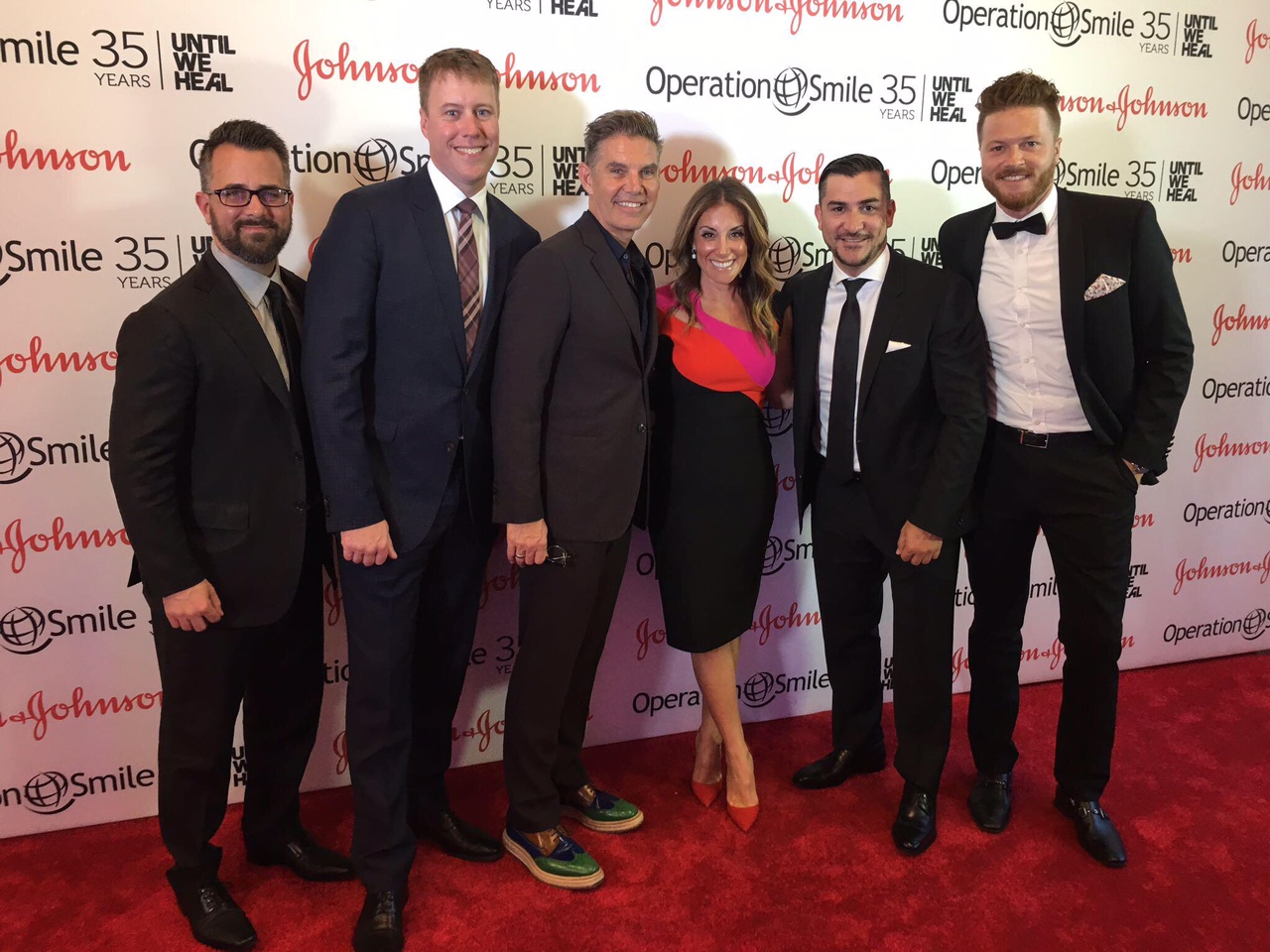
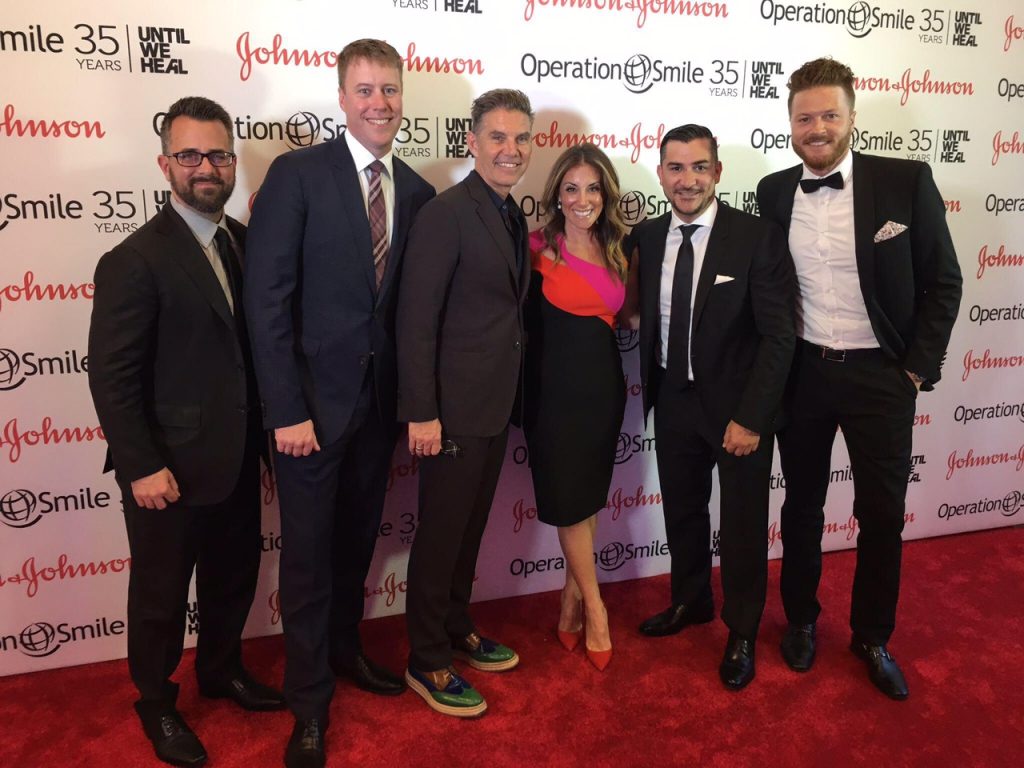
On Wednesday, May 17th, at West Edge, NYC, Operation Smile held its 2017 New York Smile Event to celebrate 35 years of providing free surgeries for children and young adults in developing countries who are born with cleft lip or cleft palate conditions. Over the years, this philanthropy event celebrating helping hands and generous hearts has become one of the most anticipated events of the spring season, bringing together 250 guest from Manhattan and around the globe to celebrate the cleft lip and cleft palate charity, including New York business and community leaders and other philanthropically-minded individuals passionate about this worthy cause.
Cydcor, along with our network of more than 3,000 volunteers from 375 independent sales offices, has been partnering with Operation Smile since 2010, holding an annual Day of Smiles fundraising event, along with many other fundraisers throughout the year.
Cydcor invited four top-fundraising independent sales office owners to attend the philanthropy event, which included a gallery exhibit, hors d’oeuvres, cocktails, and dancing. Also in attendance were Cydcor Vice Chairman Jim Majeski along with wife and Operation Smile Founders Circle Award winner, Barbara Majeski.
To date, Cydcor has raised more than $800,000 for Operation Smile, and we look forward to achieving more than $1 million raised on the organization’s behalf. Accomplishing that goal will make us smile too.
To learn more about Cydcor and our support of the cleft lip and cleft palate charity Operation Smile, please visit our donation home page.
Operation Smile is an international medical charity that has provided hundreds of thousands of free surgeries for children and young adults in developing countries who are born with cleft lip, cleft palate or other facial deformities. It is one of the oldest and largest volunteer-based organizations dedicated to improving the health and lives of children worldwide through access to surgical care. Since 1982, Operation Smile has developed expertise in mobilizing volunteer medical teams to conduct surgical missions in resource-poor environments while adhering to the highest standards of care and safety. Operation Smile helps to fill the gap in providing access to safe, well-timed surgeries by partnering with hospitals, governments and ministries of health, training local medical personnel, and donating much-needed supplies and equipment to surgical sites around the world. Founded and based in Virginia, U.S., Operation Smile has extended its global reach to more than 60 countries through its network of credentialed surgeons, pediatricians, doctors, nurses, and student volunteers. For more information, visit www.operationsmile.org.


We are proud to announce that First Data has awarded Cydcor the Top Tier Partner Award for delivering outstanding results in growing First Data’s market share in Canada. First Data, headquartered in Mississauga, Ontario, is a global leader in commerce-enabling technology solutions, serving approximately six million business locations and 4,000 financial institutions in more than 100 countries around the world.
With the help of Cydcor’s network of independent sales offices, First Data has seen an acceleration of its impressive growth within the past year. Cydcor is First Data’s largest sales partner, when it comes to reaching out to potential clients and making connections on First Data’s behalf.
“Cydcor has helped grow our business tremendously in Canada, reaching out to potential clients and making connections on First Data’s behalf,” said Marco Antico, Vice President Indirect Sales at First Data.
According to Cydcor’s President, Vera Quinn, this achievement is just the beginning. “We are determined to make a significant contribution to the growth of our client’s business," and we are proud to have exceeded First Data’s expectations in the first year of our relationship with them. We look forward to continuing to build a long and prosperous future together for our companies,” said Vera.