
Found 0 posts


Learn more about Cydcor at our website: https://www.cydcor.com/.
To run successful business, it’s essential to reach out to prospective partners and clients on a regular basis. However, many of us dread the idea of walking into a room and introducing ourselves to strangers—so making those initial connections can be tough.
Networking is a great opportunity to make business contacts and recruit new prospects. While it might seem like a difficult task, in reality it doesn’t have to be an uncomfortable experience.
To ease yourself into a “networking mind-set,” speak to people everywhere you go. This is a great way to practice conversation, as well as your active listening skills. Get into the habit of chatting with folks without the stressor of needing to do a sales-pitch or the pressure of fellow colleagues around you. This will help you get comfortable with more casual conversation and will make it much easier when the time comes to go to a convention or event.
Make a positive impression by having an upbeat attitude, as people wish to work and connect with those who are confident as well as optimistic. This assertiveness will increase your chances of a lasting impression; however, always remember to remain genuine. Being overly gung-ho or coming across fake can turn off those around you.
Cydcor is on Twitter! Follow us for company news and sales advice at @Cydcor.
Follow up with those you connect with. At many events and opportunities, business cards can be rapidly exchanged. Keep track of those cards and when you have a new contact, be sure to contact with them via email or connect with them on a social site such as LinkedIn within twenty-four hours. A simple, “It was fantastic to chat with you yesterday!” can go a long, long way.
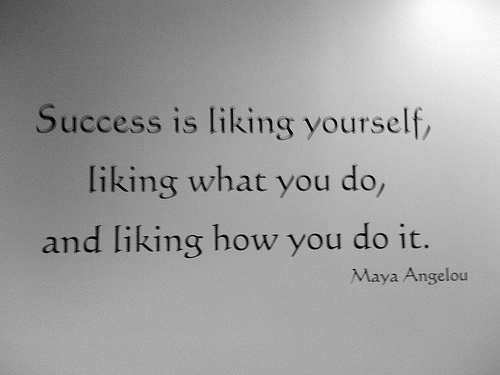
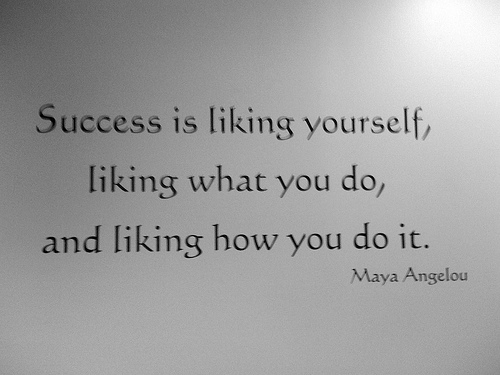
In a business environment, we all try to put our best foot forward when interacting with our co-workers, managers and clients. However, not everyone is immune from traits that might be off-putting, either consciously or subconsciously. In order to achieve long-term happiness and achievement, it is critical to be self-aware of not only your best traits, but also of ones that need improvement.
Negative Thinking
A lot of pessimists in the world consider themselves realists rather than “negative minded thinkers.” However, for others it can be difficult to be around those who speak incessantly of problems and issues, and who are stubborn to see the positive side of situations.
Being pessimistic is one thing—but remaining in a perpetually negative mind-set can frustrate those around you. Think carefully about how what you say might be phrased in a less negative light and try to see a problem as a new challenge to take the lead on.
Validation
Everyone loves to be appreciated and acknowledged for his or her efforts and accomplishments at work. However, those who constantly strive for validation are exhausting to be around. Those individuals get caught up in the need to prove their worth and to win those around them—to the point that they can over-attach to projects and be unintentionally draining.
It isn’t about what you achieve in the eyes of the group. It is about the journey, what you’re learning, and how you help those around you. Support comes from your team, and with a great assembly behind you, they will all learn and grow in the process.
Perfectionism
Author Michael Law once said, “At its root, perfectionism isn’t really about a deep love of being meticulous. It’s about fear. Fear of making a mistake. Fear of disappointing others. Fear of failure. Fear of success.” There is a lot of truth to those statements, and as a culture we tend to reward perfectionists for setting high standards. And perfectionists frequently are high achievers; however the price they pay for that success can be a source of great dissatisfaction.
Underneath it all, perfectionists have a high drive to succeed, however they need to realize the at times that “perfect” is an unrealistic goal. Such an effort towards perfectionism can often get in the way of the bigger picture, so figure out what “good enough” is, and be happy by letting go of unnecessary and unproductive pressures.
For more information about Cydcor, connect with us on LinkedIn.


Great businessmen and women know how to lead, inspire, and motivate their team—and more importantly, they know when to seek advice. No one has all the answers, and the best leadership experts agree that they’ve honed their skills through experience, advice and mentorships with others in the biz. So what do top experts say about leadership?
Michael Talve, the Founder and Managing Director of The Expert Institute:
"My best leadership tip is to think of leadership as a responsibility as much as an opportunity. Effective leaders understand that they are responsible for everyone that they are leading, and consider that responsibility as the main concern of their position. If you ever lose empathy for, and dedication to, the people you are leading, you are not being a leader."
Cydcor is on Twitter! Follow us today @Cydcor for additional business advice.
Frank Sonnenberg, author of Follow Your Conscience
"Leaders with character are highly effective. They have no need to pull rank or resort to command and control to get results. Instead, they're effective because they're knowledgeable, admired, trusted, and respected. This helps them secure buy-in automatically, without requiring egregious rules or strong oversight designed to force compliance."
Jeff Harmon, author of The Anatomy of the Principled Leader and founder of Brilliance Within Coaching and Consulting
"Repeat the words, 'It's not about me!' every day, multiple times a day. Don't make your leadership about being in charge, being right, getting promoted, or looking the best. Make leadership about the cause of the organization, serving the legitimate needs of those you're leading, and not taking yourself so darn seriously. You'll have people lining up to work for and with you and the results will follow."
Check out the latest video on Cydcor's YouTube about our headquarters move to Agoura Hills, CA: Cydcor Offices - Built for Results.
Peter Barron Stark, a consultant, speaker, and author
“When you're leading a new team or joining a new organization, honor the new team/organization's past, and then build them a bridge to the future. Too many leaders inherit a new team and want to tell everyone how much success they had in the past, and how good their old organization/team was. When leaders disrespect their new team, team members start asking each other the following questions: If your old organization or team was so good, why did you leave? If your old organization is so good, why don't you go back?"
Do you have any favorite leaders or leadership quotes? Share your thoughts with us in the comments below!

In a corporate environment, you might feel your creativity for motivating your team members is limited to kind words and small incentives. Traditional motivators include such things as gift cards and corporate swag like coffee cups and pencil holders. Larger incentives on the other hand, such as promotions and bonuses, tend to be in short supply. Here are some out-of-the-box incentives to offer your team members.
Parking
In the corporate world, especially in a heavily populated city, parking is a coveted perk in an office building. Whether you offer free parking, paid parking options, or assigned parking, there are several options you can offer to your workers as an incentive for top performances. A month of free parking? An assigned spot nearest the door? Covered parking options? These offer great appeal to many employees and can definitely be a motivator.
Split Schedule
Allowing a person to leave mid-afternoon to work from home for the rest of the day can be a tremendous reward. Often times a break from the monotony of the same schedule day in and day out is a bonus in and of itself. Allowing an employee to leave early so they can greet the kids as they get home from school, run errands, or even beat the traffic on a Friday can be especially appealing.
Personalized Gifts
A lot of employees appreciate a kind word from their boss, along with a small token such as a gift card, but you can always be a bit more creative. Instead of giving a generic gift card for something such as coffee, personalize it for that individual employee. Do they enjoy sports? Video games? A great non-fiction book? When you tailor a gift for an employee they will likely appreciate it more; even more importantly, they will take into account that you took an extra step for them, that you care and pay attention to their interests.

“On average, loyal customers are worth up to 10 times as much as their first purchase.”
- White House Office of Consumer Affairs
In 2011, American Express conducted a survey of their customers, which revealed that 3 out of 5 customers are willing to walk away from their favorite brand if they received poor customer service. Many entrepreneurs and businesspeople struggle with various aspects of customer service, but it’s clear that customer service can certainly make or break a business. In addition to the American Express survey, another research report showed that 90% of Americans are willing to spend more if it means excellent service.
Fantastic customer service can help a business rise in the ranks, and the loyalty of a client base that appreciates you and what you have to offer is paramount. Loyal customers are familiar with you and your brand, and therefore are much more likely to check out new products or recommendations you make.
“Brand ambassadors” are popular, especially on social media, where Tweets, photo posts and hashtags make it easy for customers to share a great experience—or a bad one. Keeping your customers happy, with quick responses to their questions or concerns, gives them a positive experience they wish to share. If they love your service or product, they will speak up and share, and word-of-mouth marketing is an extremely powerful channel.
Having brand ambassadors can assist you in creating new customers, as they are taking a recommendation of a friend or family member who mentions your services. This is a much lower cost to acquire, as most business need to advertise and market, offering free product samples or discounts in order to attract new customers. By providing great customer service, you create an experience others will want to share. And as a reward, they will sell others on your business.

Looking for an engaging presentation to truly inspire you or your team? TED Talks are a great way to start, with speakers ranging from musicians to entrepreneurs to authors and comedians. Their slogan, “Ideas Worth Spreading,” looks to inform, engage and educate.
There are nearly 2,000 TED Talks that would be considered business-centric, and Cydcor has checked into some of the top Talks, which explore the range of motivation, healthy work-play balances and how to inspire your workers. We recommend the following three TED Talks to inspire you in work and life:
Nigel Marsh: How To Make Work-Life Balance Work
This is a wonderfully humorous and inspiring TED Talk that explains how doing well in the business world can negatively impact your personal life if one doesn’t take steps to manage that success. Marsh is an author of inspiration and career advice books, and gives personal anecdotes on how being successful caused him to initially neglect his family. In his TED Talk, he discusses in detail how he took steps to take control of his work-play balance.
Simon Sinek: How Great Leaders Inspire Action
Cydcor has written previously on Sinek’s book, Start With Why, which provides research analysis on world-leaders and their ability to motivate. With Sinek’s TED Talk, he looks to expand upon his research, daring people to “think, act and communicate” in ways that are “the complete opposite of everyone else.”
Start With Why is a motivational classic, and hearing Sinek speak passionately on how communicating “from the outside in” is truly inspiring.
Tony Robbins: Why We Do What We Do
Tony Robbins is a tremendously successful inspirational speaker and business coach that has been speaking for over three decades on the power of motivation. His classic talk is one of the most viewed videos in TED Talk history, and Robbins’ energy is palpable on stage.
Robbins shows the importance of understanding emotions, and posits that to lead properly you have to understand what those around you truly need in order to get the best from them. The self-proclaimed ‘why guy’ will ask you to understand “why you do what you do.” Do you know the answer?


The overall consensus when meeting someone new is that you have thirty seconds to make a good impression. From the handshake to your following conversation, it can feel like a lot of pressure to nail such an interaction on the first try. But what can you do if you make a poor first impression? Whether you forget their name or a joke falls flat, top networkers say there are ways to bounce back.
“It is much easier to turn a good first impression into a bad overall impression than it is to turn a bad first impression into a good one,” said Anna Musson, an etiquette expert. When we meet someone new, our sensitivity and guard levels go up. "We like to think that we're right and once we've made up our mind about a person we need to be persuaded otherwise.”
Sometimes our insecurities get the best of us, and it’s easy to assume that others might think the worst of you. However, what we imagine is often far worse than reality. Own up to your feelings, and don’t make assumptions. Time is of the essence when it comes to damage control, but take the time to formulate your next interaction to address the issue.
Acknowledging where the breakdown might have stemmed from –-a joke or a curse word, for example— can be cleared with a simple, “I apologize for how I behaved and I realize I might have offended you.” Don’t over-apologize; so keep it polite and concise. Don’t put the other person in the uncomfortable position of having to reassure you.
For more information about Cydcor, check out our photos on Flickr, which have been updates with images from our recent Operation Smile Guatemala mission trip!
Be sincere, and own up to any breakdown during an impression without blaming others or circumstances. Depending on the situation, self-deprecating humor can really help you. Be mindful that it’s only directed at yourself, and does not make others uncomfortable. This can provide an opening for you to recover, but remember that too much humor can have the same effect as over-apologizing.
Every impression you create is a learning experience and can help you improve your body language and communication skills. Overcoming a poor first impression requires total ownership of your behavior and adds to your confidence and ability to learn from such mistakes. It’s also an opportunity for you to be mindful of appropriate interactions, and to monitor your behavior to make the best impressions possible in the future.


Cydcor is the worldwide leader in outsourced sales services. Follow Cydcor on Pinterest.
November marks the start of the holiday season for many businesses, and there’s no better time than now to begin preparing a holiday strategy. Be sure to take into account that in 2014 there is a shortened selling season, with only 26 shopping days between Thanksgiving and Christmas, so planning is key. Here are some tips to help you boost your online and sales presence during the biggest retailer and sales months of the year.
Research
During the holidays, everyone is vying for attention from potential consumers, so how do you get yourself to stand out from the rest? Start internally, by determining what message you want to send, what products you want to focus on, and what your customers have been interested in in previous years during similar time periods. Are you aware of online social trends? Where do you find the most social engagement, and what hashtags and images are doing the best in your sphere?
Decorate
Decorate your brand with the holiday spirit! Use fall or winter themed cover photos, profile images, backgrounds and the like. A few falling leaves or snow covered logos and images can really refresh your social pages and show customers you are doing proper upkeep on your assets and are on point with trends.
Traditional
A shout-out to a user via Twitter or a tag on Facebook is what’s popular these days and is certainly a quick way to reach out, but don’t undersell the value of the traditional approach. A handwritten holiday card to your key clients or circle figures can go a long way. In such a digital age, don’t neglect the small, personal touches that others can see going above and beyond to reach them.
Head to Cydcor Reviews for reviews of books regarding business, leadership, and productivity.


A business is nothing without the customers it serves. Truly great businesses also understand that it is important to foster rapport with clients to ensure that you can do business more than once—the key is to have an ongoing relationship with your client instead of just a one-time business dealing.
Clients can provide your business with so much more than money. Happy clients act as advocates, spreading the good word about a business on their own. If done correctly, you might even find fulfilling, long-term partnerships with some clients.
Here are some vital ways to turn your contacts into clients, and clients into trusted friends/partners.
Networking the right way
You are probably familiar with the idea of networking: connecting with a large group of people (business colleagues, business partners, acquaintances, past and current clients) in the hopes of helping each other in some way. The problem is that sometimes it is easy to forget that networking is a two-way street. If you use your network the right way, you can add value to the connections you make instead of only worrying about the value others give to you.
Follow Cydcor on Twitter for our latest company announcements and updates.
Keep in contact
Networking is wonderful, but it must be nurtured to survive past the short-term. No matter how engaging or memorable you are when meeting a contact for the first time, you’ll have to remind them that you exist or inevitably they will forget you. Even if your contact is uninterested in what you have to offer at the current time, that might change—and you’ll be there if it does.
Add value to the relationship: reward your returning customers
As mentioned above, be sure to add value to the relationship. This might be in the form of tangible rewards like coupons, discounts, or free merchandise—or it could be something a bit more abstract like passing along useful information or sending friendly messages about new products, services, or deals that they might be interested in. The goal is to not only receive from your clients, but to give back in the hope that they return the favor. This is crucial because, as many studies have found, returning customers spend more on average than first-time customers.
Care about your clients
Care about your clients as both important business transactions (by providing them the best of your services as possible) and as people. Be honest with them at all times and keep your word: it might seem like a no-brainer, but you are dealing with people, so you should treat them with the respect they deserve. They will appreciate it!
The final step: from client to partner
If you do everything right, you can begin forging a partnership with your clients. They will grow in value for you today and in the future—and you for them. They will add value to the relationship as advocates of your business wherever they go. View this partnership like a great friendship, and you will both be very happy.

Head over to Cydcor Media for advice regarding business, leadership, and office life.
Communicating in a clear and effective way is always important, both in real life situations and especially in business communications. We converse so much that we often forget to stop and think about what we are saying. When communicating in a professional context, you need to be aware of the little nuances that are held in your words and actions.
Here are some tips for becoming an influential communicator:
Have a clear goal and benefits for all parties.
Transparency is important. The worst thing that could happen is having your conversation be misunderstood. Therefore, you will want to make a clear goal when talking with a client, or potential client. It also helps to make sure that you frame your message in a way that presents the benefits for that party.
With that said…
Know your audience.
Your audience is whomever you are communicating with. Who are they? What do they want? How do they speak? What do they know? Understanding your audience is incredibly important because it provides you all the information you need to tailor your communications to be the most effective for that specific person or group of people.
Knowing your audience makes it less likely that you will waste time explaining things that are already known, glossing over important details that you assume are understood.
Connect with Cydcor on LinkedIn today!
Be sure to ask the right kinds of questions
Learn to strategically drop “leading questions” that prompt longer answers than “yes” or “no.” This will help guide your conversation in a productive direction.
Ask important qualifying questions to ensure that your leads will turn into a prospect. Largely, you’ll be asking questions that are focused around answering these key questions: Can and will you be able to authorize on the sale? What can I do for you to close on this sale?
Naturally, you should take information you learned from your audience and tailor the question accordingly for them, but these simple questions capture the essence of what you need to find out from your prospect.

When you think of productivity, being constantly active might come to mind. But while always being in motion can improve your productivity at times, it can also lead to mindless “productivity” where you waste time doing something that you don’t need to do.
The real trick is to work intelligently. Great time management skills are the first step to becoming a smart worker. Here are some helpful time management techniques that will help increase your productivity.
Do regular reviews of your productivity and take action to resolve issues with your productivity. You might want to do reviews either weekly or monthly—not so often that you begin wasting time evaluating everything, but not so far apart that their benefit is diluted.
Be sure to follow Cydcor on Facebook to keep up with our latest news and updates, including our upcoming Bahamas event, R&R 2014!