
Found 0 posts


Partnership is everything in business. In our first thirty years, Cydcor has had the privilege of meeting people from around the world, developing relationships, and creating new opportunities for growth and success. Though we live in a digital world, so much of our networking has happened in person, one handshake at a time.
Networking in person, especially as we become more accustomed to doing business online and over social media, can be a little nerve wracking when you’re just starting out. Meeting new people can spark anxiety. Entering new social environments and professional settings can make us feel like we don’t belong. But with a few tips that can shift your mindset around in-person networking, you’ll soon be making great connections like never before.
So, whether you’re off to a job fair, looking for partners in your next entrepreneurial endeavor, or just trying to grow your rolodex, here are three key things to remember the next time you’re networking.

We’ve all been there, trapped in a conversation with a new person, and wondering what to talk about. We want to make a good first impression, while also getting the conversation rolling with a good topic.
The secret is that we all have the same favorite topic: talking about ourselves. Studies continue to show that people like those who ask them questions – and engaging the person by showing genuine interest in them is a proven way to build rapport.
For those who are nervous speaking to new people, this is a great way to take the pressure off yourself. Let the other person do the talking, they’ll like you more for it!
You don’t have to take on the role of a Pulitzer-prize-winning journalist, your questions can be as simple as asking them their opinion on the event you’re attending together. Just because you’re in a professional setting, that doesn’t mean that there isn’t room for authenticity and personality. Ask them about their work, and try to discover what makes them passionate about it.
There is no such thing as a dumb question. Many of us avoid asking the questions we wish to ask because we don’t want to appear dumb. The person won’t think less of you for not knowing, instead they’ll appreciate that someone is actually curious about their insights.
In turn, they’ll start to ask you questions. A good conversation is a balanced one – and by sharing your thoughts and insights, the two of you will be able to discover where your passions, goals, and values align.

As you let the other person speak and share, you’ll be learning more about their wants, needs, and desires. If the goal of networking is creating mutually-beneficial partnerships, then understanding what the other person’s goals are is crucial. This will help you empathize with the person.
Leading with empathy can help you get over your social anxiety. When we get anxious in social situations, it’s because our thoughts are focused on ourselves, not the other people in the room. But when we focus our attention on empathizing with others, our mind stops worrying about our own anxieties. Being socially anxious isn’t selfish, per say, but it does keep us from giving others the attention they deserve.
As we explored in our last blog, authenticity is key to trust. Our anxieties can get in the way of being authentic, as we try to be somebody who’s cooler, smarter, or more successful than we are. But when we focus on other people’s needs, we no longer have the attention to worry about how they are perceiving us.
Referencing things that they’ve mentioned in follow-up questions and offering words of encouragement are ways that you can show empathy to people. This shows to them that you’re not just listening – you’re hearing them.

At Cydcor, candor is one of the behaviors we value. That’s because we want people to feel free to share their thoughts and opinions in order to create lively, impactful, and substantive conversations. So while you’re asking people questions and empathizing with their answers, remember to not leave out your own thoughts.
Many people in networking settings try to people please, agreeing with everything the other person is saying. But we don’t want to engage with those who just tell us what we want to hear – we enter conversations to learn things that are outside of us.
There are ways to show candor in a way that’s respectful – and ways to do it that aren’t. By empathizing with the person you’re speaking with, you can use a differing opinion to further that person’s perspective, rather than just trying to prove them wrong on a topic.
Collaboration is the key goal of networking. Would you want to work with someone that parrots your ideas, or someone with a different perspective on arriving at a shared goal?
With these tips, you’ll be having meaningful conversations with new contacts in no time. As you dive into in-person networking, remember this: in order to start collaborating with all the professionals you met, you have to follow up with them!
We live busy lives – and can even forget the best conversations if they’re lost in the shuffle. So whether by email or social media DM, get the ball rolling quickly after the first contact has been made.
Now that you have the tips, time to build the skills! Maybe we’ll see you at our next networking event.


At Cydcor, we’re in the people helping people business. That makes networking with our clients, community, and the independent ICL businesses in our network, central to what we do. Whether you’re just starting a career in business, or an entrepreneur trying to expand your horizons, you likely hold networking in just as high a regard!
There was once a time when networking happened in university classrooms, social clubs, and even in the bar on Saturday night, but these days most people have gone digital. Over 700 million professionals use LinkedIn to connect with peers in their industries and even Instagram is being used to forge new business opportunities and collaborations.
But while the digital revolution, accelerated by the pandemic, has boosted the power of online networking, are we losing sight of the in-person opportunities that are right under our noses?
At Cydcor, we strive to create progress through innovation, which means incorporating all the new technologies at our disposal. We also believe that one-on-one personal connections are what drives both a solid business and a happy life. That was one of the many reasons why we had so much fun at our National Conferences last August!
Let’s explore the benefits of seeking out in-person networking opportunities, in a world that puts an emphasis on the digital.

In the wake of the pandemic, one of the things we quickly realized is that trust is difficult to foster in online spaces. Harvard Professor Frances X. Frei and Leadership Coach Anne Morriss, writing for Harvard Business Review, discuss what they call the “Triangle of Trust,” which cites authenticity, logic, and empathy as three key drivers of trust.
Thinking about our difficulties in creating trust in online spaces, authenticity comes to mind. Social media, direct messages, and other forms of communication allow us to filter and edit our thoughts and ideas before we hit send, but that makes it difficult for the person on the other end to get a picture of the real us.
Trust is key in business and in life. Building relationships with the people you want in your network is all the more easy when you are able to show up authentically to them. The easiest way to come across as the real you, is to network in real life!

We’ve all heard that 90% of communication is nonverbal. While that commonly shared stat is a bit inflated, findings from body language researcher Albert Mehrabian revealed that 55% of communication is nonverbal, 38% is vocal, and only 7% actually comes from the words being said.
If you’re trying to engage a new business partner, start a professional relationship with a prospective employer, or simply grow your network, communication is your greatest tool. Online communication negates the power of body language and can, in text formats, make it difficult to infer tone.
We’ve all been there – wondering how many exclamation marks to put in our emails (enough to sound enthusiastic, but not too many that we sound over eager) and going through careful editing to make sure none of our ideas will be misinterpreted.
When networking in real life, these problems solve themselves in real time. Our bodies communicate our feelings in addition to the words we are saying – and any needs for clarification can be addressed in the moment.

Look, online networking is still a powerful tool. You should be using both online and in-person means to grow your connections both personally and professionally. But all the options online can make networking overwhelming at times.
Platforms like LinkedIn connect us to professionals from all over the world. This is great, but with the entire globe at our fingertips, where do we even begin?
In-person networking allows us to narrow our focus onto our specific local community. Less options means we spend less time wondering who we should be connecting with – and more time actually forging meaningful professional relationships.
You may be surprised about the opportunities that have been right under your nose this whole time. We can often get so wound up in the global perspective of the internet that we miss out on what’s happening in our own backyards.
We’re not just networking to meet new people (though that’s what’s so fun about it). We’re looking to build relationships and work alongside people who complement our skills and strengths. The goal of your networking efforts is to start collaborative partnerships, so part of the process is creating environments to do just that.
When you network in person and within your local community, you’ll end up in town with the people you are working alongside. This makes any partnership easy to logistically facilitate. There’s no working around multiple time zones, sending projects back and forth over email, or the like. Just as networking happened face-to-face, so can the ensuing collaborations!
The work you accomplish won’t be the only thing strengthened by such an environment – your relationships with your business partners and associates will be deepened by the proximity you share.
So now that we’ve explored the power of in-person networking, you may be wondering if we have any tips for networking face-to-face. Stay tuned for our next blog, where we’ll be sharing how to meet strangers, forge connections, and grow your network!
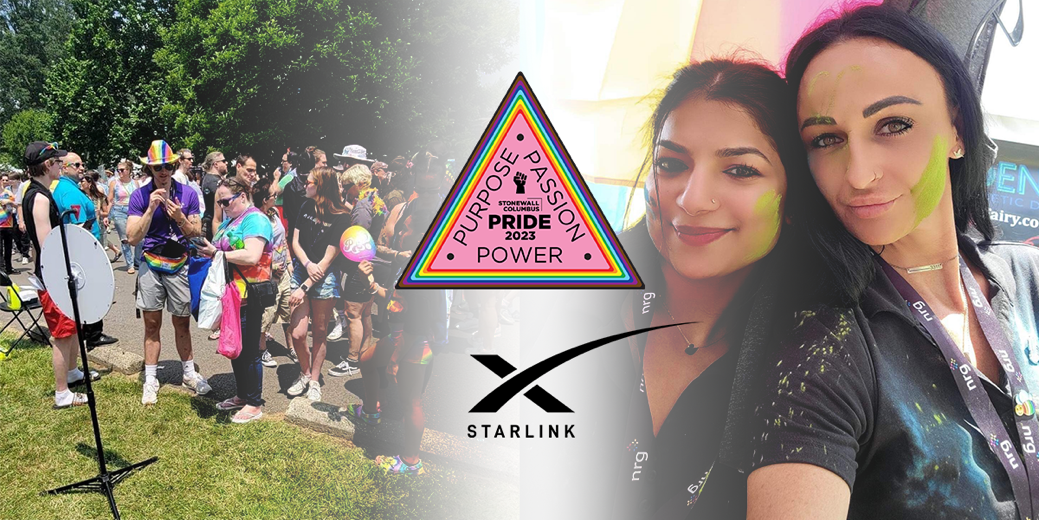
We contract with companies that are owned and managed by entrepreneurs – these entrepreneurs all have proven track records in sales and are who we choose to outsource campaigns on behalf of our clients with. These independent companies are constantly executing on innovative ideas and driving change. This story comes from one such company: Trig Inc., which adopted satellite technology to succeed at PRIDE in Columbus, Ohio.
To succeed in entrepreneurship, you have to be open to change and be ready to innovate. Beyond that, you have to be willing to execute – as new technologies, approaches, and strategies only become useful once they’re acted upon.
We are always being inundated with stories of change, innovation, and execution – which inspire us to do the same thing within our own business.
One of these stories occurred recently, when business owner Adrienne Peddicord, President of Trig, Inc., and her team attended PRIDE in Columbus, Ohio, to work on a campaign. They had been there the year prior – and a turnout of 1.7 million people had put such a load on the cell towers that the entire area lost service.
Because the Trig Inc. team uses contactless enrollment, last year’s outage had deterred their efforts. This year, determined to succeed at 2023 PRIDE, Peddicord and her team sought to evolve their services.
Be Open to Change:
The network connectivity provided by cell towers works - most of the time. But those who create change and push the envelope as leaders and entrepreneurs, don’t just accept when something only works most of the time.
Elon Musk is one of those people - and Starlink, one of his many companies, continues to expand our understanding of how network connectivity can work.
Starlink offers internet, mostly in remote areas, using satellites flying in low orbit. With the ability to bring internet access to places where cell towers aren’t even present, surely the service could serve as a reliable backup in the likely event service went down at Columbus PRIDE.
This year’s event ended up drawing a whopping 2.3 million people from the LQBTQ+ and ally community - over half a million more than the crowd that had shut down service at the prior year’s PRIDE.
The first step is to be open to change - and while Starlink isn’t a widely adopted technology (and still needs work to rival the low latency of cellular), Peddicord and her team at Trig Inc., knew that they needed to do something different. They went into the PRIDE event ready to give the satellites a shot.
Be Ready to Innovate:
This openness to change paid off.
“As the parade came to an end,” Peddicord recalls, “so did our service - as people swarmed in. But despite the towers going down, we were still in business!”
But introducing a new way of doing things means bringing up a whole new set of problems. That’s why innovation requires a readiness to solve problems as they come up.
“There were two very small hiccups where we lost the satellite connection,” Peddicord says. When this happened, her team got in touch with us, via our Cydcor help desk.
The companies we contract with operate independently, but we are around to provide consultation related to our clients’ sales orders to help optimize the sales campaigns. The two times that the Trig Inc. team’s connection to the Starlink satellites went down, Cydcor’s support team were able to collaborate on a solution.
“Moments after opening a ticket,” Peddicord says, “Cydcor’s IT team reached back out and within minutes - both times - we were back up and running.”
Instead of being phased by curveballs, the Trig Inc. team kept problem solving. The result was a day of innovation.
Execute:
In the end, you can be open to change and ready to innovate, but if you’re not willing to execute - it’s all one big waste.
Entrepreneurship requires doing - and that’s what the Trig Inc. team did - for the entire Columbus pride event. It doesn’t matter if you have every satellite in space working for you - if there isn’t a team on the ground ready to put in the work of serving people, these innovations would be worthless.
All in all, the Trig Inc. team secured over 500 enrollments that day - furthering the reach of the client, bringing solutions to the client’s customers, and celebrating PRIDE along with the rest of the Columbus community.
“We came together and were able to pull off this success,” Peddicord says. “This wouldn't have been possible without everyone being so open minded to this new idea.”
We continue to be inspired by the independent businesses we contract - and the entrepreneurs behind them. Learning from this story, how will you be open to change, ready to innovate, and willing to execute?

It’s summer now – and you can probably look outside right now and see nature at its fullest. What was just some buds a few short months ago, are now plants in their complete brilliance.
In our last two blogs we’ve been focused on growth: both for people starting a new career and for those looking to expand on their current role in the workplace. If you’ve been following along, you may be wondering what the final form of this growth looks like.
Those eager to advance their career will no doubt be called upon to be a leader. This is the end result of growth – when a person takes what they’ve learned from their journey and builds on it by empowering those around them.
So how do we grow into leadership? Let’s explore.
Be Humble
It all starts with humility. If you have the experience necessary to start taking the lead at work, it can be difficult to remain modest about all you have accomplished. Yes, it is important to take pride in the road that got you to where you are today, but it’s important to keep yourself grounded.
Remember, you’re just getting started – and there is so much more you have left to achieve!
Humility won’t just allow your team to relate to you better (and make you an easier person to be around), it will help you remain open to the innovative ideas and perspectives that every single person has to offer (more on that later).
Staying modest will also help you avoid complacency. There is always room for your own improvement and there is always something new to learn. In living this out, you will be setting an excellent example of constant growth that your team can be inspired by.
Take Accountability
Being a leader means that if a member of your team has a problem, you have one, too. The buck stops with you – and you have to take responsibility for the success or failure of your department.
This is one of the more difficult lessons to learn as a leader – as there are factors that will be outside of your control. But instead of pointing fingers when something goes pear shaped, taking accountability for what has happened will have a great impact on your ability to lead. When your team sees that you have their back, they will grow more motivated to move forward with better diligence.
This accountability ties into our next tip for growing your leadership skills: start using the word “we.”
Use The Word “We”
We is a powerful word. Imagine someone who has just completed a successful project. Their colleagues have had some input into the process, but it’s them who has put in the heavy lifting.
When presenting the results, they can either say “look what I’ve accomplished,” or “look what we’ve accomplished.” See the difference? If you were sitting in on the presentation, which line would make you more inclined to do further work with and for that person?
Leaders invite everyone into the process and are the first to give credit (even when they are shining a light on small-yet-impactful contributions). If you want to start being viewed as a leader in your workplace and beyond, start paying attention to and being quick to praise.
That starts when you adopt the word “we” into your vocabulary. Individuals speak for themselves, whereas leaders speak for their teams.
Teach Others
No matter what setting you find them in, leaders are teachers and coaches. They have risen to a high standard in their field – and are now tasked with fostering the same growth in the team around them.
Growth is not a zero-sum game. Be generous with what you know. Someone who rises to the top then pulls the ladder up behind them is no leader. Instead, think of where you started, what you had to learn, and the challenges you used to face, and think of ways that you can create the best environment for your team to thrive.
This environment is created with mentorship, knowledge, and
The best leader is one who doesn’t hide behind their own glory, but instead knows that the greatest honor is watching their team win. With the right mentorship, someone can even exceed the accomplishments of their teacher. This – for a leader – is something to be proud of and celebrate.
Keep Growing
There’s a old joke that goes something like this:
Two people go duck hunting. They bring along the second person’s hunting dog.
As the afternoon goes on, the first person says to the second:
“I don’t get it. Your dog used to be the best hunting dog there ever was. You could shoot a duck and he’d have it back to you before you could even blink. Today, he’s just sat around and barked. What happened?”
The second hunter replies:
“I changed his name to manager.”
Just because you’ve become a leader, that doesn’t mean that you don’t have room to still be growing. As you challenge your team to work hard, expand their horizons, and continue learning, you should be sure to be setting an example and putting what you preach into practice.

As spring ends and summer begins — you can probably look outside and see the leaves growing back onto the trees. Just as nature changes with the seasons, our career and professional journey can transform, too – if you allow it to happen!
If you’re looking for a change in your career, either from unhappiness with your current job or a longing for something more fulfilling, now is a great time to do it. Just take some inspiration from the budding plants and follow this advice.
Plant Yourself in The Right Environment

A plant could thrive in one environment and die in another. Each one is unique and needs a different type of soil, amount of rain, and sunlight to grow tall and strong.
People are much like plants in this regard. If you’re unhappy with your current job, it’s likely because it’s not the right environment for you.
This can trip people up: it can be easy to think that it’s your fault that you aren’t growing where you are. You may see others finding great success – and wonder what’s wrong with you.
Before you dive into growing into a new career, it’s helpful to do some introspection and get to the heart of your wants and needs when it comes to work. Assessments, such as the Myers-Briggs Indicator or the 16 Personalities test, can be a useful and fun way to accomplish this.
These tests aren’t flawless – nor can any assessment perfectly capture the unique individual that is you – but they can provide new revelations about what will be the best environment for your success.
Are you extroverted? Time to find a job that involves working with new and interesting people on the daily. Do you have an analytical mind? Maybe a job that involves studying fascinating and impactful data is the right fit for you.
With these new insights into yourself, you’ll be able to find both a job and an employer that provides you with the best environment to grow. Remember, with the right soil and amount of sunlight, every plant can succeed!
Nurture Growth by Asking Questions

If a plant needs sunlight and water to grow – what are the nutrients we need to thrive in a new career. The answer is information!
Ask questions. This is one of the biggest pieces of advice we offer to new Cydcor employees (it applies to just about everything in life, too).
Coming into a new career can make you feel like you don’t know enough. Everyone else around has worked their way into being an expert on their job and how systems function at the specific company. Starting out, it can be tempting to avoid asking questions, so that you don’t stand out too much as “the new guy.”
But you can’t grow until you say “I don’t know.” Get curious – about just about everything. For those looking to create healthy work relationships with their new colleges, asking questions has a great impact.
People love to talk about themselves and what they do. When you ask questions, most people don’t think wow – how do they not know this? Instead, they’re likely thinking wow – this person is interested in me and what I do!
To go one step further, don’t just ask how to do things – ask why they’re done this way. This will teach you about the shared values and logic of the new company you’re working for and will help you problem solve in the future when you are given work that nobody else has figured out yet.
Learn To Appreciate Rain

Spring is a time for beautiful flowers and baby birds to emerge, yes, but this time of year also sees its fair share of thunderstorms.
If you’re diving into a new career, failure is unavoidable. Trying anything for the first time is challenging – this is perfectly normal and ok!
To grow, you need to have gratitude for every hiccup, mistake, or misunderstanding that you may run into. You’re learning and each failure comes with takeaways that you can use for the rest of your life.
We’re sure budding flowers don’t always find the rain comfortable, but it’s what helps them grow the most.
Continue to ask questions and seek valuable feedback (even criticism) from your peers and supervisors alike. Most employers aren’t looking for someone who’s perfect, they’re looking for people who are coachable.
When you trip up, remember that showers make way for flowers.
Keep Growing!

This advice is all useful for those growing into a new career – but they can apply to anyone! A tree can only grow so tall and certain flowers only last a season – but when it comes to your career, there are absolutely no limits to growth.
We wish you success, learning, and joy in your career journey – wherever it takes you!

People helping people – that’s essential to our culture as a business. But what happens when people help people help other people? Here are the results of our latest Philanthropy Challenge and powerful takeaways that will help you use collaboration to create positive change.
At Cydcor, one of the most cherished partnerships we have is with Liberty Children’s Home – an orphanage in the Central American country of Belize. Known as a sanctuary, Liberty provides love, safety, and growth to over forty children, many of whom have been previously abused, abandoned, and neglected.
To heighten our efforts to support this charity organization, we organized a Philanthropy Challenge. Kicking off at NatCon 2022, this initiative ran from September 12th, 2022 to April 30th, 2023. Independently owned and operated companies, or ICLs, from across our network, were invited to participate.
All in all, the wide array of teams involved were able to raise over $70,000! Our team is currently working with the people at Liberty to determine how the funds can best be used to support the children.
From our network of independent companies, 32 teams took on the Philanthropy Challenge. These teams came from locations across the country – and allowed this initiative to have a presence in a variety of different communities.
If we were to go into this effort alone, we would have been limited by the reach and perspective of Cydcor. Inviting these independent teams to join us gave us new angles to consider how to maximize our efforts. This made us all the more powerful, overnight.
If you’re trying to leave a positive impact on the world, this is the first thing to consider. Who are the people that can bring another element to your initiative? What are the communities that are eager and ready to help out (if only someone would reach out to get them involved).
It’s corny to say, but we really are stronger together!
Everyone has different talents. The Philanthropy Challenge wouldn’t have had the same impact if we didn’t get every brain in the game. We leaned on the creativity of organizers to design pins, t-shirts, organize opportunity drawings with donated prizes, and even put together a paddle raise at our last event. These creative talents aligned in collaboration with the interpersonal skills of the people who conducted outreach and raised the funds.
Whatever your talents are, there are opportunities to serve your community and beyond. The secret is to align with a diverse network of people to form a dovetail of skill sets that create the most change possible.
Healthy competition, or social motivation, has been shown in research to improve attention on sustained physical effort. Inside all of us there’s a competitor (though some people take this to a whole other level). When collaborating on a charity effort, some friendly competition is a great way to keep everyone motivated and push beyond what was once thought possible.
Cydcor, in alliance with a network of ICLs, has long enjoyed a good-old-fashioned competition. Creating metrics for success, curating an exciting collection of donated prizes, and sprinkling in a healthy dose of fun is one of our team’s favorite things to do.
For this Philanthropy Challenge, the big prize is a once-in-a-lifetime opportunity, which also allows for the winners to continue to experience the joy of serving others. The top three winners will soon join Vera Quinn, our CEO, on her next trip to Belize. While there, they have the opportunity to volunteer at Liberty and meet the children the Challenge was created to serve.
Because collaboration is always the key to success, these winners will be inviting two team members to join them on this incredible journey of servant leadership.
Making it a competition created an atmosphere of growth. The success of one person would inspire another to push the envelope even further – and so on. This created a ripple effect of social motivation, making the astounding result of over $70,000 going to Liberty possible.
At Cydcor, we don’t believe in finish lines. So long as there are people on earth, there will be people in need of help. One day, we’ll be gone, and the next generation will be called on to provide support, service, and love to those in need.
With collaboration, we ensure that there will always be people ready, eager, and empowered to help people, because we create a movement that’s bigger than just us.
The success of the Philanthropy Challenge doesn’t just lie in Cydcor’s efforts, but also in those of the ICLs and the communities that they live and work in.
We’re committed to planning out even more ways to continue our support of Liberty Children’s Home, in addition to many more future initiatives that create positive impact in our community and beyond.
Collaboration will continue to be our greatest tool in accomplishing all this!
To learn more about the incredible work happening at Liberty Children’s Home, visit their website.


At Cydcor, we believe in constant growth – and we hope you do, too! In our last blog, we explored how to grow into a new career. Now, we’re going to focus on what to do when you’re established in your career and want to continue improving.
It’s not all about fancy job titles and bigger paychecks (though we’d be lying if we didn’t say these are great perks to growth). Building on what you’re already accomplishing in the workplace will increase your impact, open up new opportunities, and lead to a more fulfilling life.
Let’s keep growing!

First things first: growth comes to those who can manage it. Improving your position at work means taking on new (and larger) responsibilities. If you aren’t handling your current tasks with excellence – are you really able to take on more?
You can dream of that raise or promotion, but if there are areas to improve in your current role, your current role won’t be improving either.
If you can handle the little things, you will prove trustworthy for bigger responsibilities. So take pride in your current role – because it can build into something awesome!
Before you move to grow in your career, take stock. How could you improve what you're already doing? In order to move up, you’ll need to step out of your comfort zone, encounter challenges, and put in some hard work. This can start today – so get to it!

As we discussed in our last blog, most people are thrilled to share what they know with others. If you're aiming to grow in your career – the best thing to do is pick the brains of those who are accomplishing what you seek to achieve.
Start forging relationships with people at various levels of your company. It doesn’t just have to be the CEO, even the person who’s only slightly ahead of you in the process of growth has something to teach you.
Use this insight to start creating a plan for yourself. Looking at the top brass of your company, what do you think that your final goal can be? Learning from your coworker that just got a promotion, what are the steps you can start making today to get there?
Taking the experience of others and complementing it with your unique goals for life, you can come up with a vision for how you see your career going.
Having a clear vision is powerful in its own right, but everything is stronger together. The next question to ask: how can you align your vision with that of your company and your coworkers (who have their own dreams, too)?
Collaboration is one of humanity’s greatest tools, so think on the many ways your growth can impact and accelerate the improvement of your surrounding environment. With aligned goals, you will become someone that your work family can depend on. When you invest in the visions of others, they’ll be inspired to respond in kind.
Growth is not a zero-sum game. This is the philosophy that has helped Cydcor grow into what it is today – and it will help your career journey, too!

As we’ve previously mentioned, improving your position at work means taking on more responsibilities. Many of us fall into the trap of sitting around and waiting for that to happen. The people who grow the quickest are those who proactively seek out opportunities to expand their role.
Saying things like “that’s not my responsibility” or “that’s not in my job description” won’t lead to growth. To move forward in your career, you have to be looking for ways to constantly be expanding your job description – not allowing your current role to box you in.
Look around – everyone could use a hand. Whether it’s being ready to fill in when someone is away or indisposed, or it’s coming up with a solution to a problem that your office has deemed unfixable, there are always ways to proactively grow.
In helping others, you will help yourself. Opportunities are always available – but only to those who are ready and eager to take them on.

The idea of taking the lead can be scary – but you can’t keep growing in your career until you’re ready to lead those who are in your current position. That’s why it’s important to start fostering this skill now.
Leadership skill doesn’t come from a fancy title or a promotion. It comes from humility, a willingness to share what you’ve learned, and from taking accountability for now just your work, but the work of those around you.
For more on this topic, stay tuned for our next blog!
In the meantime, we encourage you to continue seeking growth in your career, finding new ways to build on what you’ve already accomplished. The future will be bright – and it’s you who will be shining!


What do you want the impact of your life to be? We would all like to leave the world a better place – so how can we use our careers to make a positive difference?
This may at first be a difficult question to answer. We can often think of our careers as separate from the legacy we’re leaving behind. But with the right mindset and approach to living out your values, you can find your place on a team that aligns with your mission to better your family, community, and world.
It’s 2023. Our world faces many challenges, from climate change to poverty. With so much work to be done to leave a better world behind, our careers must play a role in how we act out our higher values.
This isn’t just the right thing to do – this will enrich your life and help you reach your goals. When motivated by a mission bigger than yourself, you can experience a life of fulfillment, hold the joy of generosity, and form deeper connections with the community and world that surrounds you.
So, what does a career with positive impact look like? Let’s explore.

Most careers revolve around bringing a product, service, or solution to people who need it. Therein lies the first way that you can build a meaningful career that serves as a net benefit. If you can take pride in what you are offering clients and customers and the business that you work for, you’re on the right track.
For the entrepreneurs reading who either have or are soon to start their own businesses, thinking about what you offer is critical. Remember, sales is about leading people to the things that they need, so the best success comes when your first mission is to enrich the lives of your customer or client base.
As an example, we can develop the best methods for clean energy, but if there’s no business set up around making it available to people, it cannot have any impact. We tend to think that creating positive change is a job best left for charities, missionaries, and the like – but when we look at doing good in this light, we see that every career can have a positive impact.
Whether you’re in sales, marketing, accounting, or anything else, by aligning with brands that are bringing products and services that better the planet, your career can have a positive impact!

Success in your career means that you will find more opportunities to give back. Whatever you do, there are always ways that you can share the wealth of your hard work with others.
This is something that we at Cydcor hold very dear to us. We believe that you can make a career out of caring and we continue to discover philanthropic efforts that allow us to impact both our community and the world at-large.
In a past partnership, we were able to raise nearly $1 million to offer free cleft-lip and cleft palate surgeries to children in underserved regions across the globe. These are life-changing operations, which brought healing to nearly 4,000 smiles.
As of this blog, we are currently working with Liberty Children’s home, a Belize-based orphanage.
In addition, our Neighborhood Leader Program helps the independent sales companies in our network direct their passion and talents towards great causes in their local communities.
Philanthropy offers you many ways to take the gifts that your career has grown and share them with those who need a helping hand. This can help you find fulfillment and leave a meaningful legacy.

We’d do anything for our families. That’s why it’s important to consider the people in your life when creating a career of positive impact.
Building wealth that brings comfort, opportunity, and wellbeing for your spouse, children, and other dependents is likely a major reason why you show up to work. We want to provide for the ones we love. Keeping this at the forefront of your values is a surefire way to unlock motivation on even the most difficult of days.
But it’s not just wealth most people want to give their family and friends. Time is the most valuable thing of all! When building a career of positive change and fulfillment, remember to leave space for you to enjoy quality time with those who matter most.

Once you’ve found a way to offer something better, get involved with philanthropy, and support your family, what’s next? The positive impact your career can have does not stop there!
With a fulfilling and meaningful career established, next comes the beautiful opportunity to pass your knowledge, experience, and wisdom onto others – so that they too can create an impactful legacy through the work that they accomplish.
When you teach others, your positive impact multiplies. Knowing that the people you teach will then build on that knowledge and teach others – well, there’s no better or easier way to change the world than that!
Whether you’re just starting out your career, or are simply looking for something more, take some time to intentionally think about the legacy you can leave behind.
Let’s all commit to careers of positive impact!

First impressions matter.
In sales, a positive first impression can determine whether a customer decides to buy from you or a competitor. A negative one can cost you both money and the opportunity to establish a relationship with a new customer. The key to making a good impression and building rapport in sales is by applying the SEE factors — Smile, Eye Contact, and Enthusiasm. Non-verbal cues through facial expressions and body language can make the difference between success and failure — even before you say a single word.
First impressions are fast, but they last.
Countless studies, surveys, and experts vary in their claims on how long it takes to form an impression of someone — from 27 seconds to seven seconds to even as little as one-tenth of a second. Further research from an international team of psychologists shows that a first impression persists, even if a new experience contradicts it. People view the contradictory experience as a one-off occurrence tied to a specific context — a perception that’s difficult to change. The takeaway is that you won’t have a second chance to make a great first impression, so make every second — or millisecond — count.
Here are five tips for making a good impression and why they’re important:
1. Perfect your handshake.
A handshake is more than an initial greeting. It’s often the first connection with the customer and can set the tone for the rest of the sales conversation or meeting.
A good handshake should be:
2. Smile.
A smile is contagious. It communicates warmth and approachability, instantly putting the other person at ease and in a better mood. A genuine, inviting smile can improve your likeability and get the other person to respond more positively to you. When smiling, make eye contact to transmit openness, trustworthiness, and interest in what they have to say. People love doing business with those they like and trust. It's human nature.
3. Be confident.
Research shows that people who are confident appear more competent, credible, and trustworthy. They exude confidence through their expertise, attitude, presence, and demeanor. So, when meeting people, do your research and be prepared with relevant talking points and smart questions. Be calm and self-assured, not cocky or arrogant. Be articulate and speak deliberately and clearly. Stand in an open, relaxed posture with your chin up, back straight, and arms at your side. Finally, dress to impress because when you look sharp, you feel sharp. Being confident makes people comfortable around you and more receptive to what you have to say.
4. Be thoughtful.
Thoughtfulness is grounded in empathy, so tune into the other person, listen more, and say less. When someone speaks, show genuine interest and understanding by summarizing what you’ve heard and asking follow-up questions. Choose your words carefully and speak with honesty and sincerity. Read the room and modulate your tone and approach appropriately. Thoughtfulness creates an emotional connection that elevates the conversation and builds rapport and trust with the customer.
5. Be energetic.
Positive energy and enthusiasm are infectious. When you’re fired up, it shows you care and passionately believe in your product, service, and company. It engages and motivates the customer and gets them excited too. Just make sure you don’t get carried away. Nothing is more off-putting than over-the-top energy and enthusiasm that feels fake and insincere.
By following these five simple tips, you’re making a good first impression that’s a lasting good impression. You’ll connect with the customer, start building rapport, and improve your odds for success in any sales interaction.

With the right combination of work ethic, people skills, and self-discipline, working on commission is an extremely rewarding way to earn a living and build a successful career. Sales teams that work on a sales compensation plan earn more when the company sells more, making these pay structures a win win for both sales professionals and their employers. There are many types of sales commissions, but taking a job that offers commission either on top of or instead of a base salary can pay off for motivated employees looking to maximize their earning potential.
Let’s take a look at six benefits of commission work.
You control what you earn.
One of the best things about commission based work is that you can make as much money as you want. If you’ve ever had an hourly or salaried position, you know how frustrating it can be to have to wait for a raise in order to see a bigger paycheck. When you earn sales commission, however, you get to determine this yourself. This is especially great when you’ve got your heart set on a big purchase: in addition to saving up over time, you can increase your income and speed up the process.
It’s the best preparation for running your own business.
Have you ever realized that business owners are technically working on 100% commission? If their companies aren’t making money, they aren’t either. There is no better practice for an aspiring entrepreneur than a job that pays commission rather than a fixed salary. Whether working as a sales rep, a real estate agent, or earning another type of commission based pay, working on commission will teach you self-reliance, a no excuses mentality, organization, money management, and resilience -- all of which are essential for survival when you’re running your own show.
You aren’t micromanaged.
Another huge perk of being paid on commission is having a high degree of autonomy, which means that your boss isn’t looking over your shoulder all day. This is great for people who enjoy making their own decisions or who prefer working independently. With most commission jobs, it’s up to you to determine exactly how to structure your day to maximize success.
You can’t become stagnant.
When you’re picking up an automatic weekly paycheck, it’s easy to take your foot off the gas from time to time, especially if you know a co-worker is getting away with doing less work for the same pay. Jobs with a commission structure force you to stay on your toes, which is great for your professional growth. When you’re always on your A-game, career success is inevitable.
Your effort is rewarded.
As much as delayed gratification is crucial for long-term success, we all love a good immediate reward. One of the perks of commission work is the direct relationship between working hard and seeing results. Doing that little bit extra -- visiting that one additional customer, asking that one extra question, putting in that extra hour -- has the potential to pay off, literally. Each individual sale matters, and typically when the employee works harder the employee earns more too.
It’s fun.
There’s something to be said for ‘the thrill of the hunt’. Successful salespeople will even tell you that there’s something addicting about it. Nothing feels better than working hard, earning a sale, and seeing a happy customer. Since no two days are exactly alike, working on commission is always an exciting adventure.
If you’ve never earned sales commission before, the idea might sound intimidating. But, as anyone who has tried it for themselves will tell you, if you possess a student mentality, a strong work ethic, and an internal drive to succeed, you’ll find that the rewards of a sales commission plan are plentiful.

How many famous people can you name who started their careers in sales? Before becoming well-known actors, musicians, comedians, and CEOs, quite a few of today’s celebrity’s early jobs meant going door to door, working in retail, serving in restaurants, and telemarketing. Not only did these soon-to-be celebrities who once had sales jobs eventually hit it big, but their history in sales seems to have taught them some valuable lessons as well. Perhaps there is something to be said for a sales gig as the ultimate crash course in communication!
Check out this list of six celebrities who had sales jobs before they were famous.

Would you believe it if we told you that Johnny Depp was once a telemarketer? It’s true! Using made-up names, Depp phoned people asking if they’d like to buy pens. He only ever made one sale, but he considered the experience to be his first foray into acting.

This now-billionaire founder of the shapewear company Spanx spent nine hours a day for eight years selling fax machines door to door. She credits the experience with developing an immunity to rejection and teaching her that the best way to be persuasive is face to face -- both of which served her well in starting Spanx.

It’s kind of hard to picture this now award-winning rapper working at a chain retailer like the Gap. Indeed, he was a part-time sales assistant there during high school. In retrospect, West believes that this early job working with clothes sparked his inspiration to become a fashion designer many years later.

Billionaire entrepreneur Mark Cuban’s first job as a pre-teen was selling garbage bags door to door. Coveting a pair of sneakers that his father wouldn’t fund, Cuban took matters into his own hands by selling boxes of garbage bags at a profit of three bucks a pop.
This well-known comedian and talk show host used to live quite the different life! After dropping out of college, DeGeneres held a variety of sales positions, which included selling clothing, demonstrating Hoover vacuums in front of customers, serving, and bartending. Perhaps the celebrity’s early jobs in sales contributed to her talent for thinking on her feet and quickly getting people to like her.

Years before adopting this pseudonym, Stefani Germanotta was raking in the tip money as a waitress at a diner – which as most servers will tell you, is essentially commission sales! She made conversation with customers by telling stories and always kept it stylish in high heels. Maybe she translated some of her talent for earning tips into her later penchant for earning lifelong fans.
Like these stories of salespeople turned celebs? Check out this list of CEOs who got started in sales before striking it rich. To find out more about Cydcor, check us out on Facebook, LinkedIn, Instagram, and Twitter.
We are Cydcor, the recognized leader in outsourced sales and marketing services located in Agoura Hills, California. From our humble beginnings as an independent sales company to garnering a reputation for consistently exceeding client expectations and driving outstanding revenue growth, Cydcor has been helping Fortune 500 and emerging companies achieve their customer acquisition, retention, and business goals since 1994. Cydcor takes pride in the unique combination of in-person sales, call center, and digital marketing services we offer to provide our clients with proven sales and marketing strategies that get results.