
Found 0 posts

In late June, more than 1,700 sales representatives and 200-plus office owners from Cydcor’s network of independently-owned sales offices came together at the 2011 U.S. National Conference, held in Nashville, Tennessee. Attendees had an opportunity to attend informative breakout sessions, organizational lunches, and an awards dinner that recognized their hard work and stellar achievements.
Other exciting highlights: A presentation from one of Cydcor’s top clients, who spoke about growth and the quality sales that Cydcor’s independently-owned offices have demonstrated, the “Promoting Owner of the Year” award winner, who received a 2011 Range Rover Sport, and numerous recognitions that were given to top performers across the U.S.
“The client excited the crowd by explaining all of the potential opportunity on his campaign,” said Vera Quinn, chief operations officer. “He comes from a sales background and was rejuvenated by the energy of our people.”
The conference was a great opportunity for sales offices throughout the country to learn, network, and be recognized for their contributions over the past year. Each day, in states across the U.S., they work tirelessly on behalf of Cydcor’s clients, going door-to-door and business-to-business to deliver tremendous results. The exciting, event-filled weekend was just an example of the excitement and passion that each office has for their clients.


Most people make excuses. They are usually very logical and true. Winners, however, find a way to win no matter what the obstacles and difficulties. The U.S. women’s national soccer team exemplified this fact yesterday in its comeback win over the tough Brazilian team.
The U.S. team had many circumstances that could have been viewed as excuses for losing that game. There was a controversial red card given to one of the American players that on replay looked very questionable. So for much of the game, the U.S. had to play with one fewer player. Although Hope Solo, the U.S. goalkeeper, saved the resulting penalty kick, it was retaken because of another controversial call in which the referee said she had left the goal line too quickly.
Being a first player down and having some controversial calls going against them would have been legitimate reasons for the players not to give their utmost. However, the team never gave up. Abby Wambach kept pointing her index finger, indicating that only one more play would tie the game. It happened in the last minute of the game when Megan Rapinoe made a brilliant cross to Wambach, who made an equally brilliant header for the tying goal. It was done.
The U.S. wound up winning the game in penalty kicks and taught the world a lesson: Regardless of the bad calls we may get or of the obstacles in the way, we must dig deep down to our inner strength and find a way to succeed.
Walter Payton, aka "Sweetness," played with the Chicago Bears from 1975 to 1987 and missed only one game in his career. He was elected into the Pro Football Hall of Fame in 1993 and is remembered as one of the most prolific running backs in American football history. Hall of Fame NFL player and coach, Mike Ditka, described Payton as the greatest football player he had ever seen—and the greatest human being he had ever known. Payton’s incredible work ethic and humility earned him the respect of players and fans everywhere.
Payton had a 5-feet-10-inch, 200-pound frame and worked out every day, even in the off-season. He was acrobatic and quick but not fast, so he developed his signature "stutter-step" to help break runs and give him the edge on his opponents. He did not believe in running out of bounds and maintained a “never die easy” mentality. He played hard to win, and his determination led him to become the all-time leader in rushing with 16,726 yards and all-purpose yards until 2002, when Emmitt Smith broke his record. Payton also held the single game rushing record until 2000.
What gave Payton the will to achieve such great success? In the following excerpt from his autobiography, Never Die Easy, he attributes his work ethic to how his parents raised him:
"Competing in sports back then was everything. No matter what the game was or how much older and stronger the other kids were, we were taught to give it everything we had until it was over. Never give less than one hundred percent. If you start something, you shouldn't quit, that is what we were taught. If you're going to play, you might as well play to be your best.
My mother was a yard person and every summer to keep us out of trouble she'd have this guy to come in and dump this hundred pounds of topsoil in the driveway. She'd want us to spread the topsoil all over the yard. We had one shovel and a wheelbarrow... It was hard work and we were so small then, I was six, seven, eight, Eddie was a couple of years older. But there we were, trying to shovel and push all of this topsoil everywhere... If you want my opinion, there was no reason to spread all that topsoil except to keep us occupied and around the house.
I look back on it now, though and I think that yard work taught me a lot. I learned about working hard and staying with something even though the project seemed overwhelming... You have to imagine how big that huge pile of dirt appeared to a seven-year-old. I used to think we would never finish. We'd just try to make dents in it every day. Which is how you have to approach any kind of work. You have to take things one day at a time... You work as hard as you can for as long as you can and the small gains you make will eventually pay off. Eventually that mountain of dirt will be gone and you can go play baseball or go hunting."
We can apply Payton’s simple yet powerful formula for success on our own work and lives: Work hard, persevere and commit to do and be our best.
A colleague recently asked me who was the greatest influence in my life. Without hesitation, I replied, “my grandparents.”
I recall that my grandfather and grandmother came over every Sunday to be with my family. This was important to me because my dad worked every weekend. They taught me how to read, helped me develop a love of learning and took me to my first ball games.
It was their example, however, that inspired me the most. They were selfless in how they treated my each of us. They thought the best of everyone, listened well and never judged. They were nurturing toward my siblings and me, and their kindness shaped our characters. They were there for all of us, and nothing was more important to them than family.
My grandparents never lectured us on the importance of these values. They simply lived them and became our role models.
I aspire to be like these two amazing individuals, taking care to remember that the example I set through my character and actions speak louder than any words.


I believe that you may belong to one of the greatest generations of our time. You follow in the footsteps of other individuals who accomplished amazing things before they were 30. Steve Jobs co-founded Apple at age 21. Bill Gates co-founded Microsoft at age 20, and fellow Millennial Mark Zuckerberg co-founded Facebook at age 19.
So be proud of your considerable talents and ambition. Use your mastery of technology, your competitive spirit and intensity, your creativity and your aptitude for collaboration and communication. These gifts prepare you well for success in life and work.
It is important to remember, too, that all great people have had great mentors who have inspired and guided them. Bill Gates views legendary investor, Warren Buffet, as a mentor, and Gates himself has been an important influence on Mark Zuckerberg. Similarly, you should find people from whose knowledge and wisdom you could learn. Buffet said the key to success is to know who to be the batboy for. Good mentors can teach you how to avoid the mistakes and landmines that can harm your reputation and career prospects. Additionally, they can arm you with the knowledge and skills to perform at your best.
Certain concepts are timeless: sacrifice and struggle for long-term success; going the extra mile to reach your goals; if you get knocked down seven times, get back up eight; and so on. Mentors can help you with these vital lessons, especially when you are struggling. They can give you the support and guidance to help you get back on your feet and embrace something Abraham Lincoln once said: “Things may come to those who wait, but only the things left by those who hustle.”


In my previous post, I wrote about the great potential of Millennials. How do we help them reach this potential and motivate them to perform at their best? I think it starts with respect. They have lots of ideas that they will want to share. They are not afraid to go to the CEO during their first week of work and to make suggestions. This happened to me recently, and the suggestions were good. Listen to them. Hear them out. You may need to advise them on the “how” and “when,” but do not dismiss them. Keep them engaged.
Another thing to keep in mind is that Millennials are not patient. They want a lot of responsibility fast, so give it to them. They will surprise you with what they can do. Empower them or risk losing them to another employer or losing their full commitment and energy. Approaches like Ken Blanchard’s Situational Leadership® II and Situational Self Leadership are structured ways that can help both managers and their Millennial team members. Managers can learn how best to lead and develop their people according to their needs. And Millennial team members can learn to develop effective self-leadership and self-reliance.
Here are a few tips for mentoring and coaching your Millennial team members:


We have been blessed with some incredible generations that have built and maintained our country. The founding fathers fought for our independence and constituted the great federal and state governmental institutions that are still the engine of our country. The Civil War generation gave its life and blood to preserve our country and end slavery. The WWII generation toiled through a horrible Great Depression and led the defeat of Hitler’s Nazi regime and of Japanese imperialism.
The Millennial generation, which includes those born between 1981 and 2000, seems to get bad press. “Entitled,” “lazy” and having “unrealistic expectations” are words often used to describe Millennials. Indeed, every generation seems to underestimate the next. Plato wrote 2,500 years ago how his contemporaries worried that the next generation of Athenians were too soft, not hard working and wanted success without effort. Every generation since then has likely expressed the same judgments about the generation following it.
Yet, the young can do amazing things. Alexander the Great conquered most of the civilized world by age 26. Alexander Hamilton was 32, and James Madison was 36 when they led the writing and adoption of the United States Constitution. Albert Einstein was under 30 when he published the great theories that sparked a quantum leap in science and technology. We should never underestimate the next generation of talent.
I believe that Millennials could turn out to be one of the greatest generations of our time. They have three advantages instrumental to their success.
One, they have grown up during the tech revolution, making them the most technologically savvy and information-intensive generation of all time. The world is changing dramatically because of the Internet and digital technology, and Millennials understand it best.
Two, Millennials are achievement-oriented and used to working under pressure. Although this notion contradicts the popular view, Millennials study harder in middle and high school. Many take a plethora of advanced academic classes and study longer hours than did the baby boomer generation to which I belong. Today, getting into college is more competitive and puts greater importance on class work and test scores. In addition, many participate in intense, performance-based activities, such as club sports and dance, a fact that prepares them well for the highly competitive work world.
Three, Millennials know how to collaborate and communicate effectively with their peers to get work done. This skill is vitally needed in the real world and can make the difference between productive results and failure. I noticed my oldest would do school work with her classmates. I asked her if that was allowed since it had been considered cheating when I was in school; work was always done on your own. She said that the teacher encouraged them to study together. I realized the brilliance of this idea since one of the biggest difficulties at work is to practice open collaboration.
So here is a generation that is equipped with the skills to succeed today and tomorrow: superior in technology, competitive, high achieving and adept at collaboration and communication. The Millennial generation will lead the way to solving the most pressing economic, social, political and environmental issues in our history. And those of us from earlier generations who work with Millennials should not only encourage them, but also should collaborate and learn from them.
A team member who follows Stephen Covey on Twitter recently sent me one of his posts: “Leadership is communicating to people their worth and potential so clearly that they are inspired to see it in themselves. Are you such a leader?”
Covey’s post makes me think of The Wizard of Oz. Behind the smoke and mirrors, the Wizard is an ordinary man whose true power lies not in magic, but rather in his ability to help Dorothy, the Scarecrow, the Tin Man and the Lion see the innate strengths already within them. I am reminded to be just this type of leader, one who helps people believe in themselves and in their ability to accomplish what might at first glance seem out of reach.
As leaders, we must ask ourselves if we are inspiring our teams to live up to their own greatness. At times, they may have doubts that they have what it takes to succeed.
Our role is to help our people cultivate their full potential by investing in their development and nurturing their talents and aspirations. And as our people gain confidence and grow, our businesses, too, will grow with them.
Earlier in my career, I had talented people on my team who would perform excellently for a time, and then their performance would deteriorate. My approach was to look first at my own performance as their manager and to see how I potentially contributed to this deterioration.
That introspection taught me 10 things I could do to motivate my people to perform at their best:

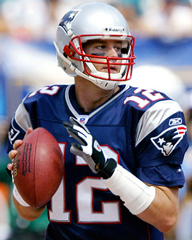
My wife and daughter recently watched the ESPN special, The Brady 6, about the events leading up to and after the selection of Tom Brady in 2000 as the New England Patriot’s seventh quarterback. I was somewhat surprised that they would watch a one-hour football show but then realized it told an inspiring story that could appeal to everyone. I highly recommend this documentary, which chronicles Brady’s rise to the top from humble beginnings—the story of someone who became great through sweat and determination, rather than through sheer talent.
Brady was the 199th draft pick during his senior year. With six quarterbacks picked ahead of him, he was drafted in the sixth round. He had been overlooked because physically, he had the worst combine (an athletic workout) of any quarterback likely in history. He was slow and did not jump very high. Additionally, he did not have the greatest arm and could not throw a tight spiral. In his senior year at the University of Michigan, Brady split the starting quarterback role with a newcomer, and NFL teams questioned why he lost the starting position.
As you watch the documentary, you learn that Brady outworked and out-prepared the other quarterbacks drafted that year. Except for maybe Payton Manning, he probably continues to outwork and out-prepare all NFL quarterbacks. Today, Brady holds numerous regular season and postseason records and is one of two players in NFL history with multiple NFL MVP and Super Bowl MVP awards. He is now widely viewed as one of the best NFL draft picks of all time.
Tom Brady’s story shows us that hard work and preparation, more so than natural gifts, are crucial to success. He overcame the odds and excelled at something he was truly passionate about. Rather than expecting greatness to be bestowed upon him, Brady earned it through determination, dedication and drive—a lesson from which we can all learn.
I recently spoke with someone who just opened his business but has lost his confidence. He feels that his people do not respect him because of mistakes he has made and because he no longer believes in himself. He asked me:
I, too, have experienced doubt and difficulty, as has every successful entrepreneur. All of us have had times in our careers when we have questioned our abilities and lost our confidence. These moments that test us, however, can strengthen our character and ability to lead, if we do not let them defeat us.
Experience has taught me the following lessons to weather adversity and emerge a more effective and inspiring leader: