
Found 0 posts


If you are looking to advance your career, you will definitely want to consider the power of positive thinking. While it may sound hokey at first, adopting a positive frame of mind can have a real impact on your potential for success, not to mention, making you feel good! Actively working towards positive thoughts in your everyday interactions with yourself and with others can improve your confidence, strengthen your relationships, and lead you to your life’s goals.
What is positive thinking?
Positive thinking involves a mental attitude that expects good and promising results. Incorporating positive thinking into your mind and your life can lead to a great deal of benefits because it can transform positive energy into reality.
You may not think of yourself as a positive or a negative person—you’re a realist. While that may be the case, even realists can get bogged down by a negative train of thought. Harnessing the power of positive thinking will train your mind to consider a positive outcome and then truly believe that that outcome will come true.
The problem with negativity
Negative thoughts are incredibly limiting. Henry Ford once said, “If you think you can, or you think you can’t—you’re right.” If you don’t think you can land a sale, you won’t. If you don’t think you can advance to your dream job, you won’t. Negativity will make you overthink your interactions, your work, or your effort, and it will make you believe that none of it is cutting it. A negative mindset can also make you comfortable with failure, which certainly won’t do you any favors.
Negativity doesn’t let you see the forest for the trees. It narrows your thoughts, creating stress and a flight or fight response. It can make you fixate on a single problem without giving you the room to consider alternative possibilities. Learning how to counter negativity with positive thoughts is essential for maintaining an upwards career trajectory.
How to use the power of positive thinking
Thoughts create your reality. Harkening back to another one of Henry Ford's most motivational quotes, "if you believe you will land a sale, your confidence will shine through, and you are more likely to achieve that goal. Additionally, a positive mindset doesn’t come naturally to a lot of people; it takes concerted effort to rewire your brain to think in this manner.
Try the following actions in your day-to-day in order to reap the benefits of positive thinking:
The benefits of positive thinking
When you actively work towards a positive attitude, you will begin to experience more joy, contentment, and love in your life. Furthermore, the power of positive thinking has a tendency to create what some call an “upward spiral.” Like a downward spiral, which is associated with the slippery slope of negative thoughts, an upward spiral can provide the momentum for broadening your horizons and increasing your rate of success. Use the baby steps tactic that you learned about to help propel you into an upward spiral.
Another great benefit of positive thinking is that you will be able to handle feedback and conflict in a new way. If constructive criticism used to make you squirm, positive thoughts can help you reframe that feedback into a learning experience. The same can be said for conflict: you can create new pathways in your brain to handle additional setbacks or issues so you can approach conflicts with a level head.
While many people think that success is a result of work ethic, persistence, or drive, behind it all is the power of positive thinking. Few of the most successful people would be where they are today—whether elite athletes, CEOs, or business owners—without the positive mindset and confidence that they would eventually attain their goals. Replace your negative thoughts with positive ones to start believing in yourself and believing in your own success. You will probably be surprised by difference positive thoughts can make.

Have you taken the time to ponder what you really want in life? Is there a bigger picture that drives you – a future that you feel deeply passionate about? Do you know what will give you an ultimate sense of peace and fulfillment? People find their internal motivations in a variety of ways, whether it’s focusing on providing for the ones they love most, envisioning the life they’d like to build for themselves, overcoming personal challenges and weaknesses, or conquering ambitious goals. Whatever you choose as your personal internal motivation, it has to be something that truly matters to you. Have you clarified your “why?”
#1: When you know your “why,” you have a reason to jump out of bed each morning.
Nothing is more mobilizing than having a purpose. It’s arguably better than a bucket of cold water being splashed on your face. When you have a compelling vision for your future as your internal motivation, you can’t help but to get up, get moving, and do all you can to have a productive day―even when no one’s standing there ready to pour.
#2: When you know your “why,” you develop successful habits.
Anyone who’s serious about their big picture goals wants to achieve them sooner rather than later, so they don’t have time for bad habits. People with a “why” design their day to day lives to lead them towards the future they want. They realize that since success isn’t achieved overnight, the fastest way to get to their goals is to remain self-disciplined throughout the week.
#3: When you know your “why,” you stay the course.
People who know where they’re going don’t just turn the car around and go home when they see a road block. That would only delay their ETA! They’ve got somewhere to be and they have every intention of getting there―no matter what challenges they face along the journey.
#4: When you know your “why,” you’re a stronger leader.
Everyone likes to follow someone who knows where they’re going―particularly since so many people don’t. When you’re on a mission for greatness, you attract like-minded people who are excited about joining you on your journey. Your contagious passion will make you a compelling leader who others will happily get behind.
#5: When you know your “why,” you’re more comfortable with sacrifice.
No one necessarily likes the idea of giving up one thing in order to have another―but there’s no such thing as actually “having it all.” The thing about making sacrifices, though, is that it’s all in the eye of the beholder. If you aren’t passionate about specific end goals, you’ll feel resentful about what you’re giving up. But if you are―when you really know your “why” and are grounded in your internal motivation―you’ll be ready and willing to do whatever it takes to acquire the things you want the most. As Friedrich Nietzsche said, “He who has a why to live for can bear almost any how.”
#6: When you know your “why,” you avoid unnecessary regret.
When you don’t have a grand plan, it’s easy to end up somewhere you don’t want to be. And the tricky part is that most people don’t know it until they’re already there. You can avoid looking back with anguish by making choices that are in sync with your greater vision. Connecting the dots from the short term to the long term will prevent loads of haphazard decisions that you’ll wish you didn’t make.
#7: When you know your “why,” you don’t get burned out.
When you’re passionate about your vision and truly driven by your internal motivation, all of your hard work is for an important cause. Even when the hustle gets exhausting, you know that you’re building towards the future you want. Your burning desire to get there provides the fuel you need to keep going.
#8: When you know your “why,” you’re a happier person.
Living a meaningful life is one the absolute best ways to become a happier, more positive person. When you care deeply about your end goals and you get to chip away at them every day, you can’t help but to feel grateful and excited about what’s to come.
If you’ve just finished reading this and you’ve realized “I don’t know my why!” don’t worry. Make it a priority to sit down with a mentor or wise friend to dig deep about what you want for your future.
If you’re someone who knows your “why,” tell us in the comments below! We’d love to hear what drives you and how your vision has helped you in your career.


Shirley Levine was an incredible educator that I had the pleasure to work with and learn from. She once asked some teachers, “What is your job?”
The teachers responded, “Teach the kids.”
Shirley said, “That is not it.”
The teachers responded with, “Educate the kids,” and similar concepts.
Shirley said, “That is not it either.”
After a while, when the teachers were perplexed, she said, “Your job is to get the kids to learn. There is a big difference. If your job is to teach, once you deliver your great lesson, you are done. If your job is to get them to learn, you are not done after the lesson. You are only done when they learn the material. Also, kids can learn a variety of ways. They can learn on their own, from their peers, from a book.”
I frequently need to remind myself of this concept. I too often get into teaching mode. My eldest daughter reminded me of this hearing me go over one of my presentations. She thought it was bad. I asked why. She said, “I felt like you were talking at me, not involving me. Millennials like to be involved to learn.”
After the initial shock of her dissatisfaction with a presentation I have given for over 25 years, I remembered this quote frequently attributed to Benjamin Franklin: “Tell me and I forget. Teach me and I remember. Involve me and I learn.”
Did Benjamin Franklin know about millennials 250 years ago? Or, is it always that we learn best when we are involved? It is much easier to teach than find a way to involve. But who wants easy?

Gary Polson is Chief Executive Officer and Chairman at Cydcor, the market leader in outsourced sales. With more than 25 years of business operations experience in accounting, legal and senior management, Gary has propelled Cydcor to unprecedented achievement with clients, culture and philanthropy since 2001. Under his leadership, Cydcor has increased its revenue more than six-fold since 2001 and has been recognized as “…the most respected sales outsourcing company in the world” by Datamonitor and The Black Book of Outsourcing, and one of the “Best Places to Work” by the Los Angeles Business Journal for eight consecutive years. Gary’s passion for excellence and never-satisfied approach has led Cydcor to earn both industry and employer recognition. With Gary at its helm, Cydcor has built its reputation on maintaining long term relationships with clients by consistently delivering results and by going above and beyond to help Cydcor’s clients gain market share and grow.

It’s no secret that effective leadership is critical to any company’s success. While each CEO brings a unique set of abilities to the table, there are some valuable CEO traits that everyone should have. Whether you’re a fledgling leader or a seasoned pro, adopting these 7 CEO traits will help you become more effective in your role.
In today’s challenging business environment, change is inevitable and adaptability is the new competitive advantage. Great leaders recognize that the strong CEO trait of being able to adjust makes you more valuable in an ever-changing environment. It enables you to excel as a leader because you gain experience and learn to modify your responses to handle different situations appropriately.
Communication is key in any company, but it’s an especially important CEO trait. Having good communication skills means knowing how to position matters in the best way possible to help you achieve your desired outcome. Communication isn’t only verbal—it includes non-verbal cues such as facial expressions and body language which can affect the impact of your message. Great leaders are able to be unemotional and manage conflict by giving everyone a voice, but not necessarily a vote.
A high-performing CEO trait is the ability to listen. Great leaders consistently listen to others and seek out the ideas, opinions, and even the advice of others. They recognize the need to be able to read people and adapt their management styles to elicit the kinds of responses and actions needed to produce results. Effective leadership comes from those who are continuously learning and are open to feedback from others.
Strong CEOs are influential, inspirational, and good motivators. They are able to create alignment and get all stakeholders—whether employees, board members, or clients—to buy into the business’s strategy. Having buy in at all levels is critical to effective leadership, executing the business’s strategy, and achieving its goals.
Taking calculated risks means considering all the possibilities and probabilities before taking bold and assertive action that has the potential to produce growth and results. Effective leadership requires driving transformation and innovation by daring to take these calculated risks and learning from the occasional failure along the way. Embracing risk also helps to overcome the fear of failure, as leaders realize that setbacks are the most effective way to learn and grow.
Effective leadership requires a clear vision that team members can buy into. CEOs need to be able to communicate in such a way that they instill confidence in others and elicit the kinds of actions and thinking that result in better performance. Effective leaders have conviction and are able to understand all the working parts of a business, and make quick, far-reaching decisions that benefit the company as a whole.
Many high-performing entrepreneurs will tell you that having resilience is key to success. Despite best efforts, the path to success isn't always a direct journey. Sometimes success is built on failure; as a leader, you need to be able to turn failure around and learn from mistakes. Successful CEOs are resilient because they understand the impact of failure, learn to think differently, and are determined to achieve their goals no matter what.
Having these key CEO traits will help differentiate you, foster effective leadership, and elevate you to become the most exceptional leader you can be.
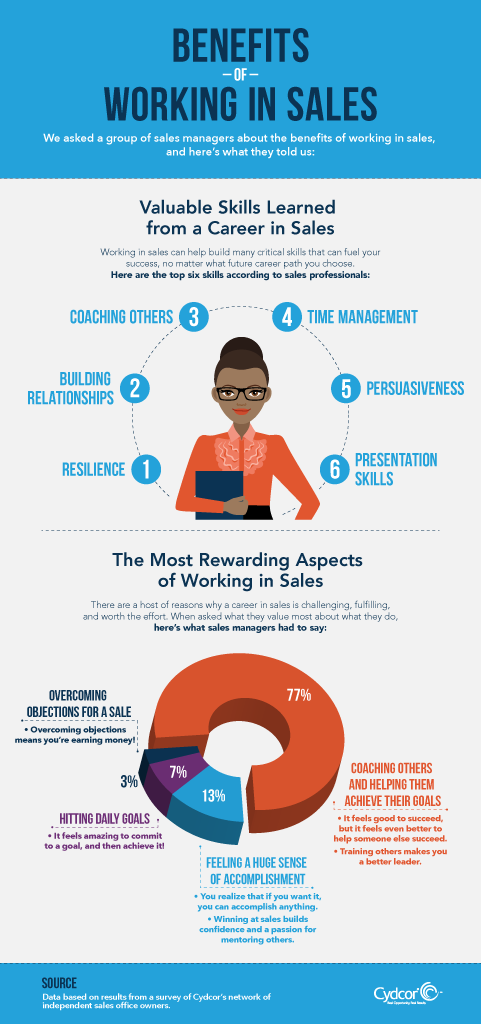
We Asked About Careers in Sales; Sales Managers Answered.
Whether you're pursuing a career in sales, or you’re considering one, working in sales is exciting, challenging, and highly rewarding! A career in sales can benefit you by helping you find focus, teaching you to set ambitious goals and achieve them, and by showing you the value of helping others reach their goals, as well. We asked a group of sales managers about what they believe to be the best and most rewarding aspects of working in sales, and the results are in. Check out our findings in the sales infographic below:
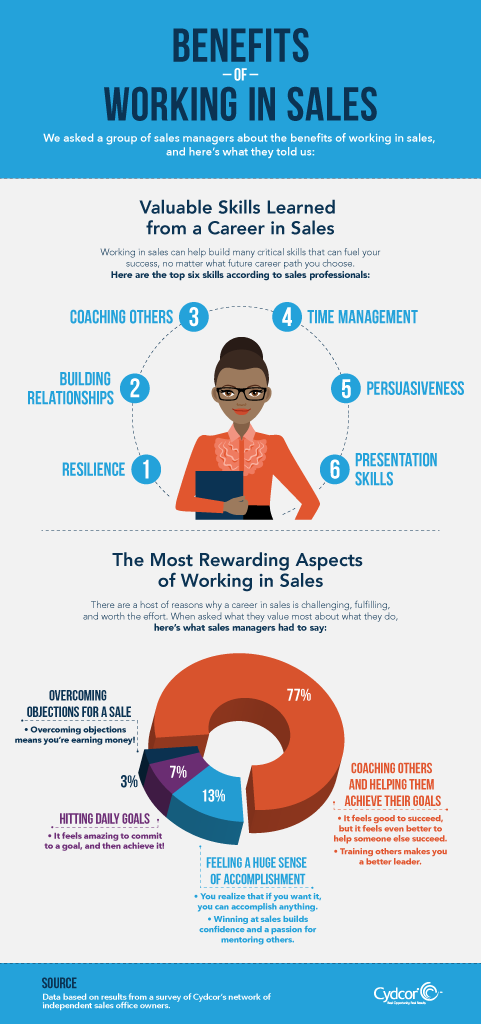
A career in sales can have a profound impact on you and your future success. Even if you only work in sales for a short time, gaining sales experience can increase your value to a potential employer by expanding and improving your skillset. It can also bolster your leadership ability by putting you in a position to mentor others, to help them achieve their own career goals and aspirations.


The crowd falls silent as you walk out to the podium, and with hundreds of eyes fixed on you, you try to speak, only to realize you can’t remember a single word of your speech! This is the nightmare scenario so many of us play in our heads in the hours before we know we’ll need to speak in front of a crowd. The fear of public speaking, glossophobia, is one of the most common phobias, and many people avoid public speaking in order to escape their anxiety. But dodging the microphone or avoiding speaking in front of others can have career consequences that are worse than that temporary feeling of dread.
Public speaking is a great opportunity to demonstrate leadership, draw positive attention to yourself, and share your point of view. Avoiding public speaking invitations, simply because you’re afraid, is doing yourself a disservice that could stifle your career growth. You can overcome your fear of public speaking by approaching it with the right attitude and by calling on a few helpful tips and tricks.
1) Focus on Them, Not You: Public speaking anxiety often centers around feelings of insecurity about how you look and sound. By focusing on what the audience is getting out of your speech, you can take your mind off those worries about being judged. Remember that you’re speaking in front of a crowd to communicate something important. Are they absorbing your message? Are they connected? The more energy you put into conveying your main point, the less you’ll have available for self-criticism.
2) Speak from the Heart: Public speaking can feel awkward because we may think we have to pretend to be someone else – someone smarter – more knowledgeable. Instead of playing a role, just be sincere. Use examples you know well, relate to, and about which you feel strongly. The audience will pick up on your passion for the subject. When you speak in front of a crowd about your own perspective, you’re more likely to remember your speech, remain calm, and be convincing and compelling.
3) Breathe: It may seem obvious, but breathing properly is a proven technique for overcoming anxiety. Being deliberate about your breathing during a public speaking engagement can have multiple benefits. It reminds you to stay in the moment and get out of your head, and it slows you down, which prevents rushing through your speech and allows you to build confidence as you go. Breathing deeply also helps you control the sound of your voice, and it has a calming effect that prevents nerves from creeping up on you.
4) Practice, Practice, Practice: The better rehearsed you are, the more confident you’ll feel on stage, helping mitigate any fear of public speaking. Focus on your delivery more than specific words, and practice reading your presentation aloud. If possible, perform your speech in front of an audience, even if it’s just a friend or loved one. If you plan to use cue cards or a PowerPoint, practice with those as well, and make sure you’ve designed your cheat sheets in ways that are simple and easy to read. Cue cards with huge blocks of text can be confusing. Instead, use clean bullet points, and make sure the cards are numbered so you don’t mix up the order of your presentation. Record yourself via audio or video recorder and review your presentation as though you were an audience member. You’d be surprised how much changing your perspective can help you improve your public speaking performance.
5) Take Pauses: When you’re nervous, it’s tempting to rush through your presentation, but taking occasional pauses can help to calm your nerves and improve your delivery. Pauses create a break in your speech, which gives the audience a chance to react and absorb your message. Pauses help to add emphasis and can force you to get back into the moment rather than obsessing about the next line you have to recite.
6) Embrace Your Nerves: Don’t judge yourself for being nervous. Your anxiousness about public speaking is a sign that you care about doing well and you’re invested. Studies have shown that trying to stop yourself from being nervous is a losing battle. Instead, transform your nerves into another feeling: excitement. Use your nerves as a way of bringing energy to your presentation as you speak in front of a crowd.
7) Start with a Story: When it comes to public speaking, what people will remember most is how you start and how you finish. Begin with a story, joke, or memory to draw the audience into your presentation right away. This also helps you put their focus on your message rather than your performance as a speaker.
8) Don’t Memorize Every Word: It’s tempting to rehearse to the point that you know every single word, pause, and inflection by heart. This could backfire big-time if you happen to miss a word, completely throwing you off for the rest of your presentation. Instead, memorize the beats, the main points you need to make, and instead of focusing on the exact delivery, put energy into staying in the moment and connecting with your audience.
Public speaking doesn’t have to be painful. In fact, it shouldn’t be. Taking center stage to speak to a crowd is an exciting opportunity to share your voice and demonstrate your ability to motivate and inspire. While your instincts might tell you to get through it as fast as you can and to try not to think about what you’re doing, that approach will almost guarantee a poor performance. As daunting as it may seem, try to enjoy the moment. Remind yourself of the potential benefits of doing a good job, and remember that the people in the audience aren’t there because they want to see you fail. They are there to learn something and to hear what you have to say. Prepare yourself well and your ability to capture the crowd may surprise you.


Working in sales can feel like the career equivalent of boot camp. It puts your mental toughness and endurance to the test, but if you’re brave enough to give it your all, working in sales can transform you from a career weakling to a business powerhouse. Whether you're interested in a sales career or not, taking a job in the sales industry build critical skills that are necessary for success whether you’re a recent graduate, trying for a big promotion, a small business owner, or a top executive.
1. Knocking on Doors…Literally and Figuratively
The scariest part of a job in sales is approaching people you don’t know and asking something of them. What if they slam the door in your face? What if they get mad? What if everyone you talk to says no? But succeeding in business is all about hearing no. You have to learn to deal with rejection if you ever hope to succeed in the real world. Working in sales is the perfect training ground for building that thick skin you need to apply for a job, ask for a promotion, close the deal, or solicit new clients.
2. Becoming a Master of Improvisation
Working in sales teaches you to think on your feet. You never know exactly what the customer might throw at you, and you have to learn how to listen and adapt to their objections and concerns on the fly. Entry level sales experience teaches you to be nimble minded and improves your public speaking skills, so you can help pitch a new idea to a team, respond to a real-time public relations crisis, or scramble for options when project funding falls through.
3. Relating to Others
In order to make the sale, you have to learn how to build rapport and find common ground with people you’ve never met before. The ability to understand where others are coming from and relate to them on their level is handy in almost any work scenario. Customers prefer to do business with people they like and they tend to trust people they relate to. This skill can help you in your job search too as you meet prospective employers and try to impress hiring managers.
4. Asking the Right Questions
Great salesmen know how to find peoples’ hot button issues. Not everyone will tell you what their objection is; sometimes you have to probe a bit and do some investigating to find what’s really holding them back. Being a good detective and understanding how to do research are sales skills that are critical to overcoming roadblocks and achieving success in business.
5. Highlighting Benefits
Whether you’re selling something door to door or selling yourself on a blind date, the fact remains the same, people want products, companies, and people who will make their lives better in some way. Learning how to appeal to people’s needs and wants is a powerful tool that can help any time you need to make a case for something, whether it’s donating to a great cause, investing in your feature film, or offering you the salary of your dreams.
6. Sounding Like an Expert
The best sales people understand that people want to buy from someone who knows what they’re talking about. But as important as it is to thoroughly know your product; it isn’t really what you say that matters, but how you say it. Being confident and sounding like you know what you’re talking about is the secret to building trust and gaining consensus. Work experience in sales is the perfect way to practice sounding like an expert, even when you’re not.
7. Talking Numbers
Negotiating makes a lot of people uncomfortable. We feel like we’re being impolite when we ask people to pay for something, especially when the price is higher than they’d prefer to pay. Working in sales forces you to face that fear, and learning to stand your ground at the negotiating table can help you finally get that big pay bump, large investment, or executive title you’ve wanted.
8. Capturing and Keeping Attention
To be a good sales representative, you have to know how to turn it on when you enter a room. Entertaining your audience and telling a good story is one of the most effective ways to build rapport and get the customer on board with your message. Learning how to engage others can be invaluable for public speaking, networking, or pitching ideas.
9. Earning Trust
People are naturally suspicious of strangers, and they’re especially suspicious of salespeople. That’s what makes earning a customer’s trust such an impressive feat. It’s also a powerful tool. People buy from people they trust. Learning how to convince others to put their faith in you has limitless benefits in business and in life.
10. Setting and Achieving Goals
The life of a sales person is all about setting targets and hitting them. You learn how to dig deep, stay self-motivated, and set challenging, yet achievable goals because achieving them can often mean the difference between having a great week and struggling to pay your rent. And strategizing how to meet them is key to succeeding at almost anything.
Sure, working in sales can be tough, but as anyone who has tried their hand as a sales rep will tell you, it’s also worth it. Sales experience hones indispensable career skills that can help you get ahead and overcome challenges for years to come.


Discover how student mentality breeds success, and personal development, for employees in this article from Cydcor. Lifelong learning helps exceed goals.
When you’re a student, your whole job is to learn. That’s why companies like their employees to maintain a student mentality. And while organizations want to hire expert talent, employees who think of themselves as experts may miss the opportunity to continue growing and improving. By encouraging employees to think of themselves as students, employers foster a culture of ongoing personal development, inspiring employees to seek out valuable lessons in every task they’re given.
Here’s how a student mentality creates better employees:
1. Teaches Them to Listen
Unlike seasoned veterans who may be less open-minded to new ideas and approaches, students are in a constant state of openness. They pay attention to people and experiences, absorbing information and searching for valuable takeaways. Staying on the lookout for new ideas creates a fertile breeding ground for innovation.
2. Keeps Them Humble
There is no employee, no matter how senior, who can’t improve in some way. Adopting a student mentality reminds even executive level employees that they always have more to learn.
3. Keeps Them Focused on Growth
Students have a hunger for information and a drive toward personal development that people often lose as they move ahead in their careers. A student mentality challenges employees to set the bar higher. It pushes them to perform at their best and continue redefining what their best might be.
4. Reminds Them to Study
Encouraging employees to think like students reminds them that it’s important to stay abreast of the latest industry trends and take advantage of resources such as trade journals, white papers, blogs, and events for their own personal development.
5. Forces Them to Question
Being a student means admitting that you don’t know all the answers. Employees who think like students become attuned problem solvers. They’re willing to challenge assumptions, and they learn to probe for new approaches that are better, faster, and more cost effective.
6. Keeps Them Competitive
Students are constantly learning and applying new skills, maintaining a student mentality urges employees to keep their abilities and knowledge finely tuned and up to date with industry trends. This may mean learning new software, attending seminars, or taking online training courses.
7. Makes Them Better Leaders
Students often make the best teachers because they learn how to effectively communicate with others. By asking employees to think like students, employers also provide opportunities for employees to mentor each other, which helps them become even better leaders.
8. Keeps Them Open Minded
As employees advance in their careers, it’s easy for them to become rigid and set in their ways. After all, doing things the old way got them this far. But an environment that values constant learning pushes them to consider new ways of thinking and reminds them to stay flexible and open to change.
Employees who maintain a student mentality don’t assume they already know everything. They understand that useful new ideas can come from anywhere and anyone. By staying open to innovative thinking, and constantly striving to learn more and improve, employees who think of themselves as lifelong students have the kind of forward thinking that helps organizations reach their goals and beyond.

In between feeding-frenzies featured on this popular television show, smart entrepreneurs can find practical business strategies. You’ll find tactics to improve day-to-day operations and invigorate long-term business plans
Have you ever seen the television show Shark Tank? If you have, then you know it is both entertaining and educational. Watch the program and you’ll find strategies that will enhance your professional performance and help you make the move from employee to entrepreneur.
We’ve pulled out 5 essential strategies from Shark Tank that every aspiring entrepreneur should know. How do you measure up?
Know How To Tell A Story
The first thing people will notice is you—the person making the pitch. It’s your job to tell a great story about your product. You must be able to tell your story with passion, clarity, and a bit of humor. Rehearse your pitch until it’s flawless. Practice doesn’t just make perfect; it often closes the deal.
Believe In Yourself
Each time your reach out to a new customer, you have an opportunity to make a difference in their life. But you must have confidence in your abilities to sell your product or service. Believing in your product is just good business! If you believe in your product, the more likely it is that the customer will too.
Develop Pragmatic Passion
Be pragmatic and practical when you’re pitching your product or service. If you are not finding success with your pitch, then seek advice from a coworker or try another strategy.
Understand Your Industry
When a customer asks questions about your product or service, you must have the answers they need. You must have a full understanding of your industry, your competitors, and your product or service. Make it clear to the customer what sets your offering apart from someone else’s.
Your Opportunity Is Waiting
Customers seek someone with a solution. Why not you? The difference between closing a deal and losing a deal is simple: salespeople who close the deal see an opportunity and take a risk. Taking risks can be daunting, but that’s how you create new opportunities.
You need persistence when you’re trying out a new strategy. You may not see results right away, but don’t give up. These Shark Tank strategies will clear obstacles from your path—a path that leads to career growth and expertise. Learn these strategies and you’ll be able to swim through any shark tank with confidence.
Are you an entrepreneur who thinks like a shark? Share the strategies you depend upon to grow your business. Post your story on Twitter, follow us @Cydcor, and share this article with your friends and start a conversation with your community. #Cydcor #strategy #entrepreneur
We are Cydcor, the recognized leader in outsourced sales services. From our humble beginnings as an independent sales company based in Canada to garnering a reputation as the global leader in outsourced sales, Cydcor has come a long way. We’ve done this by having exceptional sales professionals and providing our clients with proven sales and marketing strategies that get results.

TED Talks will improve your understanding of a complex concept or help you to master new skills. Humor, imagination, and authentic emotion energize these talks and guarantee your engagement.
TED wants to change your life. It’s that simple. This popular nonprofit was launched in 1984 as a conference exploring the convergence of Technology, Entertainment, and Design (TED). TED Talks offer viewers a glimpse into the workings of some of the leading minds in the world today.
The problem with such a vast array of rich resources is that it makes tracking down the topics that will provide an immediate career benefit a bit more difficult. When you have the time, plan to take a tour of the TED Talks available online. You never know what insights you might find from a subject that has no direct connection to your industry.
When your time is limited and you’re looking for insights to improve your performance in business and sales, start with these 10 talks. Each speaker we’ve selected provides a powerful personal story and insights that will have a direct impact on your professional life.
Make yourself comfortable and prepare to open your mind. Your journey to excellence is about to begin.
1. The Puzzle of Motivation | Dan Pink
2. Five Ways To Kill Your Dreams | Bel Pesce
3. Your Body Language Shapes Who You Are | Amy Cuddy
4. Want to Help Someone? Shut Up and Listen! | Ernesto Sirolli
5. The Power Of Believing You Can Improve | Carol Dweck
6. Try Something New For 30 Days | Matt Cutts
7. How To Make Work-Life Balance Work | Nigel Marsh
8. Smart Failure for a Fast-Changing World | Eddie Obeng
9. The Key To Success? Grit. | Angela Lee Duckworth
10. What It Takes To Be A Great Leader | Roselinde Torres
Have you listened to a TED Talk or attended an event in person? Do you have a favorite speaker or subject? If you were going to give a TED Talk, what would you talk about? Please comment here, share your story on Twitter, and follow us @Cydcor. Invite your friends and colleagues to participate in this discussion; you might spark a TED Talk of your very own.
We are Cydcor, the recognized leader in outsourced sales services. From our humble beginnings as an independent sales company based in Canada, to garnering a reputation as the global leader in outsourced sales, Cydcor has come a long way. We’ve done this by having exceptional sales professionals and providing our clients with proven sales and marketing strategies that get results.

Welcome to Cydcor Reviews, a website dedicated to recommending interesting and insightful books to business professionals wolrdwide.
About First, Break All the Rules: What the World’s Greatest Managers Do Differently by Marcus Buckingham and Curt W. Coffman
Managers come in all shapes and sizes, and everyone has their own style of doing things to reach their goals. No manager is the same as any other, but many managers share the same traits: the ability to break any past rules and try new ways of thinking to reach the results they want. Marcus Buckingham and Curt W. Coffman have put together a book based on a study by the Gallup Organization made up of 80,00 managers in 400 different companies. Their findings present an enormous, in-depth study of great management, including those who did well at turning employee talent into real performance.
The main point found in First, Break all the Rules is that the key to attracting and retaining the best employees is excellent management. This book explains how the best managers use the talent of employees to set the bar for skills and experience, create clear expectations, and motivate and develop people to their full potential.
Why Cydcor Reviews recommends this to future leaders:
Management is difficult to narrow down to a set of guidelines and best practices. Often, what works at one company doesn’t work everywhere else. This book presents a firm belief in an excellent principle of management that works: focus on the strengths of people to achieve the wanted results. Building a perfect team from scratch usually doesn't work because it’s difficult to find the right people for the right role. First-line managers are the key to an organization’s success. They are the vital link between company shareholders and employees. What separates a great manager from a mediocre manager is the ability to recognize and develop talented individuals right from the initial point of employment. Buckingham and Coffman do an excellent job of conveying their study’s findings in a way that is easy to understand but still insightful.
Our favorite part:
The essence of the data found in this book forms the four keys of great managers. These key points state that managers must find the correct match between talent and roles, turn talent into performance, concentrate on strengths and not on weaknesses, and assign roles to employees that give them the greatest chance of success. First, Break All the Rules also dives into the 12 questions that give organizations the information they need to attract, focus, and keep the most talented employees. The authors group these questions into various categories and explain why they are important to keep in mind.