
Found 0 posts
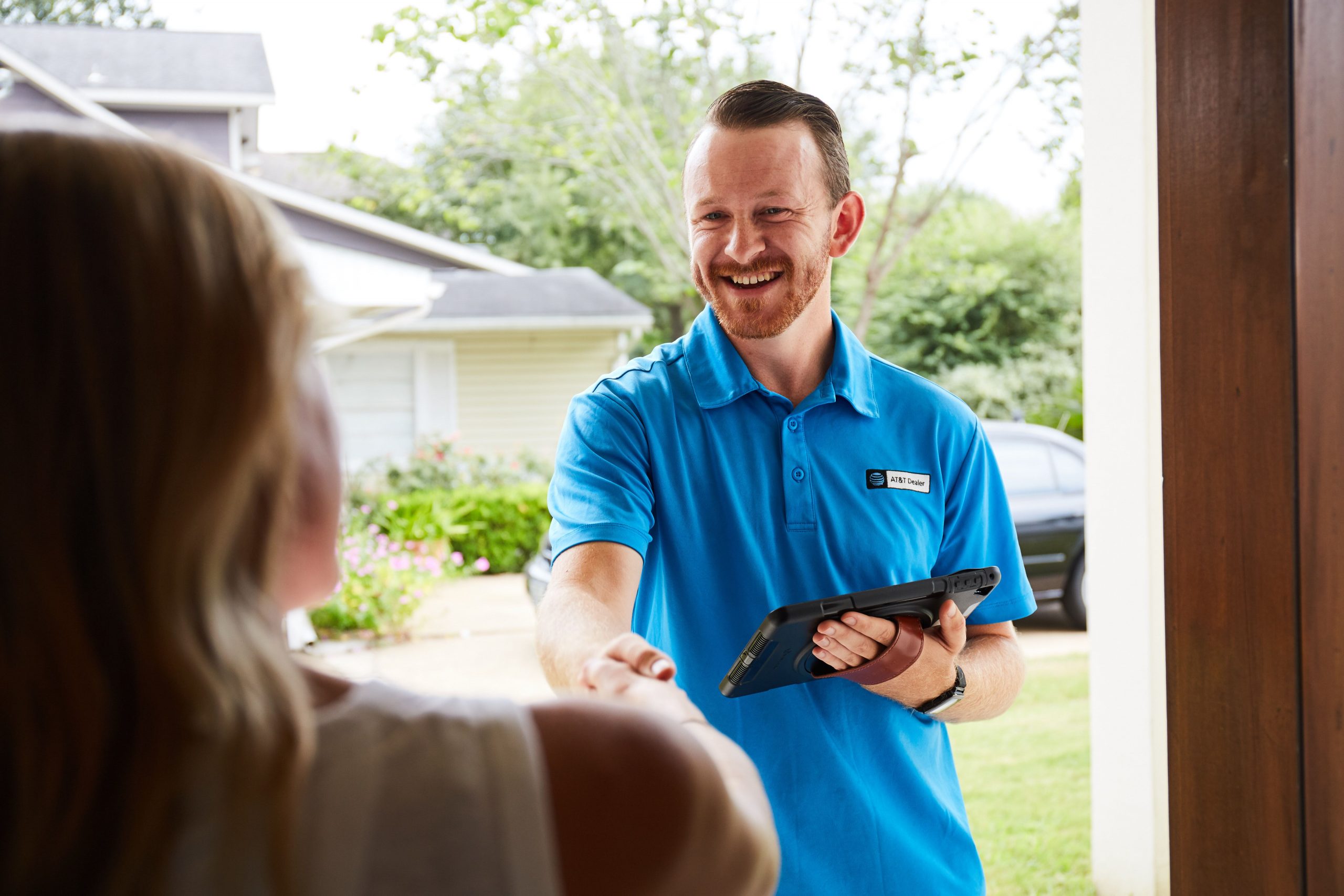
Everything old is new again – at least when it comes to marketing strategy. While you might think of door-to-door sales as a thing of the past, it’s actually a highly effective method for acquiring new customers in today’s modern climate. Many thriving corporations are seeing the benefits of adding door-to-door selling to their marketing mix, and here’s why:
Advertisements are easily tuned out.
Commercials are everywhere these days. From billboards and TV commercials, to social media and mobile advertising, we're flooded with so many advertising messages that it’s easy for all of it to blend together into one ocean of noise that easily fades into the background.
This is why door-to-door sales should be part of your marketing strategy. Unlike any other advertising medium, in-person sales reps create real connections with potential customers. They communicate from one human to another, customizing their sales pitch and even their body language and tone in a way that even the most sophisticated digital advertising and artificial intelligence can’t. Well-trained salespeople are able make the potential buyer feel comfortable, attracting their interest and initiating a discussion, which is the first and most important step of acquiring new customers.
The competition is fierce.
With so many companies vying for consumers’ attention, it’s extraordinarily difficult to stand out. Even the most creative billboards and eye-catching social media strategies are bound to get lost in the mix.
Door-to-door marketing is a secret weapon for any company looking to carve out space in a crowded market. Not only is it a less common approach to customer acquisition, but it is highly effective at reaching people who have been unresponsive to other forms of customer outreach. Actively engaging face-to-face provides the opportunity to first, inform customers about products they might not have otherwise known about; and second, influence their decision-making process.
People buy from people.
As much as technology has changed over the years, human nature has not. There is no digital replacement for connecting face-to-face, human-to-human. A commercial can’t ask a business owner to describe the challenges facing his business. An internet ad can’t inquire about the needs of a growing family, make eye contact, or interpret facial expressions. But a skilled salesperson can.
Through door-to-door sales, companies are able to localize their marketing efforts and connect with customers on a personal level. By engaging one-on-one, salespeople are able to learn about the needs, wants, and concerns of their customers throughout the sales process. By building rapport, they are able to establish trust, which in turn translates not only to the consumer’s decision to buy – but to remain loyal to the respective brand.
It’s highly adaptable.
The launch of a new product or service is expensive and time-consuming through most marketing channels. Whether you’re paying for market research, air time, graphic design, public relations, or anything in between, the expenses add up quickly.
This is another key differentiator of door-to-door marketing. Not only is it more cost-effective, but it’s dramatically faster to implement changes and market new products. When you already have an outside sales team in place, launching a new product is as simple as educating the salespeople about your new offering. The right door-to-door sales team should be able to start selling immediately and at no added cost to your company.
Success is 100% measurable.
The tricky part about most forms of marketing is that the success or failure of a campaign is often a gray area. While a given ad might enhance brand recognition or contribute to the buzz about a new product, results are difficult to quantify.
Unlike advertising campaigns, there is no doubt as to whether a door-to-door sales strategy has been successful. The number of new customers acquired is crystal clear, allowing companies to track progress, calculate ROI, and make changes accordingly.
There is a reason one of the oldest professions, face-to-face sales has seen a resurgence over the past decade: it works! No matter how advanced digital marketing becomes, people will always prefer to buy from people. It’s human nature. While the smartest sales strategy is diversify your sale and marketing tactics, including a door-to-door element to your marketing mix remains a highly effective way to increase revenue and drive consistent sales results.

A face-to-face sales force is the secret weapon of many thriving corporations. There are many benefits of direct sales, and with the right team interacting with their business-class customers, Fortune 500 companies are able to drive revenue and increase market share exponentially.
Let’s take a look at the advantages of direct selling and 5 reasons why in-person B2B sales is so effective.
Let’s face it, businesspeople are busy! With packed schedules and to-do lists a mile long, they often don’t have time to research new office supply vendors or stay up to date on the latest telecom deals. They also don’t have time for a complicated sales process that takes their attention away from running their businesses.
Business-to-business direct sales representatives solve both of these problems. One of the advantages of direct selling is that reps are able to efficiently educate business owners about specific products and services, leaving out superfluous details and highlighting what might be of real use. Then, with a high sense of urgency and an underlying respect for the customer’s time, customers are able to sign sales agreements on the spot.
Skilled B2B sales representatives do much more than their titles suggest. Rather than simply peddling products and services, they serve as trained consultants with an eye for increasing profits. Another advantage of direct selling is that by sitting down with a customer face-to-face, sales reps are able to ask open-ended questions and suggest solutions that will increase efficiency or provide bottom-line cost savings.
Interactions between B2B direct sales reps and their customers tend to be discussions about strategy, rather than one party “pitching” another. For example, armed with product and industry knowledge, an in-person sales representative might help a business owner determine whether breaking an existing contract might be advantageous in the long-run.
Everyone is bombarded on a daily basis with phone calls and emails – but businesspeople get the brunt of it. This means that marketers’ attempts to reach a commercial market are all the more likely to be ignored. As a result, many business owners remain in the dark about the products and services that might actually be of value to them.
It’s easy for business owners and their employees to screen telemarketers and delete promotional emails. But turning away a friendly human being visiting their place of business is different. By connecting face-to-face, not only do sales reps capture the attention of busy businesspeople, they also get them thinking about cost-saving or revenue-enhancing opportunities that might not have been on their priority lists.
As a whole, business owners are thoughtful, intelligent, and inquisitive people. They shoulder great responsibility and are accustomed to weighing decisions carefully. This is why a knowledgeable in-person sales representative can be extremely helpful. Sales reps are able to guide their customers through the buying process -- answering questions, addressing concerns, and adapting to the pace of the customer. Ultimately, they are able to provide any information or assurances a business owner requires to make a confident decision.
Furthermore, even in today’s digital age, most businesses are accustomed to conducting business face-to-face – which makes this form of outsourced sales a natural fit. The right B2B sales team is professional in appearance and demeanor and is able to effectively connect with their customers in their own place of business.
Last, but certainly not least, direct sales is effective in the B2B channel because as with any channel, relationships built in person are the most authentic and long-lasting. Nothing can replace eye contact, a firm handshake, and a shared laugh.
Interacting face to face ensures an optimized customer experience, which business owners appreciate more than anyone. After a positive, completely customized interaction with a brand, everyone from mom-and-pop shop owners to the heads of large corporations can’t help but to become loyal customers.
Do you agree that direct sales is an effective revenue-driver in the B2B channel? Do you know more advantages of direct selling? We’d love to hear your thoughts! Tweet us @Cydcor and tell us what you think.

Technology is changing rapidly, but no matter how advanced digital media and market research becomes, direct sales is still one of the best ways to acquire new customers and grow your business. There are just some things a computer can’t do, and until they can, people talking to other people through face-to-face sales is still the best way to build trust, overcome objections, and turn prospects into buyers.
Some people may call it old-fashioned, but direct and face-to-face sales work. The reason in-person sales is most effective comes down to one factor: people. People relate better to other people than they do to TV commercials, online marketing, billboards, print ads, or any other form of advertising. It’s natural. Direct sales are built on relationships with a specific sales rep, and it allows customers to feel a personal connection to a product or service. Face-to-face sales build trust, which gives the customer the confidence to buy. That’s why in-person sales are a smart investment for any company looking to grow.


Working in sales can feel like the career equivalent of boot camp. It puts your mental toughness and endurance to the test, but if you’re brave enough to give it your all, working in sales can transform you from a career weakling to a business powerhouse. Whether you're interested in a sales career or not, taking a job in the sales industry build critical skills that are necessary for success whether you’re a recent graduate, trying for a big promotion, a small business owner, or a top executive.
1. Knocking on Doors…Literally and Figuratively
The scariest part of a job in sales is approaching people you don’t know and asking something of them. What if they slam the door in your face? What if they get mad? What if everyone you talk to says no? But succeeding in business is all about hearing no. You have to learn to deal with rejection if you ever hope to succeed in the real world. Working in sales is the perfect training ground for building that thick skin you need to apply for a job, ask for a promotion, close the deal, or solicit new clients.
2. Becoming a Master of Improvisation
Working in sales teaches you to think on your feet. You never know exactly what the customer might throw at you, and you have to learn how to listen and adapt to their objections and concerns on the fly. Entry level sales experience teaches you to be nimble minded and improves your public speaking skills, so you can help pitch a new idea to a team, respond to a real-time public relations crisis, or scramble for options when project funding falls through.
3. Relating to Others
In order to make the sale, you have to learn how to build rapport and find common ground with people you’ve never met before. The ability to understand where others are coming from and relate to them on their level is handy in almost any work scenario. Customers prefer to do business with people they like and they tend to trust people they relate to. This skill can help you in your job search too as you meet prospective employers and try to impress hiring managers.
4. Asking the Right Questions
Great salesmen know how to find peoples’ hot button issues. Not everyone will tell you what their objection is; sometimes you have to probe a bit and do some investigating to find what’s really holding them back. Being a good detective and understanding how to do research are sales skills that are critical to overcoming roadblocks and achieving success in business.
5. Highlighting Benefits
Whether you’re selling something door to door or selling yourself on a blind date, the fact remains the same, people want products, companies, and people who will make their lives better in some way. Learning how to appeal to people’s needs and wants is a powerful tool that can help any time you need to make a case for something, whether it’s donating to a great cause, investing in your feature film, or offering you the salary of your dreams.
6. Sounding Like an Expert
The best sales people understand that people want to buy from someone who knows what they’re talking about. But as important as it is to thoroughly know your product; it isn’t really what you say that matters, but how you say it. Being confident and sounding like you know what you’re talking about is the secret to building trust and gaining consensus. Work experience in sales is the perfect way to practice sounding like an expert, even when you’re not.
7. Talking Numbers
Negotiating makes a lot of people uncomfortable. We feel like we’re being impolite when we ask people to pay for something, especially when the price is higher than they’d prefer to pay. Working in sales forces you to face that fear, and learning to stand your ground at the negotiating table can help you finally get that big pay bump, large investment, or executive title you’ve wanted.
8. Capturing and Keeping Attention
To be a good sales representative, you have to know how to turn it on when you enter a room. Entertaining your audience and telling a good story is one of the most effective ways to build rapport and get the customer on board with your message. Learning how to engage others can be invaluable for public speaking, networking, or pitching ideas.
9. Earning Trust
People are naturally suspicious of strangers, and they’re especially suspicious of salespeople. That’s what makes earning a customer’s trust such an impressive feat. It’s also a powerful tool. People buy from people they trust. Learning how to convince others to put their faith in you has limitless benefits in business and in life.
10. Setting and Achieving Goals
The life of a sales person is all about setting targets and hitting them. You learn how to dig deep, stay self-motivated, and set challenging, yet achievable goals because achieving them can often mean the difference between having a great week and struggling to pay your rent. And strategizing how to meet them is key to succeeding at almost anything.
Sure, working in sales can be tough, but as anyone who has tried their hand as a sales rep will tell you, it’s also worth it. Sales experience hones indispensable career skills that can help you get ahead and overcome challenges for years to come.

In this age of technology, we’re constantly surrounded by information about what we should do and when we should do it. There are so many conflicting opinions and things to consider about every decision we could make that it’s easy to get sucked into “analysis paralysis” and never make a decision at all. But sometimes, trusting your gut may be the way to go.
So how can you develop your decisiveness and get better results? Here are some tips from the experts.
Use your emotional intelligence. When presented with a high-stakes decision that needs to be made quickly, it’s easy to respond with emotions such as fear, overwhelm and anger. These emotions can cloud your ability to make a good decision, so make a point of reining in your emotions to allow yourself to do more clear-headed thinking. Instead of denying the emotion, which will only make it stronger, acknowledge the emotion and allow it to move through you until you reach a state of calm.
Manage uncertainty. Don’t waste time with dozens of choices, because that will lead to the infamous “analysis paralysis” mentioned earlier. Instead, use your intuition to narrow the number of choices down to two or three, and then study those in more depth. By trusting your intuition, you’ll be more satisfied with your decision in the long run.
Listen to your team members. Their thoughts can help you consider the consequences of various choices. It also makes them part of the process so they too will be more satisfied with your decision.
Act quickly. Business moves fast, so your decisions need to be made quickly, too. ”When decisions need to be made, effective managers gather the facts, analyze the situation, consider alternatives, and decide on the best course of action—and they do it quickly!” say Denny Strigl and Frank Swiatek, authors of Managers, Can You Hear Me Now?: Hard-Hitting Lessons on How to Get Real Results. “They don’t procrastinate, and they certainly don’t stand around wringing their hands.”
Don’t be afraid to be wrong. Much indecisiveness is caused by the fear of making a mistake. However, the ability to make important decisions quickly is the key to achieving success. “Business is a contact sport, and you can’t be afraid to make a mistake,” says John Wittaker, marketing director of information management solutions at Dell Software. “You can always course correct if you need to, but you can’t make up for failing to take action when action is needed.”
It can be difficult to make tough decisions whenever they arise, but it’s worth it in the end. Decisiveness is a needed trait for every aspiring leader, and by doing so, you set an example for your team to follow.
How has decisiveness helped you achieve better results? Please share your thoughts in the comments or tweet @Cydcor with your stories.
We are Cydcor, the recognized leader in outsourced sales services located in Agoura Hills, CA. From our humble beginnings as an independent sales company based in Canada to garnering a reputation as the global leader in outsourced sales, Cydcor has come a long way. We’ve done this by having exceptional sales professionals and providing our clients with proven sales and marketing strategies that get results.