
Found 0 posts
By: Gary Polson, CEO
I was so inspired by Senator John McCain’s life and death. His life is a reminder of America’s greatest values: service, devotion, sacrifice and honor. He is a real American hero.
Actually, he was more than a hero. He was a loving father. In her eulogy, Meghan McCain shared how she loved her father and felt his love. John McCain committed to Washington, DC and traveled the world in his role as a Senator. Yet, he found a way to be a wonderful father. He is a role model of how you can make a big contribution in your career AND have a meaningful family life. Rest in peace.
Gary Polson is Chief Executive Officer and Chairman at Cydcor, the market leader in outsourced sales. With more than 25 years of business operations experience in accounting, legal and senior management, Gary has propelled Cydcor to unprecedented achievement with clients, culture and philanthropy since 2001. Under his leadership, Cydcor has increased its revenue more than six-fold since 2001 and has been recognized as “…the most respected sales outsourcing company in the world” by Datamonitor and The Black Book of Outsourcing, and one of the “Best Places to Work” by the Los Angeles Business Journal for eight consecutive years. Gary’s passion for excellence and never-satisfied approach has led Cydcor to earn both industry and employer recognition. With Gary at its helm, Cydcor has built its reputation on maintaining long term relationships with clients by consistently delivering results and by going above and beyond to help Cydcor’s clients gain market share and grow.
There are no better examples of leadership than the legacies of our great historical leaders. While they achieved tremendous fame, they did not do so without facing the occasional failure and enduring hardship. As we strive to become better leaders and learn how to inspire others, we would do well to reflect on the greatest leaders from history to see the characteristics, mentality, and habits that allowed these most revered leaders challenge norms, empower the oppressed, galvanize action, and spark change.
Lesson One: Learn from the Past
The best sources for what works in leadership are the lessons of the past. The trials and tribulations of historical leaders, while sometimes on a grander scale than our own lives, can teach us how to succeed or fail. We can learn how to lead effectively from reading about or watching movies on history, and anyone hoping to become a better leader should make a habit of it. Why make your own mistakes when you can benefit from the lessons learned by those who eventually achieved greatness? Study their lives, follow in their footsteps, and apply their leadership approaches as you drive your own team to reach its goals.
Lesson Two: Character Matters
The greatest historical leaders knew that character can often matter even more than ideas when it comes to leading others to find the greatness in themselves. Benjamin Franklin identified Thirteen Critical Virtues necessary for a successful live and vowed to exemplify them. George Washington is admired for his honesty, and Gandhi demonstrated remarkable restraint and self-discipline in his use of non-violent protest to drive change. Whether reading about George Washington, Ben Franklin, Mahatma Gandhi, Martin Luther King or Nelson Mandela, their character stood out and earned them respect, built trust with others, and translated to a highly-regarded reputation.
Lesson Three: Take Risks
You must be bold, and you must accept that you will sometimes fail. Failing can be an important stop on route to success. Lincoln lost a number of elections, including the Illinois Senate race in 1858, yet he ran for President in 1860. Washington struggled to win a major battle against the British for years, yet he had the courage to stay the course. Gandhi, King and Mandela were humiliated for many years on their paths toward civil rights and representation. Facing the occasional failure is a sign that you took on challenges, pushed yourself outside of your comfort zone, and it is an opportunity to prove your resilience and willingness to learn from your mistakes.
Lesson Four: You are Not a Victim of Your Circumstances
We can rise above poverty, lack of education, or lack of support to achieve greatness. Charlie Chaplin grew up in the direst circumstances, reminiscent of a Dickens novel, yet he revolutionized silent film. Men and women who had once been slaves and peasants, overcame the odds to become generals, emperors, and queens. While challenges can sometimes feel insurmountable, the stories of remarkable historical leaders prove that even when things seem hopeless, determination, passion, and grit can overcome the odds.
Lesson Five: Self Discipline is a Must
Lincoln had just one year of formal education, but he read constantly to feed his curiosity and continued to expand his knowledge. Franklin devised ways to improve his character by evaluating himself daily, assessing one character trait each day. Michael Jordan and Kobe Bryant were relentless in their routines to develop their skills and conditioning. The stories of great leaders of the past up to the present teach that our potential is boundless if we are willing to push ourselves. Achieving greatness as a leader means having the passion and drive to continuously transform yourself and expand your boundaries. Nobody will do that for you. To become a leader that can inspire others and provoke action, you must first be willing to lead yourself.
History is full of incredible stories of leaders who rose above their circumstances, exemplified character, and endured and overcame setbacks on their path to success. By studying their stories and seeking to understand which qualities and actions allowed them to achieve greatness, you can improve your own chances of doing the same. The stories of historical leaders are a goldmine from which I have learned so much about the kind of leader I hope to be.
To find out more about Cydcor, check us out on Facebook, LinkedIn, Instagram, and Twitter.
Gary Polson is Chief Executive Officer and Chairman at Cydcor, the market leader in outsourced sales. With more than 25 years of business operations experience in accounting, legal and senior management, Gary has propelled Cydcor to unprecedented achievement with clients, culture and philanthropy since 2001. Under his leadership, Cydcor has increased its revenue more than six-fold since 2001 and has been recognized as “…the most respected sales outsourcing company in the world” by Datamonitor and The Black Book of Outsourcing, one of the “Best Places to Work” by the Los Angeles Business Journal for eight consecutive years. Gary’s passion for excellence and never-satisfied approach has led Cydcor to earn both industry and employer recognition. With Gary at its helm, Cydcor has built its reputation on maintaining long term relationships with clients by consistently delivering results and by going above and beyond to help Cydcor’s clients gain market share and grow.

What makes Cydcor the recognized leader in outsources sales services?. We interviewed Cydcor CEO, Gary Polson, President Jim Majeski and Chief Operating Officer Vera Quinn, to describe what makes Cydcor stand out in a changing sales market, and what qualities Cydcor has in both its team members and culture that makes it a world-wide powerhouse in sales.
“We are hard-wired as a ‘people-helping-people’ business. Developing our people, unleashing their potential is what excites us the most, we have a passion about, and we got to learn to be great at that,” says Cydcor CEO Gary Polson.
Learn for yourself about Cydcor’s commitment, quality, and integrity and how we wow our clients and employees. Watch and listen to members of the team leading Cydcor - a worldwide powerhouse in professional outsourced sales!
This is our seventh installment of our book reviews project designed to introduce you to books that Cydcor team members find especially valuable. This review is by Gary Polson, Cydcor CEO, and is fourth Gary has written for us. Gary has previously reviewed other books for us, including Wooden: A lifetime of observations and reflections on and off the court and The Effective Executive.
Title: Self Leadership and the One Minute Manager
Author: Ken Blanchard, Susan Fowler, and Laurence Hawkins
Description of the book: Ken Blanchard uses situational leadership to discuss building entry level people's confidence in his One Minute Manager series. Briefly, if someone is new at a skill or goal, he or she needs to be patiently shown how to do it. The person needs direction and frequent follow-up for feedback.
Once the person has learned the skill fairly well, he or she needs little direction and more support. If they are frustrated, they may need to vent and hear another’s perspective for support.
Why should you read this? As managers, when someone is new at a skill we often do not give enough direction or appropriate follow up. We show them one time and expect them to know it. When they feel frustrated, we either shame them for not getting it right or give them support rather than more direction. We should observe them doing the skill and then show them how to do it better.
This is our fifth installment of our book reviews project designed to introduce you to books that Cydcor team members find especially valuable. This review is by Gary Polson, Cydcor CEO, and is third Gary has written for us. Gary has previously reviewed other books for us, including Wooden: A lifetime of observations and reflections on and off the court and The Effective Executive.
Title: When the Game was ours
Author: Larry Bird, Earvin Magic Johnson, with Jackie Macmulllan
Description of the book: Larry Bird and Magic Johnson will always be linked as two competitors. They are linked like Muhammad Ali versus Joe Frazier and Wilt Chamberlain versus Bill Russell. They first competed against each other in the NCAA basketball championship, which has the highest ratings of viewers of any game in history. They then competed against each other in the NBA and in three NBA finals. One was white and one was black; one from a city and one from the country; one was quiet and shy and one outgoing and loved being around people. The one thing that they had in common is that neither was a great athlete. They were considered slow, with poor jumping ability. They were great because of their work ethic and their deep desire to be great. They out-worked and out-competed their competition.
They did not like each other at first, yet there was respect. They each practiced hard, and were motivated to beat the other. Then because of a television commercial they became friends. This book tells about each of their lives, how hard they worked and practiced and how they became friends.
Why should you read this? This is a must read for people who want to be successful. It does help if you have a slight interest in basketball, but it may not be necessary. This is a compelling story of what it takes to win. We often think these great stars are born great. Not the case with most and especially Bird and Magic. They did it by will and effort.
My favorite part: One of the best quotes from the book, summarizes what I am referring to about why this book is a must read for those who want to know what it takes to be successful: “[Magic] worked tirelessly on his ball-handling and his rebounding with the advice [Coach] Fox gave him imprinted on his mind: when you think you have done enough, do a little more, because someone out there is working harder than you. Bird was told the same thing by Coach Jim Jones. As he advanced from high school to the college game, he wasn’t sure that “other person” truly existed. ‘Not until I met Magic,’ Bird said.”
This is our second installment of our book reviews project designed to introduce you to books that Cydcor team members find especially valuable. This review is by Gary Polson, Cydcor CEO. Gary has previously reviewed other books for us, including Wooden: A lifetime of observations and reflections on and off the court.
Title: The Effective Executive
Author: Peter F. Drucker
Review by: Gary Polson, CEO
Description of the book: Peter F. Drucker is one of the top business thinkers and executive coaches of the 20th century. He believes, and I agree with him, that people need to learn business and leadership skills, that they do not come naturally to people. It is like learning to play the piano, if you have never played, you cannot expect to sit down and play a beautiful song. Only through hard work can you play a beautiful song. In this book he teaches us the tools to be an ‘effective executive’.
Why should you read this? According to Drucker we know very little about self-development. What we do know however, is that people grow according to the demands they make on themselves. They grow according to what they consider achievement and attainment. If they demand little of themselves, they will remain stunted. If they demand a good deal of themselves, they will grow to giant stature – without any more effort than is expended by the non-achievers.
From my own experience, I know this to be true, except for the part about effort. I think it does take more effort. For me it required time reading, thinking, discussing one’s self-improvement. It also requires the mental energy to get out of one’s comfort zone. The best way to improve the performance of your team is to lead by example. Your high standard of performance will raise the bar for everyone. It is very simple. The key is whether you have the will.
My favorite part: “In human affairs, the distance between the leaders and the average is constant. If leadership performance is high, the average will go up. The effective [leader] knows that it is easier to raise the performance of one leader than it is to raise the performance of a whole mass.” -Peter Drucker, The Effective Executive
Welcome to Cydcor Reviews! This is our first installment of our book reviews project designed to introduce you to books that Cydcor team members find especially valuable. Check back soon for more reviews!
Title: Wooden; A Lifetime of Observations and Reflections On and Off the Court
Author: John Wooden with Steve Jamison
Review by: Gary Polson, Cydcor CEO
Description of the book: Coach Wooden is one of the great men of modern time who exemplified the balance of family, success and contribution. If you read any Coach Wooden book, this is the one I recommend.
Why should you read this? This easy-to-read book begins at his foundation: family, values and virtues and then discusses and offers wisdom on the topics of success, achievement, competition and leadership.
My favorite part:
By Gary Polson, CEO
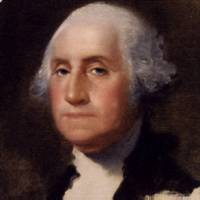
Many military historians consider George Washington to be America’s greatest general. He led a tattered, under-equipped, under-manned, and starving army to defeat the greatest army of the world at that time to win our independence.
He was not always such a great military man. As a colonel for the Virginia Colony, he made strategic blunders that led to the slaughter of his men and the start of the French and Indian War. After that defeat, the Governor of Maryland described Washington as a “dangerous mixture of inexperience and impetuosity.” As horrible and humiliated as Washington felt, he did not give up on himself. He learned from these mistakes and eventually became a great general and the first President of the United States.
Like George Washington, we all have setbacks that feel devastating. He is a great example of not letting those setbacks stop us in the pursuit of our dreams.
Gary
All of us at the recent Keys to Success event, an annual kickoff meeting attended by all sales office owners in North America, were so lucky to hear from our guest speaker, Eric Greitens, Navy SEAL and award-winning author of “The Heart and the Fist.” The most powerful part of his message was the mindset required to survive the Navy Seal boot camp. Only about 10 percent of these highly-fit soldiers make it. Eric said that it was not the great collegiate athletes that survived. Instead, it was the ones with the greatest will.
The attributes that he described for the successful are the same ones that are needed for success in our business. Here is a sampling of his comments that I wrote down:
“Confront your fear and push yourself.”
“Courage is the courage of perseverance of willing to do the hard things day after day.”
“People quit when they think how hard it is going to be, but rarely when they are doing those hard things.”
“The Navy Seal challenges are called ‘evolutions’. Your character evolves until you get to the place where you change who you are.”
“To get the life you want, change the compass just a few degrees and march in that direction every day.”
“If you attempt a challenge and do not succeed, the challenge always remains - the challenge always remains.”
Lessons for all of us. Eric, we will always be grateful and learned so much from you during the conference. Your words will stick with us now and in years to come.
During a USC class, we learned about a conference that was attended by 60 top business leaders. The leaders were asked to name their biggest fear. All 60 had the same answer, although not the same exact words. For each of them, their biggest fear is that people will find out that they are not so good.
Almost everyone struggles with confidence. Each of us has to realize that success comes from effort, discipline, work ethic, resiliency, preparation, going the extra mile, student mentality and treating people well. Talented people sometimes think that there is a magic formula of business skills to learn to become successful, or that you have to be like someone else. The reality is that anyone can do anything with will power.
All of us need to ask ourselves these questions: How confident are we in our effort? In our discipline? In our work ethic? In our resiliency? In our preparation? In going the extra mile? In treating people well? In our student mentality? If you are confident in these areas, you should be very confident in your success.
Walter Payton, aka "Sweetness," played with the Chicago Bears from 1975 to 1987 and missed only one game in his career. He was elected into the Pro Football Hall of Fame in 1993 and is remembered as one of the most prolific running backs in American football history. Hall of Fame NFL player and coach, Mike Ditka, described Payton as the greatest football player he had ever seen—and the greatest human being he had ever known. Payton’s incredible work ethic and humility earned him the respect of players and fans everywhere.
Payton had a 5-feet-10-inch, 200-pound frame and worked out every day, even in the off-season. He was acrobatic and quick but not fast, so he developed his signature "stutter-step" to help break runs and give him the edge on his opponents. He did not believe in running out of bounds and maintained a “never die easy” mentality. He played hard to win, and his determination led him to become the all-time leader in rushing with 16,726 yards and all-purpose yards until 2002, when Emmitt Smith broke his record. Payton also held the single game rushing record until 2000.
What gave Payton the will to achieve such great success? In the following excerpt from his autobiography, Never Die Easy, he attributes his work ethic to how his parents raised him:
"Competing in sports back then was everything. No matter what the game was or how much older and stronger the other kids were, we were taught to give it everything we had until it was over. Never give less than one hundred percent. If you start something, you shouldn't quit, that is what we were taught. If you're going to play, you might as well play to be your best.
My mother was a yard person and every summer to keep us out of trouble she'd have this guy to come in and dump this hundred pounds of topsoil in the driveway. She'd want us to spread the topsoil all over the yard. We had one shovel and a wheelbarrow... It was hard work and we were so small then, I was six, seven, eight, Eddie was a couple of years older. But there we were, trying to shovel and push all of this topsoil everywhere... If you want my opinion, there was no reason to spread all that topsoil except to keep us occupied and around the house.
I look back on it now, though and I think that yard work taught me a lot. I learned about working hard and staying with something even though the project seemed overwhelming... You have to imagine how big that huge pile of dirt appeared to a seven-year-old. I used to think we would never finish. We'd just try to make dents in it every day. Which is how you have to approach any kind of work. You have to take things one day at a time... You work as hard as you can for as long as you can and the small gains you make will eventually pay off. Eventually that mountain of dirt will be gone and you can go play baseball or go hunting."
We can apply Payton’s simple yet powerful formula for success on our own work and lives: Work hard, persevere and commit to do and be our best.