
Found 0 posts

A colleague recently asked me who was the greatest influence in my life. Without hesitation, I replied, “my grandparents.”
I recall that my grandfather and grandmother came over every Sunday to be with my family. This was important to me because my dad worked every weekend. They taught me how to read, helped me develop a love of learning and took me to my first ball games.
It was their example, however, that inspired me the most. They were selfless in how they treated my each of us. They thought the best of everyone, listened well and never judged. They were nurturing toward my siblings and me, and their kindness shaped our characters. They were there for all of us, and nothing was more important to them than family.
My grandparents never lectured us on the importance of these values. They simply lived them and became our role models.
I aspire to be like these two amazing individuals, taking care to remember that the example I set through my character and actions speak louder than any words.
A team member who follows Stephen Covey on Twitter recently sent me one of his posts: “Leadership is communicating to people their worth and potential so clearly that they are inspired to see it in themselves. Are you such a leader?”
Covey’s post makes me think of The Wizard of Oz. Behind the smoke and mirrors, the Wizard is an ordinary man whose true power lies not in magic, but rather in his ability to help Dorothy, the Scarecrow, the Tin Man and the Lion see the innate strengths already within them. I am reminded to be just this type of leader, one who helps people believe in themselves and in their ability to accomplish what might at first glance seem out of reach.
As leaders, we must ask ourselves if we are inspiring our teams to live up to their own greatness. At times, they may have doubts that they have what it takes to succeed.
Our role is to help our people cultivate their full potential by investing in their development and nurturing their talents and aspirations. And as our people gain confidence and grow, our businesses, too, will grow with them.
Earlier in my career, I had talented people on my team who would perform excellently for a time, and then their performance would deteriorate. My approach was to look first at my own performance as their manager and to see how I potentially contributed to this deterioration.
That introspection taught me 10 things I could do to motivate my people to perform at their best:

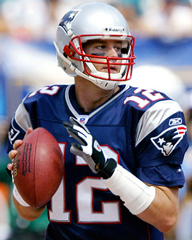
My wife and daughter recently watched the ESPN special, The Brady 6, about the events leading up to and after the selection of Tom Brady in 2000 as the New England Patriot’s seventh quarterback. I was somewhat surprised that they would watch a one-hour football show but then realized it told an inspiring story that could appeal to everyone. I highly recommend this documentary, which chronicles Brady’s rise to the top from humble beginnings—the story of someone who became great through sweat and determination, rather than through sheer talent.
Brady was the 199th draft pick during his senior year. With six quarterbacks picked ahead of him, he was drafted in the sixth round. He had been overlooked because physically, he had the worst combine (an athletic workout) of any quarterback likely in history. He was slow and did not jump very high. Additionally, he did not have the greatest arm and could not throw a tight spiral. In his senior year at the University of Michigan, Brady split the starting quarterback role with a newcomer, and NFL teams questioned why he lost the starting position.
As you watch the documentary, you learn that Brady outworked and out-prepared the other quarterbacks drafted that year. Except for maybe Payton Manning, he probably continues to outwork and out-prepare all NFL quarterbacks. Today, Brady holds numerous regular season and postseason records and is one of two players in NFL history with multiple NFL MVP and Super Bowl MVP awards. He is now widely viewed as one of the best NFL draft picks of all time.
Tom Brady’s story shows us that hard work and preparation, more so than natural gifts, are crucial to success. He overcame the odds and excelled at something he was truly passionate about. Rather than expecting greatness to be bestowed upon him, Brady earned it through determination, dedication and drive—a lesson from which we can all learn.
I recently spoke with someone who just opened his business but has lost his confidence. He feels that his people do not respect him because of mistakes he has made and because he no longer believes in himself. He asked me:
I, too, have experienced doubt and difficulty, as has every successful entrepreneur. All of us have had times in our careers when we have questioned our abilities and lost our confidence. These moments that test us, however, can strengthen our character and ability to lead, if we do not let them defeat us.
Experience has taught me the following lessons to weather adversity and emerge a more effective and inspiring leader:
When things are not going as well as we have planned, we should remember what Jack Welch said in his book, Winning: “Whatever you will accomplish is restricted by your ability to lead others.” We measure our success by the effectiveness of our leadership, which takes hard work and skillful practice of the fundamentals.
Exude the right energy; teams take their cue from you.
Your team feeds off your energy, so demonstrate confidence, enthusiasm, passion and vision in everything you do. Uphold clear standards and expectations while providing knowledge, coaching and guidance.
Build a strong relationship with your team.
Determine how well you are connecting with your team. Do people feel that you care about them and have their backs? Do they feel their lives are better by being on your team? Are they engaged and motivated?
Be tough and consistent.
At times, you need to be tough in a relationship. Firmly holding people accountable to a high but achievable standard drives them to succeed. Teams lose confidence in leaders who appear inconsistent and allow them to become stagnant.
Lead by example.
Your example and intensity sets the bar for the team. Your character, integrity and follow-through create trust and bind the team together.
When I entered the workforce, I sought experiences that would teach me vital skills for the future and build my confidence. Although many of my peers wanted to find jobs at companies that would carry them to retirement, I wanted to rely on myself and become a successful entrepreneur.
During the first ten years of my career, I focused on honing the skills that would make me a successful business owner. Ultimately, I learned that I needed to excel at two things: sales and relationships.
In the beginning stages of a business, the owner is usually the number-one sales person, as I was during the first five years of my commercial printing business and during all three years of my financial recruiting business. Successful entrepreneurs are savvy sales people who understand their customers’ needs and offer the most effective, compelling solutions to meet them.
Good sales people also have good people skills. Unless you want to be the only person in your business, you need to be able to work cooperatively with others and build strong relationships based on trust and respect. The more people you can successfully recruit, develop, manage and lead, the more you can accomplish and the more economic value you can generate.
The most important lesson I have learned in my career is this: Choose work experiences not for their prestige or short-term gain, but rather for their ability to equip you with the skills for success and the opportunities to practice them.
Do what you say you are going to do, when you say you will do it. Following through on your commitments demonstrates integrity, builds credibility and earns people’s trust. Follow-through is one of the building blocks of success.
Conversely, you cannot respect or count on those who do not meet their commitments. They are not the ones with whom we will have lasting relationships, nor are they the ones we think of first when there is opportunity. We should make sure that we follow through, so we can be the ones on whom people rely.
Consistent follow-through requires not only the right attitude, but also the right skills. Planning systems like FranklinCovey’s® can help you become more effective at organizing and managing important activities and events. Your focus and discipline, bolstered by such tools, can help you become adept at prioritizing and accomplishing the toughest tasks under the most challenging conditions.
There are times, however, when things may slip through the cracks. It happens to the best of us. Do not get discouraged. Just be accountable and go the extra mile not just to finish the task, but also to excel at it.
There are a lot of aspects to Habit 1, Be Proactive. The most important aspect to me is that “if there is a will, there is a way;” whatever I need to improve about myself, I can with discipline and humbleness.
Constant self-improvement has been vital for me to be successful in my business and personal life. I had to improve on a lot of things. Many of them were quite hard.
Initially, my biggest obstacle was my speech. I had a speech issue as a child and went to speech therapy until I was about thirteen years old. When I quit, the doctor was concerned that by quitting it would jeopardize my ability to get a job which required speaking.
If I let myself believe that limit on myself, I would have been too afraid to go for my business dreams. My mentality was that no one can put limits on me, but me. I was dedicated to improving my speech and building my confidence in conversing with people.
Everyone has things to improve about ourselves. Proactive mentality and action will do it.
Gary


The San Fernando Valley Business Journal recently sat down with our very own Gary Polson to discuss his role as CEO of Cydcor for nearly a decade now, what he thinks has contributed to Cydcor's success as one of the best sales outsourcing companies in the world and what opportunities he sees in growing Cydcor.
Cydcor, the leading provider of face-to-face sales teams, has announced that the company is expanding its community outreach efforts through a new program called "Cydcor Cares," which puts both local and remote team members in direct contact with low to no cost charitable opportunities that they can do individually or as a group on a quarterly basis.
Cydcor Cares will create opportunities for team members to volunteer and donate time to local organizations, such as food kitchens, literacy programs at public libraries, and to "adopt" an elementary school, providing services such as tutoring, reading, music, and drama/coaching. Cydcor's team members can also volunteer their expertise to business building programs in the community, such as interviewing, resume building, and career coaching.
As a result of Cydcor's commitment to team members and community outreach program, the company was named one of the Best Places to Work in the San Fernando Valley Business Journal in 2008 and 2009. Additionally, in the recent past, Cydcor team members:
"At Cydcor, community involvement is paramount, which is why we provide every team member with a 'Volunteer Day,' of eight paid hours they can use at any time in the year" said Chief Executive Officer Gary Polson. "Our Cydcor Cares program will enable them to take advantage of additional opportunities and resources to use those volunteer hours."
In addition to individual team member contributions year-round, Cydcor Cares will have one, pre-chosen philanthropic activity per year that will be sponsored by Cydcor, enabling team members to come together and work as a group to complete the effort.
Cydcor Cares was developed on the heels of other Cydcor philanthropic programs, including the Neighborhood Leader program and the company-sponsored Volunteer Day benefit. Neighborhood Leader provides Cydcor's independently licensed offices with the opportunity to provide their time and talent to non-profit, community, or charitable organizations of their choice, with Cydcor matching their individual donations.
"It's important to all of us to live up to our behaviors we value by collaborating to give back to the community," Polson said. "Not only do we strive to be an example to the field, but we strongly encourage unity and volunteerism. We give our all to our business, and we're doing the same for the community."