
Found 0 posts


Self-confidence is a quality that can affect almost every part of your life including peer perceptions, decision-making, job performance, and growth opportunities. Learning to feel comfortable in your own skin and believe in yourself can do much more than just improve your well-being, it can directly impact the course of your career. Having low self-confidence can prevent you from accepting challenges that might help you get ahead, stop you from asking for the salary or title you know you deserve, and hamper your journey toward roles of greater leadership and responsibility. Learning to build self-confidence and helping others develop their own self-confidence, can improve you and your team’s prospects for success. Learn how to build confidence in yourself and others with these helpful tips.
If you doubt your own qualifications or question whether you deserve your job, you’re not alone. What you’re feeling is called “imposter syndrome,” and it affects many successful people, from executives to founders, causing them to doubt their abilities no matter how many great accomplishments they have achieved. You have earned your place, and nobody can take away the work it took to get there. Here are a few small steps you can take to start acting like you belong right now: hold your head high, make eye contact when speaking with coworkers, and shake hands firmly. Body language goes a long way toward conveying to coworkers that you belong there, and not only will it build confidence in yourself, it will build others’ confidence in you, as well.
Confident people always seem to know what they’re talking about, and that’s because many confident people maintain a student mentality. They constantly seek out and absorb vital information to strengthen their expertise and provide more value to others. When you know your stuff, you’re prepared for tough questions, and your coworkers and team members will notice. Being an expert in your field holds a lot of credibility, and being knowledgeable helps your team members feel more confident about your leadership and about their own chances for success as part of your team.
Mentoring others can help you gain confidence in your abilities. Helping others master critical job skills forces you to hone your own knowledge of those skills, while also improving your ability to communicate essential information to others. Collaboration and coaching also builds confidence in others by helping them feel well prepared and informed to conquer the tasks ahead of them.
When someone lacks confidence, even the slightest mistakes can haunt them. When you or members of your team make mistakes, avoid placing blame or dwelling on what went wrong. Instead, work together to develop a strategy to move forward and avoid that same mistake in the future. The process will help boost your confidence as a leader or colleague, and it will help your team member feel supported and reassured that making mistakes is part of the learning process. Knowing that you have their back can make team members and colleagues feel more self-assured and confident about the work environment and their chances of success.
As you work with your team, you’ll see the value each of your team members bring, whether that be a skillset or mindset. Recognize team members’ individual contributions, and they will bring that value more confidently to the table. People love to be recognized for things they do well, and they appreciate being coached to overcome their weaknesses. By recognizing things your team members do well, they’ll do the same for you, helping to build confidence for the entire team.
People don’t like to admit it, but self-doubt is normal. Everyone has doubts and worries about not being the best, the smartest, or the most liked, and even the most confident people struggle to keep those doubts from derailing their goals. Once you recognize that, it levels the playing field. No longer is that keynote speaker an unapproachable business guru, he’s just another person trying to make it, just like you. Remember that your doubts and insecurities are just feelings, and they don’t define you or represent your real potential. Don’t let them stop you from stepping out of your comfort zone or going after your long-term goals and dreams.
Learning how to build confidence starts with just acting the part. Practice using confident body language, even when you’re feeling uncertain inside. Sometimes, the image we present on the outside, helps us begin to feel the part on the inside as well. Use the tips above to bolster your own feelings of self-confidence, and whenever possible, help to support others who may also be feeling uncertain. By focusing on others’ journeys toward growth, you distract from your own self-doubt while helping someone else achieve his or her goals. Throughout that process, you’ll discover that, not only will they become more confident, but you will as well.


We all have a comfort zone, and we like it there. It’s true. Even naturally adventurous, risk-takers have a comfort zone and are susceptible to falling into familiar patterns. Why? Because it’s natural, normal, and sometimes necessary. What is a comfort zone anyway? Your personal comfort zone is a state of being that protects you from risk, stress, and anxiety through habit and familiarity. When we are in our comfort zone, we are most at ease. So, what’s wrong with that? After all, isn’t being stress-free a good thing? Yes, too much stress and anxiety can have sometimes extreme negative consequences like illness, reduced productivity, and anxiety. Staying in your comfort zone too often, however, can put you at risk for becoming complacent, unproductive, and unmotivated. Studies have shown that a small amount of stress, like the kind that comes from learning something new, setting a deadline, or doing something out of the ordinary, can boost productivity. We perform at our best when we allow ourselves to get just a little bit uncomfortable, and breaking away from our usual routines can have other benefits too.
It Motivates You: Accepting an ambitious deadline or taking on a new job duty can help you get more done. There’s that healthy dose of extra pressure to deliver what you’ve promised, and there’s also the potential for reward if you succeed.
It Educates You: Trying new things can help you learn and grow by exposing you to new information and new approaches, while also adding to your skills and abilities.
Gets You Ahead: By taking on more responsibility or by speaking up to share ideas and propose solutions to problems, you can bring positive attention to yourself in the workplace, which can help you climb the corporate ladder faster.
Provides Inspiration: Doing uncomfortable things like meeting new people, trying new things, and taking risks can help to boost your creativity by changing your way of thinking and exposing you to new ideas and experiences.
Builds Confidence: When you get out of your comfort zone to try something new or take on a new responsibility, it can boost your confidence by helping you discover that you’re capable of more than you think you are.
Keeps You Flexible: Getting out of your comfort zone by facing new challenges can improve your problem-solving skills as well as your adaptability.
Give Yourself Permission to Be Imperfect: Fear of making a mistake, embarrassing ourselves, or looking foolish is one of the leading reasons we prefer to stay in our comfort zones. We get so caught up in appearances that we stop putting ourselves out there. Remind yourself that absolutely no one is perfect. It’s better to look a little bit silly than to never try at all.
Remember that a Little Stress is a Good Thing: It’s called a comfort zone for a reason: because stepping outside of it doesn’t always feel good. Accept that growth and learning are going to feel a little bit weird, and those experiences make cause a bit of unease or anxiety, but remember that small doses of anxiety can help you accomplish more and perform at your best.
Think the Worst: Getting out of your comfort zone is all about fear of the unknown. What if things go wrong? But what are those mysterious consequences? Instead of getting caught up in worry, force yourself to think of the worst possible outcome, and label it. Many times, the worst-case-scenario turns out to not really be that bad. Once you realize that you’ll survive, even if everything goes wrong, it makes the idea of taking that risk just a little bit easier.
Face a Fear: We all have things we’re afraid of, but when we let those fears keep us from accepting offers or trying new things, we risk missing out on some of the most exciting opportunities life brings. Decide that you are going to overcome one of your fears. Don’t try to conquer them all at once. Instead, choose one thing you’re afraid of, like public speaking, and decide that next time you’re offered a chance to speak in front of a crowd, you’ll take it. It will be a challenge, but you may be surprised by where the new experience takes you.
Take Pleasure in the Unknown: One of the biggest reasons people avoid getting out of their comfort zones is a fear of the unknown. Because we don’t know what might happen if we try something new, we simply don’t do it. But, what if you decide to think of the unknown as a surprise, an adventure, a gift? The beautiful thing about the unknown is that it’s limitless, and that means it can sometimes provide new and exciting opportunities we haven’t even imagined.
Start Small: Getting out of your comfort zone doesn’t always require a huge leap of faith. There are little ways you can challenge yourself to get uncomfortable on a daily basis. Simple changes like trying an unfamiliar food, taking public transportation instead of driving, or introducing yourself to a stranger can help you get into the habit of disrupting your usual routine.
Make a Snap Decision: Staying in our comfort zones helps us feel in control, and that’s why making decisions can sometimes be such a lengthy, deliberative process. We think that if we spend enough time weighting the pros and cons of each choice, we can control the outcome. What but what would happen if you just quickly make a choice and stick with it? Try it and see what happens. The results may be a pleasant surprise.
Feel Free to Fail: Some of the greatest learning opportunities, innovations, and achievements have come from flat-out failures. Failing is sometimes the best way to force yourself to think differently and come up with new solutions. Stop running from and obsessing over the idea of failing, and start seeing it as just another route to success.
Getting out of our comfort zones is something we all must constantly work on. That’s because even people who tend to be more open to new experiences and challenges can find themselves slowing down and getting comfortable once the unfamiliar becomes routine. The more often you push yourself out of your comfort zone, however, the less afraid you’ll be of the process and the more likely you’ll be to develop a habit of doing so. There’s nothing wrong with allowing yourself to fall into a comfortable routine every occasionally, because it can give your mind a much-needed rest, and it can provide room for you to absorb the lessons of recent challenges you’ve faced. It’s when comfort turns into complacency, slowed growth, and low productivity that it’s time to shake things up and get uncomfortable.
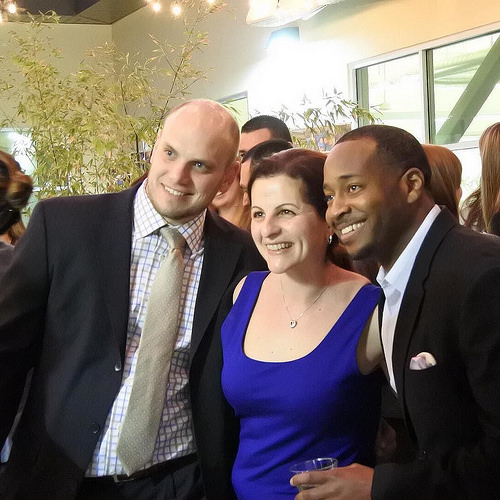
Everybody wants to be successful, but not everybody is. What’s the difference between those who achieve success in their field and those who don’t? It all begins with success-oriented beliefs.
Here are some beliefs from Cydcor that the most successful people hold. If you incorporate them into your life, you will go far toward achieving success in your career.
“I create my own future.”
You are the agent of your success. If you feel you’re at the mercy of others’ actions or you rely on others to create the path to success, it will show in your behavior. If you believe in your heart that you are responsible for your own future and take actions that speak to that, you’ll achieve success.
“I’m grateful for what I have.”
It’s easy to fall into the trap of believing that what you already have in life is not enough, especially if you’re struggling to meet your personal and professional goals. Successful people take time to appreciate the good things in their lives, no matter how small or simple. Cultivate an attitude of gratitude, and that will help you achieve your goals.
“It’s okay to fail.”
All successful people have had failures. The difference between successful and unsuccessful people is that successful people don’t give up. They learn from their failures, pick themselves up, and move on with greater wisdom and determination.
“I’m willing to take big risks.”
Success is difficult to achieve if you’re afraid to go beyond your comfort zone. Great risk brings great reward. Set a really lofty goal for yourself. Try a new method of interacting with potential customers. Learn about and practice some of the keys to professional success.
“I live in the present.”
When you’re caught up in rehashing past mistakes or obsessing over what you hope to achieve in the future, you’re not being in the moment with your customers or team. If you’re mentally present, you’ll listen better and go farther toward achieving your goals.
“I focus on what matters.”
It’s tempting to spend time checking your phone or getting distracted by office chatter, but that’s not going to get you to success. Set a few goals and a timeline for achieving them, then make a commitment to spend your time working toward that. Use the phone or water cooler time as a reward for working diligently toward your goals.
“I love my job!”
Every job has elements that are less than fun. But if you embrace the good things about your job, you’ll cultivate an attitude of success. Even when your work is hard and you’re feeling disheartened, remember there was something about this job that appealed to you when you first started; focus on that.
In short, “your attitude determines your altitude,” as the old saying goes. If you focus on the positive, set challenging goals, and understand that you are the one responsible for your success, you will be able to achieve more than you ever imagined.
For additional blogs from Cydcor, be sure to check out https://www.cydcor.com/media.
We are Cydcor, the recognized leader in outsourced sales services located in Agoura Hills, CA. From our humble beginnings as an independent sales company based in Canada to garnering a reputation as the global leader in outsourced sales, Cydcor has come a long way. We’ve done this by having exceptional sales professionals and providing our clients with proven sales and marketing strategies that get results.

Reaching your sales goals requires a positive attitude and the ability to motivate yourself and your co-workers. At Cydcor, we believe that motivation matters. We encourage our employees and sales representatives to find strategies that improve their ability to achieve any goal. Here are some quotes to can add to your motivational toolbox. Use them when your day needs a lift.
Begin by always expecting good things to happen. - Tom Hopkins
One of the best predictors of ultimate success isn’t natural talent or even industry expertise, but how you explain your failures and rejections. - Daniel H. Pink
Most people think “selling” is the same as “talking.” But the most effective salespeople know that listening is the most important part of their job. - Roy Bartell
For every sale you miss because you’re too enthusiastic, you will miss a hundred because you’re not enthusiastic enough. - Zig Ziglar
If you are not taking care of your customer, your competitor will. - Bob Hooey
All things being equal, people will do business with, and refer business to, those people they know, like and trust. - Bob Burg
Ninety percent of selling is conviction and 10 percent is persuasion. - Shiv Khera
Obstacles are necessary for success because in selling, as in all careers of importance, victory comes only after many struggles and countless defeats. - Og Mandino
To build a long-term, successful enterprise, when you don’t close a sale, open a relationship. - Patricia Fripp
Treat objections as requests for further information. - Brian Tracy
An inspirational quote is a dependable tool to use when you need to overcome an obstacle at work. Write down your favorite quotes. Display them where you will see them every day. You will get more motivation out of a quote if you make it part of your day.
What quotes do you return to for motivation when you face an obstacle that prevents you from reaching your goals? Tweet your favorite quotes and be sure to follow @Cydcor on Instagram to learn more about our company and our culture.
We are Cydcor, the recognized leader in outsourced sales services. From our humble beginnings as an independent sales company based in Canada to garnering a reputation as the global leader in outsourced sales, Cydcor has come a long way. We’ve done this by having exceptional sales professionals and providing our clients with proven sales and marketing strategies that get results.

About Outliers: The Story of Success by Malcolm Gladwell
What makes high achievers different from you or me? Malcolm Gladwell answers that question with his book, Outliers. Many overachievers believe in one of the core concepts in the book: the “10,000-hour rule.” Gladwell suggests that to be the best at something, you need to study it for 10,000 hours. In this book, he finds the outliers—men and women who do things that are out of the ordinary.
Outliers is a good read because of Gladwell’s fascination with psychology, law, statistics, and sociology. His colorful writing provides a powerful and personal analysis of why some people become outliers and some don’t. Despite its quirky characters and lofty critiques, you’ll find echoes of your life in his writing.
Like Gladwell, at Cydcor, we encourage our employees and sales associates to set challenging goals that inspire achievement. We provide determined individuals opportunities to excel, work hard, and build successful careers.
Why Cydcor Reviews Recommends This Book:
Gladwell worked as a journalist at the Washington Post and as a writer for the New Yorker magazine. Instead of writing simple biographies of successful people, he investigates the communities where these exceptional people developed. He also examines the cultures that influenced them during their formative years and up to today.
Gladwell is passionate about social sciences and statistics. This interest led him to figure out why Canada’s star hockey players are consistently born in January, February, and March. But Gladwell isn’t just revealing cold facts and figures. He uses the book to examine his own life as an outlier.
Cydcor recommends this book because the author provides profoundly inspirational insights into how ordinary men and women achieve greatness. Gladwell suggests that everyone who is exceptional at something—like sales—has practiced for about 10,000 hours. Gladwell’s theory endorses Cydcor’s belief that professional achievement, recognition, and advancement is available for anyone who works hard and pursues each opportunity they find.
Our Favorite Part
Our favorite part of Outliers is Gladwell’s talent for revealing the unique twists and turns that influence someone’s life. For example, when Bill Gates was in the eighth grade, the mothers’ group at his school used the proceeds of their annual bake sale to purchase a personal computer for the students.
No software was available for the computer, so Gates learned how to program it by punching holes into computer cards—a very outdated practice today. After many hours of hard work, he got the computer to work. By the time he was a sophomore in high school, Gates had exhausted his school’s computer resources and sought further instruction at the University of Washington, where he met his future business partner, Paul Allen. Gates certainly had a gift for computing, but ultimately his achievements were powered by his 10,000 hours of hard work.
If we follow Gates’ example, if we pay attention and begin to see obstacles as opportunities, we will improve our chances for success.
As you read this book, you may remember the lessons you learned from teachers and mentors who taught you how to overcome obstacles. This book reminds us that the opportunity to succeed is always present; you just need to have a positive outlook and the determination to meet each challenge. You may not become a billionaire after reading Outliers, but your personal and professional life will become rich with possibility.
Who are the outliers that influenced your career path? Let us know about the men and women who inspire you to succeed. Share your ideas on Twitter and follow us @Cydcor.
We are Cydcor, the recognized leader in outsourced sales services. From our humble beginnings as an independent sales company based in Canada to garnering a reputation as the global leader in outsourced sales, Cydcor has come a long way. We’ve done this by having exceptional sales professionals and providing our clients with proven sales and marketing strategies that get results.

These words of wisdom will inspire you to overcome any obstacle in your path.
An inspiring quote is the perfect tool to use when you find that an obstacle is blocking your way forward. We’ve collected 20 inspirational quotes for you to read when you need encouragement. At Cydcor, we teach our employees and sales representatives to embrace optimism. You will find an optimistic, positive perspective within the quotes we’ve selected.
Find a quote that is meaningful to you, then take a few moments to reflect on how it applies to the obstacles you face. Write it down on a piece of paper to become more familiar with the words and wisdom it contains. Display it in a place where you’ll see it regularly. Read the quote out loud whenever you need inspiration. Reminding yourself every day of what inspires you, of what pushes you to achieve greater things, is a powerful tool for maintaining your professional progress.
Is there a special quote you turn to when you’re facing an obstacle? Post it on Twitter, follow us @Cydcor, and share it on your social media platforms. We want to know what motivates you when need it the most.
We are Cydcor, the recognized leader in outsourced sales services. From our humble beginnings as an independent sales company based in Canada to garnering a reputation as the global leader in outsourced sales, Cydcor has come a long way. We’ve done this by having exceptional sales professionals and providing our clients with proven sales and marketing strategies that get results.
As you celebrate the New Year, reflect back on the one we’re just finishing up. What were your biggest successes? Your most frustrating failures? Consider the coming months and use this year’s experiences to identify possible challenges and desired goals.
After a month or two, the New Year loses some of its initial excitement and may move back into that place of hard work and routine. It’s during these times that we need support and encouragement to continue moving onward and upward the most.
We’ve selected 12 inspirational quotes from some seriously smart men and women in a variety of professions. Their wit and wisdom are just the spark you’ll need to pump up your optimism!
1. "If opportunity doesn’t knock, build a door." – Milton Berle, American humorist, and actor
2. "Don’t limit yourself. Many people limit themselves to what they think they can do. You can go as far as your mind lets you. What you believe, remember, you can achieve." – Mary Kay Ash, Founder Mary Kay Cosmetics
3. "It’s easier to explain price once than to apologize for quality forever." – Zig Ziglar, Salesman and motivational speaker
4. "Opportunities are usually disguised as hard work, so most people don’t recognize them." – Ann Landers, Advice columnist
5. "Goals aren't enough. You need goals plus deadlines: goals big enough to get excited about and a deadline to make you run." – Ben Feldman, Salesman, and author
6. "I’ve never worked a day in my life without selling. If I believe in something, I sell it, and I sell it hard." – Estée Lauder, Co-founder Estée Lauder Companies
7. "Fear is the destroyer of dreams and the killer of ambitions." – Jeffrey Benjamin, Senior adviser to Cyrus Capital Partners, LP
8. "If you are hardworking and determined, you will make it, and that’s the bottom line. I don’t believe in an easy way through." – Isabel Dos Santos, Africa’s richest businesswoman as reported by Forbes
9. "Success is to be measured not so much by the position that one has reached in life as by the obstacles which he has overcome while trying to succeed." – Booker T. Washington, African-American educator, author, and businessman
10. "You really can change the world if you care enough." – Marian Wright Edelman, President and founder, The Children’s Defense Fund
11. "A lot of people complain about yesterday. We have no power to change yesterday. But this very day, 30 years later, is what we can control and decide. Change yourself, take baby steps, and stay determined for ten years." – Jack Ma, executive chairman of Alibaba Group
12, "My best successes came on the heels of failures." – Barbara Corcoran, businesswoman and investor, host of ABC’s Shark Tank
Save these quotes. Display them near your work area where is easy for you to see. Get familiar with them and turn to them when times get tough. Use these quotes as the foundation of a personal book of quotations, one that you’ll build and study over the coming months and years.
And always remember that you’re never alone when you surround yourself with wise and thoughtful friends.
Has an inspirational quote ever had a positive impact affect on your work habits? Please share it here, and be sure to follow Cydcor on Instagram for the latest photos of what’s going on at our office in Agoura Hills, CA: https://www.instagram.com/cydcor
We are Cydcor, the recognized leader in outsourced sales services. From our humble beginnings as an independent sales company based in Canada, to garnering a reputation as the global leader in outsourced sales, Cydcor has come a long way. We’ve done this by having exceptional sales professionals and providing our clients with proven sales and marketing strategies that get results.

Learn more about Cydcor by connecting to us on LinkedIn! https://www.linkedin.com/company/cydcor
Every morning as you prepare for the day you face a simple choice: how are you going to accept the big and the small obstacles that you encounter during the day? Will you let these challenges become impossible obstacles or will you think like an optimist and turn them into opportunities?
Optimism is the tool you need, and the good news is that it can be developed. To engage your optimism, you need to mature the ability to pause for a moment when you encounter an obstacle. During that pause, begin to reframe what you’re seeing. Learn how to see an obstacle as an opportunity. Optimism isn’t a gift you’re born with—you develop it with practice and eventually you will become an authentic optimist, ready for any opportunity.
Consider these 5 ways an optimistic attitude will create positive results in your life. Try one at a time. Remember that becoming an expert with a new tool takes practice.
Acknowledging the good that you already have in your life is the foundation for all abundance. - Eckhart Tolle
It feels good to start your day with a grateful attitude. Your attention moves from the negative to the positive. Consider the good things in your life and your successes; even the small things are important. At the end of the day, before you fall asleep, think of five things that you’re grateful for and feel the happiness they bring to your life.
What matters most is not what these obstacles are but how we see them, how we react to them, and whether we keep our composure.- Ryan Holiday
If you identify something as an obstacle, your mind will respond with ways to make repairs; That means your energy is heading in the wrong direction- toward the negative. When you correctly identify a task, assignment, or a deadline as an opportunity, you begin to activate your optimism and align your skills toward a positive outcome.
Learn more about what Cydcor does for clients and team members by watching our latest video on YouTube.
You do not need to be a victim of worry. Reduced to its simplest form, what is worry? It is simply an unhealthy and destructive mental habit. -Norman Vincent Peale
Low optimism is evident when you’re confronting feelings of anxiety and fear about the future, which often leads to rumination, a negative type of self-talk that imagines everything that could go wrong. An alternative to ruminating is imagining the positive. Create a movie in your head that visualizes your confident self, feeling powerful and achieving success.
People may hear your words, but they feel your attitude.- John C. Maxwell
Language defines our emotional state and creates the space in which we respond to a challenge. Instead of saying, “it’s impossible,” say, “it’s a challenge.” Shift your “no” toward “yes”. Stop complaining about personal problems and things that are getting you down. Greet the people you encounter with an optimistic response. If someone asks, “How are you?” Your response will be, “I’m doing great today.” Optimism is powerfully contagious and will make a great impression on the people you meet.
No one knows more about optimism than a Cubs fan. After waiting 104 years, it's our optimism, and not the winning, that binds us together. We really do believe the next year will be the year. -Grant DePorter
Begin to pay attention to sources of negativity in your life. Does listening to the nightly news lead you to feeling sad? Then find a commentator or writer who answers despair with hope and celebrates positive stories. Volunteer your time working on a cause that helps others. Cydcor provides employees with an opportunity to support Operation Smile. Joining a group that’s doing good means you’re making the choice to be around optimistic people. Eventually, their optimistic view of things will contribute to your success as your optimism also grows.

A few sentences will rarely ever change our lives for the better. It’s up to us to go out every day and actively seek a better self. Words are just words, but when applied to our behavior in life, they can create a new meaning. The following are excellent quotes that are meant to not only inspire, but to help others think about the potential they have within. In Cydcor’s opinion, these are the most inspirational quotes ever spoken:
“Don’t wait. The time will never be just right.” – Napoleon Hill
Putting things off until later or waiting to start a positive habit on Monday never gets us anywhere positive. Time is never going to be perfect; take action today to start seeing results.
“Do What You Can, where you are, with what you have.” – Teddy Roosevelt
Many people fall victim to feeling helpless, so Roosevelt makes a good point. Doesn’t matter who you are, where you’re located, or how much wealth you have. Do anything you can to keep yourself growing toward positive habits.
“Very often a change of self is needed more than a change of scene.” – Arthur Christopher Benson
Changing habits and things you don’t like about yourself is key, compared to just moving to a new place. Although there will be benefits to starting somewhere new, no real change can happen if you don’t look in the mirror and see what needs to be changed first.
“The creation of a thousand is in one acorn.” – Ralph Waldo Emerson
This quotes is largely focused on potential. We tend to look at tough situations and automatically think there’s not much to work with. The potential of each little step we take to better ourselves means a lot. The moral of the story is that big things come in small packages.
“The question isn’t who’s going to let me; it’s who is going to stop me.” – Ayn Rand
Never worry how life is going to working out. The only thing we ever need to worry about is if we are putting in the necessary effort. Ayn Rand makes an excellent point that it should never be a question of if what we’re doing is the correct path. Trust in yourself and never let anything get in your way of fulfilling your dreams.
“Stop wearing your wishbone where your backbone ought to be.” – Elizabeth Gilbert
This is a great quote that speaks to taking the action necessary for any situation. If change is what we seek, it’s required for us to put in the effort. Never just dream about where you could be; get out there and get where you want to be today.

"If you work just for money, you'll never make it, but if you love what you're doing and you always put the customer first, success will be yours."
-Ray Kroc, businessman
Money is not the be-all and end-all of success. First, love what you are doing and take full gratification in pledging yourself entirely to your work and the needs of your client or business. This outlook on your work can transform the level of success and happiness you achieve throughout your life.
"The secret to productive goal setting is in establishing clearly defined goals, writing them down and then focusing on them several times a day with words, pictures and emotions as if we've already achieved them."
-Denis Waitley, author and motivational speaker
Creating a clear plan is key. Start by envisioning yourself experiencing success every day of your life. You are more likely to commit to keeping promises and staying on your goal path by visually focusing on them daily.
"It is not what we get. But who we become, what we contribute... that gives meaning to our lives."
-Tony Robbins, life coach
A large part of being successful means remembering others in your lives and how each person helped you get where you are today. True happiness and self-satisfaction is not measured by material wealth or possessions. Rather, it is the way you influence others and how you developed your character that makes life significant.
"Life is a succession of lessons which must be lived to be understood."
-Helen Keller, author
Why do some things happen one way while other things happen differently? In order to fully understand why events occur the way they do, you must experience them first hand. Never just take someone else’s word for it; go out and live life to the fullest.
To learn more about Cydcor, the recognized leader in outsourced sales services, check out Cydcor's channel on YouTube.

The following is a review by a Cydcor employee of How Will You Measure Your Life? by Clayton Christensen!
About How Will You Measure Your Life?
From the world’s leading thinker on innovation and New York Times bestselling author of The Innovator’s Dilemma, Clayton Christensen, comes an unconventional book of inspiration and wisdom for achieving a fulfilling life.
Christensen’s The Innovator’s Dilemma, notably the only business book that Apple’s Steve Jobs said “deeply influenced” him, is widely recognized as one of the most significant business books ever published. Christensen’s How Will You Measure Your Life is with a book of lucid observations and penetrating insights designed to help any reader—student or teacher, mid-career professional or retiree, parent or child—forge their own paths to fulfillment.
Why Cydcor recommends this book to future leaders: Christensen is known as a deep thinker, as well as a thoughtful writer, and his traits of deep integrity, thought and consideration comes through How Will You Measure Your Life. His main aim is to find the purpose and happiness in your life, which any individual can relate to. He examines how businesses thrive and fail and can also be resurrected, as an example of life lessons for personal lives.
Our favorite part:
Christensen offers three keys to success:
Whether you are looking for happiness in work, family or relationships, Christensen speaks to where challenges, not rewards, offer greater pleasure in our lives. Work, recognition and responsibility tends to increase our satisfaction in a job position, and while ‘rewards’ such as benefits, vacation and money merely reduce dissatisfactions.
This book is not a “self-help” book, but a book for people wanting to think about how to help themselves, and Christensen provides excellent resources and tools to become the best you can be.
For additional information regarding Cydcor, head to our Facebook page!


Written by Nia Bowers
Some leaders arrive at the top of a company. Vera Quinn built her way there.
She got her start over 25 years ago as a door-to-door sales representative within the outsourced sales industry. What followed was an impressive ascent in business leadership when she joined Cydcor (a leader in the outsourced sales arena): VP of Operations, Senior VP of Sales Operations, Chief Operating Officer, President, and finally CEO in 2020.
Founded in 1994 and headquartered in Agoura Hills, California, Cydcor is a trusted provider of outsourced customer acquisition solutions. Through its network of independently owned and operated sales companies, Cydcor offers Fortune 500 and emerging brands a blend of personal connection and technology that has kept clients coming back year after year.
When Quinn took over as CEO, the world was six weeks into a pandemic that had effectively outlawed the face-to-face sales model Cydcor’s business was built on. Many companies in that position played defense. Quinn led Cydcor’s corporate team to develop and launch touchless selling technologies, equipping the network of independent sales companies with entirely new strategies for customer acquisition and enabling the business to evolve and thrive.
It wasn't a pivot born of desperation. It was the kind of move that only happens when a leader knows the machinery well enough to rebuild it under pressure.
Since becoming CEO, Quinn has led Cydcor through consistent revenue growth, expansion into new industry verticals, and recognition on the Inc. 5000 list of America’s fastest-growing private companies. In 2025, Cydcor posted double-digit revenue growth for the fourth consecutive year, continued to serve long-standing clients, and saw its network scale their own businesses and develop new entrepreneurs.
Quinn talks about culture the way most executives talk about strategy as the thing everything else depends on.
"If you want great results, you have to invest in the people around you," she says. "It’s about giving them the tools, the clarity, and the belief that they can achieve more than they thought possible."
That belief isn’t decorative. At Cydcor, it operates as a management principle, one that runs through how the corporate team functions, how Cydcor approaches its relationship with the network of independently owned and operated sales companies that carry out field execution, and how it maintains the client relationships that have, in many cases, lasted decades.
"Clients stay with us because we’re consistent and because we do what we say we’ll do," Quinn explains. "They trust the integrity of our team and the strength of our network."
Cydcor has earned the DIRECTV Dealer of the Year Revolution Award for nine consecutive years. That kind of sustained recognition is less about any single campaign and more about what happens when accountability is baked into how a company operates at every level.
Under Quinn’s leadership, Cydcor has also been named a Best Place to Work in Los Angeles 13 times, a reflection of a corporate culture that doesn’t treat growth and team investment as competing priorities.
The accolades of the past few years read less like a peak and more like a confirmation of something that's been compounding for a long time.
Quinn was honored by Comerica and the Los Angeles Lakers with their Women of Business Award, named CEO of the Year by the Los Angeles Business Journal Valley Women's Leadership Awards, and was an honoree of the LA Times Studios Inspirational Women Forum & Leadership Awards - recognized for her focus on driving sustained business growth and building a high-performance, opportunity-based culture.
The Valley Women's Leadership Symposium spotlights influential leaders across the San Fernando Valley and greater Los Angeles who are driving innovation, cultivating inclusive workplaces, and shaping the future of business. Quinn's inclusion wasn't a lifetime achievement moment, it was a recognition of something actively in motion.
Quinn also serves as Executive Director of Liberty Children’s Home in Belize extending the same investment-in-people philosophy that defines her leadership at Cydcor into work that has nothing to do with revenue targets. Through Cydcor and its network, the company’s relationship with Operation Smile has helped fund nearly 4,000 smile-restoration surgeries for children, with over $1,000,000 raised.
It's a pattern worth noting: the leaders who build durable companies tend to be the ones who aren't only building companies.
Quinn has spent more than two decades learning within the industry and leading through a period that would have broken a less prepared successor. The numbers reflect it. So does the culture. And so, increasingly, does the industry recognition that keeps finding her, not because she's chasing it, but because the results keep demanding it.
Vera Quinn is the President and CEO of Cydcor, a leader in outsourced sales headquartered in Agoura Hills, California. Learn more at cydcor.com.