
Found 0 posts
By Dwight Coates, Chief Information Officer | Cydcor
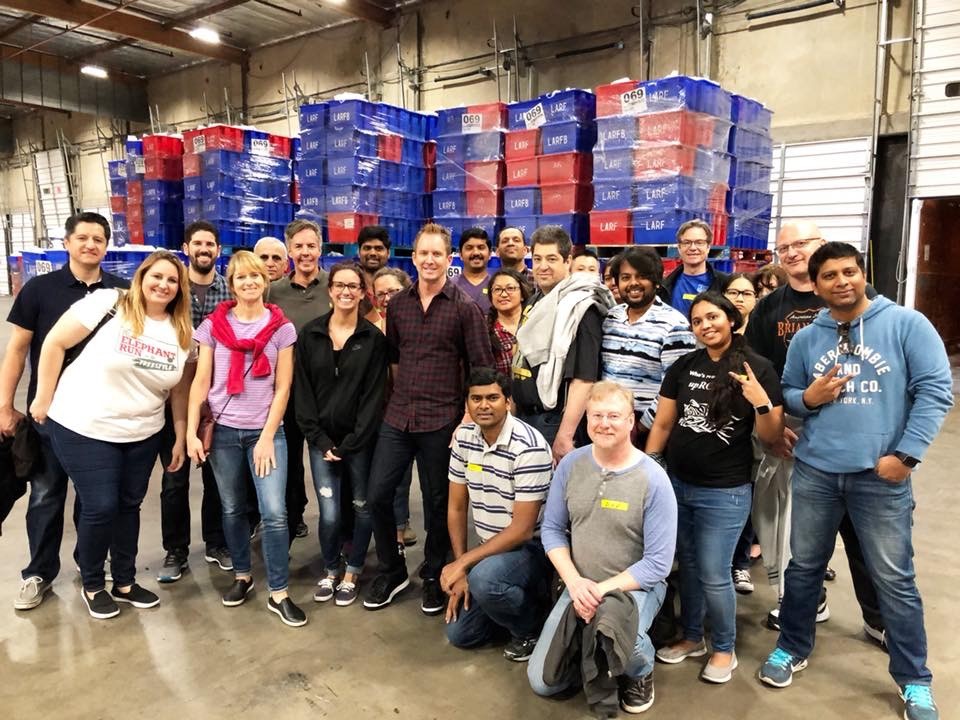
Building a department’s strategy, holding meetings, and orchestrating the delivery of technology to our business are not the only ways people can build leadership skills. In fact, one of the most effective ways for team members to learn critical leadership skills is by helping others. There is a myriad of benefits to volunteering. Volunteering takes team members out of their everyday routines and out of the office environment. It shakes up typical work groups, team structure, and processes and it challenges team members to think differently, look to each other for input and guidance, and unite behind a shared purpose. While volunteering, team members aren’t focused on getting ahead; they are focused on completing tasks, overcoming obstacles, and accomplishing goals—which is exactly why community service projects are such powerful teaching experiences.
1.Volunteers Connect with the Whys of Life: While serving others or working on behalf of the environment, volunteering can remind team members of their own values and help them reflect on the things that are most important to them. This process helps build more empathetic future leaders, and encourages team members to engage their hearts, not just their minds, in their work. It also helps team members see the bigger picture, to realize that thier work can have an impact far beyond any single project.
2. Enables Networking: Volunteering can have an equalizing effect, mixing high-level executives with employees fresh out of college. These volunteer activities give employees the opportunity to break out of their typical work circles and meet people from whom they may be able to learn valuable leadership skills or who may be able to offer support to help them grow their careers. While volunteering, team members often form lasting friendships and partnerships.
3. Teaches the Importance of Having a Vision: When teams volunteer, they unite behind a shared vision and commit, as a team, to shared goals. Because the stakes are often so high, it is easy to create alignment within the team, and team members can see how that level of alignment can pay off in the form of rapid results. When people band together behind ideas and trust in a single vision, it is astounding how much they can accomplish, and this experience can translate back to how a team works together on behalf of company goals as well.
4.Volunteer Work Energizes: When employees are stressed, doing work that benefits others, the community, or the planet releases endorphins and lifts spirits better than any sports game or team wine night. Volunteering reinvigorates overworked employees, reignites their passion for their work, repairs bonds between team members, and makes them more efficient and productive by challenging them to solve new kinds of problems and follow different processes.
5.Trains Great Mentors: As volunteers, team members benefit by offering guidance and support to each other in different ways than they might as part of their everyday role.Volunteer work gives team members a voice who may not always have one, and allows them to step up and show leadership skills and benefits they can offer the team that may not be as easy to recognize while at the office.
6.Exposes Employees to Other Cultures and Other Ways of Working: While volunteering, teams may have to follow new systems or processes than they do as part of their daily work, and this helps to challenge their thinking and adaptability. Team members are sometimes also asked to work with people who come from different countries, cultures, and backgrounds, and this helps team members learn new skills and improve their abilities to bridge communication gaps and relate to others regardless of differences.
7. Fosters Collaboration: Volunteering encourages partnerships between those who may not normally work together. While participating in philanthropy projects with my teams, I often intentionally assign employees to tasks that force them to work alongside team members they’re not used to working with to help bridge those communication gaps and force employees to break through barriers to find solutions together.
Besides the leadership skills volunteering imparts, spending time helping others can change the way team members feel about their work. Employees want to work for organizations that stand for something, and showing a dedication to service may help to improve employees’ outlook on the company as a whole, which may support team member retention. An additional benefit of volunteering includes strengthened bonds between team members, helping them to function better as a team and produce better results. Community service and philanthropy, beyond their clear benefit to the community, are invaluable team member development experiences that no department head should overlook as you strive to help your people be their best.

Dwight Coates, Chief Information Officer, Cydcor
Dwight Coates is the technology driver for Cydcor’s customer relationship management solutions. With more than two decades of leadership experience, Dwight has had the opportunity to see, first-hand the impact community service activities can have on IT and other professional teams as they work together to achieve outstanding results.

It’s no secret that effective leadership is critical to any company’s success. While each CEO brings a unique set of abilities to the table, there are some valuable CEO traits that everyone should have. Whether you’re a fledgling leader or a seasoned pro, adopting these 7 CEO traits will help you become more effective in your role.
In today’s challenging business environment, change is inevitable and adaptability is the new competitive advantage. Great leaders recognize that the strong CEO trait of being able to adjust makes you more valuable in an ever-changing environment. It enables you to excel as a leader because you gain experience and learn to modify your responses to handle different situations appropriately.
Communication is key in any company, but it’s an especially important CEO trait. Having good communication skills means knowing how to position matters in the best way possible to help you achieve your desired outcome. Communication isn’t only verbal—it includes non-verbal cues such as facial expressions and body language which can affect the impact of your message. Great leaders are able to be unemotional and manage conflict by giving everyone a voice, but not necessarily a vote.
A high-performing CEO trait is the ability to listen. Great leaders consistently listen to others and seek out the ideas, opinions, and even the advice of others. They recognize the need to be able to read people and adapt their management styles to elicit the kinds of responses and actions needed to produce results. Effective leadership comes from those who are continuously learning and are open to feedback from others.
Strong CEOs are influential, inspirational, and good motivators. They are able to create alignment and get all stakeholders—whether employees, board members, or clients—to buy into the business’s strategy. Having buy in at all levels is critical to effective leadership, executing the business’s strategy, and achieving its goals.
Taking calculated risks means considering all the possibilities and probabilities before taking bold and assertive action that has the potential to produce growth and results. Effective leadership requires driving transformation and innovation by daring to take these calculated risks and learning from the occasional failure along the way. Embracing risk also helps to overcome the fear of failure, as leaders realize that setbacks are the most effective way to learn and grow.
Effective leadership requires a clear vision that team members can buy into. CEOs need to be able to communicate in such a way that they instill confidence in others and elicit the kinds of actions and thinking that result in better performance. Effective leaders have conviction and are able to understand all the working parts of a business, and make quick, far-reaching decisions that benefit the company as a whole.
Many high-performing entrepreneurs will tell you that having resilience is key to success. Despite best efforts, the path to success isn't always a direct journey. Sometimes success is built on failure; as a leader, you need to be able to turn failure around and learn from mistakes. Successful CEOs are resilient because they understand the impact of failure, learn to think differently, and are determined to achieve their goals no matter what.
Having these key CEO traits will help differentiate you, foster effective leadership, and elevate you to become the most exceptional leader you can be.
This article is the third in a series of five blog posts from management expert, and Cydcor Chief People Officer, Jeannie Finkel. In this series, Jeannie recommends the Top Five Books she believes can help you transform your management style and become a better, more effective leader.
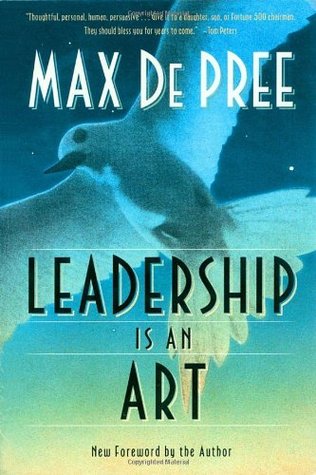
There are some clear cut skills that can help anyone become a better manager, but it can take a harder-to-define set of qualities to be a strong leader. Management expert Jeannie Finkel recommends Max De Pree’s Leadership is an Art to anyone looking to find out how to establish your unique point of view as a leader, fill your organization with passion, and foster loyalty and drive within your organization. Great managers show enormous faith in the potential of their people, and this book can help you discover how to lead by establishing relationships based on mutual trust, building a culture of inclusiveness, and by offering constant support.
Below, Jeannie Finkel explains why every manager and aspiring manager should read Max De Pree’s book on leadership, to build their identity as a leader and help shape their vision for their organization:
Book #3: Leadership is an Art
Author: Max De Pree
Short summary: This is a beautifully written collection of leadership principles written by Max De Pree, son of the founder and former CEO and Chairman of Herman Miller, Inc. Herman Miller is a nearly 100-year-old company, but it has consistently been recognized throughout its history as one of the best companies to work for in America, as well as one of the best managed and most innovative.
If you’re looking to understand how leaders can create a culture and set of principles that can stand the test of time, this book is a great place to start.
De Pree opens with a story about his father as a young manager whose experience with the death of a long-time employee shaped his philosophy of leadership. De Pree’s father went on to weave those ideas into the fabric of his company and the hearts and minds of his sons, who ran the company after him. The various chapters, each written as a little essay, bring this philosophy to life, starting with the question everyone asks at one point or another: “What is Leadership?”
What you’ll learn: The most important aspect of this book is the humanity and belief in the potential of people and the human spirit that it expresses. If you are not familiar with the concept of servant leadership, by the time you finish reading, you will be, and hopefully will be inspired by it.
De Pree also lays out his ground rules for how work relationships should operate based on mutual accountability. He looks at the capitalist system and helps us imagine how it could be enhanced through a more inclusive mindset where everyone participates. He provides guidance on how to stimulate innovation by recognizing and supporting “giants”, and he reminds us of the importance of sharing culture, values and shared history through storytelling. De Pree also offers techniques for becoming alert to the signs of complacency in ourselves, and he teaches us how to recognize the signals of organizational entropy, as well.
Every time I read this book (which is about once a year!) I take something new away from it.
Why it’s a must read:
This is an enduring classic. I came upon this one because I fell in love with Herman Miller’s products and services, and their exquisite attention to design, aesthetics, functionality and harmony in creating a work environment in which people were inspired and enabled to do their best. I had the privilege to have HMI as a client when I was in the recruiting business, and in order to do my best work and find the right people for them, I had to understand the culture. The manager I worked with encouraged me to study the company and read the book – and I was captivated. It helped me visualize the kind of company I hoped to be a part of and the kind of leadership I wanted to practice. It left me with a sense of my obligations as a leader which I’ve tried hard to live up to ever since.
And on top of everything else, the writing is absolutely beautiful – it’s like reading poetry!
If you found this book recommendation helpful, make sure to check back for upcoming posts in this series to learn about two more books that can help managers build their skills, earn the trust of their team, and lead their organizations to success. In case you missed it, don’t forget to read last week’s post about the book The Elements of Style.
To find out more about Cydcor, check us out on Facebook, LinkedIn, Instagram, and Twitter.

Jeannie Finkel, Chief People Officer at Cydcor, the recognized leader in outsourced sales, has more than twenty-five years of business experience, managing human resources and administration at top firms. Jeannie served for nearly twelve years as a Senior Vice President of Human Resources at Charles Schwab & Co. Jeannie was also Head of Human Resources and Administration for a leading asset management firm, and served as Managing Director, Talent Management Systems and Strategies for a Fortune 100 organization. Jeannie later became a Partner with leading global retained search firm, Heidrick & Struggles. With years of experience managing teams and overseeing organizations, Jeannie is a seasoned expert in management, administration, and leadership.