
Found 0 posts

As a sales leader, motivation is your secret weapon to igniting your team’s passion and performance. Motivated sales teams are energized and engaged at work. They deliver results and take on challenges because they want to, not because they have to. Great leaders understand the power of motivation to spark enthusiasm, drive, and bold action within their teams, not just meet deadlines and targets. Being an effective leader means tapping into the internal motivators that inspire — and keep inspiring — high levels of employee engagement and performance.
So, how can you boost sales team motivation and sustain momentum?
The key is to understand what really motivates people in a meaningful and lasting way. According to the 2018 Gallup Employee Engagement Report, 34 percent of U.S. workers are engaged. This finding suggests that the traditional carrot-and-stick approach of rewards and punishment to motivate employees just isn’t working. It appears that high performing employees are driven by something deeper than just monetary rewards. In Drive: The Surprising Truth About What Motivates Us, author Daniel Pink draws on decades of scientific research to propose an upgraded model. He defines three elements of true motivation that drive success and employee satisfaction beyond external incentives like fame or fortune:
“(1) Autonomy — the desire to direct our own lives; (2) Mastery — the urge to make progress and get better at something that matters; and (3) Purpose — the yearning to do what we do in the service of something larger than ourselves.”
Applying these concepts, you can enhance sales team motivation with three easy strategies:
1. Autonomy: Empower your people to thrive on their own.
Giving employees a level of independence and the space to unleash their creativity and ambition is a great internal motivator. Equip your sales team with the tools, resources, and information needed to make decisions and solve problems on their own. Then let your people know that their path to success truly lies in their hands. They have the freedom to personalize their pitch, adjust their approach, and optimize solutions to reach and win more customers. They can decide what sales process works best for them, helping them close deals and meat sales quotas. The smarter and harder they work, the more they can make and advance their career — even becoming business owners someday. The sky’s the limit!
Employees also want a say in how they can contribute and add value. Rather than forcing them to fit into a narrow mold, listen to their ideas and understand what they find personally motivating. Let them play a part in shaping their role and offer opportunities to have influence and make an impact.
2. Mastery: Encourage your people to learn and grow — and make it fun!
Be a mentor and show your people that you’re invested in helping them achieve their career goals. Encourage team members to stretch and take risks that can accelerate their personal and professional growth. In sales, rejection is unavoidable, and some may become dejected or hold back due to the fear of failure. Find ways to turn these short-term setbacks into coaching opportunities. Help team members remain positive and not take a “no” personally, identify roadblocks and potential solutions, and think long-term beyond a single pitch. It’s easier to stay motivated through a sales rut and demonstrate resilience if people can learn from failure, improve, and make progress toward their sales goals and their personal goals.
To make learning fun, use gamification to add competitive elements and turn training and development activities into sport-like challenges. Let’s face it — salespeople like to win, so try these ideas to stoke their inner drive and improve employee engagement:
· Break up training into short modules or game levels that are progressively challenging.
· Create sales contests and offer rewards — badges, points, or power-ups — when they master a challenge and move up a level.
· Provide feedback during gameplay like timed quizzes to provide positive reinforcement or steer them in the right direction.
· Foster friendly competition through player rankings, leaderboards, progress bars, goal tracking statistics, milestone setting and tracking, and so on.
· Immerse participants in an entertaining story-like scenario to test them on skills they’ve learned.
3. Purpose: Ask each team member, “What is your why?”
There are many ways sales managers can motivate from the outside, but none are as powerful as helping team members discover their “why” — their internal motivation to pursue a goal regardless of the odds or obstacles. Employees who know their “why” gain deep satisfaction from doing meaningful work that brings them closer to achieving their dreams or making a difference in their own lives or the lives of those closest to them. Your role is to create a culture that focuses on the “why” and motivates your team to do work that matters, do it well, and keep doing it — even when things are tough. Team members who are internally motivated and focused on their personal goals are most likely to stay highly engaged, positioning them to become top performers.
By using these three strategies, you can boost sales team motivation to new heights, unleashing your people’s passion, purpose, and performance. The right internal motivators can yield profound benefits that last — higher employee engagement, more discretionary effort, greater productivity, better business outcomes, and employees feeling a deeper emotional commitment to their work and team.

Looking to save a bit of money in the year ahead? As a business owner, the more money you save, the more of your money you can put back into your business. But where do you start? Finding ways to save money on a tight budget can be challenging when you’re already living a pretty frugal lifestyle, but you might be surprised how quickly small changes can add up to big savings by the end of the year.
Here are 10 easy ways to save money on a tight budget and make an extra $5,000 or more every year:
Even a small step can lead to big changes and, in this case, even bigger savings. Many of these money saving ideas are easy to implement, and they could provide benefits that go well beyond the money you’ll save, such as financial freedom for you and your family. Most importantly, living within your means can reduce the additional stress you have to manage as you work to keep your growing business healthy. Every cent you save is just one more penny you can use to help your company reach its goals.


This article is the fourth in a series of five blog posts from management expert, and Cydcor Chief People Officer, Jeannie Finkel. In this series, Jeannie recommends the Top Five Books she believes can help you transform your management style and become a better, more effective leader.
What really motivates people? What is that drives people to do their best work and be the most effective version of themselves? As a manager and leader, it pays to not just be able to confidently answer these questions but to lead in a way that inspires and fosters that passion to execute. While we all work to earn money, there are myriad rewards and benefits of a career that go far beyond monetary needs, and leaders who understand how to encourage employees and feed their emotional needs as well, have the opportunity to unlock hidden talents and potential – the kind that only emerge when employees love what they do.
Below Jeannie Finkel recommends the book Encouraging the Heart by James Kouzes and Barry Posner to any manager looking to motivate his or her employees and help team members reach their potential through encouragement and inspiring leadership.
Book #4 Encouraging the Heart
Author: James Kouzes & Barry Posner
Short summary: This is a wonderful book about the art of rewarding and recognizing others, that opens up a world of possibilities beyond just monetary rewards. The book helps us explore what really motivates people and makes them feel appreciated. The authors are best known for their major works on leadership. First was The Leadership Challenge, published in 1987, and the associated leadership development program and assessment instrument they created, used by major multinational companies. The second was Credibility, which examines what makes leaders credible, based on years of research. This book is based on one of the “5 Leadership Practices” identified in The Leadership Challenge, and it’s the only one the authors chose to build out in such detail. Kouzes and Posner recognize that one of the hardest, but most vital, things for leaders to do is excel in meeting those basic needs we all have: to be respected for who we are and recognized for what we do. This book is a “how to” manual that will help and inspire you to become great at not just meeting those needs but also unleashing truly high performance and commitment.
What you’ll learn: As with the other Kouzes and Posner books, this one starts with some foundational research, principles, and introspection. You’ll take a self-test to see how you score on the “Encouragement Index” (and might learn, to your dismay, that you’re not as good at this as you could be!). The bulk of the book takes you through the “7 Essentials of Encouraging the Heart: Set Clear Standards; Expect the Best; Pay Attention; Personalize Recognition; Tell the Story; Celebrate Together; and Set the Example.”
In the concluding section, the authors revisit introspection, with a few thought-provoking pages on “Finding Your Voice”. And finally, they provide 150 suggestions for ways to get started!
Why it’s a must read: Honestly, all three of Kouzes and Barry Posner’s books should be read by anyone who aspires to be a leader. This one, in particular, is special because it speaks to those basic needs we all have, and what we hope we will experience from this thing called “work”. As the authors say, “To us, leadership is everyone’s business. Leadership is not about a position or a place. It’s an attitude and a sense of responsibility for making a difference.” Anyone who has to work with others to get things done can benefit from the wisdom and wealth of practical suggestions in this small volume. If we put them into practice, we can make our workplace a better place…and hopefully a BEST place!
If you found this book recommendation valuable, check back to read the upcoming and final post in this series. These books can help you become the kind of leader who inspires the passion, drive, and innovation necessary for organizations to produce extraordinary results. In case you missed it, don’t forget to read last week’s post about the book Leadership is an Art.
To find out more about Cydcor, check us out on Facebook, LinkedIn, Instagram, and Twitter.

Jeannie Finkel, Chief People Officer at Cydcor, the recognized leader in outsourced sales, has more than twenty-five years of business experience, managing human resources and administration at top firms. Jeannie served for nearly twelve years as a Senior Vice President of Human Resources at Charles Schwab & Co. Jeannie was also Head of Human Resources and Administration for a leading asset management firm, and served as Managing Director, Talent Management Systems and Strategies for a Fortune 100 organization. Jeannie later became a Partner with leading global retained search firm, Heidrick & Struggles. With years of experience managing teams and overseeing organizations, Jeannie is a seasoned expert in management, administration, and leadership.
This article is the third in a series of five blog posts from management expert, and Cydcor Chief People Officer, Jeannie Finkel. In this series, Jeannie recommends the Top Five Books she believes can help you transform your management style and become a better, more effective leader.
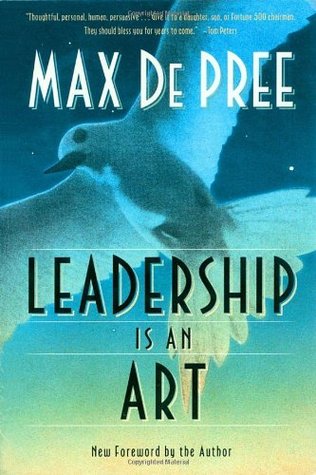
There are some clear cut skills that can help anyone become a better manager, but it can take a harder-to-define set of qualities to be a strong leader. Management expert Jeannie Finkel recommends Max De Pree’s Leadership is an Art to anyone looking to find out how to establish your unique point of view as a leader, fill your organization with passion, and foster loyalty and drive within your organization. Great managers show enormous faith in the potential of their people, and this book can help you discover how to lead by establishing relationships based on mutual trust, building a culture of inclusiveness, and by offering constant support.
Below, Jeannie Finkel explains why every manager and aspiring manager should read Max De Pree’s book on leadership, to build their identity as a leader and help shape their vision for their organization:
Book #3: Leadership is an Art
Author: Max De Pree
Short summary: This is a beautifully written collection of leadership principles written by Max De Pree, son of the founder and former CEO and Chairman of Herman Miller, Inc. Herman Miller is a nearly 100-year-old company, but it has consistently been recognized throughout its history as one of the best companies to work for in America, as well as one of the best managed and most innovative.
If you’re looking to understand how leaders can create a culture and set of principles that can stand the test of time, this book is a great place to start.
De Pree opens with a story about his father as a young manager whose experience with the death of a long-time employee shaped his philosophy of leadership. De Pree’s father went on to weave those ideas into the fabric of his company and the hearts and minds of his sons, who ran the company after him. The various chapters, each written as a little essay, bring this philosophy to life, starting with the question everyone asks at one point or another: “What is Leadership?”
What you’ll learn: The most important aspect of this book is the humanity and belief in the potential of people and the human spirit that it expresses. If you are not familiar with the concept of servant leadership, by the time you finish reading, you will be, and hopefully will be inspired by it.
De Pree also lays out his ground rules for how work relationships should operate based on mutual accountability. He looks at the capitalist system and helps us imagine how it could be enhanced through a more inclusive mindset where everyone participates. He provides guidance on how to stimulate innovation by recognizing and supporting “giants”, and he reminds us of the importance of sharing culture, values and shared history through storytelling. De Pree also offers techniques for becoming alert to the signs of complacency in ourselves, and he teaches us how to recognize the signals of organizational entropy, as well.
Every time I read this book (which is about once a year!) I take something new away from it.
Why it’s a must read:
This is an enduring classic. I came upon this one because I fell in love with Herman Miller’s products and services, and their exquisite attention to design, aesthetics, functionality and harmony in creating a work environment in which people were inspired and enabled to do their best. I had the privilege to have HMI as a client when I was in the recruiting business, and in order to do my best work and find the right people for them, I had to understand the culture. The manager I worked with encouraged me to study the company and read the book – and I was captivated. It helped me visualize the kind of company I hoped to be a part of and the kind of leadership I wanted to practice. It left me with a sense of my obligations as a leader which I’ve tried hard to live up to ever since.
And on top of everything else, the writing is absolutely beautiful – it’s like reading poetry!
If you found this book recommendation helpful, make sure to check back for upcoming posts in this series to learn about two more books that can help managers build their skills, earn the trust of their team, and lead their organizations to success. In case you missed it, don’t forget to read last week’s post about the book The Elements of Style.
To find out more about Cydcor, check us out on Facebook, LinkedIn, Instagram, and Twitter.
Jeannie Finkel, Chief People Officer at Cydcor, the recognized leader in outsourced sales, has more than twenty-five years of business experience, managing human resources and administration at top firms. Jeannie served for nearly twelve years as a Senior Vice President of Human Resources at Charles Schwab & Co. Jeannie was also Head of Human Resources and Administration for a leading asset management firm, and served as Managing Director, Talent Management Systems and Strategies for a Fortune 100 organization. Jeannie later became a Partner with leading global retained search firm, Heidrick & Struggles. With years of experience managing teams and overseeing organizations, Jeannie is a seasoned expert in management, administration, and leadership.


It's always a boon to morale to show gratitude to employees. Making sure employees know their hard work doesn't go unnoticed is a nice reminder that the bottom line isn't the only thing that matters in sales. Is there a better time to explore ways of showing gratitude and the positive effects it can have at work than Thanksgiving?
Call-Outs: A simple "good job" in any form – whether it's during a meeting, included in a company-wide email or posted on a bulletin board in a common area – goes a long way. It may mean more when the recognition comes from management or the C-suite level, but don't discount the value of peer recognition. Encourage your employees to keep everyone informed if they think part of their team is doing exceptional work. It goes a long way towards fostering a team-oriented environment and building community within your office.
Rewards: Verbal call-outs are great, but tangible gifts and experiences can leave an even bigger mark. Gifts don't have to be extravagant; even something as simple as a photo frame for the team member’s desk, a funny coffee mug, or a stylish journal is a great way to recognize someone. Personalizing a reward to suit an employee's taste goes the extra mile toward positive reinforcement. Gift cards, a lunch out or tickets to a show also make great tokens of recognition. We’re not suggesting you should make handing out awards a daily occurrence, but recognizing employees who consistently go above and beyond is a great practice.
Group Activities: The only potential downside to singling employees out is the risk of alienating other employees who feel they were passed over. So much of business is a team effort, so why not plan a team outing that lets people relax and get to know each other on a more personal level? Dinner out, sporting events, leisure sports like bowling, scavenger hunts, live shows and movies are all great options.
If group outings feel too costly or burdensome to coordinate, consider buying lunch for the office. Planning a potluck and supplying the main dish can also bring people together.
At Cydcor, we’re constantly working to achieve outstanding results on behalf of our clients, but that doesn't mean forgetting the amazing people who make those achievements possible. It’s important to take the time to remind your employees that your own success and that of the company depends on them, their passion, their drive, and the time and effort they devote to helping the team reach its goals.
We hope you and your work family all have a safe and happy holiday season.
Happy Thanksgiving!
This is the first in a series of five posts by management expert, Jeannie Finkel. In this series, Jeannie weighs in on the top five books for managers, featuring one book each week.
Being a great manager is a skill that benefits from constant honing and refinement. While some are born with the innate ability to influence others, inspire action, and drive results, most leaders require a great deal of training, practice, and studying to become as effective as they hope to be. There are many incredible management training courses available, but they can be very pricey. Luckily, there is a wealth of information that can help you transform the way you lead and manage your team available for free, from the local library.
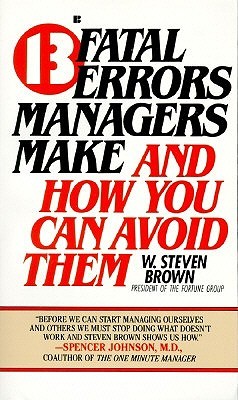
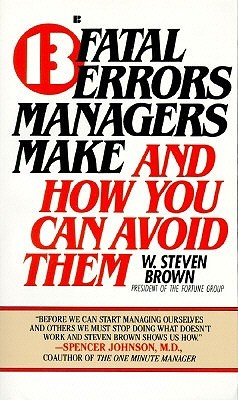
Book #1: 13 Fatal Errors Managers Make and How You Can Avoid Them
Author: W. Steven Brown
What it’s all about: Brown draws on his years of experience as a sales and management coach and consultant, working with Fortune 500 companies, to identify the top errors managers tend to make repeatedly, so we can recognize and stop doing them, or better yet, avoid committing them in the first place. The good and somewhat surprising news he shares is that there really aren’t that many – just 13 of them! He describes each one clearly, illuminating why the error gets in the way of achieving our goals as managers, and provides stories, examples, and suggestions to help us understand what the error looks like and how to correct it. He also ends chapters with helpful tools and a workbook section to create an action plan, summarize your key learnings, and think about how you’ll apply them.
What You’ll Learn: Whether you’re a new manager or one who’s been around a long time, there’s something in this little book for everyone. For newer managers, especially if you’ve been promoted from among a group of your former friends and peers, the transition to the role of “boss” and having to hold your friends accountable, can be very tough. For those in this tricky situation, the chapter, “Fatal Error #8: Be a Buddy, Not a Boss,” might really help.
For more experienced managers, who find yourselves wishing you could get your team to be more productive, there are great insights in the chapters “Fatal Error #3: Try to Control Results Instead of Influencing Thinking,” and “Fatal Error #7: Concentrate on Problems Rather than Objectives.” Or, maybe you’ve always been a top performer, and even though you set a high bar for your team, somehow, you know they can do even better. The chapters, “Fatal Error #5: Manage Everyone the Same Way,” and “Fatal Error #12 Recognize Only Top Performers,” could provide some good tips!
Why it’s a Must Read: I bumped into this book soon after it was first published, when I was a young manager. It was a godsend to me, as the firm I worked for did not provide any management training so I had to figure things out for myself. I discovered that I was committing most of these errors, and I quickly realized that the suggestions the author provided actually work. When I applied them to my own role, I became a much better leader of people, in large part because of the simple lessons this book offers.
This is a top management book I revisit every so often, and I recommend it to any new manager who’s just starting their leadership journey, as well as more experienced managers looking to strengthen their leadership skills. It’s really easy to read – you can probably finish it on a cross country plane flight or quiet Sunday afternoon – but the wisdom sticks with you long afterwards!
Look out for more book recommendations from management expert, Jeannie Finkel, as we continue our series on The Top Five Books for Managers. No matter where you are in your career, feeding your student mentality with advice from the top management experts can only aid you in your quest to reach your current and future goals and achieve success.
To find out more about Cydcor, check us out on Facebook, LinkedIn, Instagram, and Twitter.
Jeannie Finkel, Chief People Officer at Cydcor, the recognized leader in outsourced sales, has more than twenty-five years of business experience, managing human resources and administration at top firms. Jeannie served for nearly twelve years as a Senior Vice President of Human Resources at Charles Schwab & Co. Jeannie was also Head of Human Resources and Administration for a leading asset management firm, and she served as Managing Director, Talent Management Systems and Strategies for a Fortune 100 organization. Jeannie later became a Partner with leading global retained search firm, Heidrick & Struggles. With years of experience managing teams and overseeing organizations, Jeannie is a seasoned expert in management, administration, and leadership.


There are no better examples of leadership than the legacies of our great historical leaders. While they achieved tremendous fame, they did not do so without facing the occasional failure and enduring hardship. As we strive to become better leaders and learn how to inspire others, we would do well to reflect on the greatest leaders from history to see the characteristics, mentality, and habits that allowed these most revered leaders challenge norms, empower the oppressed, galvanize action, and spark change.
Lesson One: Learn from the Past
The best sources for what works in leadership are the lessons of the past. The trials and tribulations of historical leaders, while sometimes on a grander scale than our own lives, can teach us how to succeed or fail. We can learn how to lead effectively from reading about or watching movies on history, and anyone hoping to become a better leader should make a habit of it. Why make your own mistakes when you can benefit from the lessons learned by those who eventually achieved greatness? Study their lives, follow in their footsteps, and apply their leadership approaches as you drive your own team to reach its goals.
Lesson Two: Character Matters
The greatest historical leaders knew that character can often matter even more than ideas when it comes to leading others to find the greatness in themselves. Benjamin Franklin identified Thirteen Critical Virtues necessary for a successful live and vowed to exemplify them. George Washington is admired for his honesty, and Gandhi demonstrated remarkable restraint and self-discipline in his use of non-violent protest to drive change. Whether reading about George Washington, Ben Franklin, Mahatma Gandhi, Martin Luther King or Nelson Mandela, their character stood out and earned them respect, built trust with others, and translated to a highly-regarded reputation.
Lesson Three: Take Risks
You must be bold, and you must accept that you will sometimes fail. Failing can be an important stop on route to success. Lincoln lost a number of elections, including the Illinois Senate race in 1858, yet he ran for President in 1860. Washington struggled to win a major battle against the British for years, yet he had the courage to stay the course. Gandhi, King and Mandela were humiliated for many years on their paths toward civil rights and representation. Facing the occasional failure is a sign that you took on challenges, pushed yourself outside of your comfort zone, and it is an opportunity to prove your resilience and willingness to learn from your mistakes.
Lesson Four: You are Not a Victim of Your Circumstances
We can rise above poverty, lack of education, or lack of support to achieve greatness. Charlie Chaplin grew up in the direst circumstances, reminiscent of a Dickens novel, yet he revolutionized silent film. Men and women who had once been slaves and peasants, overcame the odds to become generals, emperors, and queens. While challenges can sometimes feel insurmountable, the stories of remarkable historical leaders prove that even when things seem hopeless, determination, passion, and grit can overcome the odds.
Lesson Five: Self Discipline is a Must
Lincoln had just one year of formal education, but he read constantly to feed his curiosity and continued to expand his knowledge. Franklin devised ways to improve his character by evaluating himself daily, assessing one character trait each day. Michael Jordan and Kobe Bryant were relentless in their routines to develop their skills and conditioning. The stories of great leaders of the past up to the present teach that our potential is boundless if we are willing to push ourselves. Achieving greatness as a leader means having the passion and drive to continuously transform yourself and expand your boundaries. Nobody will do that for you. To become a leader that can inspire others and provoke action, you must first be willing to lead yourself.
History is full of incredible stories of leaders who rose above their circumstances, exemplified character, and endured and overcame setbacks on their path to success. By studying their stories and seeking to understand which qualities and actions allowed them to achieve greatness, you can improve your own chances of doing the same. The stories of historical leaders are a goldmine from which I have learned so much about the kind of leader I hope to be.
To find out more about Cydcor, check us out on Facebook, LinkedIn, Instagram, and Twitter.
Gary Polson is Chief Executive Officer and Chairman at Cydcor, the market leader in outsourced sales. With more than 25 years of business operations experience in accounting, legal and senior management, Gary has propelled Cydcor to unprecedented achievement with clients, culture and philanthropy since 2001. Under his leadership, Cydcor has increased its revenue more than six-fold since 2001 and has been recognized as “…the most respected sales outsourcing company in the world” by Datamonitor and The Black Book of Outsourcing, one of the “Best Places to Work” by the Los Angeles Business Journal for eight consecutive years. Gary’s passion for excellence and never-satisfied approach has led Cydcor to earn both industry and employer recognition. With Gary at its helm, Cydcor has built its reputation on maintaining long term relationships with clients by consistently delivering results and by going above and beyond to help Cydcor’s clients gain market share and grow.

Management and leadership are two sides of the same coin, and both are necessary for a business to succeed. Learning the difference between management and leadership is important for developing effective management skills.
Great leadership is about inspiring enthusiasm and drive, while great management is about building highly efficient teams that produce impressive results. Managers are experts at getting things done and meeting targets and deadlines; leaders know how to evolve people and organizations and help them meet their potential. Each is a unique discipline that helps teams meet their short- and long-term goals, while also fostering commitment to a shared vision and outside the box thinking.
Management skills are concerned with assigning tasks, committing to deadlines, and creating systems, while leadership is focused on defining a purpose and uniting individuals behind big ideas. Managers ensure teams meet their deadlines and deliver what’s expected of them, while leaders focus on the future and how teams might prepare for challenges on the horizon. Management is about limiting risk, while leadership encourages bold action. Leadership is primarily about engagement, while management has more to do with execution. Management focuses on performance, while leadership focuses on development. Managers develop processes and create smooth operations, while leaders build relationships, encourage communication, and build trust. The most successful businesses are built with an ideal balance of management skills and leadership skills.
Scenario 1: Suzy Business Owner has promised a new client 2,000 flyers by the end of the month, but she recently lost two employees, and she knows it’s going to be a stretch. She creates a workflow document that helps remaining team members understand when they must complete their portion of the project, and she meets with each team member one-on-one to train them on the new system. By following the workflow correctly, the team is able to meet their deadline.
Is this an example of management or leadership?
Answer: Management
Suzy is faced with a short-term business challenge, and by managing her overstretched team correctly, she’s able to help them successfully achieve their goal.
On the other hand…
Suzy should be careful. Her team is being pushed beyond its limits. To continue her team’s successful streak, Suzy must also lead. She has to remind team members that accepting these kinds of challenges can help them transform the organization, leading to a more successful future for everyone involved.
Scenario 2:
Jim Entrepreneur is hoping to push his company to become the leader in its industry within the next five years. He knows it’s possible if everyone gets on board. He calls a team meeting where he presents his long-term vision and asks team members to imagine what it will feel like to someday be the best of the best. He hands out paper and crayons and asks everyone to draw a picture of one thing the company can start doing differently to help towards its goals. The team eagerly participates and many turn in more than one idea.
Is this an example of management or leadership?
Answer: Leadership
While Jim’s meeting may not produce any tangible results immediately, it serves to unite the team and get everyone excited about the company’s potential. His brainstorm encourages creativity, and it reminds each team member that his or her ideas matter. The meeting also helps inspire people to focus on the big picture rather than just short-term results.
On the other hand…
Jim has a talent for getting his team fired up, but this effect could fade if his team members start to notice that he’s all talk and no action. Jim will need to use his management skills to prove that he can translate ideas into tangible business systems.
Scenario 3:
Eric the Executive grows concerned when the company does not hit its goals for the quarter. He schedules one-on-one meetings with each member of his team to investigate the problem. One team member, who has struggled to meet his deadlines, says he’s been having trouble with the company’s current software, and he has been leaving work 10 minutes early every day to take a training class on another software he was hoping to pitch as a replacement. Eric tells the team member he’s sorry to hear the current software is challenging, but he asks the employee to consider dropping the class to allow him the extra time needed to finish his daily tasks. The employee agrees to focus on his work.
Is this an example of management or leadership?
Answer: Management
Eric is doing a great job using his management skills to monitor the bottom line and ensure his company is meeting its quarterly goals. He understands that every team member must be contributing 100 percent of what is expected of them if the company hopes to produce the results it has promised.
On the other hand…
While Eric has solved the problem in the short term, he may be missing longer term opportunities to help the company operate more efficiently. If he had found a way to help the team member stay in the class, Eric would have provided the employee with a chance to develop himself while also exploring a new software solution which might improve company operations far into the future.
Scenario 4:
Brenda the Boss has discovered that her team’s projects have consistently come in over budget, and the executive team has suggested that if Brenda can’t curb spending, they may have to reduce her department’s budget for next quarter. Brenda can think of a few ways she could reduce spending, but instead of implementing those ideas automatically, she decides to throw the problem to her team, asking them to brainstorm some solutions to cut costs.
Is this an example of management or leadership?
Answer: Leadership
By empowering her team to find solutions, Brenda encourages them to think outside the box and demonstrates confidence in their abilities to problem solve. She also shows that her priority is not implementing her ideas, but rather, finding the solutions that are best for the team.
On the other hand…
Brenda will still need to make sure the solutions her team comes up with will deliver as promised. If they cannot reach their cost cutting goals, the whole team will suffer under a slashed budget, so Brenda may have to nix more creative ideas if they don’t seem likely to reach the goal.
Every business needs both great management and bold leadership in order to achieve its goals. Vision without action is ineffectual, and efficiency without a purpose is a recipe for maintaining the status quo. Managers help businesses function like well-oiled machines, while leaders help organizations evolve and take giant leaps forward. Innovative companies can count on their managers to work out the kinks, lower costs, and increase volume, while well-managed companies benefit from the creativity, passion, and unity leaders inspire. Whether it’s achieved by one executive or a team of one hundred, the most successful companies will be those who recognize the difference between management and leadership see the two as complementary and inseparable parts of any thriving business.

Corporate culture comprises some of the hardest to define aspects of your business: vision, values, philosophies, leadership, language, norms, beliefs, habits, and more. Because defining corporate culture is so challenging, though, many business owners overlook it altogether. Corporate culture exists, however, whether a company’s leadership actively takes a part in creating it or not. Business leaders who do not help shape their organization’s corporate culture run the risk of letting their businesses lose control of such an important facet.
Creating a vibrant, easy-to-understand corporate culture can help organizations attract and keep top talent. It is critical to employee engagement and retention, and it can have an impact their happiness and satisfaction in the workplace. Creating a thriving corporate culture can also affect performance by instilling values relating to work ethic or by the way it shapes management styles. Culture can also influence the way your company is viewed by its competitors and industry.
It’s All About Authenticity: Defining corporate culture is valuable, but the definition must fit your unique company and its values. Don’t base your idea of culture on what competitors are doing, and don’t try to force your company culture to fit within a narrow definition based solely on what you’d like the company to be. Instead, take an honest assessment of your existing corporate culture, and define specific adjustments you’d like to make over time.
Corporate culture is something that permeates every aspect of a business, and changing it means changing employees’ feelings about the business, their understanding of what is expected of them, and a shared sense of the things that matter most to the business. Simply slapping a new label on your corporate culture won’t do much to change those deeply ingrained ideas. Shifting the perception of what your business stands for will take plenty of time, planning, cooperation, communication, and demonstrating that the company’s spoken values are much more than mere words.
Clarify Purpose: Start simply by defining your organization’s purpose. Then, ensure all employees and stakeholders understand that purpose, have bought into it, and are united toward fulfilling it. A clear definition of your corporate culture is pertinent to how effective it is.
Make Culture Part of Your Communications: Build a shared cultural vocabulary by reinforcing company purpose, vision, and values in all weekly and daily communications. Creating corporate culture means keeping it in mind when you set goals, announce achievements, plan events, and celebrate successes. Take advantage of company meetings as opportunities to reiterate core philosophies and unite the team. Weave culture into the visual design and layout of your workspace, as well. Prove your company’s stated values are more than just lip-service. For example, make sure your “green” business offers employees access to plenty of recycling bins, and avoid filling your business that touts “creativity and outside-the-box thinking,” with small cubicles, which literally box employees in.
Lead by Example: Call on your executive team to help define corporate culture. Other members of the organization will look to what the executive team does, not just to what they say, to determine their cultural reality. Setting the right example is critical when it comes to culture, so hold meetings to ensure your highest-ranking leaders are on board and fully committed to doing their parts.
Hire with Culture in Mind: Maintaining a specific corporate culture requires hiring not just quality people, but the right people. Communicate your corporate culture clearly during the interview process, just as you would other company goals, and make sure it fits with prospective employees’ own values and work style.
Grow Your Culture as You Grow Your Organization: When companies grow, culture becomes vulnerable because new employees bring with them new ideas, ingrained values, and past experiences. Set clear guidelines and provide reminders of cultural priorities to help maintain control of company culture during growth periods.
Get Everyone on Board: Make team members accountable for living up to the company’s standards and representing its values. Accepting shared responsibility for creating company culture gives employees a sense of ownership and purpose. Set clear expectations for employee behavior, and encourage managers to label and confront actions that violate company values. Make culture part of performance reviews, and address culture when measuring company progress as well.
Shape the Culture Around Your People, Not the Other Way Around: As company priorities and processes naturally evolve over time, the way you define your corporate culture may no longer fit. If your company’s value statements focus on the importance of in-person, face-to-face meetings, but 80% of your new employees now telecommute, it may be time to rethink whether those values still make sense. Don't try to force your people conform to a cultural definition that is no longer relevant. Instead, adjust your concept of corporate culture to fit your people and what’s important to them.
Corporate cultures are born with companies. They have lives of their own that go on whether business leaders intervene to help shape them or not. Defining and guiding corporate culture is about much more than words. It requires that companies and their leadership commit to a set of values and agree to a clear set of actions to weave those values throughout all of the core business functions. A thriving corporate culture is like a company’s soul: it is present in the way it does business, what it says about itself, who it hires, who it promotes, what it delivers to clients, and so much more. Business owners who understand the importance of corporate culture, can build happier, more engaged, better performing, and united work forces driven by people who understand their shared purpose.


Building great teams starts with great leadership. As a manager, your job is about more than just delivering results. Your team members depend on you to help them keep their eyes on the prize. They look to you for support, encouragement, and most of all, for the motivation to deliver more than what is expected of them. Your passion for the work will inspire theirs, and by helping your team stay energized, positive, and driven toward your shared goals, you can position yourself and your team members for unprecedented success.
1. Listen Up: It’s easy to make assumptions about what employees want and who they are, but to truly motivate your employees, you’ll have to start listening. Spend one-on-one time with each team member to learn more about their goals, dreams, and challenges. Take a pause before responding with your own ideas to ensure you’ve fully absorbed what they’ve told you.
2. Ask Questions: Ask team members questions to help figure out what motivates them and what is holding them back. Instead of telling them why they should care, help them discover for themselves what drives them.
3. Create a Positive Work Environment: It’s simple. Happy employees are motivated employees, and unhappy employees find it challenging to stay engaged. Examine the culture at your office, and ask yourself if you were a team member, would you feel supported and excited to come to work? If the answer is no, start brainstorming ways you might be able to change things. If you get stuck, enlist the help of your employees. The simple act of including them in the process may motivate employees to work even harder.
4. Take a Personalized Approach: One size does not fit all when it comes to motivation. Relate to your employees on an individual level and adjust your leadership approaches according to what works best for each of them.
5. Set High Expectations: It’s hard to feel motivated when your supervisor does not seem to believe in you and expects you to fail. Instead of focusing on what the employee is doing wrong, reassure your team member that you know he or she can blow it out of the water.
6. Earn their Trust: Employees need to believe you when you say you have their interests at heart. Managers who expect employees to work hard just because it makes them look good, quickly foster resentment that can infect and demotivate the whole team. Make it clear that you want them to succeed, not for your benefit, but for theirs.
7. Offer to Help: Setting clear expectations is great, but employees also like to know that their managers have their backs. Let employees know you’re there to support them in any way they need.
8. Focus on Growth: Studies have shown that money alone, is not an effective incentive to drive performance. While it may seem counterintuitive, employees are far more motivated by autonomy, mastery, and purpose. To get your employees charged up, talk about their hopes and dreams for the future, recognize their improvements, and rally around your purpose as an organization.
9. Check in Often: Motivation is not something you can set and forget. Let employees know you’re paying attention. Acknowledge progress, praise accomplishments, and help team members look for potential solutions to their challenges.
10. Be a Good Example: Wanting your team to perform is a no brainer, but are you leading by example? You can’t expect your employees to feel motivated if you’re not fully invested too. Give employees something to aspire to by maintaining a positive attitude and by constantly looking for ways to go above and beyond.
Remember that high-performing, motivated teams start with great leaders. Most employees want to do well. They just need good managers who can help them keep their eye on the things that matter. Following these simple steps can help fuel your team members’ drive to succeed.


Discover how student mentality breeds success, and personal development, for employees in this article from Cydcor. Lifelong learning helps exceed goals.
When you’re a student, your whole job is to learn. That’s why companies like their employees to maintain a student mentality. And while organizations want to hire expert talent, employees who think of themselves as experts may miss the opportunity to continue growing and improving. By encouraging employees to think of themselves as students, employers foster a culture of ongoing personal development, inspiring employees to seek out valuable lessons in every task they’re given.
Here’s how a student mentality creates better employees:
1. Teaches Them to Listen
Unlike seasoned veterans who may be less open-minded to new ideas and approaches, students are in a constant state of openness. They pay attention to people and experiences, absorbing information and searching for valuable takeaways. Staying on the lookout for new ideas creates a fertile breeding ground for innovation.
2. Keeps Them Humble
There is no employee, no matter how senior, who can’t improve in some way. Adopting a student mentality reminds even executive level employees that they always have more to learn.
3. Keeps Them Focused on Growth
Students have a hunger for information and a drive toward personal development that people often lose as they move ahead in their careers. A student mentality challenges employees to set the bar higher. It pushes them to perform at their best and continue redefining what their best might be.
4. Reminds Them to Study
Encouraging employees to think like students reminds them that it’s important to stay abreast of the latest industry trends and take advantage of resources such as trade journals, white papers, blogs, and events for their own personal development.
5. Forces Them to Question
Being a student means admitting that you don’t know all the answers. Employees who think like students become attuned problem solvers. They’re willing to challenge assumptions, and they learn to probe for new approaches that are better, faster, and more cost effective.
6. Keeps Them Competitive
Students are constantly learning and applying new skills, maintaining a student mentality urges employees to keep their abilities and knowledge finely tuned and up to date with industry trends. This may mean learning new software, attending seminars, or taking online training courses.
7. Makes Them Better Leaders
Students often make the best teachers because they learn how to effectively communicate with others. By asking employees to think like students, employers also provide opportunities for employees to mentor each other, which helps them become even better leaders.
8. Keeps Them Open Minded
As employees advance in their careers, it’s easy for them to become rigid and set in their ways. After all, doing things the old way got them this far. But an environment that values constant learning pushes them to consider new ways of thinking and reminds them to stay flexible and open to change.
Employees who maintain a student mentality don’t assume they already know everything. They understand that useful new ideas can come from anywhere and anyone. By staying open to innovative thinking, and constantly striving to learn more and improve, employees who think of themselves as lifelong students have the kind of forward thinking that helps organizations reach their goals and beyond.