
Found 0 posts

It’s time to spring forward! Use these ten terrific tips to energize your attitude and get the most out of your workday.
Your customers’ wants and needs are what matters most. Figure out what they expect and then exceed those expectations. Take the time to become extraordinary.
Smiles often change attitudes—your own and your coworkers’. People usually like to be around people with a happy demeanor. Think about the times when you were having a rough day and seeing some else’s smile encouraged you to smile. It may be a simple thing to do but making an effort to smile will make an impact on the rest of your day. Smiles work from the outside in, so practice smiling often. You’ll improve your outlook and strengthen customer and co-worker connections.
It is important to look for ways to keep you in a positive state of mind. Perhaps have lunch with a friend, join the fun and be part of the office team night, and listen to upbeat music on your way to and from work. You’ll bring back authentic energy to your workplace.
Record your accomplishments in a notebook or in your smartphone. When you need a boost, you have a resource that will transform a challenging day to a great day.
Putting off a difficult job never turns out well. Procrastination sows, and that can ruin your day. Attack your hardest task first; once it’s out of the way, you’ll feel accomplished and ready to meet anything else that comes your way.
Reach out to your team to see if they need help with their tasks. Doing something for others is a great way to get out of your head and gain a positive perspective.
Consciously remind yourself to see the positive side of every situation that you’re in. You can learn from every experience at work, and that’s an exciting possibility. Looking at things from a positive perspective will also help you be more solutions-minded and a proactive teammate.
Think like an Olympic athlete when you are working—don’t let anything stop you from living up to your full potential! Master your tasks and core assignments first, then tap into your entrepreneurial spirit to find opportunities to do more and exceed expectations.
Show up twenty minutes early. Get a head start on your day by avoiding last minute traffic that can make you late for work. Getting to work early will also give you some time to think on the tasks you need to accomplish for the day. Perhaps you can use the time to read a section of a motivational book or reflect on your goals. Not only will your day start off better, but you’ll also get noticed for taking the initiative.
Let your boss know what you’re doing. Share your career plans. Asking for advice is a great way to let your boss know that you’re committed to the company.
What are some tactics you use to stay positive at work? Share your tips with us on Twitter @Cydcor or Facebook, and show this article with your friends to start a conversation with your community.
We are Cydcor, the recognized leader in outsourced sales services. From our humble beginnings as an independent sales company based in Canada to garnering a reputation as the global leader in outsourced sales, Cydcor has come a long way. We’ve done this by having exceptional sales professionals and providing our clients with proven sales and marketing strategies that get results.

Learn more about Cydcor by connecting to us on LinkedIn! https://www.linkedin.com/company/cydcor
Every morning as you prepare for the day you face a simple choice: how are you going to accept the big and the small obstacles that you encounter during the day? Will you let these challenges become impossible obstacles or will you think like an optimist and turn them into opportunities?
Optimism is the tool you need, and the good news is that it can be developed. To engage your optimism, you need to mature the ability to pause for a moment when you encounter an obstacle. During that pause, begin to reframe what you’re seeing. Learn how to see an obstacle as an opportunity. Optimism isn’t a gift you’re born with—you develop it with practice and eventually you will become an authentic optimist, ready for any opportunity.
Consider these 5 ways an optimistic attitude will create positive results in your life. Try one at a time. Remember that becoming an expert with a new tool takes practice.
Acknowledging the good that you already have in your life is the foundation for all abundance. - Eckhart Tolle
It feels good to start your day with a grateful attitude. Your attention moves from the negative to the positive. Consider the good things in your life and your successes; even the small things are important. At the end of the day, before you fall asleep, think of five things that you’re grateful for and feel the happiness they bring to your life.
What matters most is not what these obstacles are but how we see them, how we react to them, and whether we keep our composure.- Ryan Holiday
If you identify something as an obstacle, your mind will respond with ways to make repairs; That means your energy is heading in the wrong direction- toward the negative. When you correctly identify a task, assignment, or a deadline as an opportunity, you begin to activate your optimism and align your skills toward a positive outcome.
Learn more about what Cydcor does for clients and team members by watching our latest video on YouTube.
You do not need to be a victim of worry. Reduced to its simplest form, what is worry? It is simply an unhealthy and destructive mental habit. -Norman Vincent Peale
Low optimism is evident when you’re confronting feelings of anxiety and fear about the future, which often leads to rumination, a negative type of self-talk that imagines everything that could go wrong. An alternative to ruminating is imagining the positive. Create a movie in your head that visualizes your confident self, feeling powerful and achieving success.
People may hear your words, but they feel your attitude.- John C. Maxwell
Language defines our emotional state and creates the space in which we respond to a challenge. Instead of saying, “it’s impossible,” say, “it’s a challenge.” Shift your “no” toward “yes”. Stop complaining about personal problems and things that are getting you down. Greet the people you encounter with an optimistic response. If someone asks, “How are you?” Your response will be, “I’m doing great today.” Optimism is powerfully contagious and will make a great impression on the people you meet.
No one knows more about optimism than a Cubs fan. After waiting 104 years, it's our optimism, and not the winning, that binds us together. We really do believe the next year will be the year. -Grant DePorter
Begin to pay attention to sources of negativity in your life. Does listening to the nightly news lead you to feeling sad? Then find a commentator or writer who answers despair with hope and celebrates positive stories. Volunteer your time working on a cause that helps others. Cydcor provides employees with an opportunity to support Operation Smile. Joining a group that’s doing good means you’re making the choice to be around optimistic people. Eventually, their optimistic view of things will contribute to your success as your optimism also grows.

Is your glass half full, or is it half empty?
Before you answer this question, take a moment to think about what you’re being asked. The standard response from a traditional optimist is that the glass is half full.
Pessimists also provide an expected answer and observe that the glass is half empty. But an authentic optimist, one who’s been improving his or her performance at work and in life, will simply say, “I’m thankful that I have a glass.”
You see, the authentic optimist has developed the ability to see the details in the situations and challenges the encounter every day. They have learned to recognize opportunity and respond with originality tempered with a bit of audacity. Optimism has a lot of benefits—one of them is original thinking.
Optimism isn’t a trick. It’s not a gift, either. It’s something you can learn. It’s a skill you must learn if you want to develop your career and build success. At its best, optimism is a way of life. Are you ready to embrace it fully?
You may have been taught that to be an optimistic person you must “hope for the best.” Actually, those are two different things. Hoping for the best leads to passive decision making - you will sit where you are until something good happens. But you may be sitting in the wrong place. When something good happens on the next street over, you’ll miss it entirely because you misunderstood optimism.
Optimism is a state of mind, a decision, and a daily practice. As you begin to cultivate your own personal optimism you’ll begin to see that it’s not a magic bean or a book of spells. Optimism is a point of view. It’s learning how to see that each challenge you face at work, on the road, on the phone, and at home, presents you with an invitation and an opportunity to achieve your goals.
Now, it’s easy to see bad news and difficulty. Even some optimistic people may see that the glass is half empty. But authentic optimistic people have developed their skills to achieve and expect success. They never stop looking once they notice that the glass is half empty. An optimist sees that there are choices to be made and opportunities to be considered.
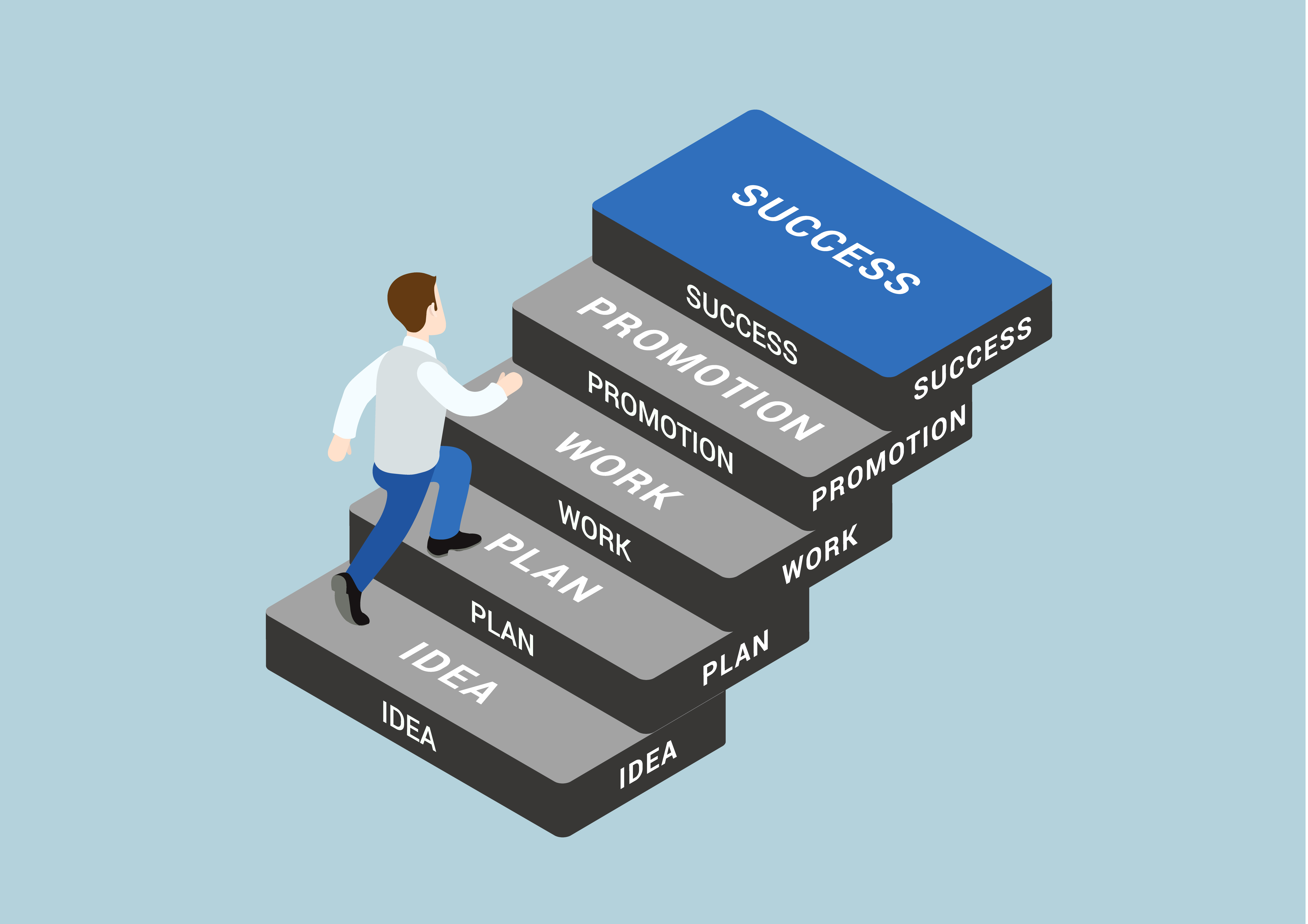
Cydcor has previously written about Toxic Employee Traits That Can Slow Progress, but it's also important to mention how to continue career progress. You will never advance simply by sitting at your desk, answering emails, and filing reports. A promotion is earned. Achieving a promotion isn’t an impossible goal. But to get there you need a good plan. The following suggestions are your starting points for success.
Evaluate Your Skills
You wouldn’t have been hired if you weren’t good at your job. But are you producing enough positive results to earn a promotion? Before you request a promotion, evaluate your job performance. Ask yourself the hard questions—face your fear.
It’s Not All About You
You will never achieve success by yourself. Your colleagues are an important part of your advancement. Study what they do. Understand their pain points. Improving their productivity is a leadership skill and contributes to your chance for promotion.
Write Your Future
Write the story of your career. Imagine where it will lead. This exercise provides a private place to draft new possibilities for your work life. It’s a safe place to practice taking risks. Don’t waste time creating a fantasy about wealth and power. Your career is serious work.
Become the Resident Optimist
Don’t get distracted by the inevitable complaints you hear during the day. Is it hard to do? Yes, sometimes it is. Everyone has bad days. But remember this: negative is easy, positive is hard. Don’t complain—explain. Don’t spread rumors—educate. Build a reputation for being constructive, informed, and open-minded.
Your Evaluation Happens Every Day
Do you ever feel invisible when your workload is building up? During these times remember that your supervisors are taking note of how you manage stress while you reach your goals. If you feel stuck in a negative take time for a mental stretch. Many corporate leaders find insight and get reenergized when they meditate.
Ask For Help
Sometimes you’ll come across a problem you can’t figure out. You need to be brave enough to ask for help. Find a mentor. Build a resource team from various departments. Share the problem. You will be remembered solving problems with creative strategy. Never ignore the wealth of institutional experience at work.
Find out more about Cydcor and our latest company updates by following us on Twitter @Cydcor.

Learn more about what's happening at Cydcor by keeping up with our latest updates on Instagram.
At Cydcor, we know that becoming an effective leader does not happen overnight. It takes effort to learn and practice crucial leadership skills in order to be efficient. Still, people can point out effective leadership when they see it. There are great leaders who naturally become successful, but there are also certain traits that they share. These are a few characteristics of what it takes to be an effective leader.
Optimism
It’s difficult to lead without believing that one day, you will succeed the way you want to. Leaders must have some sort of optimism to keep their hunger for success alive. People will always follow a person who dreams big and knows that everything they want can one day be achieved. Optimism is a trait of leadership that is constantly overlooked but can be effective when trying to gain the trust of team members. Leaders should always be preparing for the future, while still focusing on the present.
Cydcor is on Facebook! Be sure to follow our page (https://www.facebook.com/CydcorLLC) to keep up with our fundraising event for Operation Smile, Day of Smiles!
Look Out for the Team
Leaders must move and think quickly, but they must also take time to pause and pay close attention to how their employees are doing. As a leader, you can’t prepare yourself to lead more effectively if you don’t know what is really happening with your team members. Always be on the lookout for evidence of their state of mind and what support they need to reach success and fulfillment in their work.
Constant Preparation
If a leader fails, it’s usually due to their lack of preparation. When an opportunity is missed, it’s often because a leader did not plan for themselves or their employees to see and seize it. Preparation requires accountability and is a responsibility with multiple factors. Every leader sees through a different lens – therefore, they should know what the short and long term preparation demands are for their employees and the business to be successful
Self-Assessment
An effective leader should always be giving employees a critique to see if they can find improvements in any areas. By looking at what the team is doing correct and what they need to work on, leaders can better identify with a team. Checking in with ourselves is never a bad idea.
Make Tough Decisions
Without fail, leaders are called on to make choices that impact both their organization and the people they lead. People want to follow a person who weighs all the options. In other words, good leaders make important decisions based on what’s best for the organization -- and they make them confidently. You will have to make a tough call from time-to-time, but with the right amount of sureness and groundwork, anything is possible.