
Found 0 posts


If you are looking to advance your career, you will definitely want to consider the power of positive thinking. While it may sound hokey at first, adopting a positive frame of mind can have a real impact on your potential for success, not to mention, making you feel good! Actively working towards positive thoughts in your everyday interactions with yourself and with others can improve your confidence, strengthen your relationships, and lead you to your life’s goals.
What is positive thinking?
Positive thinking involves a mental attitude that expects good and promising results. Incorporating positive thinking into your mind and your life can lead to a great deal of benefits because it can transform positive energy into reality.
You may not think of yourself as a positive or a negative person—you’re a realist. While that may be the case, even realists can get bogged down by a negative train of thought. Harnessing the power of positive thinking will train your mind to consider a positive outcome and then truly believe that that outcome will come true.
The problem with negativity
Negative thoughts are incredibly limiting. Henry Ford once said, “If you think you can, or you think you can’t—you’re right.” If you don’t think you can land a sale, you won’t. If you don’t think you can advance to your dream job, you won’t. Negativity will make you overthink your interactions, your work, or your effort, and it will make you believe that none of it is cutting it. A negative mindset can also make you comfortable with failure, which certainly won’t do you any favors.
Negativity doesn’t let you see the forest for the trees. It narrows your thoughts, creating stress and a flight or fight response. It can make you fixate on a single problem without giving you the room to consider alternative possibilities. Learning how to counter negativity with positive thoughts is essential for maintaining an upwards career trajectory.
How to use the power of positive thinking
Thoughts create your reality. Harkening back to another one of Henry Ford's most motivational quotes, "if you believe you will land a sale, your confidence will shine through, and you are more likely to achieve that goal. Additionally, a positive mindset doesn’t come naturally to a lot of people; it takes concerted effort to rewire your brain to think in this manner.
Try the following actions in your day-to-day in order to reap the benefits of positive thinking:
The benefits of positive thinking
When you actively work towards a positive attitude, you will begin to experience more joy, contentment, and love in your life. Furthermore, the power of positive thinking has a tendency to create what some call an “upward spiral.” Like a downward spiral, which is associated with the slippery slope of negative thoughts, an upward spiral can provide the momentum for broadening your horizons and increasing your rate of success. Use the baby steps tactic that you learned about to help propel you into an upward spiral.
Another great benefit of positive thinking is that you will be able to handle feedback and conflict in a new way. If constructive criticism used to make you squirm, positive thoughts can help you reframe that feedback into a learning experience. The same can be said for conflict: you can create new pathways in your brain to handle additional setbacks or issues so you can approach conflicts with a level head.
While many people think that success is a result of work ethic, persistence, or drive, behind it all is the power of positive thinking. Few of the most successful people would be where they are today—whether elite athletes, CEOs, or business owners—without the positive mindset and confidence that they would eventually attain their goals. Replace your negative thoughts with positive ones to start believing in yourself and believing in your own success. You will probably be surprised by difference positive thoughts can make.

If you’re serious about advancing your career, you have to be willing to take massive action—there’s no way around it. Top performers in any industry are those who know how to push themselves. They are constantly seeking out a new competitive edge, looking for ways to up their game and achieve the next level of results.
Whether you are just beginning your career and want to get off to a strong start, or you are a seasoned veteran looking to kick things up a notch, it’s all about the willingness to take action and put the pedal to the metal. While there will always be factors outside of your control, the ability to be proactive will ultimately determine how far you'll advance in your career and how fast you get there.
1. Don’t wait to shine
A shocking number of professionals fail to reach their full potential because they’re waiting for the people who got there first to succeed. You might be doing this without even realizing it. If you truly want to advance in your career, get rid of this mentality. Never be afraid to set the pace, even when you’re the newest member of the team.
Are you awesome at what you do? Shine. Can you break a record? Do it. Do you have great ideas? Share them. Want more responsibility? Rise to the occasion. Take action and unleash your talents on the world. Outwork the person who started five years before you. Whatever you do, don’t wait for someone else to get promoted first just because you’re the rookie.
2. Be hyper-strategic about where you take action
If you want to advance your career, it’s time to be smart about what activities deserve your time and attention. Yes, there are likely three-dozen things on your to-do list—that’s why you need to strategize.
Start by asking yourself this question, “What is one specific change that I could make that would elevate my game?” (Hint: if you’re having trouble answering this, schedule a chat with your mentor.) Simply knowing the answer to this one question can bring clarity to your plan of attack.
Once you’ve got your mission, put the blinders on. Take deliberate action to advance the specific goal that you’ve defined. Give your freshest, most valiant effort while you’re still on a full tank by avoiding lower priority tasks until you’ve made satisfactory gains. If you catch yourself sending your valuable resources in the wrong direction, be sure to pivot quickly!
3. Spring clean your life
Now is the perfect time to get impeccably organized. Set aside a weekend to dust away anything extraneous in your day-to-day life. Put away your winter clothes. Go through the files you’ve downloaded to your desktop. Get rid of old voicemails. Finally hit inbox zero—and come up with a system to keep it that way. This might mean skipping your normal Netflix-dedicated Sunday, but it will be worth it. Nothing feels better than having your ducks in a row. By cleaning up and simplifying your world, you will eliminate distractions and clear up space to focus on how to take action to advance your career.
Remember, successful careers aren’t built overnight. Little things add up to big things. Keep working hard and never stop asking yourself how you can up your game. Be so good they can’t ignore you. You have the power to increase the pace at which you advance in your career.
“Only those who dare to fail greatly can ever achieve greatly.” - Robert F. Kennedy
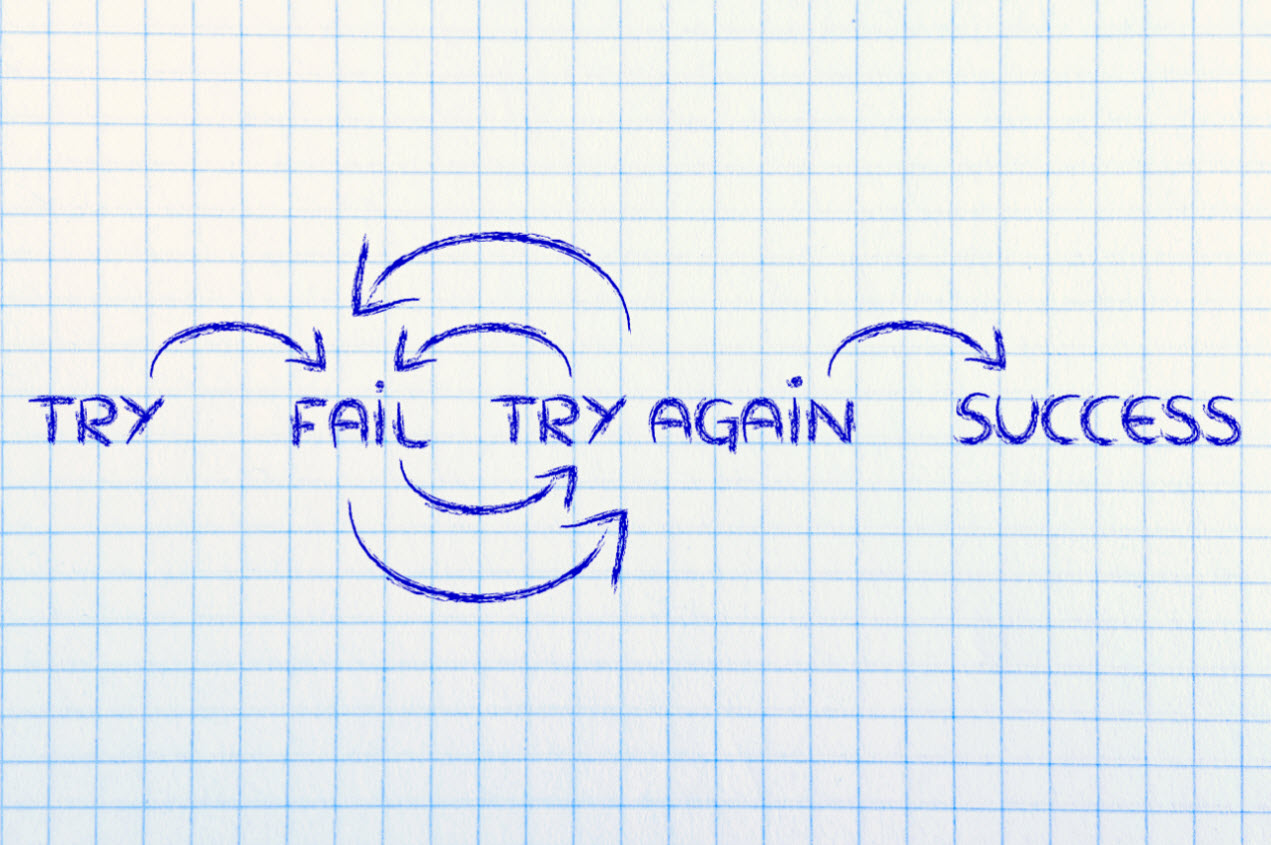
Growing up, we learned that all failures are bad. So when we did fail, it hung over our heads as an unpleasant reminder of what happens when we try something new. But failure can be good when we learn from it, and embracing the “fail fast and fail often” mentality, which focuses on risk-taking and innovation, can turn one step backward into two steps forward. Failure is a powerful teacher. It shows us what doesn’t work, so we can more quickly find our way to what does. Failing in sales and business can often be an effective and even necessary route to mastering the art of the pitch and closing more deals.
Learning from failure is a powerful skill that takes confidence in our abilities and strength to admit fault. Here are some strategies to turn a setback into a comeback:
Don’t Worry About What You Can’t Control
You can’t change what’s out of your control, and worrying about it will only make things worse. Take stock of what you can control, such as your planning and skillset, and use it to re-evaluate your process to prepare for a better outcome.
Own it
Everybody fails. Own it and forgive yourself, then learn from it and turn this negative into a positive. The best thing to do is to be honest with yourself and set your mind on improving, and the only way you can truly do that is taking responsibility for the missed opportunity.
Revise the Plan
Before you set out, what was your plan? Often times, the cause of failure is a simple oversight or misplaced effort in the planning phase. Focus on everything that happened before the failure and see what can be changed; there may be one or two things you could’ve done that’ll seem obvious with hindsight.
Seek an Outside Perspective
Sometimes we’re unable to see the cause of our failure because we lived it. An outside perspective from someone you trust, such as a mentor who is in a better position to see where things went wrong, might provide helpful guidance. Be open and honest with them about your failure; it’ll make you feel better to talk about it, and your mentor will respect you for seeking honest feedback and learning from it.
Believe in Yourself
Something went wrong, so trust yourself to make it right. It’s too easy to dwell on failure and beat ourselves into submission. A failure doesn’t make you a failure if you learn from it. Believe in your abilities and your strength to move forward because you will get better. Take risks. Expand your comfort zone. One day, you’ll look back on this and be glad it happened because it made you realize your true potential.
Try Again
The worst thing to do after a failure is stop trying. Failure can be a gift when it provides insights that help you perform better on the next attempt. When you give up, you waste that valuable information. Learn, grow, and keep moving, and this time you might just win big. There’s only one way to find out.
Setbacks are stressful, and can keep us from chasing our goals if we let them, but the courage to own it and learn from failure helps us pivot onto stronger ground for new opportunities. Millionaires and celebrities are no strangers to this; they’ve all experienced failure. Can you imagine if Steven Spielberg quit making movies after being rejected from film school? The most important thing to do after a failure is to learn from it and try again.
With the help of these strategies, your feelings of failure will subside and you’ll become even more confident in reaching your goals.


We all want to love our jobs, and while most of us accept that not every part of our job can be our favorite thing to do, what happens when you start getting bored at work? Does that mean you’re doing something wrong or that your chosen career might not be right for you after all? Not necessarily. While you should never stay at a job you absolutely hate, feeling occasional boredom at work can actually mean that you’re making valuable progress you’re not even aware of.
Make the Most of It Tip: Rather than focusing on the monotony, remind yourself that even if you can’t see the improvements right away, you are getting better at what you do with each repetition.
Make the Most of It Tip: Tell yourself you can check your emails, surf the web, get coffee, or spend ten minutes socializing with coworkers once you’ve finished the assignment in front of you. By giving yourself small rewards to work towards, the strange feeling of only paying attention one thing at a time might not feel so uncomfortable. At the end, you might be surprised to see how much you’ve accomplished, and it may help you enjoy those periods of focus a bit more the next time.
Make the Most of it Tip: Rather than looking for ways to speed things along, take pride in the fact that you’re accurate and thorough. Tell yourself that doing things right is part of your personal brand, and know that it’s that attention to detail that will help you stand out amongst the competition.
Make the Most of it Tip: Use those moments of boredom as opportunities to think through the case you’ll make to management for why you’re ready to move up to a new role. Use the ease with which you do your current tasks as part of your argument. Explain that the job has gotten so easy that you’re confident you could be doing more, and offer to help train your replacement to be as proficient at your current role as you are.
Make the Most of it Tip: When your mind starts to wander, take advantage of those moments by choosing to brainstorm new ideas for your company or ways you can make projects more efficient. In other words, decide to use your daydreams to benefit your company, and you may be surprised how that decision can boost your own career growth as well.
Like most things in life, boredom, in moderation, won’t hurt you, and it could even help you take your career to the next level. Remember that being great at your job may not be fun and exciting every day, but feeling the occasional boredom shouldn’t send you running for the hills either. Realize that even the greatest jobs will have ups and downs, and what may seem like a rough day today could be helping you toward that big win tomorrow.


We all have a comfort zone, and we like it there. It’s true. Even naturally adventurous, risk-takers have a comfort zone and are susceptible to falling into familiar patterns. Why? Because it’s natural, normal, and sometimes necessary. What is a comfort zone anyway? Your personal comfort zone is a state of being that protects you from risk, stress, and anxiety through habit and familiarity. When we are in our comfort zone, we are most at ease. So, what’s wrong with that? After all, isn’t being stress-free a good thing? Yes, too much stress and anxiety can have sometimes extreme negative consequences like illness, reduced productivity, and anxiety. Staying in your comfort zone too often, however, can put you at risk for becoming complacent, unproductive, and unmotivated. Studies have shown that a small amount of stress, like the kind that comes from learning something new, setting a deadline, or doing something out of the ordinary, can boost productivity. We perform at our best when we allow ourselves to get just a little bit uncomfortable, and breaking away from our usual routines can have other benefits too.
It Motivates You: Accepting an ambitious deadline or taking on a new job duty can help you get more done. There’s that healthy dose of extra pressure to deliver what you’ve promised, and there’s also the potential for reward if you succeed.
It Educates You: Trying new things can help you learn and grow by exposing you to new information and new approaches, while also adding to your skills and abilities.
Gets You Ahead: By taking on more responsibility or by speaking up to share ideas and propose solutions to problems, you can bring positive attention to yourself in the workplace, which can help you climb the corporate ladder faster.
Provides Inspiration: Doing uncomfortable things like meeting new people, trying new things, and taking risks can help to boost your creativity by changing your way of thinking and exposing you to new ideas and experiences.
Builds Confidence: When you get out of your comfort zone to try something new or take on a new responsibility, it can boost your confidence by helping you discover that you’re capable of more than you think you are.
Keeps You Flexible: Getting out of your comfort zone by facing new challenges can improve your problem-solving skills as well as your adaptability.
Give Yourself Permission to Be Imperfect: Fear of making a mistake, embarrassing ourselves, or looking foolish is one of the leading reasons we prefer to stay in our comfort zones. We get so caught up in appearances that we stop putting ourselves out there. Remind yourself that absolutely no one is perfect. It’s better to look a little bit silly than to never try at all.
Remember that a Little Stress is a Good Thing: It’s called a comfort zone for a reason: because stepping outside of it doesn’t always feel good. Accept that growth and learning are going to feel a little bit weird, and those experiences make cause a bit of unease or anxiety, but remember that small doses of anxiety can help you accomplish more and perform at your best.
Think the Worst: Getting out of your comfort zone is all about fear of the unknown. What if things go wrong? But what are those mysterious consequences? Instead of getting caught up in worry, force yourself to think of the worst possible outcome, and label it. Many times, the worst-case-scenario turns out to not really be that bad. Once you realize that you’ll survive, even if everything goes wrong, it makes the idea of taking that risk just a little bit easier.
Face a Fear: We all have things we’re afraid of, but when we let those fears keep us from accepting offers or trying new things, we risk missing out on some of the most exciting opportunities life brings. Decide that you are going to overcome one of your fears. Don’t try to conquer them all at once. Instead, choose one thing you’re afraid of, like public speaking, and decide that next time you’re offered a chance to speak in front of a crowd, you’ll take it. It will be a challenge, but you may be surprised by where the new experience takes you.
Take Pleasure in the Unknown: One of the biggest reasons people avoid getting out of their comfort zones is a fear of the unknown. Because we don’t know what might happen if we try something new, we simply don’t do it. But, what if you decide to think of the unknown as a surprise, an adventure, a gift? The beautiful thing about the unknown is that it’s limitless, and that means it can sometimes provide new and exciting opportunities we haven’t even imagined.
Start Small: Getting out of your comfort zone doesn’t always require a huge leap of faith. There are little ways you can challenge yourself to get uncomfortable on a daily basis. Simple changes like trying an unfamiliar food, taking public transportation instead of driving, or introducing yourself to a stranger can help you get into the habit of disrupting your usual routine.
Make a Snap Decision: Staying in our comfort zones helps us feel in control, and that’s why making decisions can sometimes be such a lengthy, deliberative process. We think that if we spend enough time weighting the pros and cons of each choice, we can control the outcome. What but what would happen if you just quickly make a choice and stick with it? Try it and see what happens. The results may be a pleasant surprise.
Feel Free to Fail: Some of the greatest learning opportunities, innovations, and achievements have come from flat-out failures. Failing is sometimes the best way to force yourself to think differently and come up with new solutions. Stop running from and obsessing over the idea of failing, and start seeing it as just another route to success.
Getting out of our comfort zones is something we all must constantly work on. That’s because even people who tend to be more open to new experiences and challenges can find themselves slowing down and getting comfortable once the unfamiliar becomes routine. The more often you push yourself out of your comfort zone, however, the less afraid you’ll be of the process and the more likely you’ll be to develop a habit of doing so. There’s nothing wrong with allowing yourself to fall into a comfortable routine every occasionally, because it can give your mind a much-needed rest, and it can provide room for you to absorb the lessons of recent challenges you’ve faced. It’s when comfort turns into complacency, slowed growth, and low productivity that it’s time to shake things up and get uncomfortable.


Discover how student mentality breeds success, and personal development, for employees in this article from Cydcor. Lifelong learning helps exceed goals.
When you’re a student, your whole job is to learn. That’s why companies like their employees to maintain a student mentality. And while organizations want to hire expert talent, employees who think of themselves as experts may miss the opportunity to continue growing and improving. By encouraging employees to think of themselves as students, employers foster a culture of ongoing personal development, inspiring employees to seek out valuable lessons in every task they’re given.
Here’s how a student mentality creates better employees:
1. Teaches Them to Listen
Unlike seasoned veterans who may be less open-minded to new ideas and approaches, students are in a constant state of openness. They pay attention to people and experiences, absorbing information and searching for valuable takeaways. Staying on the lookout for new ideas creates a fertile breeding ground for innovation.
2. Keeps Them Humble
There is no employee, no matter how senior, who can’t improve in some way. Adopting a student mentality reminds even executive level employees that they always have more to learn.
3. Keeps Them Focused on Growth
Students have a hunger for information and a drive toward personal development that people often lose as they move ahead in their careers. A student mentality challenges employees to set the bar higher. It pushes them to perform at their best and continue redefining what their best might be.
4. Reminds Them to Study
Encouraging employees to think like students reminds them that it’s important to stay abreast of the latest industry trends and take advantage of resources such as trade journals, white papers, blogs, and events for their own personal development.
5. Forces Them to Question
Being a student means admitting that you don’t know all the answers. Employees who think like students become attuned problem solvers. They’re willing to challenge assumptions, and they learn to probe for new approaches that are better, faster, and more cost effective.
6. Keeps Them Competitive
Students are constantly learning and applying new skills, maintaining a student mentality urges employees to keep their abilities and knowledge finely tuned and up to date with industry trends. This may mean learning new software, attending seminars, or taking online training courses.
7. Makes Them Better Leaders
Students often make the best teachers because they learn how to effectively communicate with others. By asking employees to think like students, employers also provide opportunities for employees to mentor each other, which helps them become even better leaders.
8. Keeps Them Open Minded
As employees advance in their careers, it’s easy for them to become rigid and set in their ways. After all, doing things the old way got them this far. But an environment that values constant learning pushes them to consider new ways of thinking and reminds them to stay flexible and open to change.
Employees who maintain a student mentality don’t assume they already know everything. They understand that useful new ideas can come from anywhere and anyone. By staying open to innovative thinking, and constantly striving to learn more and improve, employees who think of themselves as lifelong students have the kind of forward thinking that helps organizations reach their goals and beyond.

You have to commit to professional development to advance your career. Business professionals are eager to share their knowledge, insights, and experience--if you know where to look.
Professional development improves abilities and skills through education and training. Some employers will train you on the job. Sometimes you can learn a new skill by watching people at work. On occasion, you’ll read a book or take a class.
The Internet has made professional development much easier. We identified ten blogs to launch your professional development with a potent punch:
Partnering with managers and business owners taught Tom Foster the secrets to improving personal performance and teams’ productivity.
Start something awesome, do something awesome, and finish something awesome. Turn passion into productivity and become the best at whatever you do.
Cheryl Cran will teach you to welcome change, embrace technological innovation, and build agile teams.
Small Business Trends presents cutting-edge strategies for entrepreneurs running a small business and committed to improving their performance.
http://under30ceo.com/category/blog/
Traveling around the globe or to new destinations in your hometown will give any entrepreneur a fresh perspective on how to do business. Check out this blog for news, advice, trends, and event for any young entrepreneur.
Everything you didn’t know about everything there is to know about marketing. Godin is a master at messaging and communication. This is a great resource for looking to improve your career projector and professional development.
http://letsgrowleaders.com/blog/
Over twenty years of customer service, marketing, and sales experience has provided Karin Hurt with the ability to teach how to strategize change and build healthy business cultures. He’s also the expert in building vibrant customer communities.
http://www.theelpodcast.com/blog/
Skip school and dive into the in-depth insights you’ll find in the informative interviews with leading business authors. Visit Cydcor Reviews to find more about the books every business professional should read.
Aspiration leads to inspiration and acclamation. Art Petty teaches professionals to improve themselves and their teams through the use of objective strategy, observation, and continuous learning.
http://randomactsofleadership.com/
Discover the skills required to transform conflict into collaboration. Susan Mazza is a progressive thought leader with a passion for facilitating excellence.
Do you have a professional development plan for mastering new skills? Share your favorite resources in our comment section. Also be sure to follow @Cydcor on Instagram to learn more about our company based in Agoura Hills, CA!
We are Cydcor, the recognized leader in outsourced sales services. From our humble beginnings as an independent sales company based in Canada to garnering a reputation as the global leader in outsourced sales, Cydcor has come a long way. We’ve done this by having exceptional sales professionals and providing our clients with proven sales and marketing strategies that get results.

Clutter is anything that prevents you from achieving your goals, learning new skills, and getting your job done. Follow these five tips and get your clutter under control.If you’re drowning in clutter, it’s easy to be overwhelmed. Don’t go there. Clutter makes you less productive, but it’s not a reflection of your character. With a little concentration and some hard work, you can fix your clutter problem. We’ve put together five tips to finally get your mess under control.
Schedule a monthly review of your paper and digital files. And don’t just think about doing it—actually do it! Pick a date and mark it on your calendar to make this procedure a regular part of your workweek. Review everything in your inbox, on top of your desk, and in your smartphone. Get rid of any files and documents you no longer need. File or scan and save documents that matter.
Pick a time at the beginning or end of your day for a 5-minute review of your workspace. Go through your inbox, review paperwork on your desk, and identify any items you can resolve with immediate action. If there are items that you can recycle or file, then take care of them right away.
Get familiar with the items in your workspace and how often you need them. Make sure that your tools have a place to call home and that they don’t migrate around during the week. To work efficiently, you need to be able to reach your supplies easily; make sure that all your most frequently used supplies are close at hand.
It’s great to keep personal knick-knacks on your desk—family photos, Star Wars action figures, or snow globes from all of your vacation—but if your collectibles get in the way of getting things done, then it’s time to reduce your collection. Also, be aware that this kind of clutter may send the wrong message to supervisors--it could tell them that you’re not the serious person they’re looking for to advance in their company. Have a friend or colleague take a look at your workspace and ask them what they think it says about you.
Schedule one day per quarter to go through all of the drawers, file cabinets, and storage areas in your workspace and clean them out, one at a time. Have a roll of paper towels and some spray cleaning fluid on hand. You’re going to empty every drawer and wash it out. This task will force you to decide whether to keep, recycle, or discard the items you find. Clean and wash your work surfaces. When you are finished, you will finally have a clean place to work, and that will motivate you to keep your workspace free of clutter.
How do you keep your workspace free of clutter? We want to know your secrets to staying organized and maintaining order with your print and digital files. Please comment here, share your tips on Twitter, and follow us @Cydcor. Invite your friends and colleagues to participate in this discussion so we can learn to do better together.
We are Cydcor, the recognized leader in outsourced sales services. From our humble beginnings as an independent sales company based in Canada to garnering a reputation as the global leader in outsourced sales, Cydcor has come a long way. We’ve done this by having exceptional sales professionals and providing our clients with proven sales and marketing strategies that get results.

As you celebrate the New Year, reflect back on the one we’re just finishing up. What were your biggest successes? Your most frustrating failures? Consider the coming months and use this year’s experiences to identify possible challenges and desired goals.
After a month or two, the New Year loses some of its initial excitement and may move back into that place of hard work and routine. It’s during these times that we need support and encouragement to continue moving onward and upward the most.
We’ve selected 12 inspirational quotes from some seriously smart men and women in a variety of professions. Their wit and wisdom are just the spark you’ll need to pump up your optimism!
1. "If opportunity doesn’t knock, build a door." – Milton Berle, American humorist, and actor
2. "Don’t limit yourself. Many people limit themselves to what they think they can do. You can go as far as your mind lets you. What you believe, remember, you can achieve." – Mary Kay Ash, Founder Mary Kay Cosmetics
3. "It’s easier to explain price once than to apologize for quality forever." – Zig Ziglar, Salesman and motivational speaker
4. "Opportunities are usually disguised as hard work, so most people don’t recognize them." – Ann Landers, Advice columnist
5. "Goals aren't enough. You need goals plus deadlines: goals big enough to get excited about and a deadline to make you run." – Ben Feldman, Salesman, and author
6. "I’ve never worked a day in my life without selling. If I believe in something, I sell it, and I sell it hard." – Estée Lauder, Co-founder Estée Lauder Companies
7. "Fear is the destroyer of dreams and the killer of ambitions." – Jeffrey Benjamin, Senior adviser to Cyrus Capital Partners, LP
8. "If you are hardworking and determined, you will make it, and that’s the bottom line. I don’t believe in an easy way through." – Isabel Dos Santos, Africa’s richest businesswoman as reported by Forbes
9. "Success is to be measured not so much by the position that one has reached in life as by the obstacles which he has overcome while trying to succeed." – Booker T. Washington, African-American educator, author, and businessman
10. "You really can change the world if you care enough." – Marian Wright Edelman, President and founder, The Children’s Defense Fund
11. "A lot of people complain about yesterday. We have no power to change yesterday. But this very day, 30 years later, is what we can control and decide. Change yourself, take baby steps, and stay determined for ten years." – Jack Ma, executive chairman of Alibaba Group
12, "My best successes came on the heels of failures." – Barbara Corcoran, businesswoman and investor, host of ABC’s Shark Tank
Save these quotes. Display them near your work area where is easy for you to see. Get familiar with them and turn to them when times get tough. Use these quotes as the foundation of a personal book of quotations, one that you’ll build and study over the coming months and years.
And always remember that you’re never alone when you surround yourself with wise and thoughtful friends.
Has an inspirational quote ever had a positive impact affect on your work habits? Please share it here, and be sure to follow Cydcor on Instagram for the latest photos of what’s going on at our office in Agoura Hills, CA: https://www.instagram.com/cydcor
We are Cydcor, the recognized leader in outsourced sales services. From our humble beginnings as an independent sales company based in Canada, to garnering a reputation as the global leader in outsourced sales, Cydcor has come a long way. We’ve done this by having exceptional sales professionals and providing our clients with proven sales and marketing strategies that get results.

Who is the best leader you’ve ever known? What qualities do you think made them successful?
At Cydcor, our idea of a leader is someone who can create a vision of the future, express that vision well, and use it to motivate people. Building a team, providing coaching, and setting clear expectations are some of the things leaders need to be really good at in order for the team to work effectively.
Leaders also need to master three key qualities to have a true impact: discipline, determination, and dedication. Examine these skills and discover how you can integrate them into your professional life.
Discipline
Discipline by its very nature is not an easy quality to master. It’s not glamorous—it’s simply unrelenting hard work. Excelling at discipline means that you approach each project with a clear understanding of what needs to be done and how you will get it done.
Don’t misunderstand the nature of discipline. It does not require you to be rigid or unrelenting. At its best, discipline is flexible and responds to changes in circumstance; it doesn’t mean that you’re unable to adapt as circumstances change during a project or when a new opportunity presents itself.
A disciplined leader is willing to address problems that arise and provide solutions. He or she looks for the best compromises and puts in the extra effort to make sure the job gets done well. They communicate clearly with the team and exemplify how to get the work done right.
Determination
A leader’s beliefs, principles, and values are founded in their determination. Determination can be a source of motivation, helping you through any and all challenges that might arise.
Did a family member, friend, or public figure inspire you when you were young? Often, a leader’s determination is learned through observation, stemming from a profound personal experience. Those who are determined to succeed recognize potential opportunities in a situation someone else might see as a dead end.
Dedication
A leader must develop and examine their dedication to projects so that they don’t lose sight of the goals. You must be a relentless worker: regularly check your progress against objectives throughout any project. Dedication requires focus. Make sure that the goals you establish are clearly stated and understood by your team as well. Schedule regular check-ins with team members to make sure everyone remains on the same page throughout a project’s duration.
A dedicated leader engages colleagues and keeps a conversation going throughout the life of the project. Dedication is fueled by communication and mutual respect. Let your colleagues know that you appreciate their efforts.
Leadership is a lot more than the three D's, but discipline, determination, and dedication are all necessary to being an ideal leader. Integrating these key attributes of a great leader into your work and personal life will have its own rewards.

Cydcor encourages ongoing education and professional development. It’s one of our core values.
Once we’re out of school we often abandon it altogether. And that’s too bad. Because if you want to get noticed at work you need to keep cracking the books—or tablet, smartphone, or headphones—whichever device works for you.
We’ve made personal developmental whole lot easier for you this fall by providing a reading business-focused reading list. There are lots of interesting ideas here that will improve your approach to work and your experiences in life. We’re looking at the big picture and that includes the whole person.
If you don’t like to read alone consider creating a book club at work for those eager to work on their skills too. Invite your coworkers, team members, mentors, bosses, supervisor, manager, and assistants to join the club. Try to arrange a meeting in person before work for coffee and conversation—when everyone is bright eyed.
Now it’s time to start studying. Check out this list:
To Sell Is Human by Daniel Pink
Pink teaches skills that will improve your sales technique and empower you to get others to take action. Develop a better understanding of negotiation, persuasion, and how to pitch.
The Power of Habit: Why We Do What We Do In Life and Business by Charles Duhigg
Duhigg is a New York Times business reporter who investigates scientific research revealing why we have habits and how we can change them. He brings a deep understanding to the study of human nature and personal transformation. Read Cydcor's review of this title here.
The 21.5 Unbreakable Laws of Selling by Jeffery Gitomer
Selling is easy but it takes hard work to be good at it. Gitomer values optimism in his approach to sales. He’ll teach you to craft a positive attitude that wins people over.
Life is What You Make It by Peter Buffet
Warren Buffett’s son, Peter, is an Emmy-winning songwriter and musician. He may have grown up around great wealth but it was never promised to him. He writes about his life journey and the core beliefs about choosing to do good in your work life and in your personal life.
Rework by Jason Fried and David Heinemeier
The authors have some great insight in new strategies for approaching work with a better, faster, easier way to succeed: doing the work and avoid the distractions. It’s a great read for people with an entrepreneurial spirit who want to accomplish great things in their organizations, but also have dreamt of being able to do it on their own.
Jab, Jab, Jab, Right Hook by Gary Vaynerchuk
You need a social media expert like Vaynerchuk to learn how to connect with today’s customers. Your social media message has to be engaging and correctly prepared for specific social media platforms. This book will teach you how tell a good story that wins customers.
Search Inside Yourself by Chade-Meng Tan
Explore the positive power of meditation and learn how to train your attention, develop self-awareness, and form new paths that lead toward wisdom and success. Chade-Meng Tan was one of Google’s first engineers. Not your typical meditation advocate.
The Effective Executive by Peter F. Drucker
Drucker teaches us that an executive has the ability to get the right things done. Learn the importance of innovation, entrepreneurship, and management for the thoughtful executive. It may have been written in the 1960s but its message still rings true.
Cydcor also has a website dedicated to the latest business book reviews. Check out cydcorreviews.com for more recommendations on business books for personal development.