
Discover practical advice, inspiration, and insights to help you succeed in business and grow both personally and professionally.
Found 0 posts

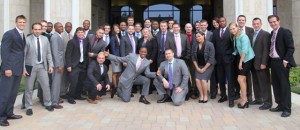
Business Building Blocks (BBB) is a quarterly event designed for our network of sales companies across the country to celebrate and motivate soon-to-be and new owners. The ttendees fly to California for a weekend of sharing, networking, and inspiration. They hear from various speakers about a slew of subjects relating to our business.
During their stay, they also travel to Cydcor’s corporate office, where they meet and mingle with Cydcor’s team members – and the people they’ll be interacting with regularly.
We recently held a BBB and the response to the event was inspiring. A senior leader spoke to the crowd, answering questions and discussing his success. Administrators from two sales companies were also in attendance as guest speakers. Attendees even had the opportunity to have a live QA webcast with two remote company owners about a new bonus available to them.
Here’s to sharing knowledge, networking, and being the best we can be!


We just had more than 280 sales company owners and other business professionals in Canada attend a Canadian Conference that gave them the opportunity to network, attend valuable discussion sessions, and hear from keynote speakers who have been there, done that – and had lots of advice to share.
A representative from a leading Canadian client also spoke to the crowd, talking to them about the sales opportunities and how to address the most challenging aspects of sales. Awards were given out to those who went above and beyond as well. The overall tone of the event was excitement – enthusiasm when it came to networking, sharing new ideas, and being together in one place.
Not only that, but over this past year, Cydcor's network of independent Canadian sales companies has experienced tremendous growth for a leading merchant processing company client. This is big news for the sales companies in the area, as the client has added new products to sell along with various value-added services.
Good for Canada, eh?

Cydcor recently hosted its annual National Conference in Atlanta for more than 1,900 sales professionals across the United States – and the energy and excitement was contagious. Attendees included business owners from Cydcor’s network of independently-owned sales companies, as well as other business professionals.
With the theme of “Go For Gold,” everyone had the opportunity to participate in valuable discussion sessions and heard a presentation from keynote speaker and NCAA wrestling champion Anthony Robles, who spoke about the struggles he overcame to achieve his goals, including being the recipient of the “Jimmy V Award” at the ESPYs. It was also announced that Cydcor and its network of independent sales companies will invited to raise funds once again for Operation Smile, a children’s medical charity. Earlier this year, Cydcor along with the independent sales companies raised $150,000 and were able to sponsor a mission.
Many also received awards for high performance and achievement – and had the honor of getting the recognition in front of their friends and colleagues. A great – and memorable – time was had by all!
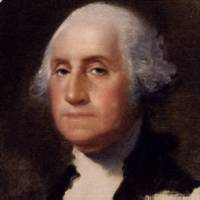
Listening to a book on tape recently reminded me of George Washington's great vision, leadership, and sacrifice. Every time I learn about Washington, I appreciate his leadership and ability to balance short- and long-term goals. He held true to his vision for our country, which focused on representative government, civil liberties, religious freedom, and each person being able to control his or her own destiny. The biggest obstacle to achieving this vision was King George III and British dominance over the Colonies.
Washington faced a difficult choice. He knew that creating the vision that would prove best in the long-term for our country would require short-term sacrifice. He would have to sacrifice personally by risking his life and all his personal wealth, being seven years away from his home and family. The country would have to sacrifice by experiencing short-term economic suffering as well as the deaths and raids caused by war.
Most people shy away from making such a difficult choice. Knowing that short-term sacrifice facilitates long-term success, however, makes the difficult choices easier. Thankfully for us, George Washington was willing to make the necessary sacrifices in the short-term to ensure a better future for America.
Gary
Cydcor announced that it has experienced the highest first quarter revenue in the company’s 18-year history. In 2011, Cydcor had an overall company growth of 15.2 percent and has set aggressive goals for the second, third, and fourth quarters of 2012.
Cydcor’s first quarter revenue is a direct result of several key events, including:
“I’m extremely proud of what we’ve accomplished during this first quarter of 2012,” said Chief Executive Officer Gary Polson. “It couldn’t have happened without the total commitment of our expert field sales force. We’re completely focused on executing against our business strategy and our momentum is in high gear as we work tirelessly to achieve our goals.”
Cydcor, Inc.
Gail Michalak, 805-277-5500

A message from Vera Quinn, chief operating officer
Once again, Cydcor team members tapped into their creative brains to provide a valuable experience to the kids at EARTHS Magnet School! Together, they created 50 literary kits in conjunction with the United Way of Ventura County, then personally donated them to the faculty. The literacy kits were designed to enforce reading and improve reading comprehension through games, worksheets, and crafts. The theme of the book that was selected to be included in the kit - habitats - aligned perfectly with the current theme of the school. Not only that, but the school was so overjoyed that they requested the original files of the worksheet and habitat game so that they could be translated into Spanish for ESL students.
There was a lot of detail and hard work that went into this project. We went above and beyond what was expected and made a real impact on the lives of children in our local community. The kit will be entered into the Ventura Corporate Games charity category as well. We have an awesome team!
A message from Vera Quinn, Chief Operating Officer
Ready, set, go! I'm so excited to see our Cydcor team members prepare for the Ventura Corporate Games - they are gearing up to win in numerous categories including volleyball, bowling, indoor volleyball, basketball, kickball, softball, ping pong, dodgeball, football, 5K, mini golf, bowling, and go-karts. As a corporate sponsor and winner of the JD Probasco Spirit Award in 2011, along with several medals, we have been waiting all year to participate in the event again. We're in it to win it!
To prepare for the Corporate Games, our team members had a tee-shirt competition and the winning design is being printed on the tee-shirts that we'll wear during the event. We also participated in numerous "practice" sessions, had motivational meetings, and encouraged one another to attend. During Wednesday night's opening ceremonies, we will have our own booth, participating in the run/walk/jog and enjoying the food and music.
Our enthusiasm, energy, and dedication aligns with the company's culture that focuses on bringing out the best in one another and showing pride in every task we take on. The Corporate Games enables us to demonstrate that pride, coming together as a company to get results. We are constantly supporting one another - during the Corporate Games and on a day-to-day basis. I'm looking forward to the games and watching every participant demonstrate what Cydcor is all about - determination, drive, and the will to succeed. It's all about the team!


This past Saturday, Cydcor team members, along with the principal and teacher from EARTHS Magnet School, celebrated spring by participating in the school's first gardening day! During the course of the day, the group pulled weeds, helped design and work on a butterfly garden, trimmed trees, and cleaned and completed other garden areas on campus. Cydcor has been working with the school for many months, tutoring children, providing meals for families over the holiday season, and creating a "giving tree" over the holidays, which allowed Cydcor team members to personally buy a gift for an individual child. This community outreach has taken a personal turn for many team members, who have found that working together to help others aligns perfectly with Cydcor's mission - and their own.
With the volunteer help Cydcor provided, the school is now able to execute plans they've had in the works for awhile, but didn't have the budget or time to complete. With Cydcor's assistance, they are able to accomplish many of these goals. Cydcor's goal? To continue volunteering and working with the school to create useful programs for the school. When Cydcor puts its mind to something, it can accomplish anything.


Hooray for Hollywood – and our Rising Stars! These up-and-coming top performers from independently-owned offices across North America were invited to our exclusive event, “Rising Stars,” which was held in Hollywood, California. Attendees were selected from among a network of 250 offices and had a chance to participate in a variety of educational classes and workshops that focused on a number of topics. During the weekend, they were treated to a night on the town at a popular bowling hotspot and a dinner at a well-known restaurant, where they had the chance to form powerful business relationships – and have some fun (there were several celebrity sightings!). To read more about this important weekend, check out our recent press release!


Cydcor is celebrating its 18 year anniversary! For the past 18 years, the company has grown tremendously and achieved numerous milestones, ranging from a move to the United States in 2001 to its most recent expansion into the retail channel. Just recently, Cydcor announced that the company experienced an overall growth of 15.2 percent in 2011 - an example of the hard work and dedication that each and every Cydcor team member and the field puts into the business every day.
Cydcor started as a small Canadian business to a thriving and profitable company that is looking forward to even more growth and expansion. Today, with hundreds of independently-owned offices across North America selling on behalf of major clients, the company is poised to continue its enormous success. Here's to the next 18 years!
By Gary Polson, CEO
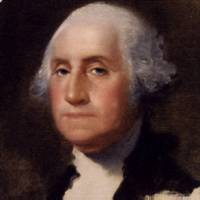
Many military historians consider George Washington to be America’s greatest general. He led a tattered, under-equipped, under-manned, and starving army to defeat the greatest army of the world at that time to win our independence.
He was not always such a great military man. As a colonel for the Virginia Colony, he made strategic blunders that led to the slaughter of his men and the start of the French and Indian War. After that defeat, the Governor of Maryland described Washington as a “dangerous mixture of inexperience and impetuosity.” As horrible and humiliated as Washington felt, he did not give up on himself. He learned from these mistakes and eventually became a great general and the first President of the United States.
Like George Washington, we all have setbacks that feel devastating. He is a great example of not letting those setbacks stop us in the pursuit of our dreams.
Gary