
Discover practical advice, inspiration, and insights to help you succeed in business and grow both personally and professionally.
Found 0 posts

Nineteen years ago, there weren’t Smart Phones or drive-thru Starbucks.
But there was Cydcor.
In its early days, Cydcor was a small company in Canada. Today, 19 years later, it is a thriving business that works with a network of more than 300 independently-owned sales companies across North America and 3,600 sales professionals. That’s a lot of growth! And next year, we’ll be celebrating 20 YEARS. That’s a long time. We’re already thinking about how we’re going to be commemorating our 20th year. We can’t wait!
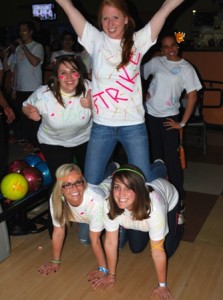
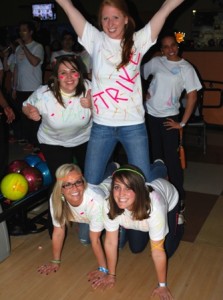
In recent weeks, we’ve had two fundraisers for Operation Smile that have raised significant funds. This demonstrates what we know:
#1. Once we all put our minds to something, we can achieve it
#2. We won’t stop until we meet our overall fundraising goal for Operation Smile!
Here’s info about what we did:
Bowling Night
The Cydcor Bowling Night raised more than $880 for Operation Smile. Approximately 75 team members, their family and friends, and Business Building Block attendees (sales professionals from independent sales companies who were in town attending a networking event at Cydcor’s corporate office) came to the event. We were creative with our “highlighter” theme, sporting highlighter goatees, jerseys, vests and ties, and much more.
Movie Night
The Cydcor Movie Night took place at the local Muvico Thousand Oaks for a screening of a popular children’s movie. A total of $755 was raised; 151 tickets were sold at $5 each. Some of the tickets purchased by Cydcor team members were donated to families at EARTHS Academy, a local elementary school. During pre-ticket sales at the theater, celebrity Jamie Foxx purchased several tickets – demonstrating a widespread support of the organization.
Next week, we’re having a fundraiser at a local Italian chain eatery and we can’t wait to see how much we will raise!
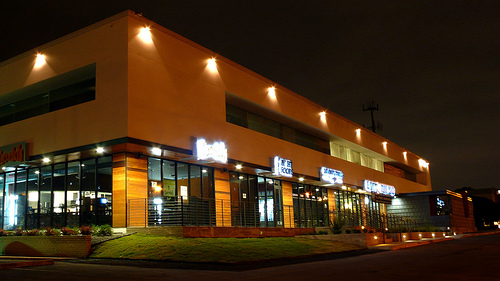
Cydcor, the leading provider of professional in-person sales teams, announced that they recently had two fundraisers – a movie night and a bowling night - for Operation Smile, a worldwide children’s medical charity, and is rapidly approaching their overall fundraising goal.
The two events were created, arranged, and executed by Cydcor team members. Last year, Cydcor and its network of independently-owned sales offices raised $150,000 for a medical mission to Rio de Janeiro and are working hard to meet their new goal – two medical missions. Details of the recent fundraisers include:
Bowling Night
The Cydcor Bowling Night raised more than $880 for Operation Smile. Approximately 75 team members, their family and friends, and Business Building Block attendees (sales professionals from offices who were in town attending a learning event at Cydcor’s corporate office) came to the event. Participants were creative with the “highlighter” theme, sporting highlighter goatees, jerseys, vests and ties, and much more.
Movie Night
The Cydcor Movie Night took place at the local Muvico Thousand Oaks for a screening of a popular children’s movie. A total of $755 was raised; 151 tickets were sold at $5 each. Some of the tickets purchased by Cydcor team members were donated to families at EARTHS Academy, a local elementary school. During pre-ticket sales at the theater, celebrity Jamie Foxx purchased several tickets – demonstrating a widespread support of the organization.
“Once we put our mind to something, we do it,” said Chief Operating Officer Vera Quinn. “Everyone has rallied together so well to raise funds for such an amazing organization. These fundraisers symbolize so much – our commitment to these children, a dedication to our goals, and our drive to succeed.”
Want to learn more? Check out Cydcor on Facebook and Twitter.
About Cydcor
Cydcor is the leading provider of outsourced, face-to-face Cydcor sales teams to a diverse client base of companies in a wide range of industries, including telecommunications, office products, retail, and energy. Serving Fortune 500 and emerging market clients in the business-to-business, residential, and retail channels through in-store marketing initiatives, Cydcor works with a network of more than 300 independently-owned corporate licensee (ICL) Cydcor sales offices, providing clients access to more than 3,300 sales professionals. The privately-held company is based in Westlake Village, California. For more information about Cydcor, go to www.cydcor.com.
Cydcor
Gail Michalak
805-277-5500
Health and wellness were the names, fun was the game! Cydcor just had its first “Health and Wellness Fair” right at corporate headquarters and it was a rousing success. Our team members flocked to the various booths, which ranged from chair massage and yoga to skin care/DermaScan screening and smoking cessation. Representatives from 18 different vendors answered questions and provided valuable information. A cool raffle, baskets full of healthy snacks, and green drinks were provided as well.
This health and wellness fair was the first of its kind for Cydcor, which values itself on its unique corporate culture. As one of the best place to work, we provide an array of programs for team members, including paid volunteer hours and active participation in programs like the Ventura County Corporate Games. We’re also heavily involved with Operation Smile, a children’s medical charity, and have already had several fundraisers for the organization, including our recent bowling night and movie night.
Thank you to all of the vendors who came out on this unique and fun day!
Our team night at a local Mexican restaurant to raise funds last week was a win! More than $800 was raised, which will give about five children new smiles.
The restaurant donated 20 percent of all proceeds to Operation Smile. A raffle was also held, with prizes ranging from Laker tickets to restaurant gift cards going to 10 team members. Highlights: Delicious food, great music, team member bonding, and meeting families. We can’t wait for our next team night – movie night at a local theater!
What do sales office owners think about what it’s really like to run their own business? In a new section on Cydcor.com, you can see what they have to say about the career edge they have from the experience. Check it out!


The holidays have been the perfect time for Cydcor to continue our “giving back” mentality. This season, for the second year in a row, many team members purchased gifts for children at a local elementary school and then a group of us took the presents over to the school and delivered them to the children. We had a giving tree party with cocoa, cider, and baked treats while team members gathered around the tree and chose wish lists. There were 107 wish lists to fill. All were taken and filled in the next week by our team.
Team members chose wish tags and replaced them with an ornament while we snacked, watched “The Grinch,” and got into the holiday spirit. Gifts were delivered by “Santa” and Cydcor elves to the children on December 18th.
We’re looking forward to 2013 – there are many, many good things for us to do!
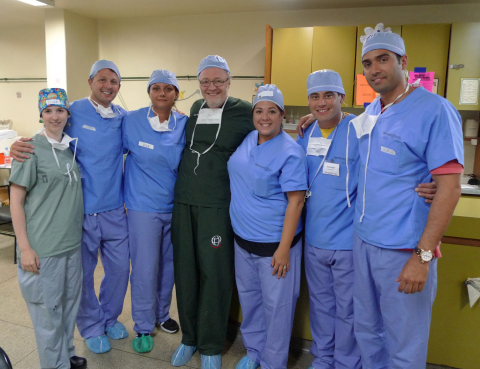
Cydcor announced their second partnership with Operation Smile. Last year, Cydcor and its network of independent sales offices across North America raised $150,000 to support a surgical mission. This year, the company set a goal to raise $300,000 to help Operation Smile provide free surgeries for children around the world born with facial deformities. Together, Cydcor and its network of sales offices and Operation Smile are giving smiles and transforming children’s lives worldwide.
The teams in Cydcor’s network of sales offices are creating fundraising events to reach their new donation goals. Community service is a key aspect of Cydcor’s culture. When the sales teams successfully reached their goal last year, several people within Cydcor volunteered for Operation Smile’s surgical mission in Rio De Janeiro. There, Operation Smile provided more than 95 free surgeries and over 162 healthcare evaluations for children who were suffering from cleft lips and cleft palates.
Every three minutes, a child is born with a cleft. One in 10 will die before their first birthday. For 30 years, Operation Smile and its network of more than 5,000 medical volunteers from around the world have provided more than 3.5 million healthcare evaluations and performed more than 200,000 free surgeries for children in need. However, many children are still waiting – children who often can’t eat or speak properly. Operation Smile can help give them a healthy, productive life filled with hope.
“Cydcor and its outsourced sales teams have an incredibly strong drive to succeed and this is so evident in how they have helped us transform children’s lives around the world,” said Dr. Bill Magee, Executive Chairman and Co-Founder of Operation Smile. “We are so grateful that Cydcor has chosen to partner with Operation Smile for a second year commitment. For the last three decades, Operation Smile has expanded to more than 60 countries so we can reach even more children in need; this would never have been possible without the support of companies like Cydcor.”
“I am grateful we could help bring smiles to so many children and their families,” said Vera Quinn, Chief Operating Officer at Cydcor. “The surgical mission I volunteered for changed my life. I’m excited to be working on our fundraising efforts and know that once again, we’ll be able to accomplish great things. I’m so proud to be working with such a motivated and dedicated group of people.”
To help support Cydcor’s fundraising efforts, visit www.operationsmile.org/cydcor. For more information on Operation Smile’s global efforts, visit www.operationsmile.org, follow @operationsmile on Twitter, and on Facebook at www.facebook.com/operationsmile.
About Cydcor
Cydcor is the leading provider of outsourced, face-to-face Cydcor sales teams to a diverse client base of companies in a wide range of industries, including telecommunications, office products, retail, energy, and financial services. Serving Fortune 500 and emerging market clients in the business-to-business, residential, and retail channels through in-store marketing initiatives, Cydcor works with a network of more than 300 independently-owned corporate licensee (ICL) Cydcor sales offices, providing clients access to more than 3,300 sales professionals. The privately-held company is based in Westlake Village, California. For more information about Cydcor, log on to www.cydcor.com.
About Operation Smile
Operation Smile, headquartered in Norfolk, Virginia, is an international children’s medical charity with a presence in more than 60 countries, whose network of more than 5,000 medical volunteers from over 80 countries is dedicated to helping improve the health and lives of children. Since its founding in 1982, Operation Smile has provided more than 3.5 million healthcare evaluations and conducted over 200,000 free surgeries for children and young adults born with cleft lips, cleft palates and other facial deformities, as well as patients suffering from burns. To build long-term self-sufficiency in developing countries, Operation Smile trains doctors and local medical professionals in its partner countries so they are empowered to treat their own local communities, donates medical equipment and supplies, provides year-round medical treatment through Comprehensive Care Centers.
Contact:
Operation Smile
Jessica Kraft, Director of Public Relations
757-321-3207
jessica.kraft@operationsmile.org
or
Cydcor, Inc.
Gail Michalak, Vice President of Marketing and Communications
805-277-5500


On November 10th, a local elementary school hosted their annual blood drive for The American Red Cross. Those interested could donate blood, be tested for a bone marrow match, or donate their hair.
Several Cydcor team members jumped at the opportunity to help! They dedicated their time by checking in donors and assisting where needed. Team member Tara Cavallaro even donated her hair – 10 whole inches of it! “I was so glad to be able to help,” she says.
Team member Lisa Stein was especially moved by meeting Robert, a bone marrow transplant survivor. He shared his story of his struggle with leukemia with her – and how the people taking the time to donate their blood and marrow could save a life. “If it wasn’t for these donors, he wouldn’t have been there to share his story,” she says. “All it takes is a simple swab to get on the registry for bone marrow.”
As for team member Lalo Burgos – attending with his young daughters was a great way to work in the community with his family. “We had a blast,” he says. “It was good to work with people in the community for such a noble cause.”


It may have been raining, but that didn’t stop 650 attendees at this year’s R&R, held at Eden Roc Renaissance Miami Beach, from having a great time! On September 20 – 23, sales office owners, their assistant managers, friends, and family relaxed by the beach in the Southern Florida sun.
Some highlights: A cornhole and dodgeball tournament to raise funds for Operation Smile (more than $3,600 was raised and donated!), a neon-themed dinner, and a spectacular pool party. The “Cydcor’s Got Talent” competition was a big hit as well, with winners receiving cash prizes. The first place winner even had $500 donated to Operation Smile under their name! Throughout the weekend, everyone had a chance to rest and relax – Cydcor’s way of recognizing the sales professionals who work hard every day on behalf of our clients. By providing them with a great venue, food, and entertainment, we are able to really recognize their accomplishments and set the pace for next year.


One of our sales office owners has made a big impact on me with a mission statement she wrote to capture what the purpose of her business is. She and her statement are such a great example of the best in our business – what makes us unique, and why we attract the best and the brightest.
In her mission, she talks about making sure that every person who comes into her office is given equal opportunity to be successful by creating meaningful and genuine relationships with each individual, constantly working for her people by setting the pace from the front and providing them with time and attention. She also places “importance on transferring knowledge to each person, personally, that’s necessary to open, operate, and grow a business.” Most importantly, she makes a “positive impact on every person that comes in contact with her, her staff, and her company.”
Her perspective on business is one that I feel applies to all of us. A successful business is run by successful people who are committed to achieving great things. In just a short time, she has managed to do extremely well and is one of our top office owners.
Her mission is one that should inspire all of us - good sense for great business.