
Found 0 posts


The combined efforts of Cydcor along with our network of independent sales companies continue to make progress toward achieving our total fundraising goal for Operation Smile. With just a little over $30,000 left to raise, we’re on track to reach our $150,000 target.
Cydcor team members have led the charge, raising significant funds for this worthy medical mission through successful, high-energy charity events. Their passionate commitment shows no signs of slowing down and is ramping up for the upcoming casino night in May.
Thanks to all the participating independent sales company owners, Cydcor team members, the community and other supporters who are helping make this possible!
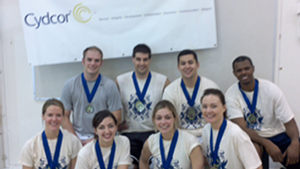
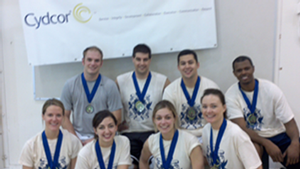
Cydcor team members not only work hard, but also play hard, as recent victories at the 22nd annual Ventura Corporate Games prove.
Team Cydcor has proven to be a fierce competitor, bringing home the gold in indoor volleyball and the silver in basketball. Participating in its third year, Cydcor is among 62 companies from Ventura and Santa Barbara counties, competing in a series of sporting events.
Cydcor looks forward to this annual battle of athletic skill and is competing in 12 different games this year, including dodgeball, flag football, softball and table tennis. The next games on the schedule this week are lasertag and soccer.
Click here for the latest team updates on the games and results.
Click here to read the recent article in the Ventura County Star on the Corporate Games.

Spring is a season of renewal and growth—and with that season nearly upon us – now is a perfect setting in which to reflect on our progress during the first few months of the New Year: how we’re tracking on our personal and professional goals, commitments and development plans.
At this timely moment, we’ve reached Covey’s seventh habit of effectiveness, “Sharpen the Saw.” In the spirit of reflection, it seems fitting to consider this final habit in the context of all the others before it.
“Sharpen the Saw” is a Quadrant 2 activity (important but not urgent) requiring time, initiative and pro-activity. It makes all the other habits possible when we practice self-renewal and self-improvement in four areas.
The first three are closely related to Habits 1, 2 and 3—the principles of personal vision, leadership and management. The fourth focuses on Habits 4, 5 and 6—the principles of interpersonal leadership, empathy and creative cooperation:
Physical: Caring effectively for our physical bodies through exercise, nutrition and stress-management
Spiritual: Renewing our commitment to our core values through spiritual reading, study and meditation
Mental: Honing and expanding our minds and discipline through education, reading, visualization, planning and writing
Social/emotional: Strengthening our relationships through service, empathy, synergy and good character
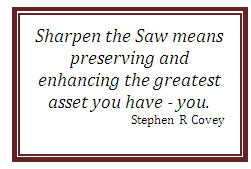
Habit 7 teaches us how to maintain a balance among these dimensions so that we can reach higher levels of understanding and effectiveness in our lives and relationships. According to Covey, it's all about preserving and enhancing our most important asset—ourselves—so that we can do and be our best:
By centering our lives on correct principles and creating a balanced focus between doing and increasing our ability to do, we become empowered in the task of creating effective, useful, and peaceful lives...for ourselves, and for our posterity.
Exercising the 7 Habits on a path of continuous growth and renewal helps us become more principled, more purposeful and more productive in ways that make a positive impact not only in our lives, but also in the lives of those around us. It’s a powerful lesson and aspiration for all of us—one I hope you’ll embrace, as I do.
– Vera

In business and in life, we talk a lot about winning in the context of competition or contests—of beating others to show we’re better at something. Winning means that someone else loses. It’s a “zero sum game.”
While a “win-lose” proposition has its time and place, I’ve found that most situations require a different approach. I recall something Coach John Wooden, a great man and influence in my life, once said: “Winning takes talent, to repeat takes character.”
Sure, winning can prove that we’re good or even the best at what we do. But to win in a meaningful and lasting way, we need to have character. For me, this means finding “win-win” opportunities that rely on cooperation and collaboration, rather than on competition and contests.
Covey’s fourth habit tells us just this—to “think win-win” by seeking mutual benefit from our interactions. While the first three habits are about mastering the “private victory” of independence, Habit 4 moves us into the realm of “public victories” or interdependence. It’s about developing effective interpersonal leadership, which is fundamental to all successful relationships.
Covey, like Coach Wooden, says that character is the foundation of winning. People and organizations with a “win-win” attitude have three key traits:
By practicing Habit 4, we can be true winners who work cooperatively with others to achieve mutual solutions, satisfaction and success. In situations where we can’t achieve a “win-win,” we must have the integrity, maturity and conviction—the character—to walk away agreeably without burning bridges. “Win-win” or no deals, rather than “win-lose” or “lose-lose” deals, are the best ways to be effective in our lives, work and most valued relationships.
– Gary
I was deeply moved when I heard the story about Victor Perez, a Fresno man who rescued an eight-year-old girl from the clutches of a kidnapper last week. After spotting a pickup that fit a description aired on the morning news, quick-thinking Victor gave persistent chase, eventually forced the suspect to stop and helped free the young victim.
We can learn from Victor’s decisive actions that fateful morning. An unemployed construction carpenter, Victor had seen hard times, laboring in the local grape fields to support his family. His own difficult circumstances, however, were no reflection of his integrity or character, nor did they deter him from rising to the occasion when the stakes were high. Despite the inherent dangers, Victor performed a selfless act of courage that saved a child’s life, reunited a family and inspired a community.
Why did he do it? He just wanted to do the right thing. "It feels good to know that at least in my part, we still do care out there,” Victor said in a recent Good Morning America interview. “We don't just close our doors and say forget about it. We actually go out there and see what we can do."
Victor’s story shows the human spirit at its finest, and this humble hero sets the example to which we should all aspire:


Sales is an extremely competitive industry with customer loyalty being the end goal. That's why it so important to treat each interaction with a current or potential customer as an investment in that relationship. Did you know that 87% of customer said they would stop doing business with a company after a negative experience? And of those 84% said they would share their negative experience with others. On the other hand, 58% said they would recommend you to others after a positive experience.
This is why it is so important to treat each interaction with a customer as an opportunity to create positive experiences and thus build customer loyalty. In doing so you create more opportunities not just for yourself, but for your team and company as well.
So what steps will you take this week to ensure you are building a better relationship with your customers?


My son and I recently met Jerry Sanders, the founder of AMD - a computer chip manufacturer and one of the giants in the history of Silicon Valley.
Jerry was telling us that people often confuse “doing things right” with “doing the right things.” He said it was vital to “do the right things ” as doing the wrong things right ends in failure and burnout.
Peter Drucker makes the same point in The Effective Executive. So how do you focus on “doing the right things”? One easy way is asking your coaches. They have the experience and objectivity to guide you.


We're so happy to announce that we've made San Fernando Valley's 'Best Places to Work' for the third year in a row. Cydcor was specifically recognized for a supportive work environment and culture, volunteer opportunities, quality and commitment of management, and benefits.
The Business Journal and Best Companies Group worked together to identify and recognize area companies with a strong commitment to workplace excellence.
Both publicly and privately held organizations were selected based on benefits, corporate philanthropy, policies, work-life balance, internal working conditions, local management, satisfaction, camaraderie and support of employees' personal growth. Selections were based on company surveys and employee comments.


The San Fernando Valley Business Journal recently sat down with our very own Gary Polson to discuss his role as CEO of Cydcor for nearly a decade now, what he thinks has contributed to Cydcor's success as one of the best sales outsourcing companies in the world and what opportunities he sees in growing Cydcor.
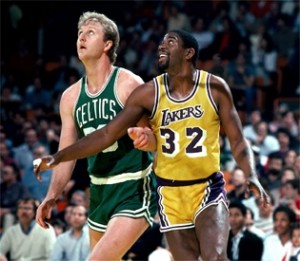
One of the best books written by sports greats is When the Game was Ours by Larry Bird and Earvin Magic Johnson, with Jackie MacMullan.
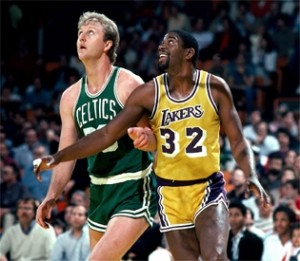
Larry Bird and Magic Johnson will always be linked as two competitors. They are linked like Muhammad Ali versus Joe Frazier and Wilt Chamberlain versus Bill Russell. They first competed against each other in the NCAA basketball championship, which has the highest ratings of viewers of any game in history. They then competed against each other in the NBA and in three NBA finals. One was white and one was black; one from a city and one from the country; one was quiet and shy and one outgoing and loved being around people. The one thing that they had in common is that neither was a great athlete. They were considered slow, with poor jumping ability. They were great because of their work ethic and their deep desire to be great. They out-worked and out-competed their competition.
They did not like each other at first, yet there was respect. They each practiced hard, motivated to beat the other. Then because of a television commercial they became friends. This book tells about each of their lives, how hard they worked and practiced and how they became friends.
This is a must read for people who want to be successful. It does help if you have a slight interest in basketball, but it may not be necessary. This is a compelling story of what it takes to win. We often think these great stars are born great. Not the case with most and especially Bird and Magic. They did it by will and effort.
One of the best quotes from the book, summarizes what I am referring to about why this book is a must read for those who want to know what it takes to be successul: “[Magic] worked tirelessly on his ball-handling and his rebounding with the advice [Coach] Fox gave him imprinted on his mind: when you think you have done enough, do a little more, because someone out there is working harder than you. Bird was told the same thing by coach Jim Jones. As he advanced from high school to the college game, he wasn’t sure that “other person” truly existed. ‘Not until I met Magic,’ Bird said.”
Sales & Marketing Management Magazine published a case study on Cydcor earlier this year that we wanted to share with you. Here's a snippet from the article:
Some 26,000 C-level officers and senior executives ranked Cydcor No. 1 in several key areas, including sales team outsourcing and sales support service, client satisfaction, and numerous performance categories (including vendor overall preference, training, trust, and reliability).
Clearly, Cydcor is doing something right. The company's sales network marshals approximately 200 offices in North America and nearly 3,000 representatives.
Three key factors account for this success: a company mission that meets a growing need, a collaborative culture that cultivates and rewards excellence, and a proven business model that drives results.
At the company's core is what Chief Executive Officer Gary Polson describes as a singular "focus to be the best outsourced sales solution for [Cydcor's] clients." Cydcor's mission anticipates and fulfills an escalating market need, as organizations seek more scalable solutions to achieve top-line growth and bottom-line value in the post-recession environment.
To read the full article visit: Case Study: Cydcor's Outsourced Sales Solution