
Found 0 posts


Working in sales can feel like the career equivalent of boot camp. It puts your mental toughness and endurance to the test, but if you’re brave enough to give it your all, working in sales can transform you from a career weakling to a business powerhouse. Whether you're interested in a sales career or not, taking a job in the sales industry build critical skills that are necessary for success whether you’re a recent graduate, trying for a big promotion, a small business owner, or a top executive.
1. Knocking on Doors…Literally and Figuratively
The scariest part of a job in sales is approaching people you don’t know and asking something of them. What if they slam the door in your face? What if they get mad? What if everyone you talk to says no? But succeeding in business is all about hearing no. You have to learn to deal with rejection if you ever hope to succeed in the real world. Working in sales is the perfect training ground for building that thick skin you need to apply for a job, ask for a promotion, close the deal, or solicit new clients.
2. Becoming a Master of Improvisation
Working in sales teaches you to think on your feet. You never know exactly what the customer might throw at you, and you have to learn how to listen and adapt to their objections and concerns on the fly. Entry level sales experience teaches you to be nimble minded and improves your public speaking skills, so you can help pitch a new idea to a team, respond to a real-time public relations crisis, or scramble for options when project funding falls through.
3. Relating to Others
In order to make the sale, you have to learn how to build rapport and find common ground with people you’ve never met before. The ability to understand where others are coming from and relate to them on their level is handy in almost any work scenario. Customers prefer to do business with people they like and they tend to trust people they relate to. This skill can help you in your job search too as you meet prospective employers and try to impress hiring managers.
4. Asking the Right Questions
Great salesmen know how to find peoples’ hot button issues. Not everyone will tell you what their objection is; sometimes you have to probe a bit and do some investigating to find what’s really holding them back. Being a good detective and understanding how to do research are sales skills that are critical to overcoming roadblocks and achieving success in business.
5. Highlighting Benefits
Whether you’re selling something door to door or selling yourself on a blind date, the fact remains the same, people want products, companies, and people who will make their lives better in some way. Learning how to appeal to people’s needs and wants is a powerful tool that can help any time you need to make a case for something, whether it’s donating to a great cause, investing in your feature film, or offering you the salary of your dreams.
6. Sounding Like an Expert
The best sales people understand that people want to buy from someone who knows what they’re talking about. But as important as it is to thoroughly know your product; it isn’t really what you say that matters, but how you say it. Being confident and sounding like you know what you’re talking about is the secret to building trust and gaining consensus. Work experience in sales is the perfect way to practice sounding like an expert, even when you’re not.
7. Talking Numbers
Negotiating makes a lot of people uncomfortable. We feel like we’re being impolite when we ask people to pay for something, especially when the price is higher than they’d prefer to pay. Working in sales forces you to face that fear, and learning to stand your ground at the negotiating table can help you finally get that big pay bump, large investment, or executive title you’ve wanted.
8. Capturing and Keeping Attention
To be a good sales representative, you have to know how to turn it on when you enter a room. Entertaining your audience and telling a good story is one of the most effective ways to build rapport and get the customer on board with your message. Learning how to engage others can be invaluable for public speaking, networking, or pitching ideas.
9. Earning Trust
People are naturally suspicious of strangers, and they’re especially suspicious of salespeople. That’s what makes earning a customer’s trust such an impressive feat. It’s also a powerful tool. People buy from people they trust. Learning how to convince others to put their faith in you has limitless benefits in business and in life.
10. Setting and Achieving Goals
The life of a sales person is all about setting targets and hitting them. You learn how to dig deep, stay self-motivated, and set challenging, yet achievable goals because achieving them can often mean the difference between having a great week and struggling to pay your rent. And strategizing how to meet them is key to succeeding at almost anything.
Sure, working in sales can be tough, but as anyone who has tried their hand as a sales rep will tell you, it’s also worth it. Sales experience hones indispensable career skills that can help you get ahead and overcome challenges for years to come.
Cydcor’s annual ‘Keys to Success’ event is almost here for 2017! Every year, Cydcor and its network of sales offices and leaders come together to build on their excellent business skills, jump-start the year with new relationships and ideas, and recognize top performers.
To spark up our excitement, Cydcor is pleased to announce a special contest for the Keys to Success attendees on the Cydcor Facebook page. You can win a Front of the Line Pass. Yes! You can go right to the front and skip the line at registration, and the best part is that we have 5 passes for five winners!
To enter, all you have to do is head over to Cydcor’s Facebook page (http://www.facebook.com/CydcorLLC) and share your best and original “Keys to Success” tip.
To win, you must be a Keys to Success 2017 registered attendee (Cydcor employees are not eligible). Multiple comments per entrant will be allowed. The contest begins at 4:00 PM PST on Friday, January 20, 2017 and runs through Tuesday, January 24, 2017. The winners will be picked by Cydcor, and announced on Cydcor’s Facebook page on Wednesday, January 25, 2017.
Terms and Conditions (Facebook)
Valid entries are comments that caption the related post on Cydcor’s Facebook page. To be eligible, entrants must be (i) at least 18 years of age and (ii) a registered attendee of Cydcor’s Keys to Success event (Cydcor employees are not eligible). Multiple comments per participant are allowed. Profanity or inappropriate language, as determined by Cydcor, in its sole discretion, will be disqualified. Five front of the line passes will be awarded. Contest begins at 4:00 PM, PST on Friday, January 20, 2017 and ends at 11:59 PM, PST on Tuesday, January 24, 2017. The five winners will be selected by Cydcor, in its sole discretion, and announced via Cydcor’s Facebook page on Wednesday, January 25, 2017 no later than 6:00pm PST. This promotional offer is not intended to create a partnership, joint venture, co-ownership or other association between Cydcor and the participant.
This promotion does not have a connection with Facebook in any way and is not sponsored, endorsed or administered by, or associated with, Facebook. By entering the contest, participants agree to fully release Facebook from any and all liability.

About The Coaching Habit: say Less, Ask More & Change the Way You Lead Forever by Michael Bungay Stanier
Coaching is an important skill for leaders, but often, managers are too busy or overworked to coach their direct reports well. However, author Michael Bungay Stanier argues that coaching can be done in increments of 10 minutes or fewer.
Drawing on years of experience on training managers through his consulting company, Box of Crayons, Bungay Stanier argues that coaching can be a regular, informal part of every day by asking seven essential questions:
Why Cydcor Recommends This Book
In 242 easy-to-read pages packed with anecdotes and explanations of the seven essential questions, Bungay Steiner offers a fresh and innovative take on the classic how-to manual. He combines insider information with research based in behavior and neuroscience to provide a new way to coach mentees. The book contains question-and-answer sections that will help readers identify old habits and start new behaviors.
The seven essential questions are also a great tool for sales professionals. They’ll help them get past the five basic objections to a product: no need, no money, no hurry, no desire, no trust. By using the seven questions to uncover what is actually important to a customer, it’s much easier to get to a “yes.”
Our Favorite Part
Each of the seven essential questions has its own chapter. The graphic design, including bulleted lists, pullout quotations, and other visual aids, helps readers to understand the highlights of each question. The book even has spaces and lines for readers to write about their thoughts and the actions they can take to develop the habits Bungay Stanier recommends. At the end of each of the seven chapters is a “Masterclass” section that helps to solidify the points the author made, allowing readers to strengthen their new habits.
Check out this book and tell us what you think. Share with us on Twitter and follow us @Cydcor.
We are Cydcor, the recognized leader in outsourced sales services. From our humble beginnings as an independent sales company based in Canada to garnering a reputation as the global leader in outsourced sales, Cydcor has come a long way. We’ve done this by having exceptional sales professionals and providing our clients with proven sales and marketing strategies that get results.

Sales can be an extremely rewarding and lucrative profession. In order to reach that stage in your career, think about the things the best sales professionals do and emulate them in your daily work. Here are some things they do every day to be masters of their careers.
They create goals and persist until they reach them
When the best sales professionals set a goal, they commit 100 percent to achieving that goal. Then, they don’t stop until they do what they set out to do. Obstacles are normal, so they expect them and work hard to push through until they achieve success.
They do the hard stuff first
It’s easy to do the least effort-intensive tasks first, thinking that will leave you plenty of time to focus on the harder tasks later. But instead, you might find yourself without enough hours in the day to accomplish a difficult task that really needs to be done. Instead, the best sales professionals do the hardest, highest-priority task first and reward themselves for accomplishing that by doing smaller and less intense tasks afterwards.
They only check their email a few times a day
It’s easy to get used to responding to every beep or vibration from your phone, but the most successful sales professionals keep their phones in their pocket and focus on making sales. They set aside some time during lunch, or at the beginning and end of the day, to go through their emails and respond to those that need their attention.
They study their craft
You might think of sales as a profession that doesn’t require a lot of education to do well. The truth is that the best sales professionals continually learn. They do this by talking with teammates to learn about successful sales techniques, or by reading books to learn the art of persuasive speaking and making effective sales pitches.
They learn from their mistakes
Everyone makes mistakes, but the best sales professionals learn from them. It’s natural to want to hide your errors to prevent being judged by others or even to drown in negative self-talk after making a mistake. Instead, take some time to think about the mistake and see what you can do better in the future.
They take care of themselves
The best sales professionals establish a healthy morning routine. They get enough exercise and sleep, make time to spend with their family and friends, and don’t skip meals. They also “unplug” at night so they can wake up refreshed and ready to hit the streets.
They don’t use to-do lists
This may be surprising and even counterintuitive. However, according to Entrepreneur magazine, only 41 percent of items on to-do lists ever get done. Why? Again, it comes down to the fact that people tend to do the easy tasks before the difficult ones. The best sales professionals schedule their “to-dos” on their calendar because it holds them accountable to complete tasks at a specific time.
What do you do every day to be an excellent sales professional? Share your tips in the comments or tweet @Cydcor with your stories.
We are Cydcor, the recognized leader in outsourced sales services located in Agoura Hills, CA. From our humble beginnings as an independent sales company based in Canada to garnering a reputation as the global leader in outsourced sales, Cydcor has come a long way. We’ve done this by having exceptional sales professionals and providing our clients with proven sales and marketing strategies that get results.

In this age of technology, we’re constantly surrounded by information about what we should do and when we should do it. There are so many conflicting opinions and things to consider about every decision we could make that it’s easy to get sucked into “analysis paralysis” and never make a decision at all. But sometimes, trusting your gut may be the way to go.
So how can you develop your decisiveness and get better results? Here are some tips from the experts.
Use your emotional intelligence. When presented with a high-stakes decision that needs to be made quickly, it’s easy to respond with emotions such as fear, overwhelm and anger. These emotions can cloud your ability to make a good decision, so make a point of reining in your emotions to allow yourself to do more clear-headed thinking. Instead of denying the emotion, which will only make it stronger, acknowledge the emotion and allow it to move through you until you reach a state of calm.
Manage uncertainty. Don’t waste time with dozens of choices, because that will lead to the infamous “analysis paralysis” mentioned earlier. Instead, use your intuition to narrow the number of choices down to two or three, and then study those in more depth. By trusting your intuition, you’ll be more satisfied with your decision in the long run.
Listen to your team members. Their thoughts can help you consider the consequences of various choices. It also makes them part of the process so they too will be more satisfied with your decision.
Act quickly. Business moves fast, so your decisions need to be made quickly, too. ”When decisions need to be made, effective managers gather the facts, analyze the situation, consider alternatives, and decide on the best course of action—and they do it quickly!” say Denny Strigl and Frank Swiatek, authors of Managers, Can You Hear Me Now?: Hard-Hitting Lessons on How to Get Real Results. “They don’t procrastinate, and they certainly don’t stand around wringing their hands.”
Don’t be afraid to be wrong. Much indecisiveness is caused by the fear of making a mistake. However, the ability to make important decisions quickly is the key to achieving success. “Business is a contact sport, and you can’t be afraid to make a mistake,” says John Wittaker, marketing director of information management solutions at Dell Software. “You can always course correct if you need to, but you can’t make up for failing to take action when action is needed.”
It can be difficult to make tough decisions whenever they arise, but it’s worth it in the end. Decisiveness is a needed trait for every aspiring leader, and by doing so, you set an example for your team to follow.
How has decisiveness helped you achieve better results? Please share your thoughts in the comments or tweet @Cydcor with your stories.
We are Cydcor, the recognized leader in outsourced sales services located in Agoura Hills, CA. From our humble beginnings as an independent sales company based in Canada to garnering a reputation as the global leader in outsourced sales, Cydcor has come a long way. We’ve done this by having exceptional sales professionals and providing our clients with proven sales and marketing strategies that get results.

If you know what an elevator pitch is, you probably think of it as something only businesspeople use. In reality, it can be applied to many different fields. An elevator pitch is everything you need to say to impress your potential customer in 30 seconds or fewer—about the amount of time it would take to travel a few floors in an elevator. It’s also the perfect opportunity to showcase your uniqueness. The elevator pitch is a crucial tool for sales representatives, so here are a few tips on how to craft a perfect one.
Step 1: Brainstorm about what you want to say. Take a blank piece of paper and write down the most important things you want to tell your customer about your service, product, or company. Focus on interesting or memorable facts that make you stand out from the crowd.
Step 2: Edit ruthlessly. Eliminate jargon, repetition, and unnecessary information. As you edit, remember that an elevator pitch consists of three main parts: The benefit, the differentiator, and the ask. Make sure your pitch tells the customer what impact your product will have, what makes it different from the competition, and how you’ll proceed if the customer is interested.
Step 3: Write your pitch on a piece of paper. Spend extra time thinking about how to phrase the differentiator or value proposition in order to get your customer interested. What makes your product unique or places it above similar products offered by your competition? If you can back this up with a simple number—for example, “95 percent of customers say they’d buy the product again”—that strengthens your proposition.
Step 4: Practice your pitch. That means saying it over and over again until you don’t have to refer to your piece of paper. You don’t have to say the exact words you wrote down, but you do have to convey the important ideas. Rehearsing will allow you to speak off-the-cuff and will keep you from getting flustered if you flub your pitch or your customer reacts in an unexpected way.
Step 5: Record yourself. Make sure your voice sounds natural, that you’re not speaking too quietly or in a monotone, and that you’re not talking too fast. You want your pitch to sound like regular conversation, not a script.
Step 6: Get feedback. Ask your teammates or a trusted friend or loved one to listen to your elevator pitch. Make sure they know you’re looking for constructive critique on everything from the wording of the pitch to your body language.
Step 7: Hit the streets! Now that you have your pitch down, it’s time to take your pitch and turn it into action. You may need to tailor it for specific audiences. Not everyone is going to respond in the same way to your value proposition, so you may need to have a couple of others in the back of your mind.
An elevator pitch is a dynamic thing, so be sure to let it evolve as you grow in your career.
What tips do you have for mastering the art of the elevator pitch? Please share them in the comments. For additional blogs from Cydcor, be sure to check out https://www.cydcor.com/media.
We are Cydcor, the recognized leader in outsourced sales services located in Agoura Hills, CA. From our humble beginnings as an independent sales company based in Canada to garnering a reputation as the global leader in outsourced sales, Cydcor has come a long way. We’ve done this by having exceptional sales professionals and providing our clients with proven sales and marketing strategies that get results.
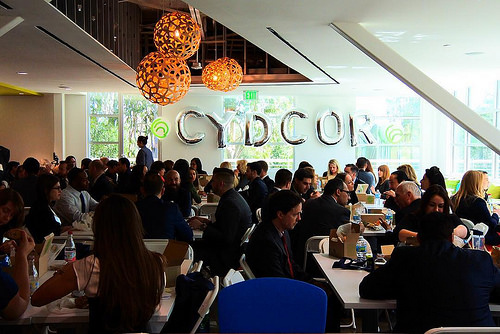
Sales is a unique profession that requires passion, extroversion and charisma. Leading a high-performing sales team and helping your direct reports get the best out of their own skills takes a little something extra. The good news is that as a sales team manager, you have that extra something inside you. Here are some tips on how you can take your own passion for your product or service and pass it along to your team members.
Set them up for success
Authenticity matters when it comes to sales. Few people come in with a fully developed talent for sales, so it’s important to meet your team members where they are and ask them what would be most helpful to them so they can achieve success. For some it will be a need for more product knowledge; for some it may be coaching or a “walk-along” with a high-performing team member.
Give them context
Your team will get better results if they have more information than simply a list of names or addresses. Help them understand the product they’re selling and how it compares to other similar products. Then assist them in finding reasons to be passionate about that product. This will drive good conversation, and thus increase conversions.
Provide them with training opportunities
It’s critical that you not only understand your team members’ unique needs but that you provide ongoing training to help them meet their goals and build confidence. Leading by example means that you also take training courses to enhance your knowledge of the latest news and best practices. That will help you to be a better mentor and a better sales professional in your own right.
Have high expectations of them
Your team will rise to the expectations you set, so set them high! On the other hand, don’t set them so high that your direct reports think they’re impossible to achieve. In order for those expectations to be met, you need to help your team feel supported and positively reinforced. Clearly articulate your goals and expectations and hold your representatives accountable for achieving them. Also, check out these motivating sales quotes that deliver motivation!
Let them specialize
Don’t treat everyone on your team the same. Some people understand certain business sectors better than others. Allow your specialists to take the lead in the area of their expertise. They may be able to help your other team members as well. The more your team understands about the product or service they’re selling, the better they’ll be at selling it.
What other tips do you have for leading a high-performing sales team? Share with Cydcor on Twitter @Cydcor.
We are Cydcor, the recognized leader in outsourced sales services located in Agoura Hills, CA. From our humble beginnings as an independent sales company based in Canada to garnering a reputation as the global leader in outsourced sales, Cydcor has come a long way. We’ve done this by having exceptional sales professionals and providing our clients with proven sales and marketing strategies that get results.

Learn more about Cydcor, based in Agoura Hills, CA, by visiting our profile on CrunchBase.
About The ONE Thing: The Surprisingly Simple Truth Behind Extraordinary Results by Gary Keller
In today’s fast-paced world, people often try to improve every aspect of their lives at once, but usually aren’t as successful as they’d like to be. Author Gary Keller proposes a simple and powerful concept in this book: focusing on what matters most in our personal and work lives first. Most people want fewer distractions, fewer things on their plate, and fewer things to stress them out. The ONE Thing proposes a new way of looking at things we want, and provides an action plan to achieve them.
Why Cydcor Recommends This Book
This is an excellent read for anyone who enjoys multi-tasking but still feels like they aren’t attaining their goals as fast as they would like to. Focusing on multiple things at one time doesn’t necessarily mean more productivity. To achieve effectiveness, we need to narrow our focus and take things one at a time. The ONE Thing suggests pausing before starting a new project and asking yourself what can be prioritized. This will ultimately make things easier and help you avoid focusing on things that are unnecessary distractions.
Our Favorite Part
Early in the book, Keller outlines six popular beliefs that most people think are the “right way,” but that might be hindering their success: everything matters equally, multitasking is good, success requires a disciplined life, willpower is always on will-call, a balanced life is required, and big is bad. Each belief is thoroughly addressed and shown to be not be as helpful as people think. To achieve success, according to the author, it’s about doing the right thing, not about doing everything right. Finding true success requires less discipline than you think.
Have you found success by focusing on one thing at a time? Be sure to follow Cydcor on LinkedIn for even more tips on finding success.
We are Cydcor, the recognized leader in outsourced sales services. From our humble beginnings as an independent sales company based in Canada to garnering a reputation as the global leader in outsourced sales, Cydcor has come a long way. We’ve done this by having exceptional sales professionals and providing our clients with proven sales and marketing strategies that get results.

About Grit: The Power of Passion and Perseverance
Renowned psychologist Angela Duckworth shows through her own personal history and stories of others that success doesn’t just come from natural talent or people who can help you get where you want to go in your career. Instead, she says, the secret to success is a blend of passion and persistence that she refers to as “grit.”
Duckworth developed this hypothesis through years of teaching and business consulting. She saw that people who found their passion and kept trying were ultimately more successful than those who had a natural talent but lacked the perseverance to follow through.
Why Cydcor Recommends This Book
Duckworth offers a concrete path to developing grit. It starts with identifying a burning interest, practicing it a lot, developing a sense of higher purpose, and finally, overcoming pessimism by developing what psychologist and author Carol Dweck calls a growth mindset. She tells us that any effort you make counts twice toward your goal.
Some of us come into adulthood already having learned grit through dealing with difficult times and getting through them. But, Duckworth says, grit can be learned regardless of IQ or circumstances, and shows you how you can do it. Anyone can become gritty. By learning grit and making effort to grow your passion, you too can achieve more than you might have thought possible.
Our Favorite Part
In Grit, Duckworth shares specific examples of people who exhibited grit in their own lives—whether those people are West Point cadets going through grueling initiation rituals, a young national spelling bee champion, or teachers working in some of the toughest schools in the country. By sharing these real-life examples, Duckworth shows us how her formula of passion, practice, and persistence can lead to success.
Check out this book and let us know what you think. Share with us on Twitter and follow us @Cydcor.
We are Cydcor, the recognized leader in outsourced sales services. From our humble beginnings as an independent sales company based in Canada to garnering a reputation as the global leader in outsourced sales, Cydcor has come a long way. We’ve done this by having exceptional sales professionals and providing our clients with proven sales and marketing strategies that get results.

As an entrepreneur without a set work schedule, it can be hard to organize your week consistently. But organization is key to success. At Cydcor, we want you to enjoy your work and be successful at it, so here are some tips to go about getting your week organized and meeting your goals.
Schedule tomorrow today. The most successful leaders sit down at the end of their day and figure out what needs to be done the next day. Instead of thinking of nebulous goals—as in “This is what I need to do tomorrow, and I’ll try to get it done”—they use their calendar to schedule specific times to accomplish those tasks.
Know what times of day are best for you. If you’re the most creative early in the morning, it makes sense to stick to rituals that require a novel approach in the morning. If, on the other hand, it takes you a while to get into work mode, take the time to get some exercise and get your brain in gear for the day. You’ll be the most successful at meeting your goals when your energy level is high and you feel the most confident, so schedule your most important tasks for that time of the day.
Work with the week’s natural rhythm. Research suggests that there is a natural energy flow related to the workweek. Instead of fighting it, go with that flow for maximum productivity. On Monday, instead of having that big team meeting, schedule low-demand tasks. Set your goals, plan your appointments and organize your office. On Tuesday and Wednesday, during the peak of energy, take on the most difficult projects, brainstorm, and write. On Thursday, hold meetings as energy begins to ebb. Then, on Friday, when energy level is lowest, do your long-term planning, relationship building, and other open-ended projects.
Make time for creative tasks. Jeremiah Dillon, head of product marketing at Google Apps for Work, suggests that you build “Make Time” -which is the time to implement your creative processes- into your calendar. Make Time is critical when you’re doing creative tasks or doing some serious thinking before you start building. It’s as important as any meeting or sales call. Be sure to enter those Make Time blocks in your calendar so your colleagues don’t disturb you during this process.
Use the right tools to get organized. The calendar associated with your email client can be your best friend. Software like Evernote can be used for “brain dumps,” and help you set your annual, quarterly, and weekly goals. Use Google Keep, Asana, or Wunderlist for your to-do list; it feels great to check off items that have been accomplished.
What tips do you have for organizing your workweek? Share them with Cydcor on Twitter @Cydcor.
We are Cydcor, the recognized leader in outsourced sales services located in Agoura Hills, CA. From our humble beginnings as an independent sales company based in Canada to garnering a reputation as the global leader in outsourced sales, Cydcor has come a long way. We’ve done this by having exceptional sales professionals and providing our clients with proven sales and marketing strategies that get results.

One of the keys to being a successful sales professional is being great at the art of conversation. But being a good conversationalist is not something that comes naturally to everyone, even the most extroverted people in the world. There are some special conversational considerations for working in sales. Here are a few tips from Cydcor staff on how to master the art of sales-oriented conversation.
Learn more about Cydcor by checking out our profile on CrunchBase: https://www.crunchbase.com/organization/cydcor
Start by building rapport. Make your prospect feel at ease with a little bit of small talk. You want your customer to feel you’re likable, which will make them more inclined to listen to you.
Match your prospect’s energy level. If your customer seems calm and cool, don’t bowl them over with aggressive enthusiasm. However, if your prospect seems like a more energetic type, then match their energy with yours. That way, you’re likely to create a better connection that can lead to a sale.
Ask questions. Find out what kind of aspirations your customer has or any frustrations with your competitor’s product or service. By doing so, you’ll be able to find ways to show your customer that your product is the best.
Ease into the sales pitch. Your prospect is much more likely to respond positively if you don’t just jump into “buy my product or service” mode. You’ll want to make your pitch with solid facts and an appeal to your customer’s aspirations and needs.
Listen. It’s tempting to stop listening before a prospect finishes speaking. You want to figure out a rebuttal to their “no.” But that’s not how you make a sale. But by listening well and doing some gentle probing, you’ll get to know what goals and needs your customer has.
Be sincere. Nobody likes a phony, and almost everyone can tell when someone is bluffing. Be yourself, and remember that you don’t have to agree with every single thing the customer says. Instead, try introducing one or two different points of view into the conversation; it’ll be more fun for both you and your prospect.
Don’t be obsessed with the sale. Have you ever been to a car dealership or a store and encountered a pushy salesperson that wouldn’t back off until you either bought a product or walked out the door? Don’t be that person. “Hard sell” tactics are a turn-off to most prospects. Instead, keep sharing information and appealing to their needs and wants.
Expect nothing, but be prepared for everything. Sales is a great and potentially quite lucrative profession, but it takes some time to become a real expert at it. Be patient with yourself and continue developing your unique skills to master the art of conversation—and conversion.
What tips would you give your teammates for mastering the art of sales conversation? Please share them in the comments. For additional blogs from Cydcor, be sure to check out https://www.cydcor.com/media.
We are Cydcor, the recognized leader in outsourced sales services located in Agoura Hills, CA. From our humble beginnings as an independent sales company based in Canada to garnering a reputation as the global leader in outsourced sales, Cydcor has come a long way. We’ve done this by having exceptional sales professionals and providing our clients with proven sales and marketing strategies that get results.