
Found 0 posts
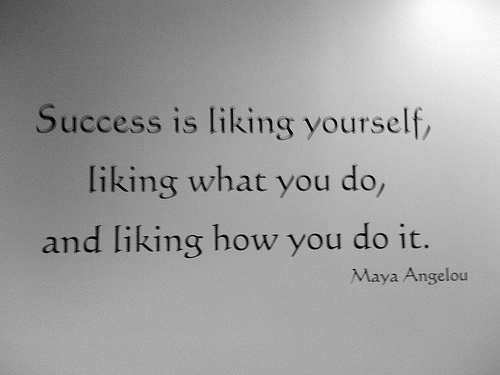
In a business environment, we all try to put our best foot forward when interacting with our co-workers, managers and clients. However, not everyone is immune from traits that might be off-putting, either consciously or subconsciously. In order to achieve long-term happiness and achievement, it is critical to be self-aware of not only your best traits, but also of ones that need improvement.
Negative Thinking
A lot of pessimists in the world consider themselves realists rather than “negative minded thinkers.” However, for others it can be difficult to be around those who speak incessantly of problems and issues, and who are stubborn to see the positive side of situations.
Being pessimistic is one thing—but remaining in a perpetually negative mind-set can frustrate those around you. Think carefully about how what you say might be phrased in a less negative light and try to see a problem as a new challenge to take the lead on.
Validation
Everyone loves to be appreciated and acknowledged for his or her efforts and accomplishments at work. However, those who constantly strive for validation are exhausting to be around. Those individuals get caught up in the need to prove their worth and to win those around them—to the point that they can over-attach to projects and be unintentionally draining.
It isn’t about what you achieve in the eyes of the group. It is about the journey, what you’re learning, and how you help those around you. Support comes from your team, and with a great assembly behind you, they will all learn and grow in the process.
Perfectionism
Author Michael Law once said, “At its root, perfectionism isn’t really about a deep love of being meticulous. It’s about fear. Fear of making a mistake. Fear of disappointing others. Fear of failure. Fear of success.” There is a lot of truth to those statements, and as a culture we tend to reward perfectionists for setting high standards. And perfectionists frequently are high achievers; however the price they pay for that success can be a source of great dissatisfaction.
Underneath it all, perfectionists have a high drive to succeed, however they need to realize the at times that “perfect” is an unrealistic goal. Such an effort towards perfectionism can often get in the way of the bigger picture, so figure out what “good enough” is, and be happy by letting go of unnecessary and unproductive pressures.
For more information about Cydcor, connect with us on LinkedIn.

Are you on Twitter? Follow Cydcor today for tweets regarding business, sales, leadership, and success.
The concept of networking can make some people apprehensive, as many feel awkward or uncomfortable with getting to know others, and putting themselves and their businesses out there. Networking is certainly a skill that takes time to build and hone, and comes much easier to some than others. However, networking is a vital step towards taking you and your business to the next level.
A crucial first step is to clearly define what your goals are. Are you looking to find potential new clients? Or perhaps a mentor in a field related to yours? Or maybe you are looking for training and education opportunities? What is it you hope to gain out of such a relationship? Identifying exactly what your ideal networking outcome would be will help make the process feel more focused.
Some people find the occasions to speak about themselves and their business intimidating, while others revel in the chance to tell others what it is they do. Practice a short, 60-second presentation about yourself. This is commonly referred to as an “elevator speech,” which is a quick overview of what it is you are trying to sell—which in this case would be yourself. Identify what your best skills are, your knowledge, your unique experience, and what it is you offer. It’s important to be considerate of other people’s time, so be as concise with your speech as possible.
Check out Cydcor on Flickr for pictures regarding our latest community service events and office going-ons.
Identifying your market is just as important as expressing what you do. When starting out in a new industry, some feel they don’t know anyone, and have a tough time defining their network. Start small, with friends and family and through social spheres of influence. Attend meetings of organizations in your field of interest or a hobby you hold, and get involved. A network should come from a place of sincerity. Don’t join a group or look to connect with a community where you don’t hold genuine interest.
Be proactive in your schedule and stay organized by tracking your networking. The business cards and contact information you acquire should go into a simple spreadsheet or online contact organizer. It’s always good to start this kind of tracking early, as you might begin to feel overwhelmed as you receive more and more cards and contact information.
Networking is an ongoing dedication. Even after you’ve exchanged contact information with a potential client it’s vital to conduct occasional check-ins to keep yourself on their radar. This will also show that you are willing to stay in touch over an extended period of time, not just when you need or want something from them.
One of the best pieces of advice about networking is that successfully creating lasting connections comes from being true to oneself. Many introverts feel they need to pretend to act like an extrovert in a networking situation. The same goes for extroverts who feel they need to be an enhanced version of themselves. While everyone needs to make an effort to be more outgoing than normal during professional networking opportunities, don’t be artificial. Be your authentic self, and the people you truly connect with will follow.

An important trait to instill in yourself is this:
Don’t think in terms of sales but rather in terms of building a business.
Great salespeople are building a business, not just trying to make a sale. When you think beyond a sale, you’re going to get other people’s attention much more easily. They’re going to be interested in what you have to say. You want something that’s going to live and go beyond a single sale.
Successful people are persistent. Cydcor knows that selling or running a business requires a tremendous amount of persistence. Obstacles loom on a regular basis, but it’s what you do when faced with these barriers that will determine your level of success. The most successful people in any industry have learned to face the obstacles that get in their way.
Don’t just make a sale. Build relationships. Build your business by building relationships one customer at a time. The last sale you make should always open the door to a new relationship and more customers..
Invest in networking, community and relationships. Invest in your community and you will see great returns emotionally and for your professional and personal lives. Be involved as much as you can.
Head over to Cydcor's YouTube Channel to catch a glimpse into what it's like to work for a reputable sales company.
Invest in yourself. Successful salespeople invest in their education and know which tools of the trade works best for them. Always continue to invest to help get you to the next level.
Thriving salespeople surround themselves with overachievers. These people are sometimes viewed as being uninterested in others, but the truth is that they’re just not interested in low production. Don’t waste your time with people who don’t get anything done, or aren’t striving towards success.

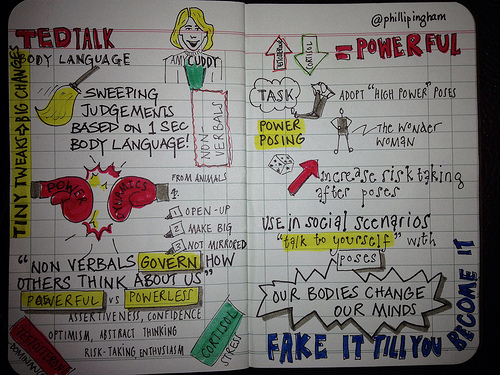
In sales, people have to have to interact with each other all day. Success in sales comes from being able to feel confident and comfortable in most situations. At Cydcor, we do our best to present the most effective sales teams around. One way to easily improve your sales confidence can be as simple as taking two minutes to stand powerfully.
Nonverbal communication has a lot of value in society. How we interact with each other can lead to very important decisions in life, such as whether someone is hired, sued, or accepted for a date. One second of political candidate facial expressions can predict election outcomes 70% of the time.

In addition to using body language to judge others, social psychologist Amy Cuddy has reported research that the way we move and carry ourselves also affects the way we judge ourselves. Further, many body expressions and postures reflect similar positions in the animal kingdom. When we are afraid we make ourselves small and meek, trying to appear insignificant. When we want to display power, we make ourselves big and open.
Power stances are known across the animal kingdom. Also, that powerful people express power chronically as well as in moments of victory. Even people who were born blind have been showed to display the upward v shape with the arms after winning something, the way racers do when they cross a finish line.
When powerful people and fearful people interact, body language reflects this as well. People unaware of fear will often shrink in the face of an open power stance without realizing it. Professor Cuddy realized the difference in power stances in the classroom, and decided to try an experiment to see if grades would improve on students she trained to stand powerfully.
The results were stunning. It turns out that powerful stances for two minutes actually increase hormones that contribute to self-confidence and assertion. So the fake-it-till-you-make-it strategy actually has a physiological affect that helps people be more confident and assertive. See the amazing talking by Professor Cuddy below:

Cydcor, the leading outsourced sales company in the business to business market, attributes its continued success to the same reasons Cydcor’s clients seek its services – quality, efficiency, speed, and securing a leadership position in the marketplace.
Cydcor’s ability to evolve at a pace to keep its clients competitive in the marketplace came with Cydcor’s capacity to streamline and improve its own operations. “Over the years, the nature of our business and the business of our clients has become more competitive and more complex,” stated Gary Polson, Cydcor CEO. “It is vital for us to ensure Cydcor is a nimble and proficient company so we can support our clients more quickly and cost-effectively than they can support themselves.”
“It’s hard to imagine how sophisticated we’ve become in such a short period of time,” states Vera Uzelac, Cydcor Vice President of Operations. “We have re-engineered a manual paper-intensive system of processing sales that used to take hours… and sometimes even days, to an automated, data-driven system that can process sales in minutes with even greater accuracy.”
Uzelac, who has been involved with the Cydcor for more than a decade, would know. She remembers when Cydcor handwrote some 250 checks a week and manually stuffed them in envelopes lined up and down the long hallways of the office, instead of using Electronic Funds Transfer.
Cydcor’s proven track record for many for leading brands in the office products, telecommunications and financial services using the most original direct marketing approach, face-to-face sales, has taken on a degree of sophistication. Cydcor’s efficient operations and quality systems enable Cydcor to offer a speed-to-market advantage to its Fortune 500 client base.
Cydcor
Gail Michalak, 818-706-9500