
Discover practical advice, inspiration, and insights to help you succeed in business and grow both personally and professionally.
Found 0 posts

Cydcor was started in 1994 in Canada and has since grown into a leading source for outsourced sales teams. For twenty years now, Cydcor has offered solutions to high level, Fortune 500 Companies looking for new ways to increase their revenue. Our friendly, driven and highly trained team deploys sales superstars into the regions our clients need Cydcor the most and produce results.
Here are some of the milestones we have accomplished in the last twenty years:
Here is what our core executive team had to say for all of Cydcor's accomplishments:
"We offer a unique expertise within our sales channels. Our clients know we deliver above and beyond our goals; the salespeople in the field are experts who understand the sales that the client needs. The offices band together as teams, working to help one another reach personal development goals that will catapult them to success." – President Jim Majeski
"We deliver proven results that make us the leaders in outsourced sales. This couldn't have happened without vision, tenacity, and commitment to achieving the best results for our clients possible." – CEO Gary Polson
"Our reputation as a leader in outsourced sales solutions stems from the fact that we are experts in our industry with the ability to be flexible for our clients. The ability we have to deliver outstanding results has catapulted us into a growing, successful company with an abundance of opportunity." – Chief Operating Officer Vera Quinn
Want to know more about what it's like to work for Cydcor? Check out our testimonial page!

WESTLAKE VILLAGE, Calif., May 16, 2014 -- Cydcor, the leading provider of professional in-person sales teams, announced the company will be moving to a new location to continue serving its thriving network of independently-owned sales offices and significant internal growth.
Cydcor's new 40,000 square foot headquarters will be located in Agoura Hills, California, and be double the size of their current location in Westlake Village. The new building will have a Silicon Valley look and many outdoor spaces exclusive to the company. It will host a collaborative and open landscape that accents Cydcor's corporate culture of collaboration, teamwork, and innovation.
"Cydcor was able to double the size of their footprint while maintaining the ability to remain on one floor," said Bryan Lewitt, Senior Vice President for brokerage firm CBRE. "Additionally, the new location's amenities include free covered parking, balconies, an atrium, and building top signage."
The new headquarters is also conveniently located near the U.S. 101 freeway, providing easy access to clients, sales office visits, and new hires from Los Angeles and Ventura counties. The new expansion and space will help support Cydcor's clients and tremendous network of independently-owned sales offices across the country.
"We have doubled in size since we moved to our current location five years ago – demonstrating how we consistently fulfill a unique niche for our clients and provide service to our field offices," said CEO Gary Polson. "Cydcor's growth is consistent, strategic and deliberate, and our business is resilient to the varying economic climates."
This is Cydcor's third move in just more than ten years. Cydcor started with about 2,900 square feet in 2001. In 2005, Cydcor started knocking down walls to gain and additional 6,800 square feet, and then again by adding a separate suite for another 2,000 square feet in 2007. In early 2009, they moved to the current location in Westlake Park Place, a 27-acre campus style office development, where they occupy the entire fourth floor with 19,000 square feet.
Want to learn more? Like Cydcor on Facebook and follow them on LinkedIn.
About Cydcor
Cydcor is the leading provider of outsourced, face-to-face Cydcor sales teams to a diverse client base of companies in a wide range of industries, including telecommunications, office products, home entertainment, energy, and financial services. Serving Fortune 500 and emerging market clients in the business-to-business, residential, and retail channels through in-store marketing initiatives, Cydcor works with a network of over 300 independently-owned corporate licensee (ICL) Cydcor sales offices, providing clients access to more than 4,100 sales professionals. The privately-held company is based in Westlake Village, California. For more information about Cydcor, go to www.cydcor.com.
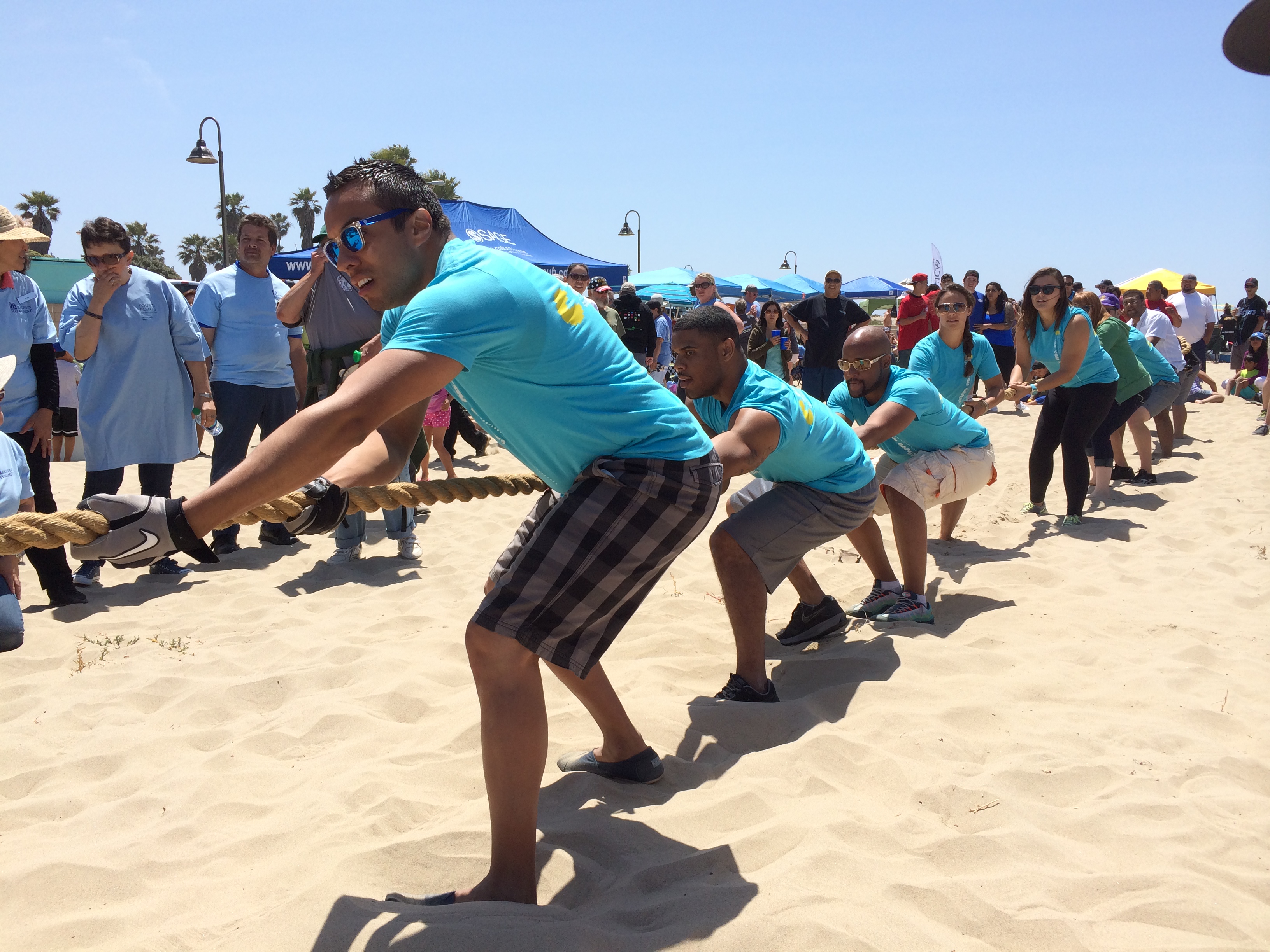
While Cydcor knows there isn’t one way to achieve goals and become successful, there are certain truths about a successful career that remain. Especial for those choosing a career in sales, these ten laws will guide you through to generating a good income for your clients, your company, and yourself. These laws are based on classic clichés you are tired of hearing, but there is still value behind them.
What are your laws of success? Let Cydcor know on Facebook or Twitter!
WESTLAKE VILLAGE, Calif., May 9, 2014 /PRNewswire/ -- Cydcor, the leading provider of professional in-person sales teams, announced the company is celebrating its 20 year anniversary – marking two decades of providing leading, professional outsourced sales solutions to clients in many diverse industries throughout North America.
Cydcor, founded in 1994, fulfills a unique niche for Fortune 500 and emerging clients. With robust capabilities and thriving organization of over 330 sales offices and more than 4,000 sales professionals and growing rapidly, the company provides clients with business-to-business, residential, and retail sales solutions to reach target customers. This expertise combined with their proven track record and long-lasting client relationships has helped Cydcor excel as the premier outsourced sales solution.
"The decision to use Cydcor has enhanced our sales capabilities while creating and developing a unique and valued partnership," said Chris Poshni, Vice-President, Independent Business Sales at Moneris.
What has Cydcor grown into?
During the last 20 years, Cydcor has defined a unique space for itself unmatched by others in the industry. From its humble beginnings to the pacesetting organization it is today, Cydcor has accomplished these notable milestones:
Top performers
At Cydcor, top-performing, talented team members in all departments – ranging from Quality Management and Legal to IT and Finance – support the field of independent offices and their teams. In 2013, six field promotions to senior leadership positions demonstrated the ongoing opportunity for personal and professional growth.
Senior Executives – Their Insight
"We offer a unique expertise within our sales channels. Our clients know we deliver above and beyond our goals; the salespeople in the field are experts who understand the sales that the client needs. The offices band together as teams, working to help one another reach personal development goals that will catapult them to success." – President Jim Majeski
"We deliver proven results that make us the leaders in outsourced sales. This couldn't have happened without vision, tenacity, and commitment to achieving the best results for our clients possible." – CEO Gary Polson
"Our reputation as a leader in outsourced sales solutions stems from the fact that we are experts in our industry with the ability to be flexible for our clients. The ability we have to deliver outstanding results has catapulted us into a growing, successful company with an abundance of opportunity." – Chief Operating Officer Vera Quinn
Want to learn more? Like Cydcor on Facebook and follow them on LinkedIn.
About Cydcor
Cydcor is the leading provider of outsourced, face-to-face Cydcor sales teams to a diverse client base of companies in a wide range of industries, including telecommunications, office products, entertainment, energy, and financial services. Serving Fortune 500 and emerging market clients in the business-to-business, residential, and retail channels through in-store marketing initiatives, Cydcor works with a network of over 330 independently-owned corporate licensee (ICL) Cydcor sales offices, providing clients access to more than 4,000 sales professionals. The privately-held company is based in Westlake Village, California. For more information about Cydcor, go to www.cydcor.com.
Contact: Gail Michalak, Cydcor, 805-277-5500
SOURCE Cydcor
RELATED LINKS
https://www.cydcor.com

Cydcor is a leading outsourced sales company. We specialize in dealing with people and convincing them we have the right product or service for them. While Cydcor knows the best way to win customer loyalty is to always do the right thing for the customer, new prospects are often suspicious of sales representatives. Beginning new customer relationships takes effective communication to help your prospect feel comfortable around you. Here are some tips for building an effective customer relationship from the very beginning.
DO:
Be upfront about who you are representing. Start the conversation with “Hello, my name is _______ and I am here to tell you about ________ company, offering you a great service.” Also add in details about the service or product that will pique interest, such as money saving deals or upgraded features.
Take an active interest in the customer’s needs. Know why you are selling your product and why you customer should want it. Be sensitive to new customers’ current challenges and see if you have something that will make their lives easier.
Assure them that they are getting the best you can possibly offer. New customers like to feel like they are getting special treatment, that because of their interaction with you they are getting something no one else has access to. You can do that by offering exactly what they want, as long as it is within the boundaries of possibility.
DO NOT:
Be pushy. If someone says no it is okay to offer one or two more pieces of information that may change someone’s mind, but it is important not to push customers too hard, or not only will you lose them, but they may get annoyed and tell others.
Lie. Do not tell customers you can give them something that doesn’t exist, or twist the facts around so that they will be disappointed. There is a fine line between emphasizing the positive and just making things up.
Get emotional. Stressing too much or getting upset when someone says no will give you a reputation for being unprofessional. Always be kind, courteous and gracious.

In a sales-driven environment like Cydcor, meetings are powerful tools. Bringing people together to share energy and announcements is a good team. Since our business focuses so much on building personal relationships, our team members benefit from face to face communication whenever time allows. Sales meetings are the best vehicles to unite and energize your team, and make sure that important information is conveyed.
So how do you conduct effective sales meetings for your business? You must start by defining the purpose and structure of the meeting. Time is an investment from your team, so it is important to make an effort to make the meeting worthwhile. A solid agenda and time budget will keep meetings productive and focused. Sales meetings should not last more than an hour in order to make sure all information is retained and your team has time to get back to serving clients. Always make sure to start the meeting on time instead of waiting for stragglers. If everyone knows the meetings always start promptly as scheduled, they will make sure to hustle. This will also reward punctual team members with respect instead of making them wait.
Start the meeting with a high energy, encouraging talk. Be sure to thank your team for being there, and incorporate positive reasons why the meeting works. This will wake people up and make them feel appreciated. Express gratitude for the stand out performers. Let your team know how your vision is being executed and celebrate the things that are good. Do not focus on the challenges during sales meetings, rather focus on the purpose of the meeting, which is to motivate the team.
Move down the agenda in a timely manner and then reserve 5-10 minutes for questions or appreciations.
What’s the best meeting you’ve been to? What did you like about it?
Follow Cydcor on LinkedIn for more tips and inspiration.

WESTLAKE VILLAGE, Calif., April 4, 2014 /PRNewswire/ -- Cydcor, the leading provider of professional in-person sales teams, raised and contributed funds for Operation Smile, a children's medical charity that provides life-changing surgeries to children internationally born with cleft lip, cleft palate and other facial deformities.
Their donation helped to fund a recent medical mission to San Cristobal, Mexico, which took place in March with five top fundraisers from Cydcor and the company's network of independently-owned offices. This year's mission came on the heels of the 2012 mission to Rio de Janeiro. During the Mexicomedical mission, 99 patients were operated on and 125 procedures were performed.
"Having our friends from Cydcor with us was an exceptional addition to the experience. Each participant showed true passion for all aspects of the events taking place, from helping and playing with the children and engaging with families, to taking a hands-on role in setting up for the medical mission," saidCourtney Kass, Operation Smile development officer. "Their energy, focus, and hard work extended through their fundraising efforts to the final days of the mission. We're proud to continue our partnership and thank Cydcor for all that they do to help children worldwide through Operation Smile!"
In 2013, Cydcor and their network of offices held the first-ever "Day of Smiles," which raised approximately $100,000 for the organization – surpassing their$90,000 goal. It was the single largest fundraising effort that helped to fund the medical mission to Mexico.
"We saw firsthand the positive impact that Operation Smile has on the communities they support. In the short time we were on the mission, we developed bonds with the children and their families and we felt like we made a difference in their lives. It was a truly humbling experience," said Jim Siegrist, mission attendee and senior vice president of business development at Cydcor.
"We're grateful that our organization can play a part in making a big difference," said Cydcor Chief Operating Officer Vera Quinn. "We are close to raising funds to support a third mission and take heartfelt pride in helping these families who otherwise would have no way of obtaining life-changing surgery."
To help support Cydcor's fundraising efforts, visit www.operationsmile.org/cydcor. For more information on Operation Smile's global efforts, visit www.operationsmile.org, follow @operationsmile on Twitter, and on Facebook at www.facebook.com/cydcor.
Want to learn more? Like Cydcor on Facebook and follow them on LinkedIn.
About Cydcor
Cydcor is the leading provider of outsourced, face-to-face Cydcor sales teams to a diverse client base of companies in a wide range of industries, including telecommunications, office products, entertainment, energy, and financial services. Serving Fortune 500 and emerging market clients in the business-to-business, residential, and retail channels through in-store marketing initiatives, Cydcor works with a network of approximately 325 independently-owned corporate licensee (ICL) Cydcor sales offices, providing clients access to more than 4,100 sales professionals. The privately-held company is based inWestlake Village, California. For more information about Cydcor, go to www.cydcor.com.
About Operation Smile www.operationsmile.org
Operation Smile, headquartered in Virginia Beach, Virginia, is an international children's medical charity with a presence in more than 60 countries, whose network of more than 5,400 medical volunteers from over 80 countries is dedicated to helping improve the health and lives of children. Since its founding in 1982, Operation Smile has provided more than 200,000 free surgeries for children and young adults born with cleft lip, cleft palate and other facial deformities. To build long-term self-sufficiency in resource poor environments, Operation Smile trains doctors and local medical professionals in its partner countries so they are empowered to treat their local communities. Operation Smile also donates medical equipment, supplies and provides year-round medical treatment through its worldwide centers.
WESTLAKE VILLAGE, Calif., April 2, 2014 /PRNewswire/ -- Cydcor, the leading provider of professional in-person sales teams, announced that the company is working with the Ventura Corporate Games to raise funds for Operation Smile, a children's medical charity that provides free surgeries to repair cleft lip, cleft palate, and other facial deformities for children around the globe.
Cydcor and its network of independently-owned sales offices have been actively fundraising for Operation Smile since 2010 and have currently raised enough for two medical missions - one to Rio De Janeiro and the other to Mexico.
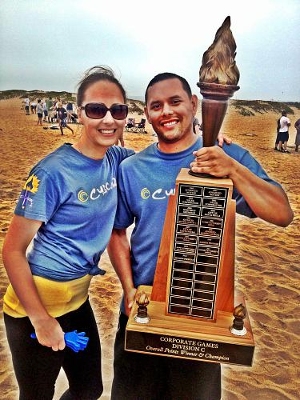
This year will be the sixth year in a row that Cydcor is participating in the Corporate Games, which are held in Ventura, California. Cydcor is a two-time winner of the JD Probasco Spirit Award, 2013 Division-C winner and proud sponsor of the Corporate Games.
For the first time, Cydcor will be sponsoring the game of "Corn Hole," which will raise funds for Operation Smile. The Corn Hole games will now be a Team Unity Award event with championship matches held during Closing Ceremonies on May 10. Corporate Games participants can enter the finals by attending one of the below qualifiers:
"We're committed to fundraising until we reach our third goal of another medical mission," said Vera Quinn, chief operating officer. "The team members at Cydcor enjoy the Corporate Games. Coming together as a team to build relationships and continuing our efforts for Operation Smile are just a win-win."
There are three steps for teams to qualify for the Corn Hole championships on May 10:
To qualify a team for the Corn Hole finals, e-mail ksaville@cydcor.com. To donate, go to www.operationsmile.org/cydcor and click "donate now."
Want to learn more? Like Cydcor on Facebook and follow them on LinkedIn.
About Cydcor
Cydcor is the leading provider of outsourced, face-to-face Cydcor sales teams to a diverse client base of companies in a wide range of industries, including telecommunications, office products, entertainment, energy, and financial services. Serving Fortune 500 and emerging market clients in the business-to-business, residential, and retail channels through in-store marketing initiatives, Cydcor works with a network of 390 independently-owned corporate licensee (ICL) Cydcor sales offices, providing clients access to more than 4,000 sales professionals. The privately-held company is based in Westlake Village, California. For more information about Cydcor, go to https://www.cydcor.com

As a leader in outsourced sales, Cydcor knows how to create winning relationships with clients. Building trust is the foundation of a sales relationship. Trust takes time, effort, honesty and hard work for clients to feel comfortable with your delivery. Even in your career, moving up at work takes the ability to build trust and sell yourself to future managers or employers. Here are some tips from the experts at Cydcor for building trust in your professional life.
What are some ways that you build trust in the workplace? Tell Cydcor on Twitter!

Last year, Cydcor raised over $270,000 for Operation Smile to help fund cleft palate surgeries for needy children around the globe. In July, the fundraiser surpassed $150,000, enough to fund a medical mission to another country. The mission involves sending doctors, volunteers and equipment to an area where access to healthcare is difficult, and provide screenings and surgeries for children. Cleft palates often result in complications eating, drinking and speaking, and many infants do not survive. Those that do often cannot attend school. Operation Smile hopes to restore millions of smiles and give those children a better chance at thriving.
This week, Cydcor volunteers are in San Cristobal de las Casas, Mexico, meeting some of the people the money they raised are helping. In 2012, volunteers made a similar trip to Brazil, where more than 600 surgeries were provided to children. Cydcor is proud of their partnership with Operation Smile and plans to continue working with the organization in the future.
During the mission, volunteers have had the chance to spend time with the families of the children being operated on and see them through the transition of the surgery. Part of the strategy of Operation Smile is to assist facilities in the field to achieve the ability to provide the treatment of cleft palates and other facial deformities on their own.
You can make a donation to Operation Smile today and support this great cause. Help Cydcor fund another mission!



When an entrepreneur gets an idea for a business, investments need to be made into the idea to make it a reality. Investment is not only a reference to financial backing, but personal time, planning and energy. At Cydcor, we believe today’s job seekers should look to entrepreneurship for inspiration on making career decisions. Treating your resume like a business plan is the best way to create a career that is fulfilling. Starting out can be overwhelming, so it is important to plan and build a winning resume that will get the attention of the employers you want to work for.
Start out by deciding on the job you want the most, then work your way backwards. For example, if you want to be a chief executive officer of a sales and consulting company like Cydcor, then trace the step of the current CEO of the company you like and of its competitors. Learn what skills you need, such as leadership, communication, finance and project management. You can improve those skills through school or various projects. Make a list of skills you need, and the various job titles that will get you the necessary experience, all the way back to the beginning.
Here are some tips on investing in your resume and creating the career you want:
Want more inspiration, support or advice? Check out Cydcor on Pinterest for our all of our posts, reviews and other things we like to share to motivate our community.