
Discover practical advice, inspiration, and insights to help you succeed in business and grow both personally and professionally.
Found 0 posts

Cydcor offers employees more than just health insurance and a 401K. We know employees today are looking for benefits that provide more than the standard offerings. In this article, read more about some of the unique and nontraditional benefits Cydcor has to offer.

A fun holiday party doesn’t have to break the bank. Read creative ideas about how companies can make their festive gatherings exciting and economical. Quick tip: Cooler weather can mean cooler things to do. Get more tips here.

How many famous people can you name who started their careers in sales? Before becoming well-known actors, musicians, comedians, and CEOs, quite a few of today’s celebrity’s early jobs meant going door to door, working in retail, serving in restaurants, and telemarketing. Not only did these soon-to-be celebrities who once had sales jobs eventually hit it big, but their history in sales seems to have taught them some valuable lessons as well. Perhaps there is something to be said for a sales gig as the ultimate crash course in communication!
Check out this list of six celebrities who had sales jobs before they were famous.

Would you believe it if we told you that Johnny Depp was once a telemarketer? It’s true! Using made-up names, Depp phoned people asking if they’d like to buy pens. He only ever made one sale, but he considered the experience to be his first foray into acting.

This now-billionaire founder of the shapewear company Spanx spent nine hours a day for eight years selling fax machines door to door. She credits the experience with developing an immunity to rejection and teaching her that the best way to be persuasive is face to face -- both of which served her well in starting Spanx.

It’s kind of hard to picture this now award-winning rapper working at a chain retailer like the Gap. Indeed, he was a part-time sales assistant there during high school. In retrospect, West believes that this early job working with clothes sparked his inspiration to become a fashion designer many years later.

Billionaire entrepreneur Mark Cuban’s first job as a pre-teen was selling garbage bags door to door. Coveting a pair of sneakers that his father wouldn’t fund, Cuban took matters into his own hands by selling boxes of garbage bags at a profit of three bucks a pop.
This well-known comedian and talk show host used to live quite the different life! After dropping out of college, DeGeneres held a variety of sales positions, which included selling clothing, demonstrating Hoover vacuums in front of customers, serving, and bartending. Perhaps the celebrity’s early jobs in sales contributed to her talent for thinking on her feet and quickly getting people to like her.

Years before adopting this pseudonym, Stefani Germanotta was raking in the tip money as a waitress at a diner – which as most servers will tell you, is essentially commission sales! She made conversation with customers by telling stories and always kept it stylish in high heels. Maybe she translated some of her talent for earning tips into her later penchant for earning lifelong fans.
Like these stories of salespeople turned celebs? Check out this list of CEOs who got started in sales before striking it rich. To find out more about Cydcor, check us out on Facebook, LinkedIn, Instagram, and Twitter.
We are Cydcor, the recognized leader in outsourced sales and marketing services located in Agoura Hills, California. From our humble beginnings as an independent sales company to garnering a reputation for consistently exceeding client expectations and driving outstanding revenue growth, Cydcor has been helping Fortune 500 and emerging companies achieve their customer acquisition, retention, and business goals since 1994. Cydcor takes pride in the unique combination of in-person sales, call center, and digital marketing services we offer to provide our clients with proven sales and marketing strategies that get results.

How do you engage employees in learning?
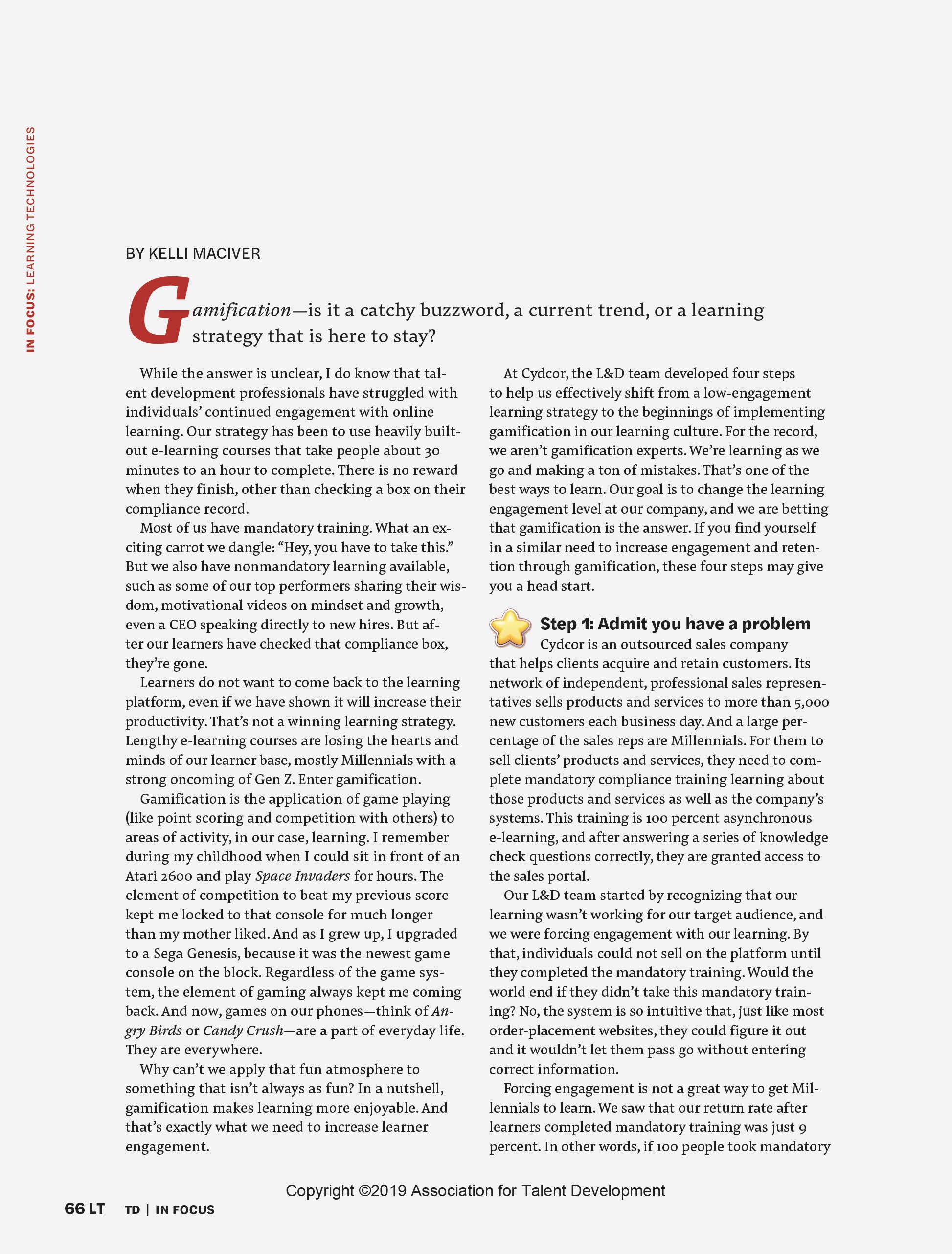
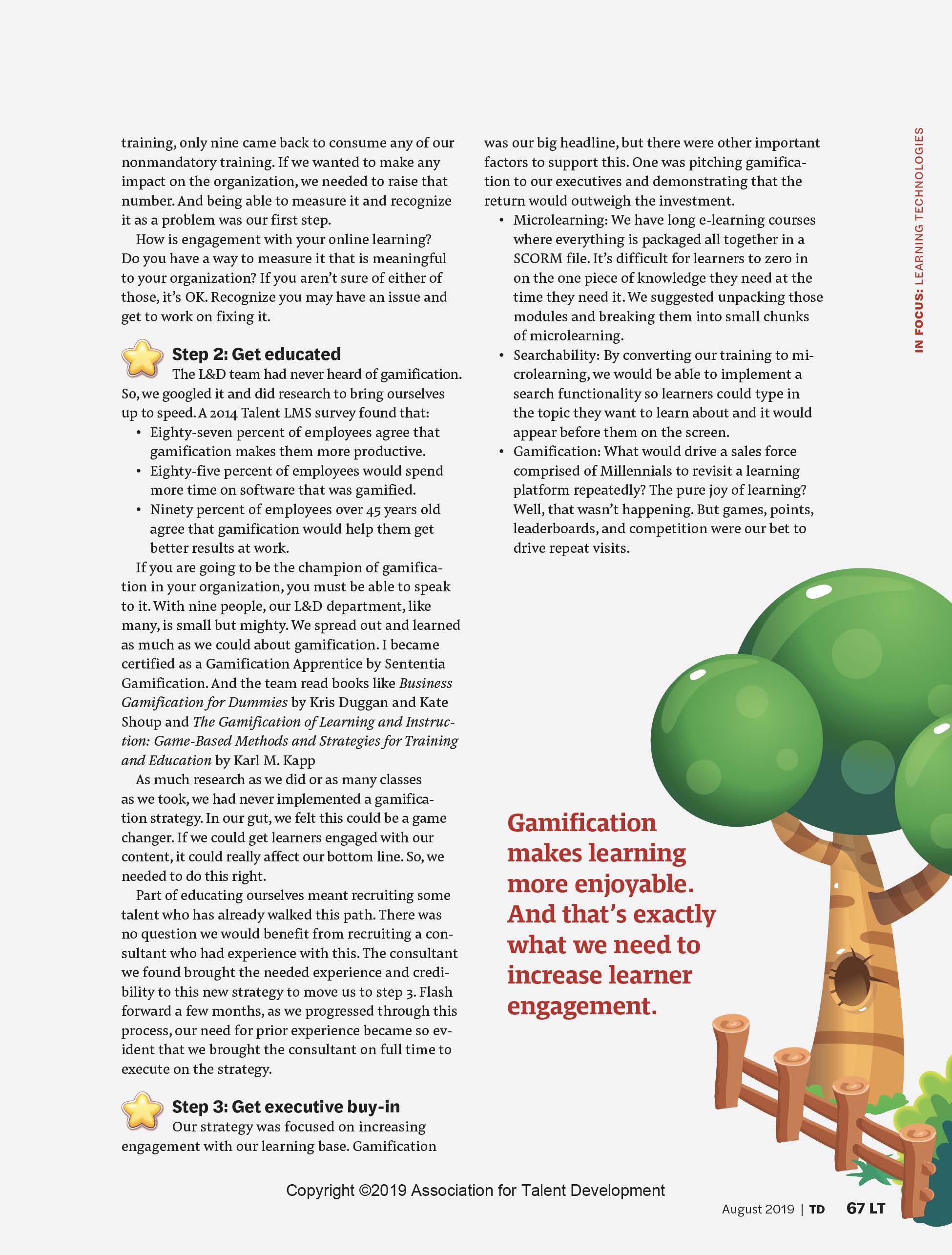
Cydcor’s Director of Learning and Development, Kelli MacIver recently sat down with TD Magazine to weigh in on the topic of employee engagement in corporate training. She and her team recently set out to discover ways to drive team members back to online training programs without making trainings mandatory. What they discovered was that through gamification, adding competitive elements to training and development programs, learning could be refashioned into a sport-like challenge employees would be eager to win!
Leading the way in corporate training and development has always been a top priority for Cydcor, an organization which prides itself of providing outstanding sales performance to its clients via a network of independent sales companies whose employees act as expert brand ambassadors for Cydcor’s client products and services. In March 2019, Cydcor earned a prestigious recognition from the Association for Talent Development, taking top honors in its Training Delivery category for demonstrating creativity and innovation in its rollout of technical training.
To ensure Cydcor continues its record of excellence and leadership in training, Kelli MacIver and her team build and distribute ongoing compliance training programs to help campaign teams sell on behalf of Cydcor’s clients.
Traditionally, these trainings have been required viewing, but making the sessions mandatory made users less interested in returning to take advantage of the other optional training content offered, reducing employee engagement. Even at Cydcor, where maintaining a student mentality is deeply engrained in the business culture, requisite learning proved to be a motivation killer for young professionals drawn to the sales industry by the promise of action and excitement.
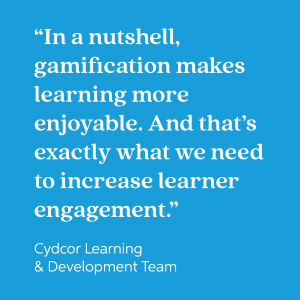
“Forcing engagement is not a great way to get Millennials to learn,” says MacIver, “We saw that our return rate after learners completed mandatory training was just nine percent.” The Learning and Development team knew there had to be a better solution engage participants in learning and keep them coming back for more.
Enter gamification. But rethinking and reworking Cydcor’s entire approach to building training content wouldn’t be easy. It would require accepting that there was a problem in the first place. It would mean gaining alignment, approval, and feedback from multiple members of the leadership. Finally, it would require extensive hours of research by Kelli’s team to learn everything they could about gamification and how adding game-like, competitive, social, and reward elements to learning programs might help keep learners engaged, motivated, and hungry for more. After a comprehensive process of information gathering, testing, and perfecting new programs, what the team discovered will transform Cydcor’s approach to training and development for decades to come.
Read the full article below.

In our increasingly digital world, door-to-door residential sales continue to thrive. Why? Because door-to-door sales is highly effective, generates higher value sales, boosts brand loyalty, and provides excellent customer experiences. The reason, you’ll discover, is simple. At the core of door-to-door sales is people connecting with people. Face-to-face communication, though more and more rare, remains the most effective means of connecting with a consumer base. It is the most reliable way to establish trust, assist in decision-making, and forge new relationships with decision makers. This sales approach benefits customers as well by providing personalized service, helping them find solutions to fit their unique needs, and giving them opportunities to ask specific questions.
With the right outsourced sales partner, corporations large and small can reap higher ROIs by getting back to basics. Let’s dive in and take a look at why door-to-door residential sales still works.
In more than 25 years outsourced sales experience, Cydcor has found that customers are often already familiar with our clients’ products and services before the sales representative arrives at their doors. They’ve seen the billboards, listened to the radio ads, and watched the commercials. Yet, they haven’t taken action to buy. Why? For many people, researching cable or energy options is simply one of many dozens of items on their to do lists – and it rarely takes priority.
That’s where a door-to-door sales team comes in. Sales professionals can reach consumers who haven’t responded to mainstream marketing initiatives. They can convert them into paying customers by personally responding to their questions and concerns and by helping them find the right products to address their needs. An effective salesperson is able to approach a homeowner, quickly establish rapport, and provide an informative sales pitch and personalized presentation. At the very least, the interaction succeeds in educating the consumer about his or her options. Even better, after painting the picture, answering questions, and addressing lingering concerns, skilled door-to-door salespeople create positive brand experiences for consumers. These face-to-face interactions increase the chances they’ll remain customers longer, or if they aren't already, improves they’ll decide to become customers in the future. In other words, door-to-door residential sales is not just effective at generating sales, but it also boosts brand loyalty by making the consumer feel important, valued, and well-served.
When executed by the right sales team, door-to-door sales is an incredibly effective secret weapon for increasing market share and making incremental sales. Not only do sales representatives reach the unreachable, but once they do, they often uncover needs that the customer wasn’t even thinking about. By asking the right questions, reps can recommend the right packages, often providing the customer higher-value products and services they’ll be happier with in the long-run.
The customer wins by getting exactly the services they want and need at the best possible price, and the client wins by acquiring lasting customers with a high lifetime value. Not only do residential customers who purchase at the door buy better packages, but they tend to cancel less and stay with the service longer.
The best predictor of brand loyalty is a positive customer experience – and the face-to-face communication is the best possible way to provide one.
By meeting in person, sales representatives can use friendly body language, make eye contact, and shake hands, building trust in a way that phone calls and advertisements can't. The door-to-door sales process leaves customers feeling confident in their decision to buy. They've have had their questions answered, and they feel warm and fuzzy about the enjoyable interaction they had with the sales rep.
All of this leads to happy customers who are fans for life. It’s no surprise that according to Net Promoter scores, potential buyers have overwhelmingly better experiences through the face-to-face sales channel. Thanks to its ability to offer a personalized and connected experience, in-person selling leads to more successful sales and benefits clients and customers alike.
As experts in outsourced, door-to-door residential sales, Cydcor understands the impact generating great face-to-face sales experiences, whether in the residential, B2B, or retail channels, can have on the long-term revenue growth of its clients. Learn more about Cydcor’s services, or become a client to see how Cydcor can help your organization achieve its customer acquisition goals.
Do you agree that door-to-door residential sales still work? If so, share this post on your favorite social media network!
Did we miss anything on our list? Tweet us @Cydcor and let us know why you believe direct sales is a win-win for companies and their customers alike!

Defining a business and sales strategy comes with an important choice: to withhold information or to be 100% forthright with the truth. And sure, there are plenty of dishonest salespeople out there, but here's the best sales tip you'll ever get: don't be one of them! The most successful and salespeople are those who consistently choose truth over deception. Rather than embellishing during a sales meeting, they prefer to under-promise and over-deliver. Instead of leaving out inconvenient facts, they proactively share any and all relevant details with their customers. Top sales professionals know that honesty in sales is possibly the most effective strategy for long-term success.
The good news for salespeople is that honesty isn’t just the best policy, morally speaking. Truthful communication is also a lucrative sales strategy that will serve you well in your career.
Never underestimate a customer’s ability to sense that something’s not quite right. Sales prospects can detect when you’re embellishing important details about a product or service, glazing over the facts, or telling them what they want to hear. As a result, they are less likely to buy. While an unscrupulous sales strategy might work for you every now and then, in the long run, you’ll lose more sales than you close because people don’t trust you. Focus instead on creating a sales strategy that respects the customer's intelligence. You're likely to generate more successful sales in the short term and build stronger long-term relationships with customers.
Every salesperson knows that it’s easier to deal with an excited customer than a skeptical one. While it might seem simpler to answer questions with short answers or withhold certain information, it’s quite the opposite. Being selective with the truth only invites more questions -- and not the good kind. It’s actually much more efficient, and more likely to increase sales, if you take the time to thoroughly and openly address all of your customer’s concerns to ensure that they feel confident about the decision to buy.
There’s a decent chance that your target customer has already been pitched in the past by another sales rep. In many of those cases, their decision against buying was due to a lack of trust -- not a lack of interest. By being completely straightforward and authentic, you’ll ending up signing up customers who had previously said no, bringing you closer to achieving your sales goals.
Nothing leads to an order cancellation faster than a negative surprise. Thankfully, the secret to a high quality, sticky sale is simple: ensure that your customer has realistic expectations. The strongest salespeople go out of their way to communicate relevant information, ensuring that buyers are fully prepared and informed.
No one wants to talk to a sales robot. Consumers are much more likely to buy from someone they can connect with -- someone who seems genuine and trustworthy. Simply being yourself and leading with honesty, makes it easier to build rapport. And as all strong salespeople know, building a relationship is often the difference between a yes or a no.
We all know that satisfied customers become loyal customers, but did you know that simply being honest also generates leads? After a positive experience, customers are not only more likely to buy from you again in the future, but satisfied existing customers will also send you referrals of their friends, families, and neighbors.
As soon as you realize that you don’t have to rely on white lies, exaggerations, and “tricks of the trade” in order to make a sale, you’ll become a more confident salesperson. Not only will you sleep better at night knowing that you conducted business with integrity, but this boost to your self-esteem will make you a stronger salesperson and a great sales team leader.
Never be afraid that you'll scare off a potential buyer with the truth. Remember: the mark of a strong salesperson is both quantity and quality of sales. Focus on being 100% honest, transparent, and authentic. Not only is this the right thing to do, but this simple sales strategy it can put you on the fast track to achieving your career goals.

You’ve set your SMART goals. You’ve written them down. You’ve discussed them with a mentor. You’ve shared them with friends and family. You’re working hard. You care deeply about your “why” and you’re excited about the future.
...But why aren’t you where you want to be?
Let’s take a look at eleven ways that you might be holding yourself back from achieving your goals.
1. You’re not staying with problems long enough. Giving up too soon is a surefire way to never reach your goals. If you’re throwing in the towel or retreating to your comfort zone every time you start to struggle, you’re hurting your chances of success and missing out on key opportunities to take steps forward toward your goals.
2. You’re only doing the right things SOME of the time. Consistency and self-discipline are the name of the game. You can’t expect to achieve your goals with any efficiency if you haven’t developed the right habits. You might be working really hard in the short term, but if you keep pumping the breaks, you’re only tiring out the engine and slowing yourself down.
3. You’re sweating the small stuff. Every time you lose your attitude, you’re moving in the wrong direction. If you don’t have thick skin, you’ll go down an emotional rabbit hole whenever you face failure or frustration. Doing so only diverts your attention away from what’s most important and drains the precious energy you need to stay motivated and keep pushing.
4. You’re avoiding the stuff you don’t want to do. We all have tasks we’d rather not tackle, conversations we’ve been putting off, and areas of professional development that we’ve been hesitant to address. But oftentimes, the things we’re avoiding are the things we most need to do. If you haven’t hit your goals yet, it might just be because you’re not stepping up. Adopt a sense of urgency by giving yourself smaller time-bound goals that will help you move the needle as you battle your procrastination.
5. You lack self-awareness. If you want to improve in any area of your life, it begins with looking in the mirror. Many people end up stagnant because they blame their lack of progress on outside factors instead of understanding their own role in their successes and failures. Once you see yourself clearly and lose the excuses, you’ll be able to focus on self-improvement and start taking the right steps towards your long term goals.
6. You’re not planning your days and weeks. When you’ve got big goals to hit, every minute counts. By not planning ahead, you are not only wasting time, but you are leaving space for lower priority tasks to crowd out the ones that will make the biggest impact on your advancement. Make time management a priority to make room in your schedule for things like professional learning and development which can help you build skills you'll need to finally achieve your goals.
7. You’ve been too focused on just yourself. It sounds counter-intuitive, but sometimes focusing too much on your own career goals can set you back -- especially if you’re working in a team-oriented environment. You’ll find that if you prioritize helping your team hit their goals, that you will in turn hit your own. By sharing your knowledge and skills with others, you'll reinforce your own strengths while you help others achieve their own personal goals.
8. You’re not receptive to coaching. If your pride is more important than your professional development, your progress will inevitably be slow. If you want to hit your goals sooner than later, it is essential to listen to your mentors and make the changes they recommend.
9. You’re not working hard enough. If your goals are big, then your effort has to be huge. You can’t expect to accomplish anything great if you’re not giving 100% each day. You might already be working really hard, but sometimes that little bit extra is what’s needed to push you over the edge.
10. You’re surrounded by the wrong people. If you find yourself regularly associating with naysayers and Negative Nancys, it’s going to inevitably chip away at your morale. When you’ve got big performance goals to hit, you need every ounce of energy and positivity you can get. People tend to emulate the people they spend the most time with -- so choose to spend time with only those who are helping you achieve your goals and not setting you back.
11. Success takes time. Never underestimate the role that time plays in reaching your goals. You need to patiently, but persistently, persevere and trust that if you do the right things, you’ll get where you want to be.
As frustrating as it may be to not have achieved your goals yet, it’s important to remember that you’re exactly where you’re supposed to be. Professional development is a lengthy process, but as soon as you recognize the reasons why you haven’t hit your specific goals and start to make the right changes, you’ll be that much closer to the finish line.
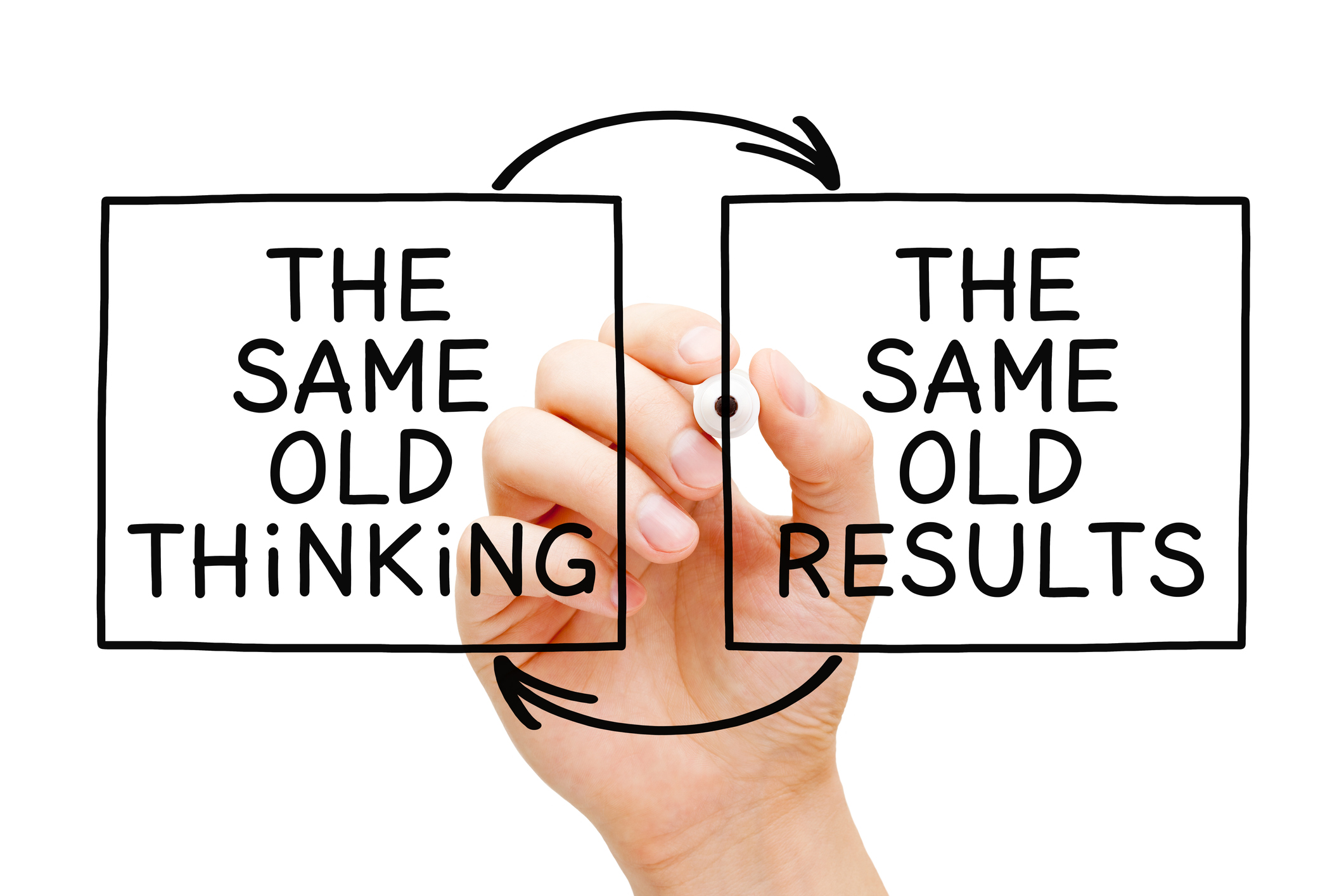
Why do some people achieve massive career success, while others remain stagnant or struggle to hold down a job?
The answer is simple: mindset.
The most successful people are those who have the mental fortitude and self-awareness to do whatever it takes to achieve success. They define success not just by how much they earn or what title they hold, but by how much they have learned, grown, and accomplished. Unsuccessful people, however, do the opposite. Let’s take a look at three typical mindsets that hold people back from reaching their career goals.
“Woe is me”
A victim mentality is one way to guarantee that you won’t reach your full potential. People with this mindset underestimate the extent to which their own attitudes and behaviors influence their career paths.
Signs you might be making this mistake:
● You don’t understand why you haven’t been promoted or given the same opportunities as others.
● You think that your coworkers somehow have an unfair advantage and that you’ve been given the short end of the stick.
● You worry that your boss doesn’t like you -- and you have no idea why.
“Victims” often think they’re unfairly treated. Rather than self-reflecting and taking responsibility for the things that don’t go their way, they tend to assign blame to others or attribute their failures to ‘uncontrollable’ circumstances. The problem with this attitude is that it’s difficult to grow professionally without connecting the dots between your own actions and results. If you don’t believe that you have the ability to shape your career, you won’t make the effort to grow and improve.
“The requirements are unreasonable”
Unsuccessful people are experts at self-imposed limits. They pre-determine what efforts are “reasonable,” and then carefully navigate to avoid doing more than what’s minimally required.
Signs you might be making this mistake:
● You have a certain number of hours in your mind of how much you “should” be working each day or each week.
● You’ve noticed colleagues coming into the office early, staying late, or working on weekends and you’ve thought to yourself, “I better not be expected to do that too.”
● You constantly compare your work hours or job responsibilities to those of your friends and family.
Typically, people with this mentality don’t possess a realistic understanding of what it takes advance their career in their chosen profession or industry. In turn, they either limit their efforts, or feel resentful about working hard. This ensures that all they will ever be is average — at best. Note that this mindset is the evil cousin of “woe is me.” Unsuccessful people fail to realize that the success of their colleagues isn’t a coincidence but a direct consequence of their willingness to go above and beyond to get the job done. In any career, you get out what you put in.
“The grass is greener”
This career-killing mentality is by far the most common one. So many are in constant pursuit of a job that will, overnight, land them more money, more prestige, or an ‘easier’ lifestyle. They are quick to abandon a promising job opportunity in favor of fewer hours, a ‘better’ boss, a lighter workload, or a shorter commute, often staying focused on short-term, rather than long-term gain.
Signs you might be making this mistake:
● You find yourself regularly looking for new opportunities and thinking about an exit strategy.
● You’re concerned that your current career choice is more demanding than those of your friends and family.
● Starting over sounds more appealing to you than conquering the challenge right in front of you.
People who fall into the ‘grass is greener trap’ often become serial job-hoppers because they find themselves in constant pursuit of the “perfect” job… which of course, does not exist. They fail to realize that all jobs have their pros and cons — and furthermore, that anything worth doing is going to be difficult. Unsuccessful people overlook the important fact that the commitment to seeing something through is usually what separates success from failure. Always starting over, they miss out on the long-term impact of their work because they never give anything long enough of a chance to see results.
In the ‘grass is greener’ camp, there are also those who stick around -- but with one foot out the door. They always have their eye out for something better that might come along. Since they are not fully committed, they never give 100% to their current role, and consequently sabotage their potential to become great.
The good news is that if any of these career-killing mindsets hits home for you, it’s never too late to make a change. Adopting a more successful mindset all starts with looking in the mirror and recognizing that you are the one in control of your own future.

Cydcor was proud to support our local community and fellow Californians as the premier sponsor of Rock the Recovery, a night of food, and music in support of California Strong. Funds raised at the benefit concert, which took place on Sunday, Aug. 4th at The Canyon Club in Agoura Hills, will help California Strong provide disaster relief funds to California residents impacted by future local tragedies like the Borderline shooting in Thousands Oaks, as well as the Camp, Woolsey, and Hill fires that wreaked havoc across our state.
Rock the Recovery was founded by Ava Flora Friedman, a Westlake High School senior who was inspired by the power of music to bring people together. The event featured performances by an exciting lineup popular local bands from a variety of genres: JACQX, Goodnight Kiss, Sitting on Stacy, Jake Parr, The Malibooz, and headliner Ray Parker Jr. and his all-star band. Hosted by professional comedian, author, and speaker Joe Dungan, the evening also included heartfelt words from Cydcor President Vera Quinn, as well as Rock the Recovery founder Ava Flora Friedman, California Strong Director Danielle Stone, Borderline shooting survivors Hannah Michalak and Cassidy Addison, Congressman Brad Sherman, and community member, painter, and poet Cindy Martia.
Check out video highlights from the event!
Through ticket sales, Rock the Recovery merchandise sales, and prize raffle sales, the event surpassed its fundraising goal, bringing in $35,000 in proceeds on behalf of California Strong.
Drawing on a shared love of music and their home town, event attendees danced, laughed, and rocked out, proving that when communities unite, they can overcome anything. Cydcor was grateful for the opportunity to play a role in making this remarkable event a successful one.

Cydcor set out to engage employees and drive them back to online training programs without making trainings mandatory. By gamifying development programs into a sport-like challenges, Cydcor discovered employees are eager to win! Read more about it.

Sometimes, becoming a better salesperson simply comes down to thinking like a customer. People like to feel they are being heard and improving your active listening skills can help salespeople quickly build rapport that is critical in gaining the customer’s trust, and ultimately making the sale. Practicing active listening techniques can help you serve the customer better while also increasing your chances of earning their business, because being a good listener helps you gather the information necessary to address their needs and overcome any concerns.
There are several active listening techniques you can use to make sure you’re keeping focus where it belongs: on the customer. But first, ask yourself why active listening skills, which seem so fundamental, are so hard for most people to master.
Talking too much: Talking puts us in the driver’s seat, in control, where most of us prefer to be, but listening lets the other person speaking briefly lead the conversation. That can be scary, but not if you think of it the right way.
Get sharp tip: While listening opens the door to the unknown, it also opens the door to opportunity. The customer might share his or her main objection. Bingo! Now you know what you need to overcome their objections and build trust. Changing the way you think about interpersonal communication is an active listening technique you can practice to improve your sales results.
Thinking ahead: While the customer is talking, it’s tempting to start planning your response. After all, what if he or she finishes speaking, and you’re left struggling to come up with a response. The problem, of course, is that while your full attention is focused on writing the perfect, cucumber-cool reply in your head, you’re missing all the invaluable information and nonverbal cues the customer is sharing.
Get sharp tip: While getting out of your own head can be one of the trickiest active listening skills to master, remember that by the time you get to unveil your perfectly composed response, it might already be out of date. The customer may have already shifted his or her interest to other topics. So instead of tuning out while you think up the ideal answer, pay attention and learn to buy yourself time in other ways. Take a deep breath before you speak or compliment the customer on his or her question. Saying something like, “that’s a really interesting point,” is an active listening technique that can give you back those few seconds you need to pull your thoughts together.
Acting like you’re listening: We have trained through social norms that listening is about nodding, smiling, making eye contact, and showing interest in what the other person is saying. The problem is, sometimes we’re so good at the “show” that when the conversation is over, we realize we haven’t really heard most of what the other person has said.
Get Sharp Tip: An easy way to improve your active listening skills is to repeat back all or part of what the customer says. This might feel silly at first, but it will force you to stop acting like you’re listening and really listen.Practicing this active listening technique can help you listen carefully to absorb more of what the customer is saying, providing you with valuable ammo and key points you can use to solve problems to address their concerns and close the sale.
Improving your listening skills isn’t easy. Getting good at active listening involves breaking deeply ingrained habits, but just like body language or facial expressions, listening can be improved by staying focused and practicing. Try some of the active listening techniques above to keep yourself present and tuned in while interacting with customers. Notice how much more information you’re able to gather about the customer. As active listening begins to pay off in the form of more sales, you may find that it will become easier as well. Eventually, you may start to see active listening as yet another essential tool your sales arsenal, a must-have interpersonal skill that can help catapult you toward your career goals!