
Found 0 posts

“To Begin with the End in Mind means to start with a clear understanding of your destination. It means to know where you're going so that you better understand where you are now and so that the steps you take are always in the right direction.”

The second habit of effectiveness, “Begin with the End in Mind,” is a favorite of mine. Covey points out how easy it is to get caught up in climbing the ladder of success only to discover that it’s leaning against the wrong wall. Effectiveness doesn’t depend solely on how much effort we expend, but on whether we expend the effort on the right things—something I’ve tried to remember in my personal and professional life.
To be effective, we must first be self-aware and critically examine how we view others and ourselves. Then, we must imagine or visualize our life’s purpose, which must be centered on a core of unchanging, “correct” principles. Finally, we must bring it into physical being, guided by our conscience and values. Doing so successfully allows us to demonstrate personal leadership, which means we take control and responsibility for our own lives.
My involvement with charities is one example of how I’ve applied Habit 2. The core principles of family, community and philanthropy underpin a personal mission to help those who are less fortunate, to give back to the community and to inspire compassion in others.
According to Covey, developing just such a mission is one way to begin with the end in mind. It focuses us on what we want to be (character) and do (contributions and achievements) and on the principles that guide our being and doing. When we ensure every decision and action is congruent with that mission, we practice Habit 2 successfully and become more effective people—and leaders.
Jim Majeski


There are a lot of aspects to Habit 1, Be Proactive. The most important aspect to me is that “if there is a will, there is a way;” whatever I need to improve about myself, I can with discipline and humbleness.
Constant self-improvement has been vital for me to be successful in my business and personal life. I had to improve on a lot of things. Many of them were quite hard.
Initially, my biggest obstacle was my speech. I had a speech issue as a child and went to speech therapy until I was about thirteen years old. When I quit, the doctor was concerned that by quitting it would jeopardize my ability to get a job which required speaking.
If I let myself believe that limit on myself, I would have been too afraid to go for my business dreams. My mentality was that no one can put limits on me, but me. I was dedicated to improving my speech and building my confidence in conversing with people.
Everyone has things to improve about ourselves. Proactive mentality and action will do it.
Gary
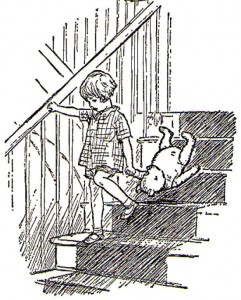
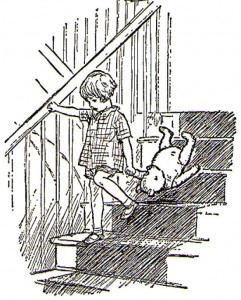
The book begins, “Here is Edward Bear, coming downstairs now, bump, bump, bump, on the back of his head, behind Christopher Robin. It is, as far as he knows, the only way of coming downstairs, but sometimes he feels that there really is a another way, if only he could stop bumping for a moment and think of it. And then he feels perhaps there isn’t.”
When I read this seventeen years ago to my daughter, I thought “I am Edward Bear.” I felt that I was not getting the business results that I wanted, yet I kept doing the same things over and over. I realized that I need to approach my work week differently.
This probably happens to most business people at some point. What do you do about it? One suggestion is to talk to a mentor or to key people on your team to get their perspective. Another suggestion is to spend more time on your weekly planning challenging yourself as to what is one or two things that you can do, besides the normal maintenance, that would get the business to a different level.
Does your head feel like Edward Bear’s?
Gary


Rescue efforts for the 33 men trapped in Chile’s San Jose Mine have come to a triumphant close with the recovery of the last miner, Luis Alberto Urzua, the 54-year-old foreman credited with helping the men survive 17 days before they were discovered. Their 69-day ordeal—the longest entrapment in human history—is finally over.
I marvel at how the world has united behind these brave men and the Chileans determined to save them. Live video from within the mine and hourly news feeds have brought us closer to them—and to our own humanity. As we’ve grown to care about these 33 strangers, their plight and dignity despite it compels us to imagine the unimaginable: How would we cope, cut off from light and our loved ones, possibly forever?
But, who among us can truly understand what these men have endured while entombed 2,050 feet underground? One thing, however, is certain. They’ve survived the unthinkable, demonstrating an indomitable spirit that 700,000 tons of rock failed to crush.
Quoted in The Guardian, rescued miner, Mario Antonio Sepulveda, explains: “I was with God, and I was with the devil; they fought me, but God won. He took me by my best hand … and I held on to him. I never thought for one minute that God wouldn't get me out of there. I believe that I had extraordinary luck. I believe this was a test ... and I believe that we have the possibility to confront things in life ... But I'm very happy that it happened to me because I believe it was the moment in which to make changes. The professionals who do all this publicity and television, the only personal thing I ask is for you not to treat us as celebrities or journalists. I want you to continue treating me like Mario Antonio Sepulveda, a worker, a miner.”
Free at last, Mario and his fellow miners have inspired us from the depths with their courage, fortitude and grace. Now safely home, they bring back these poignant lessons:
Just believe.
Our capacity for hope, faith and love can sustain us in our darkest hour.
Have purpose.
Working together toward a just and common end can move mountains—truly.
Never surrender.
Adversity can make us stronger by drawing out the best in us.
Be grateful.
We must cherish what and who really matters in our lives—always.

I was deeply moved when I heard the story about Victor Perez, a Fresno man who rescued an eight-year-old girl from the clutches of a kidnapper last week. After spotting a pickup that fit a description aired on the morning news, quick-thinking Victor gave persistent chase, eventually forced the suspect to stop and helped free the young victim.
We can learn from Victor’s decisive actions that fateful morning. An unemployed construction carpenter, Victor had seen hard times, laboring in the local grape fields to support his family. His own difficult circumstances, however, were no reflection of his integrity or character, nor did they deter him from rising to the occasion when the stakes were high. Despite the inherent dangers, Victor performed a selfless act of courage that saved a child’s life, reunited a family and inspired a community.
Why did he do it? He just wanted to do the right thing. "It feels good to know that at least in my part, we still do care out there,” Victor said in a recent Good Morning America interview. “We don't just close our doors and say forget about it. We actually go out there and see what we can do."
Victor’s story shows the human spirit at its finest, and this humble hero sets the example to which we should all aspire:


Sales is an extremely competitive industry with customer loyalty being the end goal. That's why it so important to treat each interaction with a current or potential customer as an investment in that relationship. Did you know that 87% of customer said they would stop doing business with a company after a negative experience? And of those 84% said they would share their negative experience with others. On the other hand, 58% said they would recommend you to others after a positive experience.
This is why it is so important to treat each interaction with a customer as an opportunity to create positive experiences and thus build customer loyalty. In doing so you create more opportunities not just for yourself, but for your team and company as well.
So what steps will you take this week to ensure you are building a better relationship with your customers?
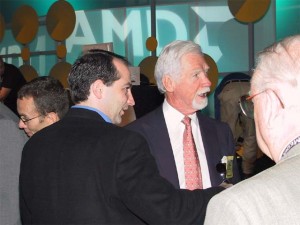
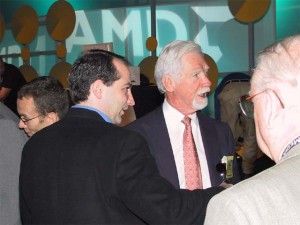
My son and I recently met Jerry Sanders, the founder of AMD - a computer chip manufacturer and one of the giants in the history of Silicon Valley.
Jerry was telling us that people often confuse “doing things right” with “doing the right things.” He said it was vital to “do the right things ” as doing the wrong things right ends in failure and burnout.
Peter Drucker makes the same point in The Effective Executive. So how do you focus on “doing the right things”? One easy way is asking your coaches. They have the experience and objectivity to guide you.


I had a conversation with an employee the other day concerning self-development. He believed it was vital at this stage in his career to get to the next level and asked me for my advice. My suggestion was for him to have an intense student mentality right now and to ask for and follow suggestions from his mentors, whether he agrees with the advice or not, as long as he feels the advice is ethical.
Why follow advice that you disagree with? A well known and respected CEO, and friend of mine, has been coaching me for about four years now and is often giving me suggestions that I feel will lead to a bad result. I will give him reasons why I feel his advice is bad but after a conversation if he still believes I should follow his suggestion, I will.
The reason I follow his advice is because I want to learn to grow. If I always do what I think is best or what I feel comfortable with then I will not grow. I will just be doing the same thing over and over, like a hamster on a wheel. The key is not the result I get from following his suggestion, but what I learned in the process.
If I follow my coach's suggestion and get a positive result, that is great and I will have learned new skills that will last me a lifetime. However, if I follow his suggestion and get a bad result, not all is lost. I will first review the process and results with my coach to see if I executed properly, but if I find that in the end the suggestion just doesn't work, then I learned a valuable lesson in what not to do in the future.
A good or a bad result is not important. What is important is what is learned along the way. Getting a good result, but not learning from the process, won't serve you as well long-term as getting a bad result, but learning the lessons from it.


The San Fernando Valley Business Journal recently sat down with our very own Gary Polson to discuss his role as CEO of Cydcor for nearly a decade now, what he thinks has contributed to Cydcor's success as one of the best sales outsourcing companies in the world and what opportunities he sees in growing Cydcor.
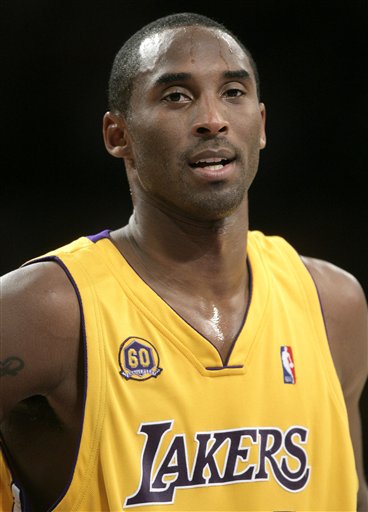
No matter much you struggle, you cannot lose faith in yourself. The great ones don’t. Lakers commentator Mychal Thompson during Kobe Bryant’s struggles in Game 7 of the NBA Championship.
The Lakers fought and clawed in Game 7 to become the 2010 NBA Champions. It was a big win for all the Lakers, but no one wanted it more than Kobe Bryant. Kobe wants to win for his teammates and for his legacy to become one of basketball all-time greats. He wanted his fifth championship ring to tie him with Magic Johnson and become only one ring behind Michael Jordan and Kareem Abdul-Jabbar (and one ahead of Shaq).
It was also Kobe’s first Game 7 Finals and it would be his biggest stage, his opportunity with the biggest viewership of a NBA basketball game since the 1980s. No player prepares harder by watching film and practicing than Kobe. He was prepared. Yet, for three quarters he had probably his worst shooting game of his career. Partly because of the tough Celtic defense and partly because of nerves and too much adrenaline, he missed nearly every shot.
Kobe struggled for three quarters. His frustration showed as he cried out to the gods wondering why they were against him. I was thinking at the end of the third quarter that the next quarter would define Kobe’s legacy. Could he forget about the past- the three quarters of hell? Could he stay composed and only focus on the next twelve minutes and will his team to victory?
He did, scoring ten points, playing tenacious defense and getting many tough rebounds in the fourth quarter. He willed his team to victory.
Kobe’s struggles and subsequent success is analogous to most successes. Years of struggles and frustration; questioning why it is not working; yet, not losing faith in yourself. It is having faith despite the struggles that if you keep at it, you will succeed. It is what the great ones do.
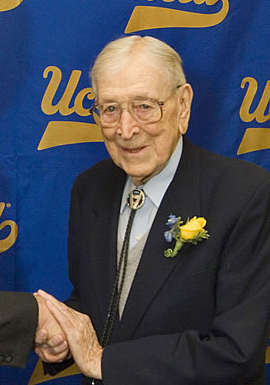
A great man passed away on Friday. He was a teacher disguised as a basketball coach. Although I was never on any of his teams and only met him briefly, he was a big influence on my life.
Coach Wooden was voted by sports writers as the greatest coach of any sport in the 20th century. His UCLA teams won 10 national championships, by far the most ever. But it was not these successes alone that made him such an amazing man. It was his values and what he stood for: the importance of marriage and family, character and integrity, sacrifice and teamwork. Preparation, preparation and more preparation. Focus on the effort and not on the results.
A must read is "Wooden- A Lifetime of Observations and Reflections On and Off the Court" by Coach Wooden with Steve Jamison. It is an easy read, where it is best only to read a page or two at a time. You will learn what it takes to be successful and how to have a meaningful life.
Two things that stick out most in my mind about Coach Wooden. One, some of his players say what they learned most from Coach Wooden is how to be a good husband by his example of how he was to his beloved wife Nellie. Two, the amount of preparation he put in to each practice; more time to prepare for the practice than the time it took to conduct the practice. I hope I learned these lessons well. The most important thing I can teach is how to be a husband and father; and, to maximize success, prepare, prepare, prepare.
May he rest in peace and always be in our hearts.
-Gary