
Found 0 posts


R&R 2015 is coming up soon! Cydcor plans to celebrate and reward our organization’s success in Cancun, Mexico, and we're excited for what's in store!
For starters, Cydcor is kicking off R&R 2015 with a caption contest on our Facebook Page. To participate, head to www.facebook.com/CydcorLLC , and submit an original caption in the comment section of this photo:

A winner will be selected at random to win a selfie stick to take some awesome photos at R&R 2015!
As such, all entrants must be a primary registrant to the R&R event (primary registrants’ guests and Cydcor employees are not eligible), however, we greatly encourage ‘likes’ for contestant entries and shares among friends and family!
Contest begins Tuesday, September 1, 2015 at 12:00 PM PST and closes Thursday, September 3, 2015, 11:59 PM, EST. The winner will be announced on Friday, September 4th, 2015 on Cydcor’s Facebook page.
Terms and Conditions
Valid entries are comments that caption the related post on Cydcor’s Facebook page. To be eligible, entrants must be (i) at least 18 years of age and (ii) a primary registrant attending Cydcor’s Cancun R&R event (primary registrants’ guests and Cydcor employees are not eligible). Multiple comments per participant are allowed. Profanity or inappropriate language, as determined by Cydcor, in its sole discretion, will be disqualified. The Isnap pro selfie stick will be awarded onsite at the event. Contest begins at 12:00 PM, PST on Tuesday, September 1, 2015 and ends at 11:59 PM, EST on Thursday, September 3, 2015. All participants will enter into a raffle and the winner will be announced via Cydcor’s Facebook page on Friday, September 4, 2015. This promotional offer is not intended to create a partnership, joint venture, co-ownership or other association between Cydcor and the participant.
This promotion does not have a connection with Facebook in any way and is not sponsored, endorsed or administered by, or associated with, Facebook. By entering the contest, participants agree to fully release Facebook from any and all liability.

Is your glass half full, or is it half empty?
Before you answer this question, take a moment to think about what you’re being asked. The standard response from a traditional optimist is that the glass is half full.
Pessimists also provide an expected answer and observe that the glass is half empty. But an authentic optimist, one who’s been improving his or her performance at work and in life, will simply say, “I’m thankful that I have a glass.”
You see, the authentic optimist has developed the ability to see the details in the situations and challenges the encounter every day. They have learned to recognize opportunity and respond with originality tempered with a bit of audacity. Optimism has a lot of benefits—one of them is original thinking.
Optimism isn’t a trick. It’s not a gift, either. It’s something you can learn. It’s a skill you must learn if you want to develop your career and build success. At its best, optimism is a way of life. Are you ready to embrace it fully?
You may have been taught that to be an optimistic person you must “hope for the best.” Actually, those are two different things. Hoping for the best leads to passive decision making - you will sit where you are until something good happens. But you may be sitting in the wrong place. When something good happens on the next street over, you’ll miss it entirely because you misunderstood optimism.
Optimism is a state of mind, a decision, and a daily practice. As you begin to cultivate your own personal optimism you’ll begin to see that it’s not a magic bean or a book of spells. Optimism is a point of view. It’s learning how to see that each challenge you face at work, on the road, on the phone, and at home, presents you with an invitation and an opportunity to achieve your goals.
Now, it’s easy to see bad news and difficulty. Even some optimistic people may see that the glass is half empty. But authentic optimistic people have developed their skills to achieve and expect success. They never stop looking once they notice that the glass is half empty. An optimist sees that there are choices to be made and opportunities to be considered.

About StrengthsFinder 2.0 by Tom Rath
Most people like to focus on fixing their weaknesses instead of making the most out of their strengths. To help people uncover their talents, the research-based management-consulting group Gallup introduced the first version of its StrengthsFinder online assessment in 2001. StrengthsFinder helped millions find out where they truly stood out. Its sequel, StrengthsFinder 2.0, unveils a new and improved version of the popular assessment. Although it can be read once to learn a few new things, it’s a great guidebook to continually refer to for career growth. The book is full of strategies for applying a person’s strengths professionally and personally. StrengthsFinder 2.0 is an approach by scientists to provide readers with a tool to identify their strengths--or more precisely, their talents. Author Tom Rath leads readers into their journey of becoming the best they can be.
Why Cydcor Reviews recommends this to future leaders:
If StrengthsFinder 2.0 will do anything for a reader, it’s pinpointing the things that a person does well and the skills they can continue to grow. The combination of dissecting these talents and the development of a plan of action works relatively well. An interesting point that Rath makes is that talent multiplied by investment will equal more strength. This means that investing in the things that we do well will make us better professionals. But finding out these strengths is not the end of the journey. It’s up to the reader to further develop other areas that may need improvement. This is an easy recommendation for any future leader who wants to use the things they know about themselves to discover what other qualities lie beneath.
Our favorite part:
When it comes to books that require you to take a test to determine the best way to read it, the test always needs to be worthwhile to take. The online test that StrengthsFinder 2.0 provides can open readers’ eyes and helps them start their improvement. The book will help you find your strengths and the best way you can apply them. Although the test is essential to reading the book, which may not appeal to some readers, it can still open up doors to understanding the way you work and give you ideas on ways to apply your strengths. It can help managers, business professionals, and future leaders tenfold.
Cydcor is the leading provider of outsources sales team worldwide. Learn more about Cydcor by visiting us on Flickr (https://www.flickr.com/photos/cydcor/)
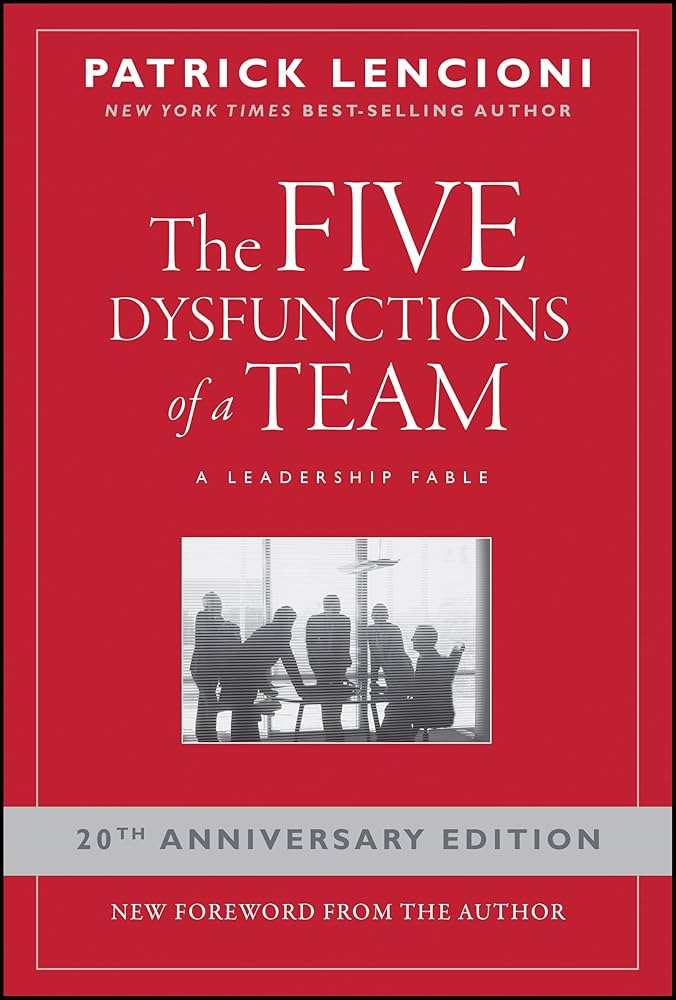
About The Five Dysfunctions of a Team: A Leadership Fable by Patrick Lencioni
The Five Dysfunctions of a Team isn’t your average book of business advice. Author Patrick Lencioni has crafted another excellent leadership fable to go along with his previous bestsellers, The Five Temptations of a CEO and The Four Obsessions of an Extraordinary Executive. In this book, Lencioni focuses his intellectual storytelling on the fascinating and complex world of team building. The Five Dysfunctions of a Team follows Kathryn Petersen, CEO of start-up Decision Tech, and how she handles a difficult leadership crisis: uniting her team when it begins to threaten the integrity of the whole company. Lencioni's gripping corporate tale serves as a timeless reminder that leadership requires as much courage as it does insight. Just as with his other books, Lencioni has written a captivating story with a simple message for all those who strive to be the best leader they can be.
Why Cydcor Reviews recommends this to future leaders:
Anyone who has had difficulty with leading and getting a group of co-workers to work together will find value in this book. The model that Lencioni lays out consists of five tiers that describe the five dysfunctions of a team. These include an absence of trust, a fear of conflict, a lack of commitment, an avoidance of accountability, and inattention to results. These are all dealt with accordingly and can open a leader’s eyes to some good ways to start making a difference. Although this is a fictional account of a leadership situation, it’s still possible to see yourself and your team in this business fable. Lencioni leads readers through the right steps to take and how to move a team from dysfunction to smooth operation. The examples are eye opening and will be useful to compare to your team’s last meeting.
Our favorite part:
The Five Dysfunctions of a Team offers practical advice as well as exercises that are easy to implement in any workplace team. Disagreements occur frequently while collaborating, but a leader needs to keep going no matter the problem to unite everyone. The story told in this book can help the reader visualize typical workplace dysfunctions while offering effective advice on how to overcome them.
The Five Dysfunctions of a Team seeks to identify and alleviate the problems that arise for many work teams. The success of a company depends greatly on how willing its leadership is to face issues head-on.

Making a good first impression matters. It’s especially important when you’re attending a business conference. Even if you’re not on stage, you’re on display as a representative of your company. You’re also representing your professional self. “What we wear speaks volumes in just a few seconds. Dressing to impress really is worthwhile and could even be the key to success,” says Dr. Ben C. Fletcher in Psychology Today.
Schedule Your Personal Style
Dressing with confidence requires some rules. Create a personal dress code for business events. It’s easy to do! Start with a review of the conference schedule. Will there be a team building experience such as a hike? Is there a formal dinner scheduled? The more you know, the better you can prepare. Here is a description of some common dress codes:
Business Casual
Business Professional
Cocktail or Business Formal
The Foundations of a Professional Wardrobe
We’ve identified several pieces of clothing that work as the foundations of your professional wardrobe. Review your clothes before the event. Try them on so that you’re confident about the fit and know that they’re good as new.
Lookout for more business professional tips from Cydcor on Pinterest! Check us out today at https://www.pinterest.com/cydcor/

About Emotional Intelligence 2.0 by Travis Bradberry & Jean Greaves
Professionals are always on the lookout for new ways to be better co-workers, managers, and employees. Today’s world is fast-paced, and competition is fierce. The best and most effective tools allow others to manage, adapt, and get ahead of the pack.
One of these tools is emotional intelligence. Emotional intelligence allows a person to recognize their own emotions and differentiate between feelings and behavior. Your EQ (emotional quotient) is the foundation for a large number of soft skills that include flexibility, time management, trust, anger management, and change tolerance. Emotional Intelligence 2.0 delivers a step-by-step program for increasing their emotional quotient and enabling a person to achieve their fullest potential.
Why Cydcor Reviews recommends this to future leaders:
Emotional Intelligence 2.0 has a self-contained, step-by-step program to determine your current level of EQ, while also providing suggestions on how to improve it. You will learn what may be holding you back and which of the book's strategies can help increase your emotional intelligence the most. This is the kind of book you’re looking for if you need both diagnosis and treatment options. Bradberry and Greaves do an excellent job of helping readers discover their strengths and find strategies that work on their weaknesses. It also provides a quick online assessment that can help you see where you currently stand on emotional intelligence.
Our favorite part:
The step-by-step program for increasing emotional intelligence through four core skills can be quite valuable. These skills include self-awareness, self-management, social awareness, and relationship management. The book’s single purpose is to increase emotional intelligence, and this is the perfect place to start. The chapter “The Big Picture” explains what EQ is and what it is not, while also giving tips to manage stress and increase your tolerance for change. Emotional Intelligence 2.0 gives abundant and practical insights to ensure readers can follow along and improve their emotional intelligence skills.