
Found 0 posts

We can all agree that April Fools’ Day is a lot of fun. It’s the one day each year when it’s perfectly appropriate for even the best behaved among us to play pranks on our friends, test our ability to fib with a straight face, and set our inner mischief-makers free. But where did April Fools’ Day come from? How long have people been celebrating? And, how do they celebrate April Fools’ Day in other countries? We’ve done some digging to answer these questions and more. Here is some background on the history of April Fools’ Day that’s sure to surprise you.
How it All Began
The origins of April Fools’ Day are actually the subject of much debate. Experts have long suspected that the holiday might originate from the period when there was a shift from the Julian calendar (when the new year started on April 1st) to the Georgian calendar (with the new year starting on January 1st). This shift happened in the 1500s; those who did not know about the shift to the new system were mocked as fools.
Another theory is that the holiday emerged from the ancient Roman day of jokes called Festival of Hilaria, which was held to commemorate the vernal equinox and honor the Anatolian Earth Goddess.
We may never know the real history of how April Fools’ Day came to be celebrated around the world, so don’t be fooled by those who claim to know the truth.
Around the World
While we love April Fools’ Day here in the states, we certainly aren’t the only ones who celebrate a day of jokes and hijinks. In France, April 1st is referred to as “Poisson d’Avril,” which literally translates to “April Fish.” French children have been known to prank their friends by taping pictures of fish onto their backs.
In Belgium, children lock their parents out of the house or teachers out of the classroom and refuse to let them back in until they offer up a treat for ransom.
In England, instead of being called a fool, you might be referred to as a “noodle,” “noddy,” “gobby,” or a “gob.”
In Portugal, where April Fools’ Day is celebrated on the Sunday and Monday before lent, it's not uncommon to have someone throw a handful of baking flour in your face.
Foolish Fiction
You might be surprised to learn that April Fools’ Day has made an impression on the literary world. In fact, the earliest recorded reference to April Fools’ Day occurred in Chaucer’s Canterbury Tales, in 1392. Later, Mark Twain would famously say about the holiday, “This is the day upon which we are reminded of what we are on the other three hundred and sixty-four.” (Pudd’nhead Wilson, 1894)
Famous April Fools’ Day Jokes Throughout History
Playing pranks on April Fools’ Day is nothing new. In fact, the first documented prank in honor of the holiday dates back to the 18th century, when gullible visitors would be invited to journey to the Tower of London to view the washing of the lions, which would never occur.
In 1957, the BBC broadcasted a spoof documentary about spaghetti crops in Switzerland that featured footage of a Swiss family harvesting strands of spaghetti from a field and laying them out to dry. Millions fell for the gag, calling the network to find out how to grow their own spaghetti plants.
Google has carried out many well-known April Fools’ pranks over the years, including the introduction of the fictional Google Wallet Mobile ATM in 2013. Google claimed this item could attach to your smartphone and dispense money anytime, anywhere, without an ATM. Google has such a history of elaborate April Fools’ Day hoaxes that when Gmail was released on April 1st, 2004, many assumed it was just another joke. The resulting confusion created a flurry of free publicity, which is what the company undoubtedly had in mind all along.
No matter how you choose to celebrate, April Fools’ Day is the perfect opportunity to enjoy some laughter with friends and coworkers. Most of us spend a lot of time taking life pretty seriously, and while that can help you get ahead, allowing yourself a few moments of laughter and fun each day is also important for helping you lead a balanced, happy, and healthy life.


We are a people helping people business. In the fast-paced world of sales, marketing, and entrepreneurship, we know that we succeed when our people do. They are the future of our business, and that’s why every aspect of our workplace culture is designed to help people succeed and achieve their goals. We achieve this by offering unique opportunities such as professional development trainings and conferences, giving back to local and global communities, and much more. Are you ready to write your own story? Learn more about our employee culture and why Cydcor is the right fit for you!
We know that growing your career takes learning new skills, overcoming obstacles, and taking challenges head on. That’s why Cydcor has an open-door policy, so our team members have face-to-face access to leaders across the company who are invested in helping them succeed. Our people-focused culture encourages open communication and collaboration; not only to share ideas and perspectives about business goals, but also to support each other. Cydcor is not a bureaucracy; our team members collaborate—across multiple levels—to solve business challenges and inspire each other to succeed because everyone has an important role to play.
In the spirit of people helping people, our culture includes a dedication to giving back. Globally, Cydcor volunteers time and talent, and raises funds for Operation Smile, which provides children in developing nations free, life-changing cleft lip and palate surgeries. Locally, Cydcor provides team members with paid volunteer hours and partners with local organizations to improve the communities in which we work and live. We do this with a sense of social responsibility, because we value making positive impacts that are bigger than ourselves. Just as our success as a company is strengthened by the success of our people, we as a community grow stronger when members of the community feel supported and free to thrive.
With over 25 years of sales and customer acquisition experience, we understand the effort it takes to see goals through because everyone, from entry-level team members to senior leadership, has a gusto for getting results. Cydcor fosters a workplace culture where dedication and hard work are appreciated and rewarded, and we celebrate team members who aggressively pursue where they’ll be tomorrow by impacting what they do today. At Cydcor, we don’t give up, and we don’t make excuses. We see it through to the goal line, because we stand by our commitments.
Our workplace culture grows unstoppable leaders, because at Cydcor, we build on team members strengths and provide them with the training and support they need to overcome weaknesses. We believe in maintaining a student mentality at all times and that learning should be an ongoing process for everyone from the entry level to the C-suite.
We include integrity in our workplace culture because it’s a word we live by. Integrity means knowing what is right and having the guts to do it. At Cydcor, we do what is right, not what is easy, and when we say we are going to do something, we do it well. Results matter, but how those results were attained matters just as much.
Cydcor aggressively seeks to improve today by creating new opportunities for a better tomorrow. We know the best solutions to business problems are found with the team members who tackle them, and we’re not afraid to challenge our assumptions and look for new approaches. So we work together to embrace obstacles and relentlessly push through them to bring innovative solutions to life for our teams and clients.
Cydcor thrives because of the high value we place on our team members. Cydcor culture is one that provides an opportunity to believe in each other as well as our shared goals. It is a place where we believe that hard work, collaboration, and dedication can produce remarkable results. Team members grow professionally, give back to the community, and flex their people skills, while knowing that they belong to an organization that is committed to their personal success as well as that of the company. For more information, contact us today.


Equipment needed: blindfold, any collection of random objects (i.e. chairs, small tables shoes, notebooks, etc.)
Skill focus: communication
How to: Break the group into pairs. Place random objects throughout the room to create an obstacle course. One team member wears the blindfold while their partner guides them, verbally, through the course. The goal of this team building activity is for all team members to use their communication skills to successfully coach their partners around the obstacles to the other side of the room.
Equipment needed: piece of paper and pencils or pens, and a collection of random items to draw or pictures of objects such as animals, vehicles, etc.
Skill focus: communication and listening
How to: Ask everyone to partner up (this can also be played in small groups of three or more). Team members sit back to back, or one team member turns his or her back away from the rest of the group. One partner becomes the artist while the other partner acts as the director. The director describes an object or shape to the artist. The director can only give instructions; he or she cannot reveal what object is. The artist can’t ask any questions. This activity works best with a short time limit. At the end of the activity, the team whose drawing most closely resembles the object wins.
Equipment needed: none
Skill focus: problem solving, leadership, cooperation and communication
How to: Give the entire group a limited amount of time (5-7 minutes, depending on group size) to line up in a straight line, in order by birthday (day and month only), without talking. The challenge involves problem solving because team members cannot speak or write, but they can communicate in other ways, including sign language, finger counting, nudges, etc. Often one or more team members will adopt a leadership role, guiding their teammates through the team building activity and helping to stoke collaboration.
Equipment needed: none
Skill focus: leadership, collaboration, time management
How to: Have the entire group stand in a circle. Ask everyone to take the right hand of someone across the circle from them. Then ask them to take the left hand of someone else. Give the group 10 minutes or less to untangle themselves without letting go at any time. The can twist, step over each other, and contort themselves in any way, but they may not break the chain of hands at any time. If the chain breaks, they must start over, putting an emphasis on collaboration and problem solving.
Equipment needed: none
Skill focus: listening
How to: The team leader acts as a conductor and asks the group for a topic. The goal is to write a story as a group. All team members stand in a line. The conductor then “conducts” the story by pointing at one member of the group at a time at random moments. The team member chosen must continue the story exactly where the last person left off. When enough details have been added, the conductor says, “end it,” and the next person must give the story an ending. The story will only make sense if team members listen closely to each other and resist the urge to change the subject, rewrite, or contradict what has already been added. It can be fun to see how having an open mind about collaboration can help the group consider alternate points of view.
Equipment needed: A large sheet or tarp
Skill focus: teamwork, problem solving
How to: Place the sheet or tarp on the floor and ask the entire team (or large groups) to stand on it. The team must flip the entire sheet over without any team members stepping off. They may lift their feet, but they cannot lift each other, and nobody can step on the floor until the challenge is complete. If someone steps off, they must start the challenge over.
Equipment needed: A basket of random objects
Skill focus: creativity, quick thinking, problem solving
How to: The team leader selects one of the random objects from the basket and hands it to a team member. That team member must go up in front of the group and invent a use for that object. They must then present the object’s use as though they were in a television infomercial for the item. Once they have completed their presentation, they pass the object to another team member, who must think up their own new use for the object. The first team member to get stumped by not being able to think of a new use for the object, gets eliminated. The remaining players then start a new round with the next object in the basket. The goal is to be creative and to think quickly to solve problems. The suggested use doesn’t have to have anything to do with the object's real purpose, and the person must start speaking immediately. If a player pauses too long before they begin speaking, they can be eliminated as well.
Equipment needed: Several balls of any size
Skill focus: memory, quick thinking, focus under pressure
How to: Ask the group to form a circle. Hand any team member a ball and ask him or her to pass the ball to any other team member while saying their name. Continue to pass the ball from player to player until every team member has had the ball once. Ask your team members to remember who passed them the ball and who they passed it to next. Have them pass the ball again in that exact order. Once you’ve established that they know the order, start adding more balls and see how many balls they can keep moving from person to person without making a mistake
Team building activities are a great reminder that there are many ways to help your team grow and improve. By shaking up the routine with easy team building games like these, you can help to energize your team and prevent them from getting stuck in a rut. Games like these challenge team members to use different skills than they normally do and get out of their comfort zones by partnering with different team members than usual. These activities are also a perfect way to ensure your team members do not become siloed into their departments. Taking just 30 minutes to put a little creativity and fun in every work week lightens the team members’ spirits and helps to maintain healthy team bonds while promoting collaboration and problem solving.

About Outliers: The Story of Success by Malcolm Gladwell
What makes high achievers different from you or me? Malcolm Gladwell answers that question with his book, Outliers. Many overachievers believe in one of the core concepts in the book: the “10,000-hour rule.” Gladwell suggests that to be the best at something, you need to study it for 10,000 hours. In this book, he finds the outliers—men and women who do things that are out of the ordinary.
Outliers is a good read because of Gladwell’s fascination with psychology, law, statistics, and sociology. His colorful writing provides a powerful and personal analysis of why some people become outliers and some don’t. Despite its quirky characters and lofty critiques, you’ll find echoes of your life in his writing.
Like Gladwell, at Cydcor, we encourage our employees and sales associates to set challenging goals that inspire achievement. We provide determined individuals opportunities to excel, work hard, and build successful careers.
Why Cydcor Reviews Recommends This Book:
Gladwell worked as a journalist at the Washington Post and as a writer for the New Yorker magazine. Instead of writing simple biographies of successful people, he investigates the communities where these exceptional people developed. He also examines the cultures that influenced them during their formative years and up to today.
Gladwell is passionate about social sciences and statistics. This interest led him to figure out why Canada’s star hockey players are consistently born in January, February, and March. But Gladwell isn’t just revealing cold facts and figures. He uses the book to examine his own life as an outlier.
Cydcor recommends this book because the author provides profoundly inspirational insights into how ordinary men and women achieve greatness. Gladwell suggests that everyone who is exceptional at something—like sales—has practiced for about 10,000 hours. Gladwell’s theory endorses Cydcor’s belief that professional achievement, recognition, and advancement is available for anyone who works hard and pursues each opportunity they find.
Our Favorite Part
Our favorite part of Outliers is Gladwell’s talent for revealing the unique twists and turns that influence someone’s life. For example, when Bill Gates was in the eighth grade, the mothers’ group at his school used the proceeds of their annual bake sale to purchase a personal computer for the students.
No software was available for the computer, so Gates learned how to program it by punching holes into computer cards—a very outdated practice today. After many hours of hard work, he got the computer to work. By the time he was a sophomore in high school, Gates had exhausted his school’s computer resources and sought further instruction at the University of Washington, where he met his future business partner, Paul Allen. Gates certainly had a gift for computing, but ultimately his achievements were powered by his 10,000 hours of hard work.
If we follow Gates’ example, if we pay attention and begin to see obstacles as opportunities, we will improve our chances for success.
As you read this book, you may remember the lessons you learned from teachers and mentors who taught you how to overcome obstacles. This book reminds us that the opportunity to succeed is always present; you just need to have a positive outlook and the determination to meet each challenge. You may not become a billionaire after reading Outliers, but your personal and professional life will become rich with possibility.
Who are the outliers that influenced your career path? Let us know about the men and women who inspire you to succeed. Share your ideas on Twitter and follow us @Cydcor.
We are Cydcor, the recognized leader in outsourced sales services. From our humble beginnings as an independent sales company based in Canada to garnering a reputation as the global leader in outsourced sales, Cydcor has come a long way. We’ve done this by having exceptional sales professionals and providing our clients with proven sales and marketing strategies that get results.

Description of this book: In Over Our Heads by Robert Kegan is an exploration of the mental demands in modern society. The book discusses how we are overwhelmed with expectations about our roles from work, family and media experts. It then goes on to discuss how we might navigate all that stimuli into a productive, happy life. The book showcases how we often feel overwhelmed and what happens to our brains in those situations, then how to cope. Kegan, a professor of psychology and education at Harvard, approaches the topics of the book with empathy and strong teaching skills. He believes that emphasizing adult development is as important as childhood development.
Cydcor recommends this book to career professionals because: This book discusses communication and techniques for processing information. Specifically, there are sections that cover work and interpersonal relationships, but also cover parenting, childhood, and learning. The book will show what to look for when seeking and hiring for jobs, how to communicate your ideas and receive communication, and how our brains learn new things and cope with stress. It is important in the workplace to master conflict resolution, learning all aspects of the job, and getting along with your team. Kegan writes about how to navigate those relationships and scenarios.
Our favorite part: The book is written at a high level and full of good research and communication studies. The chapter called Dealing With Difference breaks down management styles and shows examples of communication for each style.
Cydcor is a leading sales company that specializes in face-to-face relationships and professional development. Would you like to see more tips and advice on becoming a strong leader and building a successful Career? Find all of our inspiration on the Cydcor Pinterest Page.
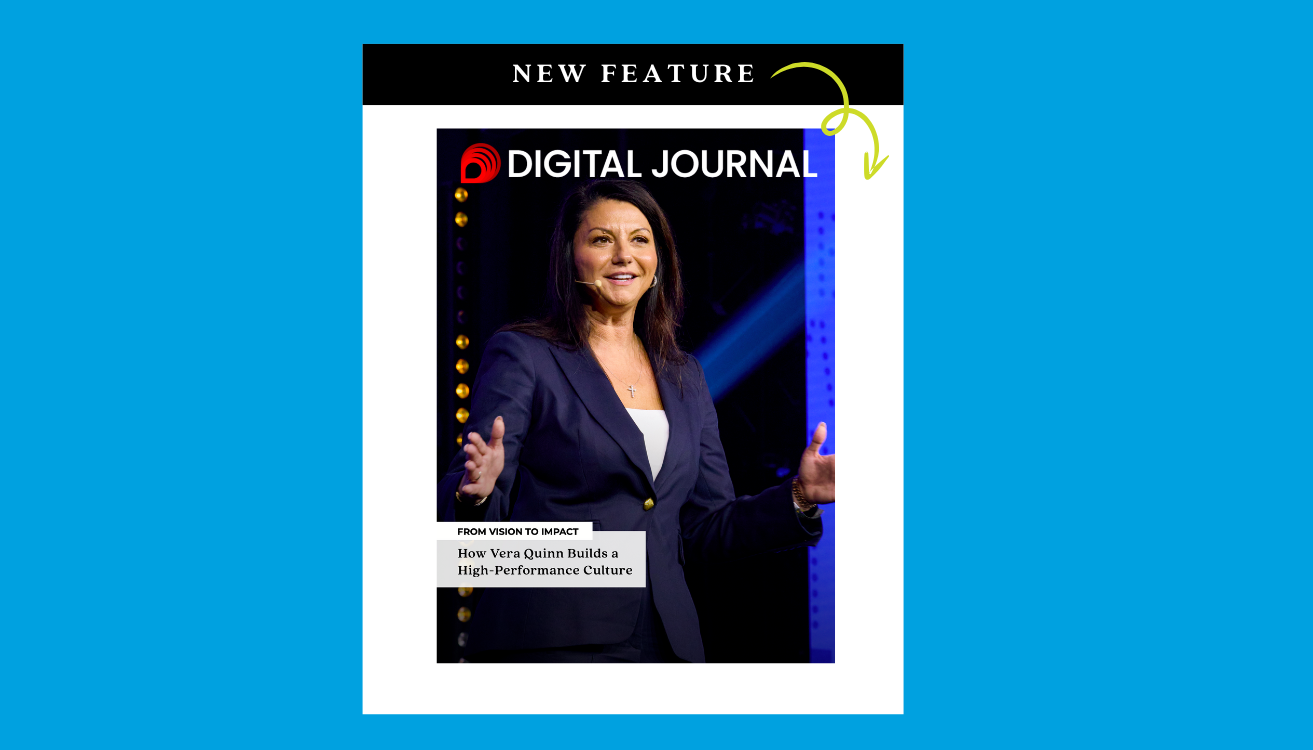
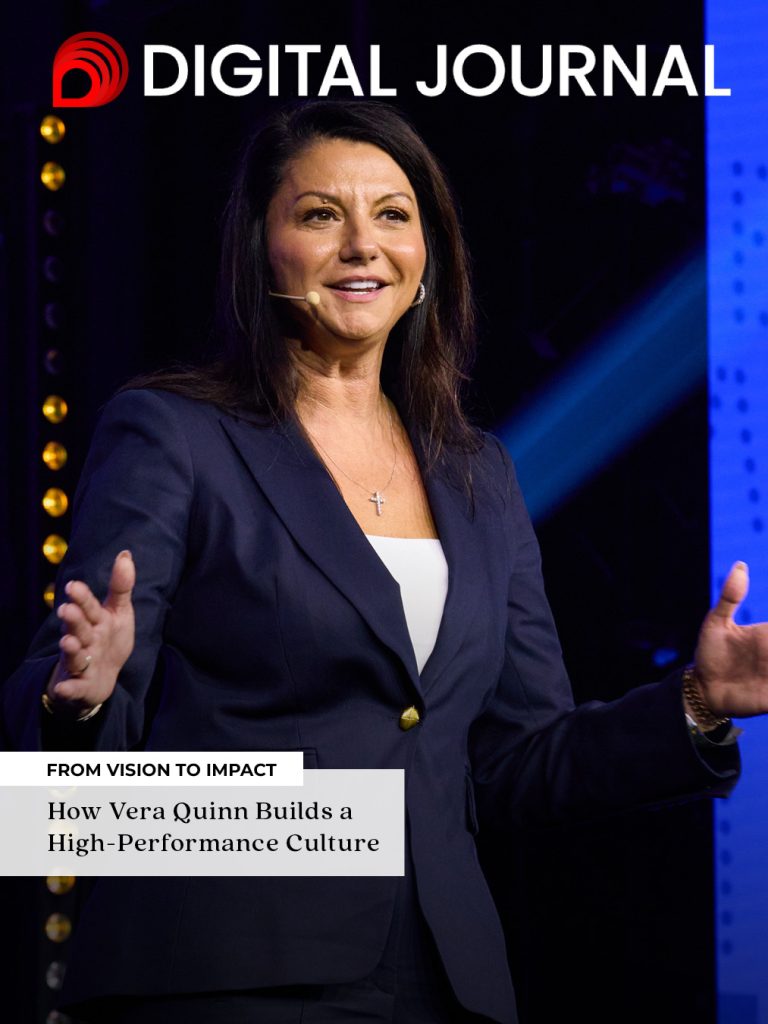
Opinions expressed by Digital Journal contributors are their own.
When you look at Cydcor today—a leader in outsourced sales and customer acquisition—it’s easy to see the results. But behind its long-standing success is the leadership style of its CEO. Under Vera Quinn, Cydcor has built not just revenue growth, but a culture grounded in trust, collaboration, and development of its people.
For Vera Quinn, high performance isn’t just about chasing big targets. It’s about creating the right environment for people to hit them. At Cydcor, that means pairing a clear vision with a culture where people feel empowered, accountable, and supported to bring their best every day, aspects Quinn built and continues to foster at the long-standing company.
Under Quinn’s leadership since becoming CEO in 2020, the culture at Cydcor has shifted noticeably. “I’ve always believed energy is contagious,” she says. “If I can show up with clarity, positivity, and belief in our people, it creates a ripple effect. That energy has brought new momentum into the business and the way we work together.”
Founded in 1994 and headquartered in Agoura Hills, California, Cydcor delivers customer acquisition through in-person sales, call center operations, and digital marketing. It’s a blend of personal connection and technology that has kept some of the biggest Fortune 500 companies coming back year after year.
Quinn, who has been with Cydcor for more than 25 years, sees culture as the real engine behind results. “If you want great results, you have to invest in the people delivering them,” she says. “It’s about giving them the tools, the clarity, and the belief that they can achieve more than they thought possible.”
Clarity is the starting point. At Cydcor, the mission isn’t just a line on a website; it shapes how Cydcor operates and how its network of independent sales companies executes in the field. Cydcor sets the vision, standards, and client partnerships. The sales companies carry that vision forward every day in how they build teams, sell, and lead.

“When people understand the ‘why’ behind what we’re doing, they approach their work with more energy and ownership,” Quinn explains.
That alignment has helped drive some big wins. In 2024, Cydcor posted double-digit revenue growth for the second year in a row, expanded into new industries, and continued to serve long-standing clients. Independent sales companies in the field scaled their businesses, developed new entrepreneurs, and delivered the results that made those wins possible.
Recognition followed. Cydcor has now earned the DIRECTV Dealer of the Year Revolution Award for the ninth consecutive year, an achievement Quinn credits to the entire ecosystem. “Awards are never just about one person,” she says. “They’re about what the whole organization achieves together.”
At Cydcor, empowerment doesn’t mean “hands-off.” It means providing a clear framework while giving people the room to make decisions—and the structure to track how those decisions play out.
“When people know they’re trusted to deliver, they rise to the challenge,” Quinn says. “But they also know we’re going to measure our progress, celebrate our wins, and adjust when we need to.”
That balance of freedom and accountability is one reason independent sales companies in Cydcor’s network perform so consistently. Cydcor sets the standards and tools, while the entrepreneurs in the field put them into practice. Beyond telecom, this model has helped brands expand quickly into new markets, often faster than they could on their own.
Within Cydcor, the same philosophy applies. Performance reviews, real-time feedback, and transparent communication are part of the daily rhythm. These practices ensure that the corporate team stays aligned with the independent sales companies, creating consistency across the organization.
“I’ve always seen leadership as personal,” Quinn reflects. “It’s not just about hitting numbers—it’s about knowing the people behind those numbers, and helping them believe in what’s possible for themselves.”
One of Cydcor’s longest-standing values is supporting the development of leaders at every level. While Cydcor itself doesn’t create field leaders, it provides the platform and structure that allow entrepreneurs in the independent sales companies to grow their own organizations.
“We’ve built a place where ambition meets opportunity,” Quinn says. “If someone is willing to put in the work, we’ll match it with the mentorship, training, and resources they need to grow.”
From retail to B2B, residential sales, and event services, the programs and tools Cydcor offers help sales companies train and expand their own leaders. That support has kept a steady pipeline of entrepreneurs ready to meet client opportunities.
This culture of growth and opportunity has also shaped life inside Cydcor’s headquarters. The company has been named a Best Place to Work in Los Angeles 13 times. “People stay and perform when they can see a future here, and they can see themselves in it,” Quinn says.
For Quinn, trust isn’t just a feel-good value; it’s a performance multiplier. “You can have all the strategy in the world, but if people don’t trust their leaders and each other, it falls apart,” she says.
At Cydcor, trust is built through integrity, follow-through, and leaders modeling the behaviors they expect from their teams. The result is an environment where people share ideas openly, challenge each other constructively, and make decisions based on the best available insight.
That same trust extends to clients, who know Cydcor will deliver with consistency, integrity, and a reliable field network. It’s why so many of the company’s partnerships—whether with established Fortune 500 companies or high-growth brands—have lasted decades.
“Clients stay with us because we’re consistent and because we do what we say we’ll do,” Quinn explains. “They trust the integrity of our people and the strength of our field network. That’s what sustains partnerships year after year.”
Business performance matters, but for Quinn, it’s not the only thing that counts. Under her leadership, Cydcor has continued its commitment to giving back, donating thousands of dollars and hundreds of hours—investing time and talent locally and globally. Teams across the network have also donated hundreds of volunteer hours to causes like the Spark of Love Toy Drive, bringing joy to thousands of children and families.
“Giving back strengthens our culture,” Quinn says. “When people work together for something bigger than themselves, it builds pride, unity, and perspective.”
As Cydcor looks ahead, Quinn’s focus hasn’t changed. “We’re about results,” she says. “But the true measure of success is when those results come from a culture that lifts people up and inspires them to do more than they ever thought possible.”Quinn’s contagious energy has been a driving force behind a cultural shift that continues to inspire both the field and Cydcor’s headquarters.
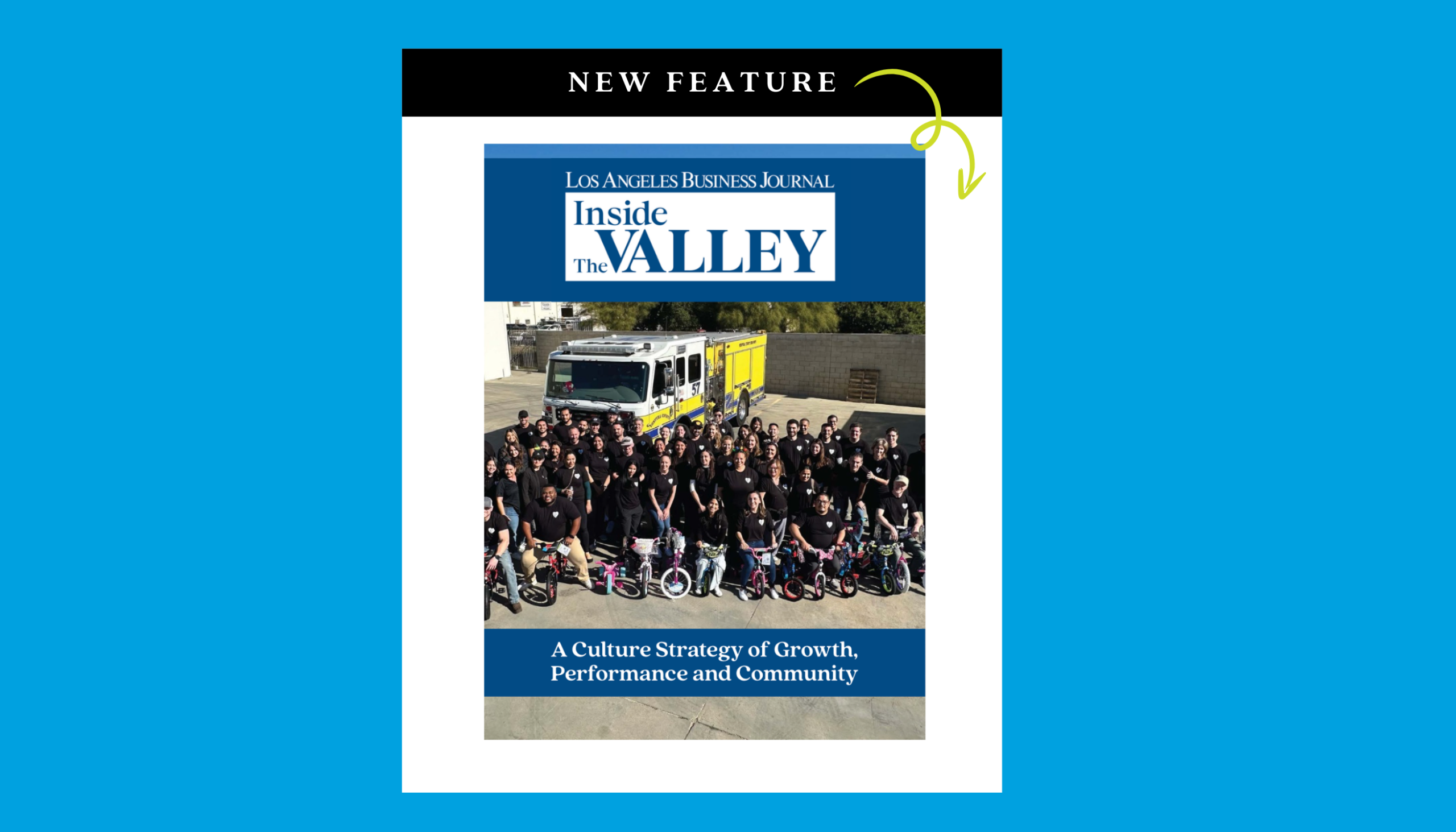
CYDCOR HAS CULTIVATED an award winning culture, not through slogans or surface-level programs, but through intentional strategies rooted in values that help both its people and business thrive. Led by CEO Vera Quinn, Cydcor has created an environment where people grow, performance scales, and giving back is part of everyday operations. This values-first approach has earned the trust of Fortune 500 clients, as Cydcor delivers in-person customer acquisition solutions that help major brands stand out in an increasingly digital world.

GROWTH THROUGH DEVELOPMENT
At Cydcor, growth begins with people. The company invests in personalized, ongoing development, from AI to public speaking to leadership training. Mentorship, feedback, and hands-on learning are embedded into the culture. This commitment has helped fuel record-breaking results, including doubling revenue over the past two years—an unprecedented milestone in Cydcor’s 30-year history. It has also earned Cydcor recognition as a 13-time Los Angeles Business Journal Best Places to Work honoree.
PERFORMANCE THROUGH ALIGNMENT
Cydcor’s performance culture is built on clarity and communication. Team members understand the company’s goals, their role in achieving them, and how success is measured. Momentum is driven through regular one-on-ones, performance check-ins, and monthly companywide meetings.
Cydcor is also relentless about delivering consistent, high-quality results for its clients. “When you build a culture where people understand what’s expected and feel supported in achieving it, they can deliver with strong performance, purpose, and pride,” said Quinn.

COMMUNITY AT ITS CORE
Cydcor’s “people helping people” philosophy is more than a belief. It is a way of thinking and operating. It attracts individuals who want their careers to create impact in business and beyond. Each year, team members volunteer hundreds of hours and raise thousands of dollars for causes ranging from child welfare to hunger relief and environmental efforts. Helping others is not extra; it is part of how Cydcor does business.
Through local partnerships and national initiatives, Cydcor’s commitment to community is deeply embedded in how the company shows up in the world.
This is all more than culture. It’s a competitive edge that strengthens teams, drives measurable success, and ignites future growth.
To learn more, visit cydcor.com.