
Found 0 posts

Cydcor Reviews is a website dedicated to recommending business-related books to professionals and aspiring entrepreneurs. Learn more about Cydcor by checking out our page on Flickr.
About Pitch Anything: An Innovative Method for Presenting, Persuading, and Winning the Deal by Oren Klaff
Delivering an excellent pitch to potential sales clients doesn’t come naturally to everyone. Enter Pitch Anything author Oren Klaff, who knows a thing or two about making a sale. Over the past decade and more, Klaff has utilized his pitching method to raise more than $400 million. In Pitch Anything, Klaff describes his formula to help any business professional with any sale pitch.
According to Klaff, crafting and executing the perfect pitch isn’t art; it’s more centered on science. By applying the latest scientific findings and discussing real-life examples, Klaff describes how the brain makes decisions and responds to sales pitches. By learning how the method works and what you’ve been doing wrong, it’s much easier to understand how a successful pitch is done. Whether you're presenting to new investors, locking down some new business, or even negotiating for a higher salary, Pitch Anything has you covered when it comes to perfecting the pitch.
Why Cydcor Reviews recommends this to future leaders:
Learning the method of a successful pitch isn’t too difficult, but many people fail the first step: getting the attention of potential buyers or clients. Attention requires the combination of two things working together: desire and tension. Not only do you need the person to be interested in what you’re selling, but you also need them thinking that they would be lucky to have the product or service. Be sure to let the client know that you have the best service or product and that they would be missing out by not buying. You have to be passionate about what you are selling and get other people to be passionate about buying.
Pitch Anything has great insights on how the brain processes simple information and how to take advantage of this with clients. Klaff has done the required research to prove his points, while still bringing something new to the table.
Our favorite part:
The sales method that Klaff discuses in Pitch Anything is simple to understand and apply. The “STRONG” method of pitching can be put to use immediately by any business professional. The steps include setting the frame, telling the story, revealing the intrigue, offering the prize, nailing the hookpoint, and finally, getting a decision. Applying these tactics and strategies will help to engage and persuade the person you’re pitching to, and you'll find more agreement and support than you ever thought possible.

Integrity means that you have high moral principles and follow professional standards. Simply put—to practice integrity in the workplace you can’t just talk the talk—you have to walk the walk. A lack of integrity can lead to poor decision-making and have a negative influence on your work and your employer.
Integrity Begins With You
Be well groomed at all times. Keep your work area and your car neat and clean. This habit shows that you care about the impressions you make as a representative of your company. Clients and colleagues will see that you respect your employer’s values and are a responsible person. If you make a promise you must keep it. It proves that you’re a dependable person. Only agree to provide services that you can actually deliver. Don’t over promise. If you do something wrong, fix it as soon as possible.
How Do I Show Integrity at Work?
You have to be honest and ethical in all of your actions if you want to practice integrity in the workplace. Understand that you’re a role model for your colleagues, clients, and vendors. Be consistent about how you apply your ethical standards. Rely on facts at all times in your interactions at work. Never make excuses or avoid sharing bad news. Integrity requires that you speak up when you notice a practice or behavior that diverges from the company’s ethical standards.
Practice Company-wide Integrity
Practicing integrity at work provides positive outcomes for your company. However, you need to understand how your company practices integrity. Become familiar with your company’s core values and use them as a guide for developing your workplace integrity. Allow your team members to share their concerns about anything they see as going against your company’s values. Encourage an atmosphere that supports honesty and fairness.
Integrity Welcomes Risk
Every decision you make will involve some elements of risk. You must be willing to take a risk in order to achieve excellence and be competitive. If there are objections to your suggestions, remain positive. Gaining support from team members and stakeholders requires effort. Do the work. Ask for input from all participants and encourage them to share their concerns.
Practice What You Preach
Your behavior at work must offer a good example for your team members, colleagues, customers, and your community. Recognize your own skills and appreciate the contributions of others. Share your experience with your team and help them to develop their own integrity in the workplace.
Learn more about Cydcor by visiting us on Flickr! https://www.flickr.com/photos/cydcor/

The leading provider of outsourced sales teams, Cydcor is dedicated to helping business professionals worldwide reach success.
Choosing the right words is key to creating a successful resume in 2015. But even before a hiring manager sees your resume, an Applicant Tracking System (ATS) could reject it. It’s estimated that nearly 75% of applicant resumes don’t make it through this automated scanning process. At Cydcor, we value all resumes that have been written well, and showcase the experience we're looking for.
Hiring managers may not understand your “passion” or you skill as a “problem-solver” if you do not explain how you demonstrated this in a work setting. You need to make sure your resume shows how you increased company profits. Use your resume to tell how your record-breaking effort contributed to your team’s success.
Start With a Summary
Your resume needs to let the hiring manager know that you’re the right person for the job and are worth being contacted for an interview. Get the hiring manager’s attention by identifying your relevant experience in a well-crafted summary at the beginning of your resume.
Numbers Tell the Story
Use numbers to define your professional accomplishments. Numbers add focus and scope to your work history. Answer questions like these with facts and figures:
Use Keywords
Highlight keywords in the job description and compare them to related keywords in your resume. If there is a 70-80% match, then you should apply for this position. Only about 20% of applicants applying for a specific job are actually qualified for the position. Online tools like Jobscan analyze how well your resume matches the job description.
Keep It Relevant
Employers want to hire people with relevant experience. Keep your resume to 1 or 2 pages by cutting any experience that is over ten years old.
Get Creative—Within Reason
Colored fonts will make your resume stand out from others—but don’t get carried away. Consider at two-color system—black and one other color, like blue. Test these colors on various screens and printers if possible. You want to make sure it’s easy to read. But before investing too much in design, study the company’s website and get a feeling for their culture to determine if a creative resume will work in your favor.


Learn more about Cydcor at our website: https://www.cydcor.com/.
To run successful business, it’s essential to reach out to prospective partners and clients on a regular basis. However, many of us dread the idea of walking into a room and introducing ourselves to strangers—so making those initial connections can be tough.
Networking is a great opportunity to make business contacts and recruit new prospects. While it might seem like a difficult task, in reality it doesn’t have to be an uncomfortable experience.
To ease yourself into a “networking mind-set,” speak to people everywhere you go. This is a great way to practice conversation, as well as your active listening skills. Get into the habit of chatting with folks without the stressor of needing to do a sales-pitch or the pressure of fellow colleagues around you. This will help you get comfortable with more casual conversation and will make it much easier when the time comes to go to a convention or event.
Make a positive impression by having an upbeat attitude, as people wish to work and connect with those who are confident as well as optimistic. This assertiveness will increase your chances of a lasting impression; however, always remember to remain genuine. Being overly gung-ho or coming across fake can turn off those around you.
Cydcor is on Twitter! Follow us for company news and sales advice at @Cydcor.
Follow up with those you connect with. At many events and opportunities, business cards can be rapidly exchanged. Keep track of those cards and when you have a new contact, be sure to contact with them via email or connect with them on a social site such as LinkedIn within twenty-four hours. A simple, “It was fantastic to chat with you yesterday!” can go a long, long way.
Here's Cydcor's review of 'The Power of Habit: Why We Do What We Do in Life and Business' by Charles Duhigg:
About The Power of Habit: Written by Pulitzer Prize-winning business reporter Charles Duhigg, The Power of Habit explores the scientific discoveries that explain how and why habits exist—and more importantly, how they can be changed.
Duhigg takes the reader through engrossing narratives that travel from the boardrooms of Procter & Gamble to the sidelines of the NFL and even to the frontlines of the Civil Rights Moment.
At its core, it contains a single argument: The key to who we are, from our successes, failures and productivity, comes down to habits and understanding how they work.
Why Cydcor recommends this book to future leaders: Duhigg explains how habits operate in the brain, how companies use them, and even how retailers and businesses use their understanding of human habits to their advantage as a business model to drive sales and profits. For future leaders, understanding this concept is critical to success.
Our favorite part: Market researchers will certainly love this book, as Duhigg explains the habits of consumers and gives predictive models. The stories on how Target and Febreeze have used habits is especially engaging. These tales of corporate manipulation are among Duhigg's most persuasive.
Not only does he explain how to create habits for yourself, but he also explains how one could potentially capitalize on them in the business world.
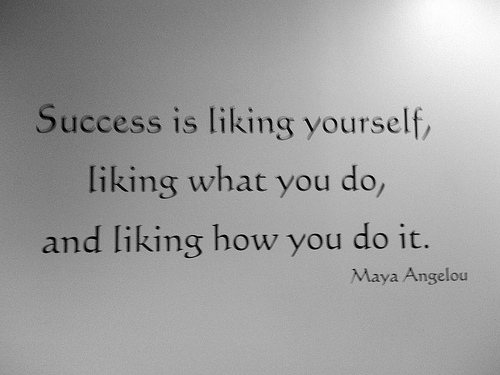
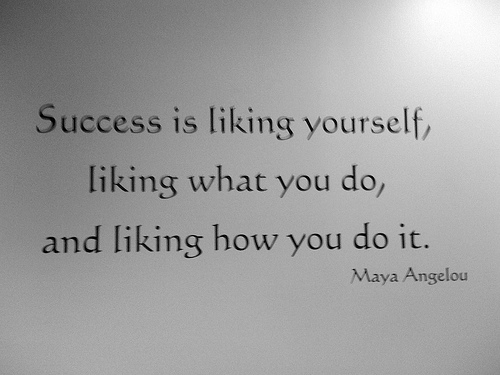
In a business environment, we all try to put our best foot forward when interacting with our co-workers, managers and clients. However, not everyone is immune from traits that might be off-putting, either consciously or subconsciously. In order to achieve long-term happiness and achievement, it is critical to be self-aware of not only your best traits, but also of ones that need improvement.
Negative Thinking
A lot of pessimists in the world consider themselves realists rather than “negative minded thinkers.” However, for others it can be difficult to be around those who speak incessantly of problems and issues, and who are stubborn to see the positive side of situations.
Being pessimistic is one thing—but remaining in a perpetually negative mind-set can frustrate those around you. Think carefully about how what you say might be phrased in a less negative light and try to see a problem as a new challenge to take the lead on.
Validation
Everyone loves to be appreciated and acknowledged for his or her efforts and accomplishments at work. However, those who constantly strive for validation are exhausting to be around. Those individuals get caught up in the need to prove their worth and to win those around them—to the point that they can over-attach to projects and be unintentionally draining.
It isn’t about what you achieve in the eyes of the group. It is about the journey, what you’re learning, and how you help those around you. Support comes from your team, and with a great assembly behind you, they will all learn and grow in the process.
Perfectionism
Author Michael Law once said, “At its root, perfectionism isn’t really about a deep love of being meticulous. It’s about fear. Fear of making a mistake. Fear of disappointing others. Fear of failure. Fear of success.” There is a lot of truth to those statements, and as a culture we tend to reward perfectionists for setting high standards. And perfectionists frequently are high achievers; however the price they pay for that success can be a source of great dissatisfaction.
Underneath it all, perfectionists have a high drive to succeed, however they need to realize the at times that “perfect” is an unrealistic goal. Such an effort towards perfectionism can often get in the way of the bigger picture, so figure out what “good enough” is, and be happy by letting go of unnecessary and unproductive pressures.
For more information about Cydcor, connect with us on LinkedIn.