
Discover practical advice, inspiration, and insights to help you succeed in business and grow both personally and professionally.

Found 0 posts
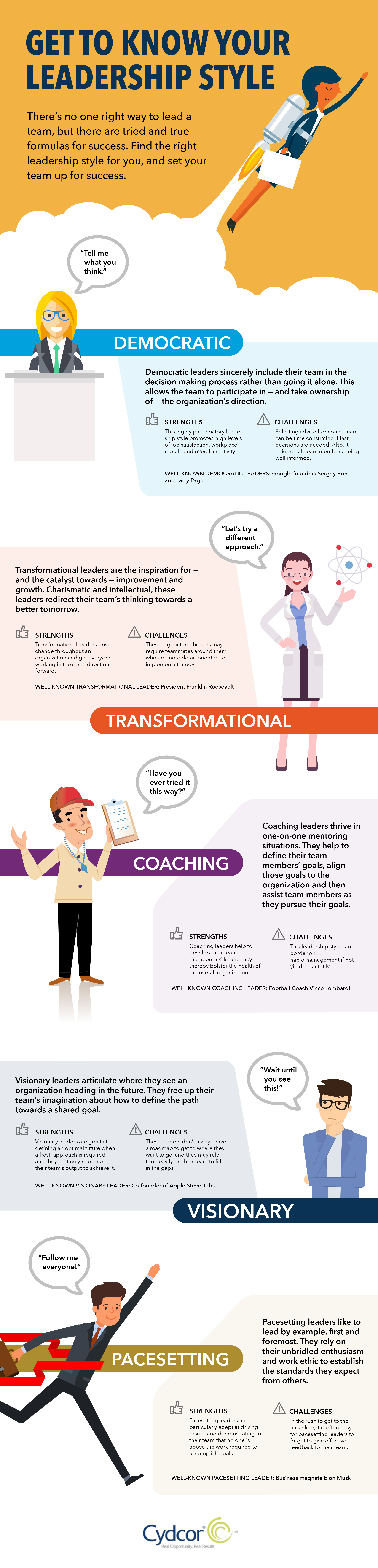
There’s no one right way to lead a team, but there are tried and true formulas for success. As you grow in your career, you’ll get more and more experience leading people. An understanding of different well-known and proven types of leadership can help you find the right path that resonates for you. Find the right leadership style for you, and set your team up for success.
Democratic Leadership Style
Democratic leaders strive to sincerely include their team in the decision making process rather than going it alone. This type of leadership allows the whole team to participate in―and take ownership of―the organization’s direction. This highly participatory style promotes high levels of job satisfaction, workplace morale and creativity. Everyone feels connected to the overall health and well-being of the organization. However, just like any leadership style, it does have its drawbacks. Soliciting advice from one’s team can be time consuming if decisions are needed quickly. Also, it relies on all team members being well informed. Democratic leaders need to strike a balance within their team of both decisive action and rich participation.
Transformational Leadership Style
Transformational leaders work with their team to implement improvement and growth. Charismatic and intellectual, these leaders redirect their team’s thinking towards a better tomorrow. The transformational leader solicits input from her team to identify what areas of the organization require change, creates the vision to guide that change, and then works with her team to execute the redirection. These big-picture thinkers may require teammates around them who are more detail-oriented to implement processes, and they need to develop strategies for soliciting their teammates’ assistance.
Coaching Leadership Style
Coaching leaders thrive in one-on-one mentoring situations. They help to define their team members’ goals, align those goals to the organization and then assist team members as they pursue their goals. The coaching style of leadership can be thought of as a sort of win-win relationship between the leader and her teammates. Coaching leaders help their team members to develop professionally, and they also thereby bolster the health of the overall organization. However, it can be easy to go overboard with this type of leadership and engage in behaviors that border on micromanagement. Coaching leaders need to yield their influence tactfully.
Visionary Leadership Style
Visionary leaders articulate where they see an organization heading in the future. They craft compelling―and often unheard-of―visions of what an organization can become. This style of leadership acts to inspire the team towards a shared goal. The internal drive they spark in their team members frees up creativity, and that freedom allows all the team members to delve into innovative strategies on how to get from Point A to Point B. However, visionary leaders need to keep in close contact with their team and stay involved in the team’s progression. Such an approach keeps everyone grounded as they strive towards the future.
Pacesetting Leadership Style
Pacesetting leaders like to lead by example, first and foremost. They rely on their unbridled enthusiasm and work ethic to establish the standards they expect from others. They are the roll-up-the-sleeves-and-get-dirty types. Pacesetting leaders are particularly adept at driving results, because they set the bar so high. They demonstrate to their team that no one is above the work required to accomplish goals. Pacesetting leaders should be cautious, however, and strive not to become single-minded. Narrowing one’s vision down to a single goal―or several―can mean that effective feedback and mentoring get neglected. Pacesetting leaders need to check in with their team members or a regular basis.
It is likely that you recognize one or more of these types of leadership in your own style. It’s rare that any one individual engenders just one leadership style. Explore which styles resonate with you. By cultivating a dynamic leadership style that encompasses a number of different approaches, you can find the right tools within yourself to tackle even the largest challenges.


No one likes conflict, but the good news is that the toughest conversations can also be the most fruitful. If you’re struggling to deliver negative feedback, there are lots of things you can do to minimize tension and achieve a positive result. Check out Cydcor’s tips for making your next difficult conversation go more smoothly.
Listen and Acknowledge
When emotions are running high, it helps to remind yourself to take a step back and just listen. Make an effort to hear the other person out. Resist the urge to interject. Show that you’re listening by maintaining eye contact, nodding and reflecting back what was said. You don’t have to be in agreement in order to make the other person feel like he or she has been heard.
Stay Focused on the Issue at Hand
Don’t make a difficult conversation even harder to navigate by bringing up unrelated grievances. Keep the focus of your discussion as narrow as possible, and avoid airing out other frustrations that come into your mind while you’re talking.
Make Sure Your Words Match your Intentions
Never go into a tough conversation without putting some serious thought into how you want the other person to feel -- and ultimately, what you’d like them to do. Assuming your intention is to influence new positive behavior rather than to cut ties, you’ll want to steer clear of any language that is discouraging, accusatory or hurtful. Be careful not to sabotage what you really want to accomplish by saying what feels good in the moment.
Watch Your Tone of Voice and Body Language
Remember, it’s not just what you say, it’s how you say it. Set the stage for a constructive conversation by keeping your tone of voice positive and your body language neutral. Avoid speaking too loudly, sounding irritated, sighing out loud, rolling your eyes or crossing your arms.
Don’t Exaggerate
This is where it helps to be prepared! Make your next difficult conversation go more smoothly by citing specific facts and instances, rather than making generalizations or referring to vague circumstances in the past. Avoid embellishing or using words like “always” or “never,” which are bound to trigger a defensive response.
Keep an Open Mind
This one’s tough. As human beings, we’re not generally good at realizing we’re wrong. But do the best you can to consider the merits of the other person’s point of view. Perhaps there are circumstances you didn’t know about or facts that weren’t clear before. You never know, maybe you’ll see things differently by the end of the conversation.
Focus on What’s Next
Once you’ve addressed where you’d like to see change, shift the focus of the conversation to the future. Put on your problem-solving hat and delve into a constructive conversation about how both parties will behave moving forward, and ideally, how you can work together to achieve a positive outcome.
Do you have your own tips for tackling tough conversations? We’d love to hear! Share them with Cydcor on social media.

Just getting started in your career? Chances are, your brother’s new girlfriend, last night’s Uber driver, and your second cousin once-removed have all offered their wisdom. While, certainly, you’re lucky to be surrounded by a well-meaning community, deciphering good career advice from bad career advice is no easy task.
When it comes to making smart career moves, the stakes couldn’t be higher. So, before you follow one of these four pieces of bad advice, be sure to think twice.
“You need work-life balance”
Building a successful career requires long hours; don’t let the popularized “work-life balance” lingo trick you. It doesn’t matter if you’re an athlete, a sales representative, or a scientist: the top achievers in any industry are those who’ve lived unbalanced lives in order to get to where they are today.
This isn’t to say that spending time with loved ones and taking time to recharge aren’t important ― of course they are. That said, if you’re just launching your career, now is the time to grind. Delay gratification. Invest your time and energy into building. Balance will come later.
“Give it a try”
This is another piece of bad career advice often imparted to young people. On one hand, it’s great to keep an open mind to new opportunities. But on the other, “trying something out” is often the same as making the premature decision to quit when challenges arise.
Anything worth doing is going to require an unwavering commitment. This means not giving up at the first sign of discomfort; or in other words, closing your back doors. No matter the career path you choose, if you want to reap the benefits, you have to stay the course.
“Choose a job that doesn’t feel like work”
It probably hasn't been long since you've seen this popular Confucius quote appear on one of your social media feeds: “Choose a job you love and you’ll never work a day in your life.”
While it's certainly great advice to select a career that you’ll find gratifying, don’t be fooled by this oversimplification. As the happiest of employees and entrepreneurs will tell you, even when you love what you do, not every task is intrinsically enjoyable. Even the most rewarding careers require tasks that are unglamorous, monotonous, or simply unpleasant. Sometimes, work just feels like work ― and that’s okay.
There is real danger in continuously looking for the “perfect job.” Be careful not to pass up a great opportunity just because you don’t love every inch of it.
“Follow your passion”
This is often synonymous with “do what you’re good at.” Unfortunately, as you may have noticed, talents don’t necessarily translate into lucrative careers.
But that’s not even the biggest fault in this piece of bad career advice. The problem with telling young people to follow their passions is that in many cases, they’ve yet to develop them. Passion is achieved through mastery of a subject ― which takes years!
Don’t expect that the best career for you is the thing that you are currently the best at doing. Figure out what your goals are, and then do what it takes to achieve them ― even if it doesn’t come naturally to you at first.
What’s some of the worst career advice that you’ve received? Did you know it was bad advice at the time? Tell us in the comments below!
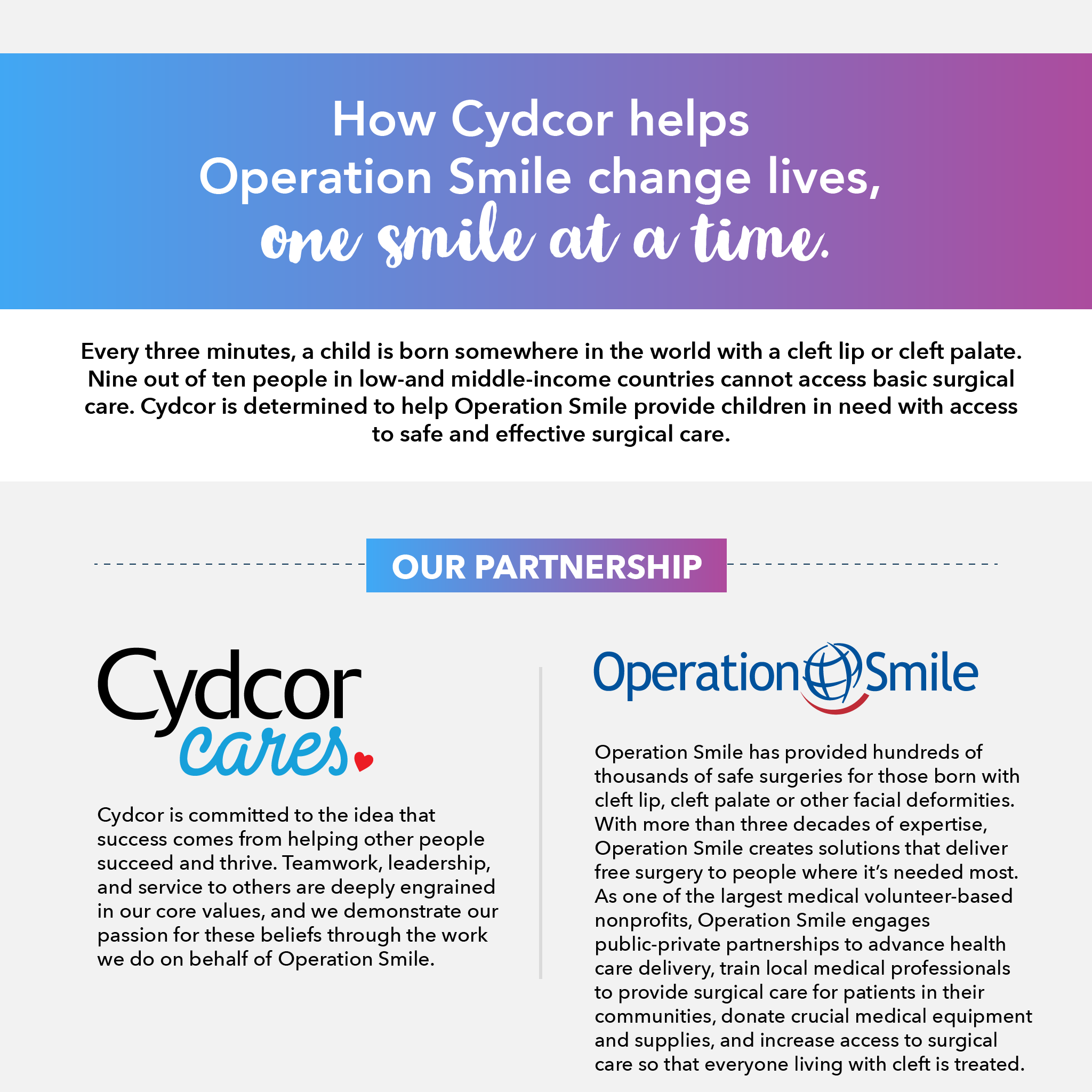
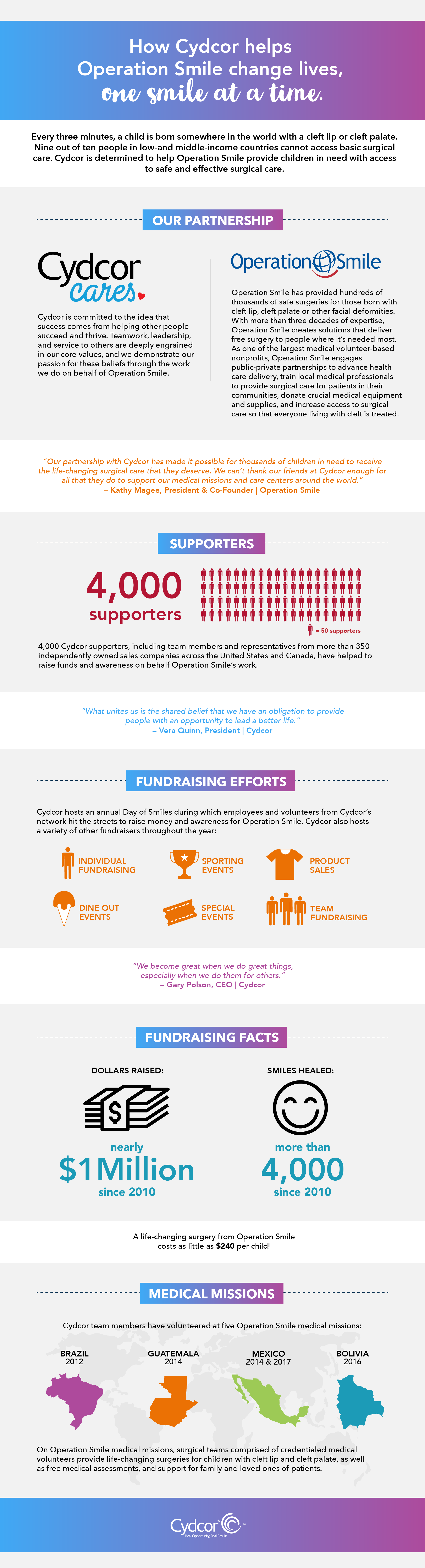
Cydcor is thrilled to announce that our 2018, annual Day of Smiles fundraising event is underway! This week, Cydcor team members, along with volunteers from Cydcor's network of independent sales companies will stage a variety of fundraisers around the country. Teams will put their sales talents to work, building awareness and raising funds on behalf of Operation Smile. One of the oldest and largest volunteer-based organizations dedicated to improving the health and lives of children worldwide, through access to surgical care, Operation Smile provides life-changing cleft lip and palate corrective surgeries at no cost, to children in need.
Teams participating in the event will get creative, planning fundraisers that vary from car washes and apparel sales, to bake sales and sporting events. Each year, Cydcor's Day of Smiles event brings in thousands of dollars to support Operation Smile's mission to ensure every child has access to safe surgical care. In addition, Cydcor team members and participants from the network of independent sales companies have had the opportunity to attend five Operation Smile medical missions around the globe that they themselves have helped fund through their outreach efforts. On Operation Smile medical missions, surgical teams comprised of credentialed medical volunteers provide life-changing surgeries for children with cleft lip and cleft palate, as well as free medical assessments, and support for family and loved ones of patients. Recently, Operation Smile’s founder, Dr. Magee personally thanked Cydcor for its ongoing contribution.
Cydcor has been partnering with Operation Smile since 2010, collaborating with the sales company owners in Cydcor’s network in a variety of fundraising projects. To date, Cydcor has raised nearly $1,000,000, to help Operation Smile ensure no child goes without surgical care. That’s enough to heal more than 4,000 smiles. This is an important year for Cydcor’s Day of Smiles, as we have that $1,000,000 mark in our sights and we plan to hit our goal!

By: Gary Polson, CEO
I was so inspired by Senator John McCain’s life and death. His life is a reminder of America’s greatest values: service, devotion, sacrifice and honor. He is a real American hero.
Actually, he was more than a hero. He was a loving father. In her eulogy, Meghan McCain shared how she loved her father and felt his love. John McCain committed to Washington, DC and traveled the world in his role as a Senator. Yet, he found a way to be a wonderful father. He is a role model of how you can make a big contribution in your career AND have a meaningful family life. Rest in peace.
Gary Polson is Chief Executive Officer and Chairman at Cydcor, the market leader in outsourced sales. With more than 25 years of business operations experience in accounting, legal and senior management, Gary has propelled Cydcor to unprecedented achievement with clients, culture and philanthropy since 2001. Under his leadership, Cydcor has increased its revenue more than six-fold since 2001 and has been recognized as “…the most respected sales outsourcing company in the world” by Datamonitor and The Black Book of Outsourcing, and one of the “Best Places to Work” by the Los Angeles Business Journal for eight consecutive years. Gary’s passion for excellence and never-satisfied approach has led Cydcor to earn both industry and employer recognition. With Gary at its helm, Cydcor has built its reputation on maintaining long term relationships with clients by consistently delivering results and by going above and beyond to help Cydcor’s clients gain market share and grow.

Rejection is a natural part of the sales process. It’s hard to avoid, and even harder to face. However, have you ever considered the silver lining of rejection? Maybe all of those “nos” have made you who you are today. Hearing “no” forces salespeople to climb out of their shell, think outside of the box, and reach for new horizons. Working in sales and facing “no” on a daily basis can help you build critical skills that can prepare you to withstand and excel against the rigors and challenges of the business world. Enduring a little rejection now can train you to be resilient, flexible, and mentally strong – all skills that can benefit you greatly as you grow your career.
You Learn
In order for someone to grow as a sales professional, he or she has to understand what works and what doesn’t work. When you recognize that some part your pitch, approach, or presentation isn’t working, you learn how to make critical decisions to correct the problem and get back on track. You discover how to do better, so that it does work the next time around. Salespeople are constantly learning, trying to improve the process. Only with a “no” can you get that much closer to a “yes.” Since business is an ever-changing landscape, as you progress through your career, having the ability to learn will make you a more desirable hire. It’s what fuels your personal growth.
You Develop Patience
We all know the saying: patience is a virtue. Boy, is that true, especially in the world of sales. The sales business is a numbers game that teaches you to accept that if the first customer says “no,” you just have move to the next one and keep going. There is no room or time to throw up your hands in exasperation. The best salespeople understand that a successful sales day is a marathon, not a sprint. Over time, sales professionals learn how to maintain a patient, positive mindset no matter what. Developing this kind of unwavering resilience will also prepare you for managerial positions, even owning a company. Things will go wrong, people will quit, rejection will befall you, and unfair things will happen. Maintaining your patient disposition through it all is what will set you apart from the competition.
You Learn How to Be Flexible
Salespeople can’t afford to be stuck in their ways. Sales is a process of experimentation and refinement. When good salespeople face rejection, they learn how to rethink their approach to avoid a sales blunder in the future. Overtime, sales teaches you how to apply self-discipline to correct course, test new approaches, and perfect your pitch until you can consistently deliver results.
You Communicate Better
Sometimes, you face rejection because your communication skills weren’t up to par. Perhaps you misspoke, failed to listen, or just delivered a message without any energy. Communication is the cornerstone of every business interaction. Hearing “no” can inspire you to do what it takes to hear that “yes” next time. You’ll refine your messaging and communication approach. Within business, communication is how critical information about sales, services, and products is relayed to key stakeholders. You need to know how to communicate quickly, effectively, and with authority. It’s time to get started.
You Toughen Up
Finally, it’s inevitable that rejection is going to force you to develop thicker skin. However, that’s not a bad thing. In the world of professional sales, it’s an incredibly important attribute. You’ll learn to listen to your gut and intuition, rising above rejection to focus on what you need to do to get the job done. You’ll develop your own personal shield that keeps you protected. As you climb towards the top, this internal toughness will better prepare you for the obstacles and stakes ahead, like hiring/firing decisions, expansions, acquisitions, and the list goes on.
We all know the time-old adage, “what doesn’t kill you makes you stronger.” In sales, this saying proves true. A healthy amount of rejection is necessary for personal growth and advancement. The next time you’re faced with a “no,” smile, for it is another opportunity to grow and flourish as an individual and a professional; it’s another opportunity to see things in a new light and appreciate a new way of doing things; and it’s another opportunity to become wiser, stronger, and better.
What have you learned from rejection in the past, and how has that helped to accelerate your personal growth? Share them with Cydcor in the comments below.