
Discover practical advice, inspiration, and insights to help you succeed in business and grow both personally and professionally.

Found 0 posts


When it comes to handling stress on the job, studies have found that 90% of top performers in the workplace are able to overcome negative reactions by managing their emotions in times of stress. The odd thing about stress is that it is an imperative feeling to have in order to make decisions, as our brains are wired in the way where it may be difficult for one to take action if not under at least some level of this emotional state.
It’s easy to let stress overwhelm you, and as the research suggests, it’s how one manages such stress that can be the key toward success.
The University of California in San Francisco has conducted multiple studies into how people handle stress. Their research shows that one quality many who handle stress well have in common is their ability to say “no.” Always saying “yes” can place heaps of seemingly unending responsibilities onto a person and can add unnecessary strain on both workload and emotions. Know and understand when you cap out on the job as far as your tasks, and be sure to communicate to your team or managers when you feel you are at the peak of your capacity. Don’t be afraid to speak up!
Exercise is an important factor in keeping stress under control, as when stress comes up at work, it’s usually the first thing that goes in one’s routine. Get your body moving at some point during the day--even ten minutes can greatly help release tension and get you motivated to conquer.
Another huge step in managing stress involves managing the negative self-talk one might engage in. Ruminating on negative thoughts, even ‘what ifs’ that might have occurred can compound stress unnecessarily.
Check Cydcor out on Bloomberg Businessweek for more information.


Musical leaders are responsive and energetic, always aware of changes in their own industry, adapting accordingly, and knowing what their audience understands and expects from them. There are a great many things one can take away from the stage into an office workplace.
Adapt
An old adage reads, “a smooth sea never made a skilled sailor.” Musicians often have to respond to surprises and adversity, since music like freestyle and jazz is all about how you react and adapt. Making a business run smoothly is always the goal; however, hurdles often can come and disrupt your plans; learning how to acclimate and react swiftly can often save a company.
Support
The best musical artists in the world know how to bring out the very best in their bands and support teams involved in setup and stage presentation. While there are times to rock out as a soloist, always remember to take a step back and let others on your team shine. As a leader, it’s important to understand that if your team did a fantastic presentation or project, see that they rocked out together, and let them know you appreciate their collaboration. Work with your team to encourage creativity in the workplace and showcase examples of solo excellence as well as teamwork.
Check out these 8 Great Work Habits on Cydcor's SlideShare today!
Audience
Musicians often create music first and foremost for themselves, but the ultimate goal is to let it be heard to a larger audience. Knowing the audience is key, especially once musicians become known for a particular musical genre. If they are known for rock ‘n roll, but play a new slower jazz piece in the middle of a concert, their audience might be less than thrilled. Your clients are the same. Know your own audience and the expectations they have for the service you are providing. Always work to provide them with something they want to keep coming back for, whether it be a fantastic product or simply great service.


Learn more about Cydcor at our website: https://www.cydcor.com/.
To run successful business, it’s essential to reach out to prospective partners and clients on a regular basis. However, many of us dread the idea of walking into a room and introducing ourselves to strangers—so making those initial connections can be tough.
Networking is a great opportunity to make business contacts and recruit new prospects. While it might seem like a difficult task, in reality it doesn’t have to be an uncomfortable experience.
To ease yourself into a “networking mind-set,” speak to people everywhere you go. This is a great way to practice conversation, as well as your active listening skills. Get into the habit of chatting with folks without the stressor of needing to do a sales-pitch or the pressure of fellow colleagues around you. This will help you get comfortable with more casual conversation and will make it much easier when the time comes to go to a convention or event.
Make a positive impression by having an upbeat attitude, as people wish to work and connect with those who are confident as well as optimistic. This assertiveness will increase your chances of a lasting impression; however, always remember to remain genuine. Being overly gung-ho or coming across fake can turn off those around you.
Cydcor is on Twitter! Follow us for company news and sales advice at @Cydcor.
Follow up with those you connect with. At many events and opportunities, business cards can be rapidly exchanged. Keep track of those cards and when you have a new contact, be sure to contact with them via email or connect with them on a social site such as LinkedIn within twenty-four hours. A simple, “It was fantastic to chat with you yesterday!” can go a long, long way.
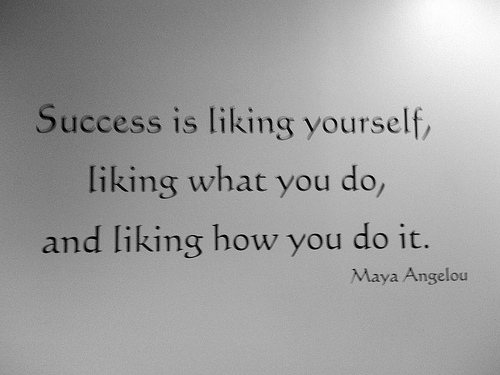
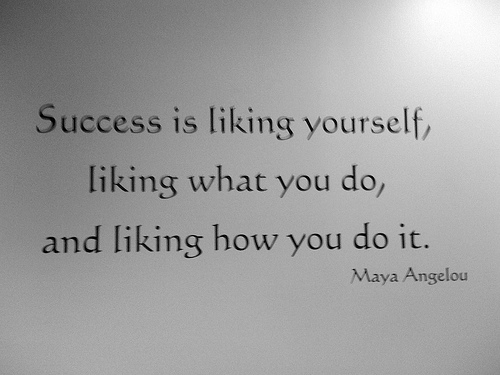
In a business environment, we all try to put our best foot forward when interacting with our co-workers, managers and clients. However, not everyone is immune from traits that might be off-putting, either consciously or subconsciously. In order to achieve long-term happiness and achievement, it is critical to be self-aware of not only your best traits, but also of ones that need improvement.
Negative Thinking
A lot of pessimists in the world consider themselves realists rather than “negative minded thinkers.” However, for others it can be difficult to be around those who speak incessantly of problems and issues, and who are stubborn to see the positive side of situations.
Being pessimistic is one thing—but remaining in a perpetually negative mind-set can frustrate those around you. Think carefully about how what you say might be phrased in a less negative light and try to see a problem as a new challenge to take the lead on.
Validation
Everyone loves to be appreciated and acknowledged for his or her efforts and accomplishments at work. However, those who constantly strive for validation are exhausting to be around. Those individuals get caught up in the need to prove their worth and to win those around them—to the point that they can over-attach to projects and be unintentionally draining.
It isn’t about what you achieve in the eyes of the group. It is about the journey, what you’re learning, and how you help those around you. Support comes from your team, and with a great assembly behind you, they will all learn and grow in the process.
Perfectionism
Author Michael Law once said, “At its root, perfectionism isn’t really about a deep love of being meticulous. It’s about fear. Fear of making a mistake. Fear of disappointing others. Fear of failure. Fear of success.” There is a lot of truth to those statements, and as a culture we tend to reward perfectionists for setting high standards. And perfectionists frequently are high achievers; however the price they pay for that success can be a source of great dissatisfaction.
Underneath it all, perfectionists have a high drive to succeed, however they need to realize the at times that “perfect” is an unrealistic goal. Such an effort towards perfectionism can often get in the way of the bigger picture, so figure out what “good enough” is, and be happy by letting go of unnecessary and unproductive pressures.
For more information about Cydcor, connect with us on LinkedIn.


Great businessmen and women know how to lead, inspire, and motivate their team—and more importantly, they know when to seek advice. No one has all the answers, and the best leadership experts agree that they’ve honed their skills through experience, advice and mentorships with others in the biz. So what do top experts say about leadership?
Michael Talve, the Founder and Managing Director of The Expert Institute:
"My best leadership tip is to think of leadership as a responsibility as much as an opportunity. Effective leaders understand that they are responsible for everyone that they are leading, and consider that responsibility as the main concern of their position. If you ever lose empathy for, and dedication to, the people you are leading, you are not being a leader."
Cydcor is on Twitter! Follow us today @Cydcor for additional business advice.
Frank Sonnenberg, author of Follow Your Conscience
"Leaders with character are highly effective. They have no need to pull rank or resort to command and control to get results. Instead, they're effective because they're knowledgeable, admired, trusted, and respected. This helps them secure buy-in automatically, without requiring egregious rules or strong oversight designed to force compliance."
Jeff Harmon, author of The Anatomy of the Principled Leader and founder of Brilliance Within Coaching and Consulting
"Repeat the words, 'It's not about me!' every day, multiple times a day. Don't make your leadership about being in charge, being right, getting promoted, or looking the best. Make leadership about the cause of the organization, serving the legitimate needs of those you're leading, and not taking yourself so darn seriously. You'll have people lining up to work for and with you and the results will follow."
Check out the latest video on Cydcor's YouTube about our headquarters move to Agoura Hills, CA: Cydcor Offices - Built for Results.
Peter Barron Stark, a consultant, speaker, and author
“When you're leading a new team or joining a new organization, honor the new team/organization's past, and then build them a bridge to the future. Too many leaders inherit a new team and want to tell everyone how much success they had in the past, and how good their old organization/team was. When leaders disrespect their new team, team members start asking each other the following questions: If your old organization or team was so good, why did you leave? If your old organization is so good, why don't you go back?"
Do you have any favorite leaders or leadership quotes? Share your thoughts with us in the comments below!

In a corporate environment, you might feel your creativity for motivating your team members is limited to kind words and small incentives. Traditional motivators include such things as gift cards and corporate swag like coffee cups and pencil holders. Larger incentives on the other hand, such as promotions and bonuses, tend to be in short supply. Here are some out-of-the-box incentives to offer your team members.
Parking
In the corporate world, especially in a heavily populated city, parking is a coveted perk in an office building. Whether you offer free parking, paid parking options, or assigned parking, there are several options you can offer to your workers as an incentive for top performances. A month of free parking? An assigned spot nearest the door? Covered parking options? These offer great appeal to many employees and can definitely be a motivator.
Split Schedule
Allowing a person to leave mid-afternoon to work from home for the rest of the day can be a tremendous reward. Often times a break from the monotony of the same schedule day in and day out is a bonus in and of itself. Allowing an employee to leave early so they can greet the kids as they get home from school, run errands, or even beat the traffic on a Friday can be especially appealing.
Personalized Gifts
A lot of employees appreciate a kind word from their boss, along with a small token such as a gift card, but you can always be a bit more creative. Instead of giving a generic gift card for something such as coffee, personalize it for that individual employee. Do they enjoy sports? Video games? A great non-fiction book? When you tailor a gift for an employee they will likely appreciate it more; even more importantly, they will take into account that you took an extra step for them, that you care and pay attention to their interests.