Found 0 posts

Cydcor is dedicated to helping business professionals take the next step in their careers. For additional blogs regarding business, leadership, and sales advice, head over to https://www.cydcor.com/media.
Sales professionals have a natural impulse to focus attention on developing new customer relationships in order to land new accounts. It’s a good impulse, but it’s one that you need to manage in order to maintain existing customer relationships.
At Cydcor, we’re interested in pursuing new opportunities, but we also understand that you can’t forget current customers in the pursuit of new possibilities. Customer relationships aren’t over once you close the sale. It’s the start of a long-term partnership that will benefit your company and your customer.
Here are some strategies for building—and maintaining—great customer relationships.
Remember Their Names
Whether you’re working with a small company or a large corporation you’ll be working with an individual—a person. He or she has a family, a birthday, a new child, or a feisty puppy. Get to know your customer. Include a few notes in your contact management system to help you remember personal details that distinguish them. Personal knowledge provides a way to start a sales conversation. Reach out on your customers’ special days and they’ll remember that you made an extra effort when they have to make purchasing decision.
Become a Solution Center
Offer your customers the resources they need to stay informed about changes, improvements, and up-dates in the service you provide. If your company offers a newsletter make sure that your customer knows about it. When you find articles, books, or webinars that might be useful to your customer remember to share them. Call out the information that will be valuable to them and their particular problems. They’ll appreciate that you personalized the information for them.
Monitor Customer Relationships with Social Media
Research by Zendesk says that 45% of customers shared bad customer experiences and only 30% shared good customer experiences on social media. This information is an important tool for building customer relationships. Follow your customers’ social media accounts on Facebook, LinkedIn, and Twitter. Listen to what they’re saying and you’ll be able to fix any issues if they happen.
Customers Are Team Members
Include your customers in events that matter to them, to your company, and his or her company. If your department is hosting a networking event or is launching a new service make certain that your customer hears about it. When you’re working on improving your team’s internal processes get your customers’ feedback. Show them that you value their business and their professional expertise.
Keep up with the latest updates from Cydcor by following us on LinkedIn: https://www.linkedin.com/company/cydcor

A mentor is a guide and counselor who provides career advice and support. This relationship—also a process—often involves a younger person seeking out the guidance of a more experienced employee or supervisor.
In some cases, a mentor provides this service as way to do good or “pay it forward.” Perhaps someone in their past took the time to help them out in their career development, and to honor the kindness and help they received, they seek to share their abilities with someone new.
Some schools, companies, and social organizations may have formal mentorship programs that match a more experienced person with a less experienced person.
One of the keys to a successful mentor and mentee relationship is enthusiasm. You should only pursue start the process if you’re honestly interested in developing your professional skills and committed to paying attention to the lessons a mentor has to offer. Before you seek out a mentor, review your goals and expectations.
A Mentorship Self Review
What do you want to learn from a mentor?
A mentor could teach you about the qualities required to be a good leader. A mentor might also teach you a technical skill—how to master a piece of sophisticated software—that will also take time to learn. A mentor could coach you on professional skills related to sales and business. Before you approach a potential mentor you need to know what you expect to learn and communicate those expectations to your mentor.
Are you ready to go back to “school”?
Finding a mentor and improving your professional skills is a great idea. You need to listen to what your mentor says and do what they tell you to do. It’s a bit like being back in school because you must be willing to follow their orders. You have to do your “homework” or you’re wasting your time and—even worse—your mentor’s time.
Do you have the time to commit to learning something new right now? Calculate the amount of time you’ll work with your mentor weekly. Figure out how much time you’ll need to study and practice your new skills. You’re going to need to schedule time for reading and studying. To sum it all up—do you have time to work with a mentor and commit to learning a new skill?
Important Qualities to Look for in a Mentor
Wisdom This quality covers a lot of ground. You want to find someone with experience that relates to your career path. But, more than that, you want someone who has the ability to review their own experience and pick out lessons that are important to share. The mentor needs to be able to identify key lessons insights that you will be able to learn from.
Authentic Working with a mentor involves an honest exchange of information, questions and answers, and sharing experiences. You’ll learn about your mentor. Your mentor will learn about you. He or she should be interested in hearing about your experiences, interests, and questions. If your potential mentor is only interested in telling stories about their success, you won’t have an authentic experience. It’s a waste of your time.
Trustworthy Asking someone to become your mentor can be risky. You might approach someone who you’ve worked with closely in the past and whose character you understand. You may also recognize that there is a colleague from another department or someone you know from your professional community. Working with them in an honest way may require that you confide in them and share some of your professional ideas and work experiences. Is the mentor you have in mind worthy of your trust?
Engaged You’re selecting a mentor based on their knowledge and experience. You’ll benefit most from a mentor whose experience is informed by a complete understanding of past and current practices in your industry. You want to improve your skills and build your mastery of a skill or process. This isn’t a history lesson. Your mentor must be engaged, open-minded, and love learning just as much as you do.
Learn more about Cydcor and what we do by checking out our latest videos on YouTube: https://www.youtube.com/user/Cydcor

Recent research has revealed that people perform better at work and in life if we practice strategic renewal. If you’re rundown you’re more susceptible to getting sick and miss days from work.
You need to get more sleep during the week, scheduling daytime workouts, eat healthy foods, and enjoy rest and relaxation away from the office with your team members whenever possible.
These simple changes in behavior are guaranteed to improve your attitude about work your performance at work—and maybe even your beach volleyball skills.
Humans aren’t designed to run on high level without having a period of rest and relaxation. You need a time for renewal. It allows you to relax and rejuvenate your mind and body.
That’s why Cydcor’s R&R Cancun 2015 is such an important event. It celebrates your accomplishments and reminds us all that we need to take a moment to stop and smell the frangipani.
Here are some of the specific benefits of rest and relaxation whether you’re on the beach or in your own backyard:
Restores your energy: You need to recharge you batteries in order perform at peak effectiveness throughout the day. Rest and relaxation is part of your work cycle and taking advantage of it whenever possible will improve your productivity.
Repairs your body: Our bodies repair themselves from daily wear and tear when we rest. Rest and relaxation reduces stress and improves overall health. You’ll be able to easily work a full day.
Improves your focus: An active mind gets tired just like an active body. Including time to quiet your thoughts and letting your mind rest is part of the healing process. You’ll improve your ability to concentrate and problem solve at work.
Improves your mood: Relaxation makes you feel happier. When you choose to think about things that make you feel good, you’ll discover that you actually feel more positive about the challenges you face at work. You’ll begin to see obstacles as opportunities.
Increases your creativity: Too much stress and activity often disconnect you from your creative potential. Rest and relaxation will allow you to regenerate as an individual and as a team. Your ability to create and innovate as a team member and as a cohesive group will be improved when you return to work.
Keep up with the latest posts from R&R 2015 by following Cydcor on Instagram! https://instagram.com/cydcor/

Is your glass half full, or is it half empty?
Before you answer this question, take a moment to think about what you’re being asked. The standard response from a traditional optimist is that the glass is half full.
Pessimists also provide an expected answer and observe that the glass is half empty. But an authentic optimist, one who’s been improving his or her performance at work and in life, will simply say, “I’m thankful that I have a glass.”
You see, the authentic optimist has developed the ability to see the details in the situations and challenges the encounter every day. They have learned to recognize opportunity and respond with originality tempered with a bit of audacity. Optimism has a lot of benefits—one of them is original thinking.
Optimism isn’t a trick. It’s not a gift, either. It’s something you can learn. It’s a skill you must learn if you want to develop your career and build success. At its best, optimism is a way of life. Are you ready to embrace it fully?
You may have been taught that to be an optimistic person you must “hope for the best.” Actually, those are two different things. Hoping for the best leads to passive decision making - you will sit where you are until something good happens. But you may be sitting in the wrong place. When something good happens on the next street over, you’ll miss it entirely because you misunderstood optimism.
Optimism is a state of mind, a decision, and a daily practice. As you begin to cultivate your own personal optimism you’ll begin to see that it’s not a magic bean or a book of spells. Optimism is a point of view. It’s learning how to see that each challenge you face at work, on the road, on the phone, and at home, presents you with an invitation and an opportunity to achieve your goals.
Now, it’s easy to see bad news and difficulty. Even some optimistic people may see that the glass is half empty. But authentic optimistic people have developed their skills to achieve and expect success. They never stop looking once they notice that the glass is half empty. An optimist sees that there are choices to be made and opportunities to be considered.

Even if you’ve been born with a friendly personality, you may find yourself stuck when you’re in a situation that requires you to start a casual conversation. If you’re a naturally quiet person, these social situations might be uncomfortable experiences. When you’re nervous you lose your confidence and find it difficult to focus. Follow these suggestions and learn how to turn small talk into a new skill!
Don’t Just Say Hello!
Saying hello is a standard introduction during a social encounter. It works, but it leaves the conversation with no place to go. Instead, get the conversation rolling with adding open-ended questions.
Small Talks Needs a Big Brain and a Big Attentions Span
Once you’ve asked an open-ended question, pay attention to what the person is saying. At the same time, think of one or two follow up questions based on what the speaker says. Pay attention to their eyes and facial expressions. You can nod your head to show that you’re listening. It’s okay to smile, laugh, or become serious depending on the conversation. When there’s a natural pause in the conversation, make a comment and ask another leading question. If you get nervous, just take deep breaths and try again.
Common Interests Build Common Ground
As you continue your conversation, you’ll discover shared professional interests and concerns, which will help you build a conversational connection. If you’re attending a business conference, you have the topics related to your business in common. This can be a great confidence builder when it comes to improving your casual conversation skills.
Know When It’s Time to Go
After a certain amount of time, you will know that you’ve reached the end of your conversation. At that time, let your contact know that you have other people to speak to. Simply say, “I’ve really enjoyed speaking to you, and I appreciate all the information you shared and getting to know more about your business. Here’s my card. Can I have your business card too?”
If you say that you’re going to follow up or provide some kind of information—do it. That’s how you turn small talk into big success—one conversation at a time.


Keep up with more the latest updates from Cydcor by following us on Instagram!
The day you return to the office from a business trip will be focused on getting caught up on work that you missed. If possible, don’t schedule any meetings during your re-entry. Here are some other great tips for how to get back into the groove of the workplace.
Stay In Touch While You’re Away
Use social media to stay in touch with your team at work, as well as your family and friends. Check your email and voicemail so messages don’t pile up. Even though you have set up a system to control your workflow while you’re out of the office, things sometimes slip through the net. Let your team members know that you’re working on various problems. Ask them for help with items you can’t complete while you’re away.
Share What You Learned
Take notes, save hard copies of presentations, get links to PDFs, and document events with photos, if possible. Once you’re back at the office, build your notes into a PowerPoint presentation to share with your team members and on social media. Cover these topics:
Sharing what you learned at the conference improves your skills as a mentor and lets your supervisor see your leadership abilities.
LinkedIn and Facebook are powerful business tools that give you an opportunity to share new business insights. They’re powerful publishing platforms that can amplify your industry’s voice.
Building Your Network
Assemble all of the business cards you collected during the conference and get them into your contact database on your first day back in the office. Your records should include where you met this contact and how you connected during the event. Take note of what you discussed or an event you both attended. Paying attention to these details will make contacting him or her easier because you shared a personal experience.
Reach out to conference contacts on social media and ask them to connect with you. Send your contacts a short email and remind them about how you met. If you feel that you established a strong relationship with someone and they suggested that you to call, follow through on their invitation. Use this experience to build your networks and your connections.

Making a good first impression matters. It’s especially important when you’re attending a business conference. Even if you’re not on stage, you’re on display as a representative of your company. You’re also representing your professional self. “What we wear speaks volumes in just a few seconds. Dressing to impress really is worthwhile and could even be the key to success,” says Dr. Ben C. Fletcher in Psychology Today.
Schedule Your Personal Style
Dressing with confidence requires some rules. Create a personal dress code for business events. It’s easy to do! Start with a review of the conference schedule. Will there be a team building experience such as a hike? Is there a formal dinner scheduled? The more you know, the better you can prepare. Here is a description of some common dress codes:
Business Casual
Business Professional
Cocktail or Business Formal
The Foundations of a Professional Wardrobe
We’ve identified several pieces of clothing that work as the foundations of your professional wardrobe. Review your clothes before the event. Try them on so that you’re confident about the fit and know that they’re good as new.
Lookout for more business professional tips from Cydcor on Pinterest! Check us out today at https://www.pinterest.com/cydcor/

Integrity means that you have high moral principles and follow professional standards. Simply put—to practice integrity in the workplace you can’t just talk the talk—you have to walk the walk. A lack of integrity can lead to poor decision-making and have a negative influence on your work and your employer.
Integrity Begins With You
Be well groomed at all times. Keep your work area and your car neat and clean. This habit shows that you care about the impressions you make as a representative of your company. Clients and colleagues will see that you respect your employer’s values and are a responsible person. If you make a promise you must keep it. It proves that you’re a dependable person. Only agree to provide services that you can actually deliver. Don’t over promise. If you do something wrong, fix it as soon as possible.
How Do I Show Integrity at Work?
You have to be honest and ethical in all of your actions if you want to practice integrity in the workplace. Understand that you’re a role model for your colleagues, clients, and vendors. Be consistent about how you apply your ethical standards. Rely on facts at all times in your interactions at work. Never make excuses or avoid sharing bad news. Integrity requires that you speak up when you notice a practice or behavior that diverges from the company’s ethical standards.
Practice Company-wide Integrity
Practicing integrity at work provides positive outcomes for your company. However, you need to understand how your company practices integrity. Become familiar with your company’s core values and use them as a guide for developing your workplace integrity. Allow your team members to share their concerns about anything they see as going against your company’s values. Encourage an atmosphere that supports honesty and fairness.
Integrity Welcomes Risk
Every decision you make will involve some elements of risk. You must be willing to take a risk in order to achieve excellence and be competitive. If there are objections to your suggestions, remain positive. Gaining support from team members and stakeholders requires effort. Do the work. Ask for input from all participants and encourage them to share their concerns.
Practice What You Preach
Your behavior at work must offer a good example for your team members, colleagues, customers, and your community. Recognize your own skills and appreciate the contributions of others. Share your experience with your team and help them to develop their own integrity in the workplace.
Learn more about Cydcor by visiting us on Flickr! https://www.flickr.com/photos/cydcor/

The leading provider of outsourced sales teams, Cydcor is dedicated to helping business professionals worldwide reach success.
Choosing the right words is key to creating a successful resume in 2015. But even before a hiring manager sees your resume, an Applicant Tracking System (ATS) could reject it. It’s estimated that nearly 75% of applicant resumes don’t make it through this automated scanning process. At Cydcor, we value all resumes that have been written well, and showcase the experience we're looking for.
Hiring managers may not understand your “passion” or you skill as a “problem-solver” if you do not explain how you demonstrated this in a work setting. You need to make sure your resume shows how you increased company profits. Use your resume to tell how your record-breaking effort contributed to your team’s success.
Start With a Summary
Your resume needs to let the hiring manager know that you’re the right person for the job and are worth being contacted for an interview. Get the hiring manager’s attention by identifying your relevant experience in a well-crafted summary at the beginning of your resume.
Numbers Tell the Story
Use numbers to define your professional accomplishments. Numbers add focus and scope to your work history. Answer questions like these with facts and figures:
Use Keywords
Highlight keywords in the job description and compare them to related keywords in your resume. If there is a 70-80% match, then you should apply for this position. Only about 20% of applicants applying for a specific job are actually qualified for the position. Online tools like Jobscan analyze how well your resume matches the job description.
Keep It Relevant
Employers want to hire people with relevant experience. Keep your resume to 1 or 2 pages by cutting any experience that is over ten years old.
Get Creative—Within Reason
Colored fonts will make your resume stand out from others—but don’t get carried away. Consider at two-color system—black and one other color, like blue. Test these colors on various screens and printers if possible. You want to make sure it’s easy to read. But before investing too much in design, study the company’s website and get a feeling for their culture to determine if a creative resume will work in your favor.
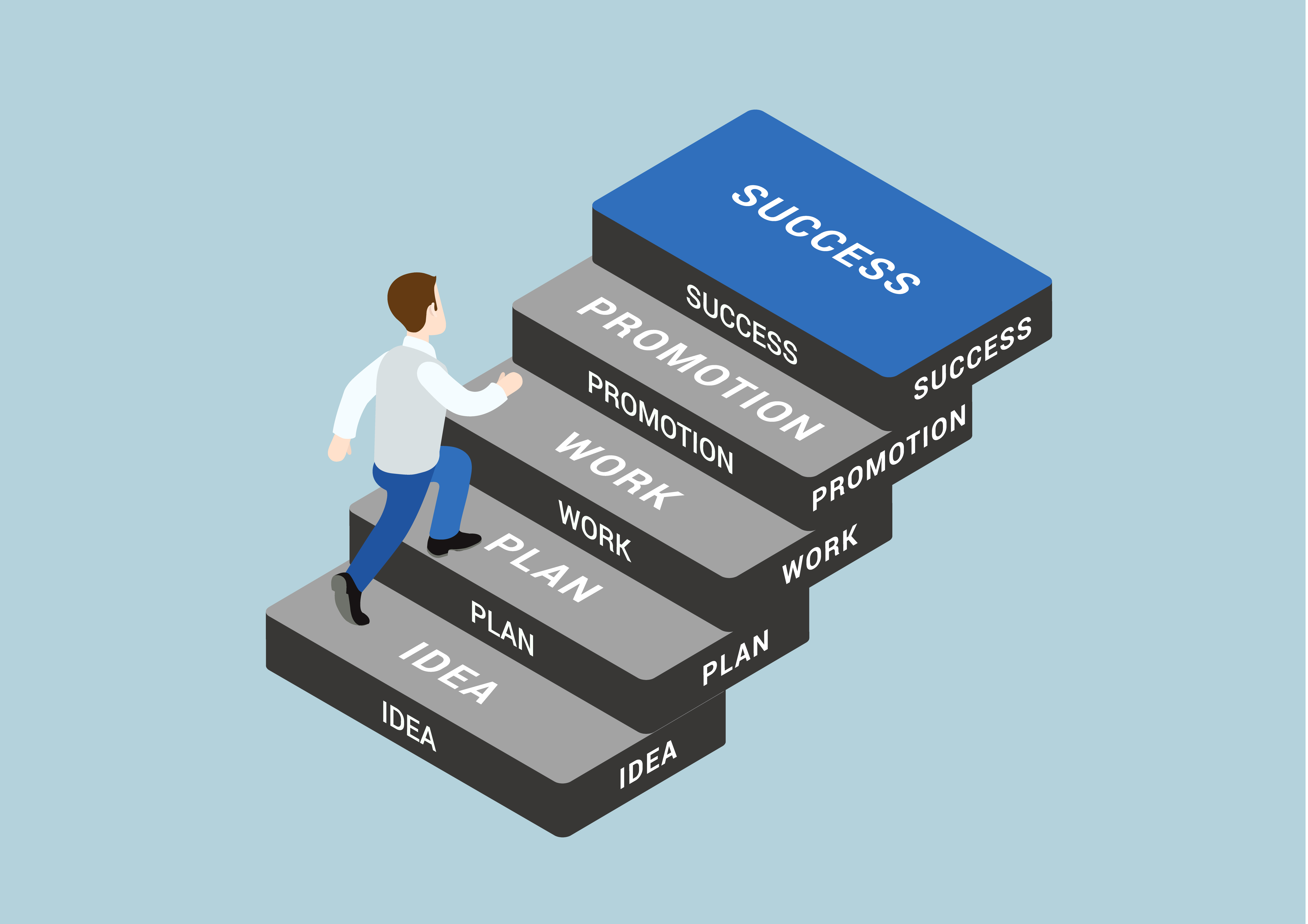
Cydcor has previously written about Toxic Employee Traits That Can Slow Progress, but it's also important to mention how to continue career progress. You will never advance simply by sitting at your desk, answering emails, and filing reports. A promotion is earned. Achieving a promotion isn’t an impossible goal. But to get there you need a good plan. The following suggestions are your starting points for success.
Evaluate Your Skills
You wouldn’t have been hired if you weren’t good at your job. But are you producing enough positive results to earn a promotion? Before you request a promotion, evaluate your job performance. Ask yourself the hard questions—face your fear.
It’s Not All About You
You will never achieve success by yourself. Your colleagues are an important part of your advancement. Study what they do. Understand their pain points. Improving their productivity is a leadership skill and contributes to your chance for promotion.
Write Your Future
Write the story of your career. Imagine where it will lead. This exercise provides a private place to draft new possibilities for your work life. It’s a safe place to practice taking risks. Don’t waste time creating a fantasy about wealth and power. Your career is serious work.
Become the Resident Optimist
Don’t get distracted by the inevitable complaints you hear during the day. Is it hard to do? Yes, sometimes it is. Everyone has bad days. But remember this: negative is easy, positive is hard. Don’t complain—explain. Don’t spread rumors—educate. Build a reputation for being constructive, informed, and open-minded.
Your Evaluation Happens Every Day
Do you ever feel invisible when your workload is building up? During these times remember that your supervisors are taking note of how you manage stress while you reach your goals. If you feel stuck in a negative take time for a mental stretch. Many corporate leaders find insight and get reenergized when they meditate.
Ask For Help
Sometimes you’ll come across a problem you can’t figure out. You need to be brave enough to ask for help. Find a mentor. Build a resource team from various departments. Share the problem. You will be remembered solving problems with creative strategy. Never ignore the wealth of institutional experience at work.
Find out more about Cydcor and our latest company updates by following us on Twitter @Cydcor.

Finding new ways to manage a business is something that’s always on the mind of a leader. There will always be new things to try, but meditation, a practice that’s been around for thousands of years, can bring a new kind of thinking to leadership. Meditation can provide a better way to manage ourselves. A few minutes in the morning or evenings is all that is necessary to help bring the right thoughts to center and to help a person focus. Apple CEO Steve Jobs was famous for it, and LinkedIn CEO Jeff Weiner does it, too. Meditation is something to be taken seriously if you are looking to improve your mind.
A bad day, or news we don’t want to hear, can put a damper on our state of mind. To prevent this from happening, leaders should take ten minutes during the day to meditate. Regardless of your approach meditation, it is just important that you make time for it. It helps get your day back on track, and is a good start to clear your mind.
As a leader, you may find times that its necessary to be brave. Whether it’s going into an important meeting or giving a motivational speech to the team, it’s important to have a confident mindset. Meditation can help get rid of negative thoughts during high intensity situations. By learning to ignore any negative thinking, worries about what could go wrong go away.
Letting go is difficult when there are so many plates spinning at once. So many times, leaders get stuck in a certain way of thinking that prevents them from seeing the whole picture. Meditation can change this way of thinking. It allows a person to attack problems with a different perspective. By getting rid of past thoughts and clearing the mind, answers to questions will appear naturally.
Like most things, it will take effort and dedication to reap the benefits of meditation, including an increase in calmness. You can also have better control over emotions. The key is to learn to focus on finding your own way instead of adopting someone else’s way of thinking.
Learn more about Cydcor by following us on LinkedIn (https://www.linkedin.com/company/cydcor).