
Found 0 posts
Distraction is the silent productivity killer of modern work. Between constant notifications, open tabs, and competing priorities, even the most disciplined professionals struggle to focus. The ability to direct your attention deliberately has become a true competitive advantage. Here are five focus hacks that can help you cut through the noise and reclaim your attention.
Tip: Begin with 90-minute sessions, followed by short breaks to reset your mental energy.
Tip: Combine it with your morning or afternoon review to keep your task list lean.
Tip: Invest in noise-canceling headphones or ambient sound apps if you work in a busy space.
Tip: Reassess your top three mid-week to stay flexible without losing direction.
Tip: If your mind wanders, gently bring it back to the task – consistency builds cognitive stamina.
Focus is not a fixed trait – it’s a skill strengthened through structure and discipline. By time-blocking your work, simplifying decisions, creating a distraction-free space, and practicing mindful attention, you can reclaim hours of productivity every week.


Partnership is everything in business. In our first thirty years, Cydcor has had the privilege of meeting people from around the world, developing relationships, and creating new opportunities for growth and success. Though we live in a digital world, so much of our networking has happened in person, one handshake at a time.
Networking in person, especially as we become more accustomed to doing business online and over social media, can be a little nerve wracking when you’re just starting out. Meeting new people can spark anxiety. Entering new social environments and professional settings can make us feel like we don’t belong. But with a few tips that can shift your mindset around in-person networking, you’ll soon be making great connections like never before.
So, whether you’re off to a job fair, looking for partners in your next entrepreneurial endeavor, or just trying to grow your rolodex, here are three key things to remember the next time you’re networking.

We’ve all been there, trapped in a conversation with a new person, and wondering what to talk about. We want to make a good first impression, while also getting the conversation rolling with a good topic.
The secret is that we all have the same favorite topic: talking about ourselves. Studies continue to show that people like those who ask them questions – and engaging the person by showing genuine interest in them is a proven way to build rapport.
For those who are nervous speaking to new people, this is a great way to take the pressure off yourself. Let the other person do the talking, they’ll like you more for it!
You don’t have to take on the role of a Pulitzer-prize-winning journalist, your questions can be as simple as asking them their opinion on the event you’re attending together. Just because you’re in a professional setting, that doesn’t mean that there isn’t room for authenticity and personality. Ask them about their work, and try to discover what makes them passionate about it.
There is no such thing as a dumb question. Many of us avoid asking the questions we wish to ask because we don’t want to appear dumb. The person won’t think less of you for not knowing, instead they’ll appreciate that someone is actually curious about their insights.
In turn, they’ll start to ask you questions. A good conversation is a balanced one – and by sharing your thoughts and insights, the two of you will be able to discover where your passions, goals, and values align.

As you let the other person speak and share, you’ll be learning more about their wants, needs, and desires. If the goal of networking is creating mutually-beneficial partnerships, then understanding what the other person’s goals are is crucial. This will help you empathize with the person.
Leading with empathy can help you get over your social anxiety. When we get anxious in social situations, it’s because our thoughts are focused on ourselves, not the other people in the room. But when we focus our attention on empathizing with others, our mind stops worrying about our own anxieties. Being socially anxious isn’t selfish, per say, but it does keep us from giving others the attention they deserve.
As we explored in our last blog, authenticity is key to trust. Our anxieties can get in the way of being authentic, as we try to be somebody who’s cooler, smarter, or more successful than we are. But when we focus on other people’s needs, we no longer have the attention to worry about how they are perceiving us.
Referencing things that they’ve mentioned in follow-up questions and offering words of encouragement are ways that you can show empathy to people. This shows to them that you’re not just listening – you’re hearing them.

At Cydcor, candor is one of the behaviors we value. That’s because we want people to feel free to share their thoughts and opinions in order to create lively, impactful, and substantive conversations. So while you’re asking people questions and empathizing with their answers, remember to not leave out your own thoughts.
Many people in networking settings try to people please, agreeing with everything the other person is saying. But we don’t want to engage with those who just tell us what we want to hear – we enter conversations to learn things that are outside of us.
There are ways to show candor in a way that’s respectful – and ways to do it that aren’t. By empathizing with the person you’re speaking with, you can use a differing opinion to further that person’s perspective, rather than just trying to prove them wrong on a topic.
Collaboration is the key goal of networking. Would you want to work with someone that parrots your ideas, or someone with a different perspective on arriving at a shared goal?
With these tips, you’ll be having meaningful conversations with new contacts in no time. As you dive into in-person networking, remember this: in order to start collaborating with all the professionals you met, you have to follow up with them!
We live busy lives – and can even forget the best conversations if they’re lost in the shuffle. So whether by email or social media DM, get the ball rolling quickly after the first contact has been made.
Now that you have the tips, time to build the skills! Maybe we’ll see you at our next networking event.
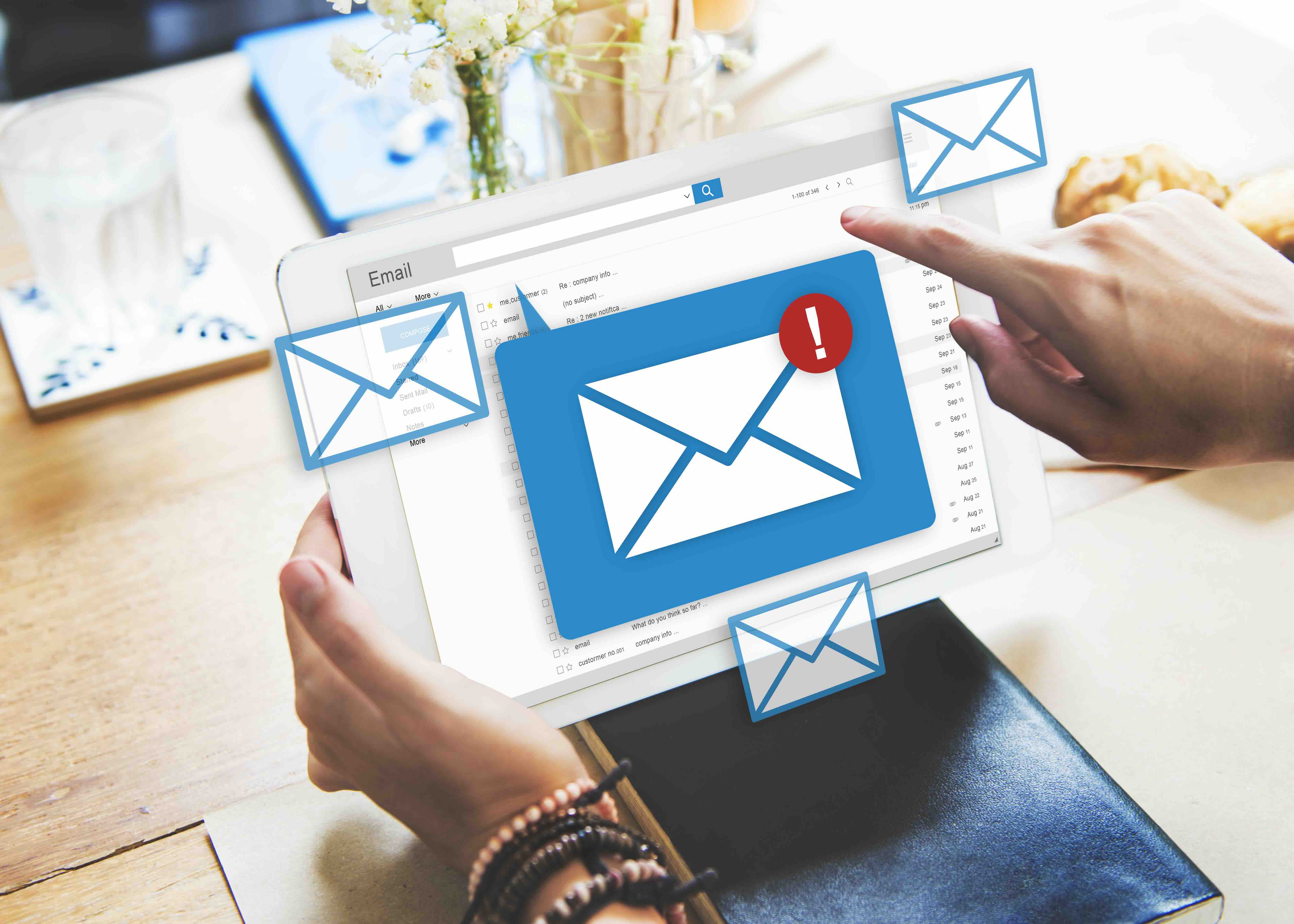
You’re not alone if you have a love/hate relationship with email. As much as we’ve come to rely on it for efficient communication, no one enjoys an overwhelming pileup of messages to read. Thankfully, learning how to manage your email inbox can be quite simple. Let’s start by taking a look at the six inbox management tips listed below.
It’s 9am. You sit down at your desk, power up your computer, and you’re greeted with three dozen new emails. What should you do? Should you start at the top and just work your way down? Should you pick up where you left off yesterday? No and no.
The best way to tackle your inbox in the morning is to start by opening emails from a specific set of people. In most cases, this will be your manager or a small list of high-priority business associates. Though it may require some will power, leave all of your other messages unread until you’ve at least taken preliminary action (more on this in #2) on what’s most important.
Do not use your inbox in place of a schedule or to do list. We repeat. Do not use your inbox in place of a schedule or to do list. This widely used practice is one of the main reasons that so many people struggle to control their inboxes.
Instead, think of checking your email as a time to get organized. Start by creating a sorting system that allows you to easily keep track of your emails by either subject matter or priority level. Then, come up with a plan for swiftly tackling new messages. If a response will take you two minutes or less, go ahead and handle it right away. But, if a new email requires more extensive action on your part, move it to its respective folder, and block out time on your calendar to handle it.
One of the easiest ways to simplify the sorting process, and in turn, control your inbox, is to use descriptive subject lines. For example, instead of the ambiguous title, “Question,” write, “Question About XYZ Project.” This way, when you get a response, you won’t have to open the email to remember what the exchange was about. Not only will this make it faster to sort your messages, but it will also ensure that the email is easily discoverable if you’re searching for it again later.
Another simple way to manage inbox clutter is to simply reduce what’s cluttering it. This starts with the obvious: hitting the “unsubscribe” button. While it might seem faster to archive or delete promotional emails as they come in, it’s better to avoid future distractions altogether by yanking weeds from the root.
As for the subscriptions that you actually want to receive, set up a dedicated email for this very purpose—one that’s safe to check much less frequently. Use this email address for social media notifications, newsletters, online shopping, or in any instance where you expect to receive follow-ups, such as when making a donation or engaging in a political cause.
Speaking of reducing distractions, you’ll make your life much easier by using each of your email accounts solely for their intended purposes. While this sounds obvious, many people, especially the self-employed, end up intermingling their communications. The result is a daunting “Unread” number and an unnecessarily long sorting process. Keep things simple by using your work email strictly for work. Don’t share it with your friends or family, and never use it to subscribe to anything, unless it’s truly necessary to do your job.
Even if you do a phenomenal job staying on top of your emails, it’s a great idea to dedicate time each week to dealing with messages that might have slipped through the cracks. Many people like to do this at the end of the week so they can start the following week fresh. Schedule an hour on Friday, or however long you need, to delete, archive, unsubscribe, sort, schedule, or respond to whatever remains in your inbox.
Did we miss any of your go-to inbox management tips? Tweet us @Cydcor and let us know how you manage your email inbox!


When it comes to business travel, the stakes are usually high. Whether you are attending an industry conference, meeting with clients, or scoping out a new market, opportunity is at your fingertips.
Your conduct and the decisions you make will ultimately determine whether a business trip is successful and all of that starts with the awareness of certain do’s and don’ts regarding professional etiquette. Check out these four essential tips on business trip etiquette to ensure that your next business trip is the best it can be.
Business Trip Etiquette Tip #1: Your appearance matters – and there are no excuses for that wrinkled shirt.
You should always dress to impress when on the job whether you’re in your regular workplace or out of town. This is especially the case if you know you’re going to be making a first impression on a new client or colleague. The way you look dictates how others perceive you, so take any competitive edge you can get.
Here’s the thing about traveling that’s important to keep in mind: Nobody’s clothes make it from A to B without accumulating some wrinkles – even for expert packers. It may sound silly, but it’s important to actually schedule a chunk of time to iron your clothes. Get all of your ironing out of the way on Day 1 so you don’t have to think about it for the rest of the trip. (Alternatively, if you’re willing to spend the cash, find out if your hotel offers pressing services. Just be careful to take note of turnaround times).
Business Trip Etiquette Tip #2: Don’t be late – even a little.
Tardiness is poor professional etiquette in any situation, but when you’re on a business trip, you should go above and beyond to be on time to meetings and events. Again, first impressions are key. Lateness sends the wrong message – and it can be a lasting one.
Plan your schedule carefully and be sure to allocate enough time to get from one point to the next. Keep an eye on the clock to ensure that unanticipated conversations don’t flow into time where you’re expected elsewhere.
Business Trip Etiquette Tip #3: Watch out for the slippery slope.
The great thing about business trips is that they present the opportunity to spend time with co-workers outside of the regular working hours. This makes for a second-to-none team bonding experience.
That said, be wary of letting happy hour turn into an unhappy tomorrow. Always use your best judgement. Don’t be afraid to call it a night if you sense that professional lines are getting too blurry. No single evening is worth sabotaging your career.
Business Trip Etiquette Tip #4: There’s a time and a place for your phone, tablet, and laptop.
You may be an incredibly talented multitasker, but all that matters in a social setting is that others perceive you to be fully present and engaged. Do your best to make calls, send texts, or respond to emails during designated working sessions or alone time. Show respect and a genuine interest in others by keeping your phone in your pocket or purse, particularly during meals.
When taking notes during a conference or meeting, the old school method of pen and paper is still your best bet. You don’t want others to misconstrue diligent note-taking for texting or updating your Facebook status.
Remember, as with all opportunities, business trips are what you make of them. The next time you get to travel for work, make the most of it by planning, maintaining professionalism, paying attention to social cues and keeping your professional etiquette top of mind.


“I’m not a morning person.” We hear people say this all the time. But guess what? Becoming a morning person might be the extra edge you’ve been looking for to skyrocket your success. With few exceptions, most people who’ve reached high levels in their careers have developed a daily morning routine that they stick to religiously.
An effective morning routine sets you up for a productive and positive day. While hitting the snooze button three times, showering quickly, and rushing out the door might be easier, most top performers will tell you that you’re missing out on a major opportunity to improve your life.
There is no “one size fits all” grouping of successful habits. Certain activities that work wonders for one person might be fruitless for another. It’s important to experiment with what works best for you and to pay attention to what behaviors are and aren’t adding value to your day.
But first, coffee.
Okay, not necessarily first, but certainly before you head to work. Numerous reputable studies have shown the long-term health benefits of drinking coffee; and certainly, the immediate benefits are plentiful as well. Even just one cup can kickstart a healthy morning routine, increasing your energy levels and giving you the boost to follow through on the next steps.
Get the blood flowing.
One of the best things you can do for yourself is get moving in the morning. Whether this means a walk around the block, some light yoga or stretching, or a full-blown work out, you’ll enjoy the benefits of increased energy and focus during the rest of your morning routine—and throughout the rest of your day.
Peaceful solitude.
Give yourself a few minutes (or more!) each morning to enjoy the calm before the storm. Turn off the television, close your laptop, and put your phone away. Perhaps pull out a notepad and jot down what you’re most grateful for. Think about the day ahead and what you’d like to accomplish.
Do something small that makes you happy.
Maybe it’s swinging by Dunkin’ Donuts for your favorite caramel latte on your way to the gym. Maybe it’s snuggling with your kids or tossing the ball for your dog. You know yourself best. Having something to look forward to not only makes it easier to wake up each morning, but it also gives you a major mood boost that will carry through to the rest of your day.
Look good, feel good.
We’ve all had those mornings when all there was time for was a rushed shower, followed by a haphazard “whatever’s clean” outfit selection, and dashing out the door. When our clothes are mismatched or wrinkled and our hair is a mess, it can be hard to feel good about ourselves. Avoid this unnecessary hit to your self-confidence by setting aside sufficient time to look and feel your best, whatever that means for you.
Cue up a podcast or audiobook.
This is a fantastic way to not only awaken your mind in the morning but to ensure that each day you are learning something new. Try listening to an interesting podcast or audiobook while you’re exercising or commuting. It will make the time fly by and might even give you a useful idea to implement in your work day.
As with all new habits, getting started is the hardest. Establishing a healthy morning routine is going to require self-discipline and patience. Facing a few setbacks is normal and shouldn’t keep you from getting back on the horse. The good news is, once you get going, it will become easier and more automatic.
It’s also important to note that your morning routine might evolve over time. Perhaps you’ll start with a 15-minute walk and work up to a longer session in the gym. Maybe you’ll find that you can shower at night instead, skip the coffee run, or add something completely new to your plan. Either way, don’t let the idea of a “perfect” morning schedule keep you from getting started.
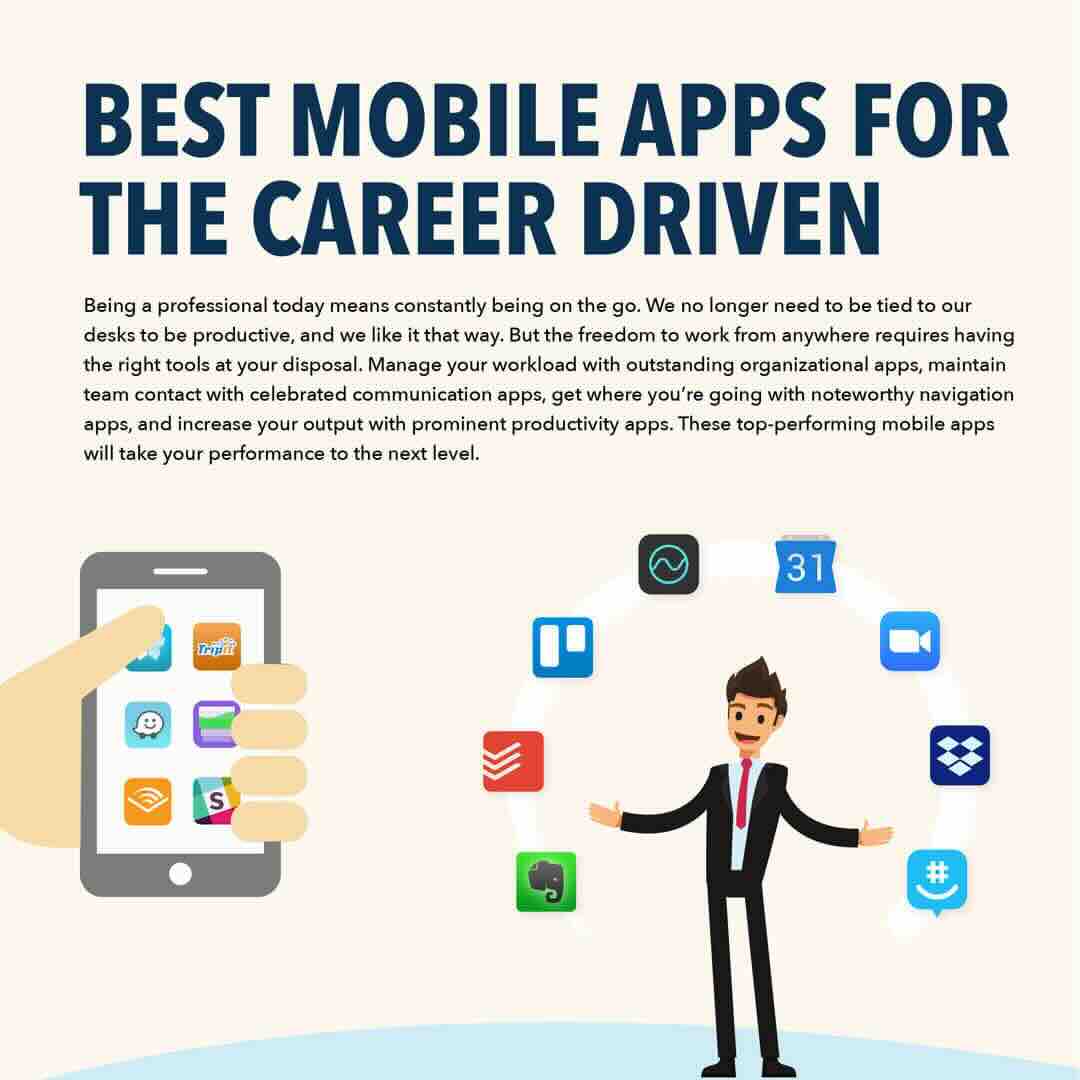
Mobile devices are more than just modern conveniences. In today’s business climate, having the right mobile tools at your disposal is critical to your professional survival. Staying connected around the clock is the accepted norm, not the exception and remaining competitive means keeping yourself up-to-date on the best apps to help you work smarter, faster, and better.
As thousands of new apps are released into the market every day, staying current on the best and most effective apps for improving productivity and performance can feel like a very daunting task. Luckily, Cydcor has created a shortcut to help you wade through this vast ocean of available apps. We’ve compiled a list of some of most useful apps to help busy professionals stay organized, communicate better and more efficiently, quickly get where they need to go, and be more productive.