Face-to-Face Marketing Strategies That Drive Growth
For many enterprise organizations in industries such as telecom, energy, financial services, and consumer brands, face-to-face marketing can be a valuable complement to digital acquisition. As customer acquisition costs have continued to rise across channels,⁴ engaging prospects directly, in environments where trust is built through conversation, can be a meaningful differentiator.
What is Face-to-Face Marketing?
Face-to-face marketing is customer acquisition through in-person conversations between brand representatives and prospective customers. It typically happens in four environments: retail, residential, B2B direct, and events. Enterprise brands use it alone or alongside digital channels to reach high-intent prospects, explain products in real time, and, in many cases, convert customers in a single interaction.
This piece examines how enterprise organizations deploy face-to-face marketing strategies across four primary environments: retail activation, residential outreach, Business-to-business (B2B) direct, and event-based marketing. For each, we look at conversion dynamics, what effective execution requires, and how performance is measured at scale.
Face-to-Face Marketing Strategies: A Guide to the Four Environments
Results vary by product, market, and program design. Planning considerations are general and will differ by campaign.
Face-to-face marketing can create meaningful customer interactions that strengthen broader acquisition strategies.
Retail environments give brands access to consumers who are already in a purchase-oriented mindset. In-store activations, pop-up programs, sampling campaigns, and kiosk-based engagement, for example, intercept prospects at the point of consideration rather than interrupting them from unrelated activities. That proximity to purchase intent can support same-session conversion, particularly for products that benefit from personal interaction or on-the-spot explanation.
Where within a retail environment a brand appears can have a significant impact on a campaign’s performance. Programs built around direct conversion and programs built around awareness or sampling serve different goals, so the right approach depends on what the brand wants to achieve. Early coordination with retailers to secure placement, scheduling, and compliance approvals is often what separates programs that launch on time from those compressed into a smaller window.
Best fit: Consumer brands seeking direct trial and/or conversion at scale; product launches or new geographic market entries; brands with demonstration-dependent or comparison-driven sales cases; convenience products.
Residential Outreach
Residential outreach places representatives at the door of the acquisition target, in the environment where household purchasing decisions are made. For telecom, energy, home services, and subscription products, this context is strategically significant: the decision-maker is present, the relevant infrastructure is visible, and the conversation can move from introduction to close within a single interaction. Research published in the Journal of Experimental Social Psychology found that in-person requests were about 34 times more likely to get a yes than the same request made over email.⁶ That effect may help explain why in-home conversations can be effective, since the prospect is in the right context to make a decision.
Territory planning is a key lever in residential programs. Geographic segmentation by demographic profile, competitive presence, and market density determines which areas are worth canvassing and in what sequence. Because the conversation takes place without the context of a store or event, clear brand standards, approved messaging, and compliance protocols are especially important and should be built into program design rather than addressed after launch. Independent sales companies recruit, hire, and train their own teams, while brands set the standards and client-mandated training those teams follow.
Best fit: Telecom, energy, home services, and consumer subscription brands; programs targeting specific geographic markets or demographic segments; products requiring documented consent at point of sale.
B2B Direct
B2B direct outreach typically places representatives in contact with business decision-makers at their offices, in business districts, or through structured commercial canvassing. For SMB-targeted products and B2B services where the sale depends on trust and direct explanation, face-to-face access to decision-makers can compress the sales cycle more effectively than digital or phone-based prospecting. The consultative context of a direct business conversation tends to surface objections earlier, giving representatives the opportunity to address them in real time rather than losing prospects to unanswered concerns between touchpoints.
B2B direct programs work best when the approach fits the type of business being visited. Timing matters: decision-makers are more accessible and more attentive at certain times of day, days of the week, and points in the business cycle, and the right window varies by industry. Walk-in outreach with the flexibility to return when a decision-maker is available allows conversations to happen at the right moment, rather than depending on a scheduled slot. Access to a decision-maker is key, so it's worth confirming that it's realistic for the target businesses before investing.
Best fit: B2B service providers and SMB-targeted products that benefit from consultative selling; organizations entering new markets where brand recognition among local businesses is limited; products requiring proof-of-concept or demonstration conversations.
Event and Experiential Marketing
Event and experiential environments can support strong engagement and conversion because the audience is self-selected, engaged, and in a context designed for brand interaction. Trade shows, brand activations, community events, and live product demonstrations place brands in front of prospects who have expressed interest simply by attending. 85% of consumers report being more likely to purchase after participating in a live event experience, according to EventTrack 2018 data published by EventMarketer.²
The critical execution variable in event programs is representative engagement posture. Passive brand coverage (meaning representatives who are present but not actively initiating conversations) produces brand impressions rather than customers. Programs with sales-trained representatives with clear conversion targets and structured engagement protocols can consistently outperform passive presence activations. Event programs also carry the longest planning lead time of the four environments, as logistics, partner coordination, staffing, and materials must be confirmed well in advance. Post-event follow-up infrastructure such as contact capture, retargeting sequences, and CRM entry extends the conversion window for prospects who engaged but did not close on the day. A sales partner that offers expertise in both gives brands the flexibility to meet a variety of goals.
Best fit: Brand activations requiring trust-building through immersive experience; new product or market launches; high-consideration purchase decisions where extended conversation and demonstration support close rates.
How to Plan, Execute, and Measure Face-to-Face Marketing Programs
Planning
Selecting the right environment for a face-to-face sales interaction relies largely on product complexity and target audience behavior. Here’s what that may look like for all four face-to-face marketing strategies:
- Retail: The advantage here is context; customers are in a shopping and purchase mindset. Performance can improve when the product complements what's already being sold or displayed in that retail environment, giving representatives a natural entry point rather than a cold introduction.
- Residential: Generally best for products and services that benefit from direct access to household decision-makers, including telecom, energy, home services, and subscriptions. Territory mapping should account for demographic profiles, competitive presence, market density, and local compliance requirements. This environment is especially useful when the product can be explained and purchased during a single interaction.
- B2B direct: Generally best for higher-complexity products that require trust-building, product education, or extended conversation with business decision-makers. Planning should include ideal customer profile definition, local market mapping, appointment-setting infrastructure, and client-provided product training. A combination of scheduled appointments and structured canvassing can improve time-to-close and reduce conversations with businesses outside the target profile. This can be good for customers who are hard to reach via digital channels.
- Event: The audience isn't defined by demographics, a retail environment, or an account list. It's defined by whoever chooses to attend that specific occasion. Planning here is about matching the event itself to the geography, audience and customer you want so that activations are targeted to event attendees.
Enterprises also need to decide between whether they’ll use an in-house or an outsourced team for their marketing program:
- In-house teams: Direct internal ownership of the program; typically involves infrastructure investment and a longer lead time to first deployment
- Outsourced programs: Can shorten time to market and may offer performance-based cost structures, with brand standards and compliance protocols established at the program design stage. These are often used alongside in-house sales, using outsourcing to enter new markets or roll out new products while in-house teams continue regular sales activity. These models can be built with strong quality and brand oversight.
Execution
Execution quality is an important driver of face-to-face program performance in all four environments. Brands should build the following into program design:
- Representative conduct standards and client-provided product training
- Pitch development and message approval within brand standards
- Compliance requirements, inspection, and escalation protocols for exceptions
Timely performance tracking, such as daily conversion reporting by territory, allows brands and their sales providers to identify underperforming areas and course-correct within a campaign cycle rather than after it.
Digital Integration
Face-to-face and digital acquisition can perform better in combination than either does in isolation. Practical integration points include:
- Contact capture at point of interaction feeding into CRM and retargeting sequences
- QR code deployment at events linking to digital landing pages
- Structured follow-up sequences for prospects who engaged in person but did not convert on the day
- Referral program activation for newly acquired customers
Customers acquired through referral and word-of-mouth can carry, on average, 16% higher lifetime value than non-referred customers with comparable profiles.³
Tracking Face-to-Face Program Performance by Environment
* Quality signals vary by program goals and the data the brand tracks. Lower cancellation rates and higher retention and satisfaction generally indicate stronger customer quality. These are typically measured by the brand using its own customer data
Research Insights:
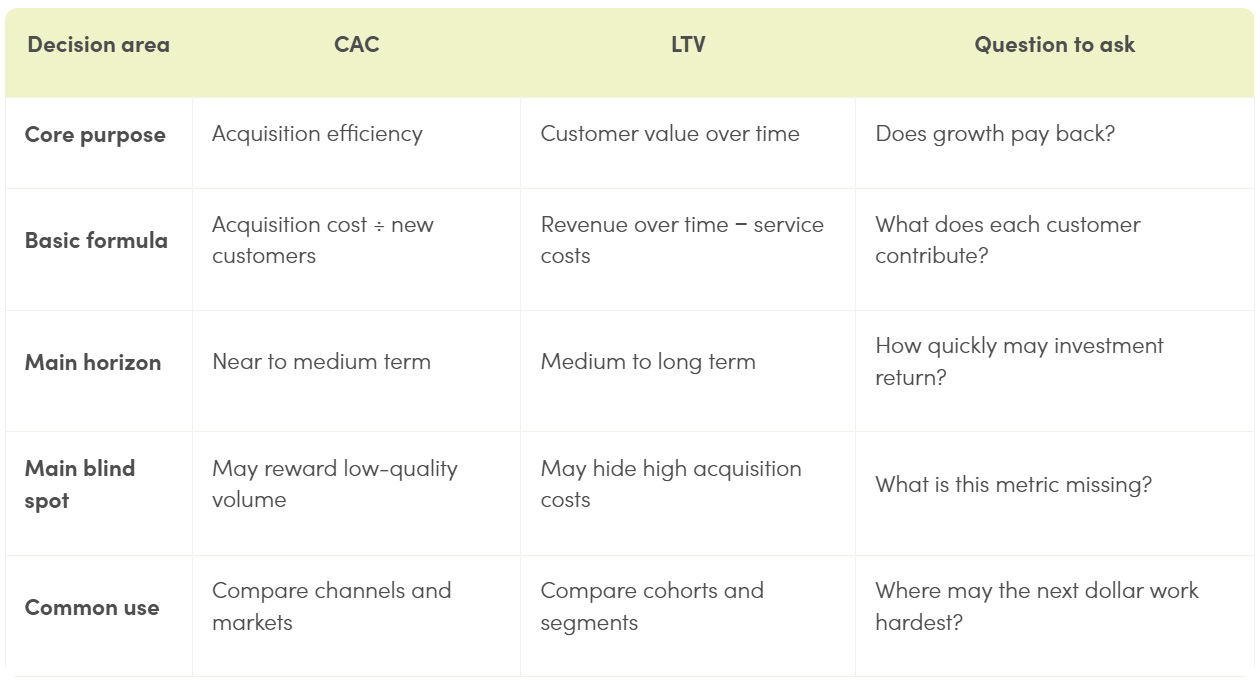
- Cost per lead varies widely by channel, industry, and program design, and CPL alone doesn't capture customer quality. Brands comparing channels often review CPL alongside cancellation rate, customer retention, and LTV:CAC (lifetime value to customer acquisition cost).
- One widely-cited ProfitWell analysis found customer acquisition costs rose roughly 60% over five years across B2B and B2C businesses, driven by digital channel saturation and rising paid media costs.⁴ Rising digital costs are one reason brands evaluate face-to-face programs that can show measurable cost-per-acquisition alongside customer quality.
Putting Face-to-Face Marketing Strategies to Work
Enterprise organizations that treat face-to-face marketing as a structured, measurable program can build an acquisition mix that complements their digital efforts. Across retail, residential, B2B direct, and event environments, a consistent differentiator is program discipline: clear conversion objectives, brand standards and compliance protocols, and measurement systems that track quality alongside volume.
Cydcor gives brands access to a network of independently owned and operated sales companies, delivering outsourced customer acquisition across the U.S. and Canada. The network’s independent sales companies operate across retail, residential, B2B, and event environments.
For brands building a structured, performance-based face-to-face acquisition program, Become a client.
Sources
[Tech note: Please make Sources section collapsible]
¹ Center for Exhibition Industry Research (CEIR). CPL and ROI benchmarks. Available through IAEE membership at iaee.com/ceir
² EventMarketer. EventTrack 2018 Executive Summary. eventmarketer.com/wp-content/uploads/2018/06/eventtrack2018execsumm.pdf
³ Schmitt, P., Skiera, B., and Van den Bulte, C. (2011). "Referral Programs and Customer Value." Journal of Marketing, 75(1), 46–59. faculty.wharton.upenn.edu/wp-content/uploads/2012/04/Schmitt-Skiera-vandenBulte-2011-Referral-Programs-Customer-Value.pdf
⁴ Paddle/ProfitWell. "How Is CAC Changing Over Time?" October 2020. paddle.com/blog/how-is-cac-changing-over-time
⁵ WordStream. "Google Ads Benchmarks 2026: Competitive Data and Insights for Every Industry." May 2026. wordstream.com/blog/2026-google-ads-benchmarks
⁶ Roghanizad, M. and Bohns, V. (2017). "Ask in person: You're less persuasive than you think over email." Journal of Experimental Social Psychology, 69, 223–226. ecommons.cornell.edu/server/api/core/bitstreams/2dd2f22c-265c-4e73-b4a8-c6f4f19662e8/content
To find out more about Cydcor, check us out on Facebook, LinkedIn, Instagram, and X.
We are Cydcor, a recognized leader in outsourced sales and marketing services located in Agoura Hills, California. From our humble beginnings as an independent sales company to garnering a reputation for consistently exceeding client expectations and driving outstanding revenue growth, Cydcor has been helping Fortune 500 and emerging companies achieve their customer acquisition, retention, and business goals since 1994. Cydcor takes pride in the unique combination of in-person sales, call center, and digital marketing services we offer to provide our clients with proven sales and marketing strategies that get results.