
Discover practical advice, inspiration, and insights to help you succeed in business and grow both personally and professionally.

Build the leadership, entrepreneurship, and professional development skills that drive personal growth, stronger teams, and better outcomes.
Found 0 posts

Experience more, learn more, and be ready for more!
If you’ve been trying to figure out your resolutions for the new year… stop.
We’re not making resolutions this year. We’re making changes.
If you want to experience, learn, and earn more in 2025, these 5 actions will empower you to hit the ground running.
Let’s make 2025 the best one yet!

Have your past New Year’s resolutions looked something like this?
This year I will:
Aspirations are good. But trying to do too much will have you burnt out by January 7th.
This year, what if we committed to doing less?
Life gets complicated… and complexity has a way of spreading us thin. Instead of trying to do it all, commit to doing a few things exceptionally well.
As an exercise, ask yourself these three questions. For each of them, write down only ONE answer.
What do I want to experience this year?
What do I want to learn?
What do I want with my career?
Your mind may want to create an exhaustive list… but your job is to distill each question down until you have one over-arching priority for each. As you prepare for the New Year, keep returning to these priorities.
With simplicity comes clarity. When you take on a new project at work, or you develop a new hobby to enrich your personal life — you can weigh the value of these activities against your true aspirations.
You’ll do more of what actually matters. And get more from life because of it.

Now that you are focused on a few key priorities, find people who currently have those things. Make them your mentors. Rather than trying to figure everything out yourself, you can save a lot of time with clear, actionable advice from people you trust.
There are mentors for everything, and the best ones are people in your everyday life (not the talking heads with millions of followers on social media).
If you want to show up more for your kids and family in 2025… seek advice from your neighbor down the street who gets daily calls from their adult children and always has grandchildren visiting.
If you want to learn a new language… find a friend who speaks it and offer to buy them lunch once a week.
If you want to pick up some coding knowledge that will get you ahead at work… ask your programmer friend if they need help with a project. Become their apprentice.
This isn’t just a better way to develop… it’s a good way to live a quality, fulfilled life. Through mentors, you can pursue your interests and goals WHILE deepening friendships and relationships along the way.
That’s a win-win in our books!

Your phone is a tool for enhancing your life. Used effectively, it can get you closer to your goals for 2025… but it’s not the goal itself.
6 hours and 35 minutes daily. That’s how much time the average internet user spends online. And in younger generations, this number is significantly higher.
How much time do you personally lose, scrolling through social media and watching Reels? What if you trade 30-60 minutes of daily screen time for something different?
This isn’t about saying “TikTok is bad. Eliminate it entirely.” This is about making a small reduction that can win you back a TON of valuable time in 2025.
One super easy change you can make right now is to go into your phone settings and turn on greyscale. This will make your phone black and white. It may feel like you’ve stepped back into the 1950s, or you’re looking at one of those magic moving newspapers in Harry Potter (which is fun)...
And there’s actually a huge psychological benefit.
Our phones are made to be addictive. The pretty, enticing on-screen colors are a BIG part of why we can’t keep our eyes off them.
Early studies — like this one from the American Journal of Pharmaceutical Education — suggest that this small change can lead to big reductions in screentime (and increased time to pursue the priorities you’ve created for 2025).

This one may be controversial — depending on who you ask. But if 2024 was an indicator… AI will play a significant role in 2025.
Does this mean you have to be the ChatGPT “power user” who believes the only thing holding them back from the secrets of the universe is better prompt engineering? No.
But you should have a working knowledge of the most prominent AI tools… good, bad, and ugly included.
Take some time to play and experiment with AI. See how it performs when handling some basic work tasks and try using it in creative ways that support your goals for the year. You won’t just be learning the abilities of this emerging technology — you’ll also be learning its limitations.
83% of US professionals believe new grads should be entering the workforce prepared to use AI, and the same should apply to people who are well into their careers.
If you dive in with an open mind and find that the AI hype is overblown… now you know.
And if you discover clever ways to do more in less time… now you have a secret weapon for having more experiences, knowledge, and advancement opportunities in 2025.

This point ties back to #1. In 2025, be intentional with your time. In a busy world, it’s all too easy for our minds to be in multiple places at once.
If we really want to experience, learn, and earn more this year, we need to understand that we can’t do all three at once.
If you’re at your kid’s baseball game… you are gaining experience.
When you’re reading a book… you are gaining knowledge.
When you’re at a workshop picking up a new career skill… you are gaining opportunities to learn more.
And if you try and read the book while listening to the workshop while at the baseball game… you are gaining nothing.
If you start to feel overwhelmed and lose sight of your goals, check back in with yourself. Ask:
“What is this hour for? What do I want to gain from it?”
And for that hour, be present and focused on that one thing.
Because all your 2025 goals will not come at once.
They’ll come when you string every moment of intentional focus into one incredible year.
Let’s make 2025 the best one yet!

Seek wisdom and actionable advice from some of the world’s most successful entrepreneurs.
"Your work is going to fill a large part of your life, and the only way to be truly satisfied is to do what you believe is great work. And the only way to do great work is to love what you do."
There’s a good chance you’re reading this on a device first imagined by the late Founder of Apple. And without pride and passion, it’s unlikely that Jobs could have ever left such an impressive thumbprint on our world!
"Dreams do come true, but not without the help of others, a good education, a strong work ethic, and the courage to lean in."
Over the course of 30 years, Burns climbed the ranks of Xerox, going from intern to CEO. Your dreams won’t come easy, but don’t be afraid to chase them!
"I knew that if I failed I wouldn't regret that, but I knew the one thing I might regret is not trying."
There’s an alternate reality where Jeff Bezos lived a boring, safe, regrettable life. Don’t let that be you!
"As a leader, I am tough on myself and I raise the standard for everybody; however, I am very caring because I want people to excel at what they are doing so that they can aspire to be me in the future."
The former CEO of PepsiCo continues to be considered one of the most powerful business leaders in the world. Now we know how she’s been able to command such a compelling influence!
“Play by the rules, but be ferocious.”
Leave it to this Nike co-founder to give us a quote that fits on a T-Shirt! Business is a game. Be fair, be competitive, and leave nothing on the court.
"Whether you think you can, or you think you can't—you're right."
You don’t have to be a woo-woo manifestation nut to see the point Ford is making here. If you don’t believe in yourself… who will?
"When something is important enough, you do it even if the odds are not in your favor."
Do we need electric cars to reverse the impact of climate change? Absolutely. Do we need a plan to get humanity to Mars? We hope not (but it’s always good to be prepared). Even the most “impossible” problems can be solved when we recognize the severity of inaction.
"Do every job you're in like you're going to do it for the rest of your life and demonstrate that ownership of it."
Barra’s first job at GM was to inspect fender panels. Without taking pride and responsibility in this small task… would they have made her the company CEO 34 years later?
To those who have, more will be given.
"One of the questions I ask [potential employees] is: "Tell me some of the riskiest things you've ever done in your life?"
As one of the leading hedge-fund managers… Cohen lives in a world where multi-million dollar mistakes are “just another Tuesday.” Risk-taking IS a skill that’s necessary for success. Make peace with the idea of losing, or you may never win!
"Don't sit down and wait for the opportunities to come. Get up and make them."
For this last quote, we went back over 100 years, to an entrepreneur who really should be a household name. Walker was the first child in her family born after the Emancipation Proclamation and went from destitute poverty to a haircare empire. She is on record as America’s first self-made millionaire. Emphasis on self-made.
There we have it — 10 inspiring quotes from 10 incredible business leaders. Which one resonated with you the most? Which one will you act on today?

Vera Quinn joins top business podcast hosts to discuss leadership, her entrepreneurial journey and more. Here are our three favorite takeaways!
Jack Welch, the former CEO of General Electric, once said “Before you are a leader, success is all about growing yourself. When you become a leader, success is all about growing others.”
And no matter where you are in that journey — whether you’re taking the first step into entrepreneurship and trying to grow yourself, or you’re leading a team you want to develop, it’s important to examine the advice that has made other leaders successful.
Our CEO, Vera Quinn, has recently joined a few top podcasts to discuss the Cydcor approach to leadership — and how Vera continues to develop the team.
While a lot was discussed on these shows, we’ve highlighted a few of our favorite takeaways — which will expand your definition of leadership and teach you how grow the people around you.

Culture is a bit of a buzzword in most corporate circles — with many leaders taking a “do as I say, not as I do” approach to their values.
But in discussion with Chris Waters on To Lead is to Learn, Vera presents a different way to go about culture:
Lead by example.
“I can say whatever I want to say, but it’s about my actions,” Vera says. “If we’re in a meeting and I’m not modeling the culture, someone on the team will speak up. We hold each other accountable. We call each other out.”
Vera and Chris go on to discuss the self-awareness and courage this requires as a leader.
We may think of the “courageous” leader as someone who’s always right and becomes a poster-child for the company’s values. But we are all human — and true courage comes from a leader willing to put themselves on the same level as their team.
Vera explains that if we shed the idea that we have to be “perfect” and instead make ourselves an ingrained part of the culture (just like everyone else), we can attract a team that enhances our strengths and sures up our weaknesses.
So, as you lead and build culture with your team — remember this:
A good leader is someone who allows their team to hold them accountable.
That takes courage.
To listen to the full episode, click here.
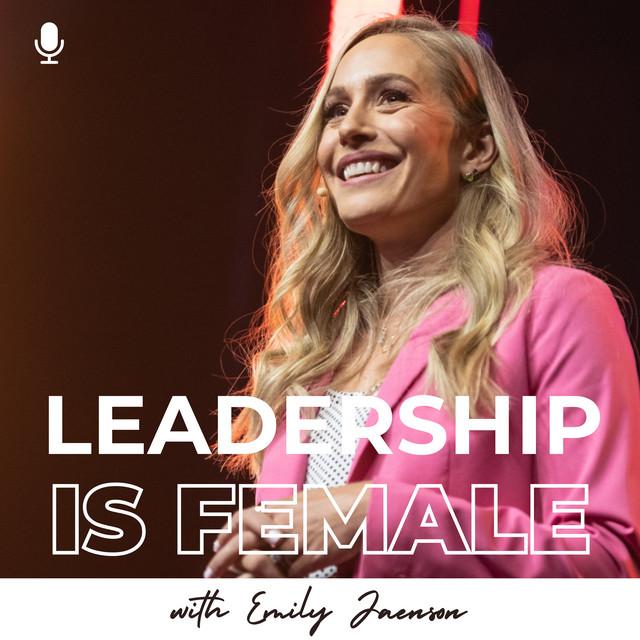
On the Leadership is Female podcast, Vera and host Emily Jaenson discuss strategic leadership.
To break the concept down, Vera highlights the two things a leader has to do:
At a glance, this may just sound like “telling people what to do.” But that’s what a boss does, while leaders take a different approach.
The keyword for Vera is “point.”
The leader can guide a team to where it needs to go — but it is by everyone’s own volition that the actually work gets done. As Vera and Emily discuss, it takes empathy to lead this way.
Vera explains that the best way to do that “pointing” is to “match opportunity with ambition.”
By taking the time to learn the individual goals of your team, you can align their ambition to the opportunities that need to be captured within the business.
Then, the team member can be personally invested in taking on that responsibility, rather than being forced to do it.
That’s how you end up with a team that you are leading, rather than having a group of people you are bossing around. Big difference.
To listen to the full episode, click here.
You may have read the last point and wondered:
“Ok… how do I empathize with my team and learn what their ambitions really are?”
And that’s exactly the topic that Vera dives into with Teri Schmidt, host of Strong Leaders Serve.
Vera tells Teri about her rise to leadership — and how a coach once told her that she needed to transition from “being interesting to being interested.”
“At the time,” she recalls, “I wanted to be the best. I wanted to be the bright, shining star.”
But a leader who tries to do that will not be a leader for long.
Vera highlights the importance of attracting talent around you — and moving from being the person everyone wants to learn about to being the leader who’s actively invested in learning more about their team.
“It changed my paradigm of being a leader,” Vera says, “and it even changed how I approached being a spouse, mother, and friend.”
Funnily enough, when you put the focus on “being interested,” you’ll draw more people to you compared to when you’re trying to be the most “interesting.”
People want to follow a leader that’s invested in their interests, story, and expertise. They don’t want to follow someone that makes it all about themselves. And while building rapport with your team is a big benefit to this mindset shift — doing this also sets you up to learn more than you ever could before.
To listen to the full episode, click here.
And when it’s all said and done, learning is the number one thing that a leader should be doing. That’s why we always get excited when Vera gets on a podcast to share some of the lessons, she’s learned at Cydcor.
You now have three actionable insights that you can act on today. So, get out there, keep growing as a leader and developing your team!

Criticism is an opportunity for growth — but only if you know how to properly deal with customer complaints.
Let’s face it — everyone’s a critic these days, and it’s all but impossible to work a job without getting some negative feedback at some point in your career.
Even the most successful people deal with valid criticism. In the end, their ability to handle and interact with that feedback is what sets them apart.
Knowing how to isolate, identify, reflect on, and act on negative feedback is a skill they have developed over time — and doing the same will help you grow in your career or in entrepreneurship.
The next time you need to respond to negative feedback, turn to this four-step framework.

It’s all too easy to view negative customer feedback as a personal attack. There’s a fine line between constructive criticism and insult — and sometimes the feedback is just downright mean. But even when something falls into the category of constructive criticism, it can still hurt!
The first thing you need to do is isolate the feedback. It is not reflective of you, the person. It is reflective of the experience the customer had with the product or service.
Isolate the feedback as if you were a neutral, third party to the situation. This will remove any emotions, disappointment, or anger that you may be feeling about the situation and allow you to interact with the customer’s concerns in a positive way.
A lot of the time, the spirit of the negative feedback is valid, but the way it’s said isn’t. Your job is to not let the presentation of the criticism bother you (even if it comes in the form of yelling or choice language) while trying to identify where the real problem lies.

After you’ve isolated the feedback — you can identify where the real concern lies.
This may seem like a simple step, but it’s usually anything but. Customer feedback doesn’t happen in a vacuum. There are usually factors outside of the situation that impact how the response is worded or expressed.
A customer may rant about 10 different things that you did wrong — when all of those 10 things boil down to one specific concern that the customer can’t quite put their finger on. Or they may simply state that “this is bad” without explaining any of the reasons why they feel that way.
To work with negative feedback, you sometimes need to play detective. Ask questions that allow the customer to fully express their feelings. This won’t just help them feel heard, it will also give you the context you need to get to a solution.
Don’t just aim to listen, aim to empathize and understand.
Don’t say “I hear you” while someone is complaining — say “I understand.” Big difference there.
When the customer is finished explaining — repeat back what you’ve heard, but remove the emotion out of it. Be matter-of-fact as you walk through what’s just happened. This will prime the customer to start viewing the situation as a solvable problem (and not an emotion-crushing disaster).
As you go through your recap with them, focus on the handful of issues that are really at the crux of the issue. Even if these are things outside of your control. Take responsibility for them. The worst thing you can do is “try and pass the buck” — and in a world where everyone’s trying to point fingers, most customers will respect you for taking accountability.
At first — negative feedback can seem overwhelming and impossible to fix. But when you get good at finding the one thing that sits at the heart of the complaint it becomes manageable.
When the key issues are identified, act swiftly. Show the customer you’ve listened to them in the way you go about resolving the matter.

The most important work happens after the specific situation has been put to bed. Your job now is to evolve so that the problem does not happen again with another customer. It can be useful to discuss the negative feedback with your boss or peers — not to gossip or complain about it, but to get their opinion about how you handled things and how you can improve.
The odds are that they’ve gotten the same kind of feedback at some point in their careers. Listening to their experiences will help you grow — and will also reveal that getting criticism is normal (so you shouldn’t feel too bad about what that customer said!).
Reflecting helps you fix a problem before it becomes a trend. When you invest the time to think about how customers are responding to your product or service — you can start developing a tangible list of action items that are going to help you grow.

The best businesses are the ones that listen and adapt based on their customer’s needs and concerts. The greatest entrepreneurs have a spotlight on them at all times — and are criticized relentlessly. Knowing how to turn a negative piece of feedback into an opportunity for growth is a skill that directly correlates with success.
So, remember that everyone gets negative feedback sometimes — and if you know how to interact with it, that feedback can be a positive turning point in your career or entrepreneurial journey.
The last step in these situations is always to act. Take time to improve based on feedback and move forward with confidence and integrity.
There will always be negative feedback. But if each complaint is different than the last… you’re going in the right direction!

Here’s how to level up your listening skills and become a better leader.
Have you ever stopped in the middle of a conversation and thought, wait a minute, this person isn’t even listening?
It’s a frustrating feeling.
The reality is that most of the time, people really aren’t listening. Despite what you may think, it’s not enough to just sit back and let noise flow into your ears.
So what does this have to do with leadership?
When we think of the greatest leaders, we often think of profound public speakers—leaders who inspire, command, and tell others what to do.
But more important than all of these traits, is the ability to listen.
As a leader, you are responsible for the people on your team. Their problems are your problems. Showing up for them requires stepping into their world, seeing their thought process, and understanding the problems that they may be encountering.
Listening is the gateway to all of these insights.
The better you understand a person, the more effectively you can lead them.
By listening to them first, you can align the team’s goals with their personal aspirations.
You can offer solutions to problems they might be anxious about before you set them to a task.
You might even uncover untapped strengths or gifts that they have, just through conversation.
Ideas don’t have to all come from the mind of the leader. On the contrary, the best innovations typically come from collaborative discussion. Your job as a leader is to facilitate as many conversations as possible, acting as a moderator while your team presents, adapts, and perfects ideas.
Active listening will help you better understand the collective vision, while also bringing forth the tough questions that will strengthen the idea. That’s why getting every brain in the game and encouraging candor in our meetings are two of Cydcor’s core values!
There’s also a massive interpersonal benefit here, too. Active listening is a difficult skill to master, so many people just aren’t used to being listened to. Because of this, the feeling of being heard is one of the best gifts you can give to someone.

Active listening is more than just a performance!
A common piece of advice on this topic is to “show that you’re listening.”
You’ve probably been told to nod your head, make small noises (like uh huh, yeah, and even the occasional wow!), and smile.
There was a time when this wasn’t terrible advice, but doing these alone is far from active listening.
These signals tend to be overused by people who are merely pretending to pay attention. The speaker may feel like they’re getting the right feedback from the listener, but something is a little off.
If these come naturally to you, then they’re great ways to show you’re listening. If you’re someone who likes to smile, smile. If you naturally nod your head when listening, let it happen.
Just don’t force it. The person wants to talk to you, not a bobblehead doll.
There’s a better way to “show” that you’re listening:
Ask good questions.

Conversations are often two people fighting over their turn to talk. Asking a follow-up question or trying to dive deeper into what’s just been said is a great way to show that you’re here just to listen.
Sometimes, you may be at a loss for how to keep the conversation going, but asking good follow ups is a skill that you can develop.
Don’t try to do too much. Simply asking for the “why” behind what’s been said, or asking how they came up with that particular idea goes a long way.
It can be uncomfortable at first, but you should (especially as a leader) learn how to ask tough or critical questions. This is not to be mean, or to shoot the speakers idea down. Instead, a difficult question—framed the right way—can make their idea stronger.
People—suprisingly—like being asked tough questions. They see that you’re not just telling them what they want to hear. They learn that you care enough about their success to challenge them.
Active listening takes thought—and if you’re thinking critically about what’s being said, you’re taking it to a whole new level.

Ok, this one is situational.
If you run into someone in the hallway and strike up a quick conversation, it would be a bit odd to whip out your notepad. But in situations like meeting, a notepad is a great listening tool.
Taking the time to write down what’s being said affirms how you value the speaker. What’s being said isn’t just useful in the moment, it’s worth saving for later.
When it comes time for questions, you’ll be able to reference the specific language that the speaker used and dig into things that you otherwise might have lost as the discussion went on.
The act of writing something has a positive impact on memory and learning—and even if you forget, you still have the notes!
This means you’ll be able to reference what’s been said, long after the meeting is over. When you apply this, the speaker’s words have long-term impact. Talk about a confidence boost!
As children, we were all told that we have “two ears and one mouth for a reason.” It’s more than a corny platitude, it’s the formula for great leadership.
As a challenge, strike up a conversation with someone you don’t talk to often. Try to get them to do as much of the talking as possible—and see what you can learn from them and the experience.
Keep doing that—and you’ll master this amazing leadership skill in no time!

Celebrating three innovative game-changers.
Here at Cydcor, we foster and celebrate a community of entrepreneurial ass kickers, while priding ourselves on being unmatched in our drive to help emerging companies achieve their goals. And while our expertise is what we believe sets us apart from the rest, this article shifts the focus to industry giants who are now changing the lives of others.
It’s easy for titans such as the three people below to celebrate their global success and ride off into the sunset, but the mark of a great leader lies in inspiring others to hit the heights they themselves once aspired to achieve.
At Cydcor; “we’re a people-helping-people business.” The following three entrepreneurs have followed suit, building brands that have resulted in thousands of jobs being created - while also making the world a better place.

Jessica Alba’s Honest is currently disrupting the multiple consumer product market all while creating a community for conscious customers. Having stepped down from her role as CEO in early April 2024, she continues to provide strategic advice to the company she founded as a labor of love.
Valued at $550m in 2022, Honest has been led by Alba’s dedication to accountability and integrity. Much like her career in the Hollywood spotlight, she admits to putting pressure on herself to achieve optimal results. “The business kept me in a constant state of pressure, sort of like a hamster wheel,” she reflects.
Alba’s decision to start from scratch came from an innate desire to find that fearlessness she experienced as an up-and-coming actress. “You can’t really fail if you try,” she points out. “Besides, there were no real expectations for me to be successful at anything.”
With her staunch mantra that ‘women can excel in life, and should be treated with fairness,’ Alba created Honest with the goal to introduce products that women can trust. “I knew {when I started} that there needed to be someone to show the world the importance of equity, diversity, and inclusion with regards to brand values,” Alba says. “I’m glad I could fill that void.”

A first-generation Iranian-American entrepreneur, Leila Hormozi first came to prominence as a top-selling fitness trainer in the Orange County region of California. After helping to scale hubby Alex’s fourth business, and each one after that she branched out to the software, service, e-commerce, and brick & mortar industries, rising to brand positions in each of those companies while co-founding Acquisition.com.
The holding company for all of her brand ventures, Acquisition prides itself on ‘making real business education available to everyone’ with Hormozi’s philosophy that “the true measure of a leader is the ability to create other leaders.”
With the company generating over $200m in annual revenue, Hormozi’s unbridled work ethic - likened to a ‘wartime’ battle, is matched only by her ability to let others in to celebrate the victories. “A win for one is a win for the other,” she told Entrepreneur.
Hormozi’s no-frills, transparent approach to her businesses has resulted not only in the generating of millions in revenue but also a workplace culture that thrives on overcoming adversity. “Rather than shying away from hard work and responsibility, we encouraged it,” she shares. “We buckled down to reinforce our internal team culture to ensure there would be no error. Ultimately, we never want to make promises to our suppliers that we can’t keep.”
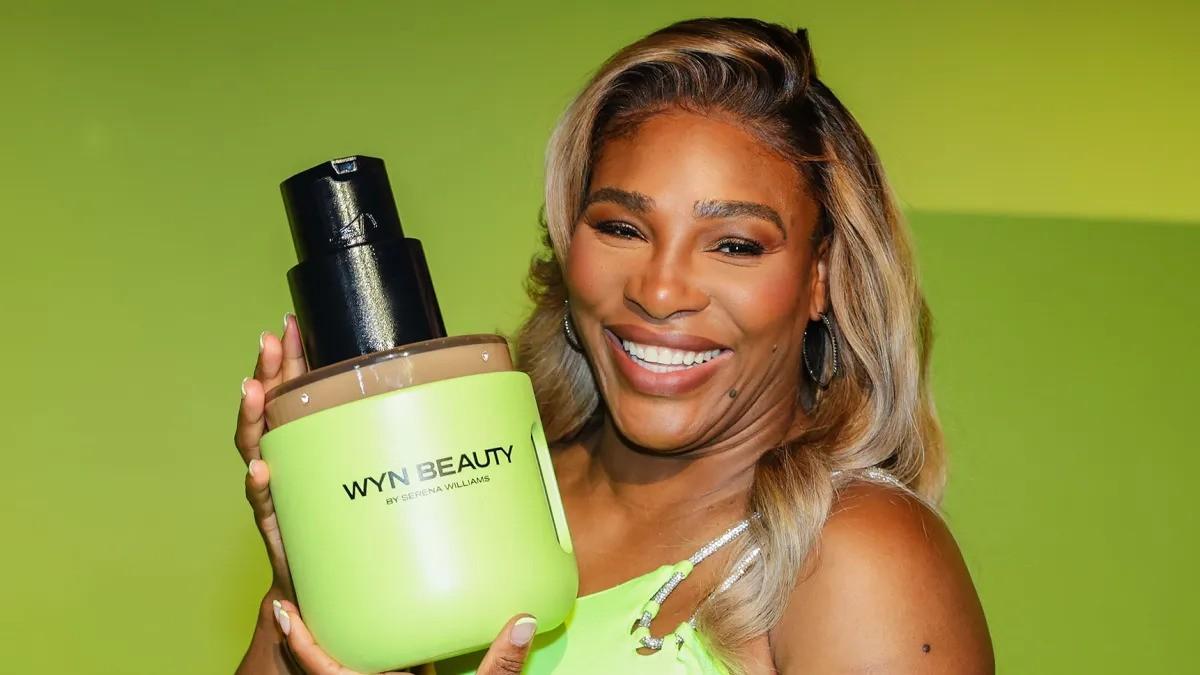
Serena Williams is new to the entrepreneurial game but is turning heads with her approach to the cosmetics industry.
Having founded the appropriately named Wyn Beauty in early 2024, the former Grandslam tennis champion may have taken a step off center court but is well in the trenches when it comes to providing a service for those who are constantly on the run.
“I needed something for my active lifestyle that included hours on the court,” she admits. “Wyn is long-lasting and designed for an active lifestyle that includes sweating and daily living.”
And while stamina is the name of the game in the tennis industry, Williams cites her patience as a transferable quality to her brand endeavors. “I’ve learned to not rush things,” she says. “It took a long time to find ingredients that were clean, but the key is not to introduce a brand until I have it right.”
Stating her gratitude for having ‘the gift’ of a mentor, Williams believes it’s important for young women entrepreneurs to have an established woman to look up to. Williams leads by example, also leading a venture fund that primarily invests in businesses that are started by women of color.
—
As these three entrepreneurs continue to kick ass and further their impact on the world, we at Cydcor will continue to do the same.
The entrepreneurial journey is never easy, but investigating the success of others is a great way to see what’s possible and push the limits yourself!