
Discover practical advice, inspiration, and insights to help you succeed in business and grow both personally and professionally.

Build the leadership, entrepreneurship, and professional development skills that drive personal growth, stronger teams, and better outcomes.
Found 0 posts

Here’s what happens when entrepreneurs put serving others at the heart of their business. What could this mean for your entrepreneurial journey?
We’re living in the golden age of entrepreneurship.
In 2023, nearly 5.5 million new businesses were started in the United States—the most ever in a single year. As more entrepreneurs bring new products, services, and brands to market, we can only expect that number to keep rising.
But 70% of startups fail within their first 5 years—a testament to how hard it is for entrepreneurs to cut through the noise and build a business that lasts.
Here at Cydcor, we just celebrated our first 30 years in business. While celebrating this achievement, we’ve been able to reflect on our story, and how particularly difficult those first few years were.
For an entrepreneur to lead their startup toward success, it takes more than just talent and hard work (though putting in the work is crucial). It comes down to the business model.
Creating a business model that can turn a profit—consistently, for years to come—is easier said than done. But there is one element that is present in all successful business models, one that you can implement no matter what industry you are in:
Serve others.
Here’s how serving others supports your entire business model—and why it’s the only path to a sustainable business.

The best businesses begin with the solution to a problem…
Helping someone solve a problem is one of the highest forms of service. If you can create a business that alleviates pain and improves the lives of others, you’re on the right track.
That’s why some of the most profitable companies start almost by accident—launched by entrepreneurs who are not even trying to start a business. They’re just people who set out to fix a problem—and are rewarded for it.
A sustainable business model is based on a mutual exchange between a business and its customers. Starting out, the ball is in your court as an entrepreneur to kick off such a partnership. If your first priority isn’t to better the lives of your customers, it doesn’t matter what the rest of your business model is—nobody will be interested in buying from you.
We live in a world where it seems everyone wants something from us. Putting service above everything is what will set you apart from the competition—and make people excited to be working with you over others.
A business isn’t successful just on the merit that it can extract money from its customers.
A business is measured by the problems that it is solving for others. The money comes afterward. And people feel good paying for something that they know is making their life better.

For a startup to survive, building trust is crucial
What happens when you start solving people’s problems, and put service to them first?
They trust you. If you’re an entrepreneur getting a startup through its first few years, trust is your greatest asset.
When you give to others, they often willingly give back. This could mean referrals, great reviews, or even continued patronage.
Getting trust is what so many entrepreneurs struggle with—because it’s not just about saying you’re here to help, it’s about following through on the promise.
This is where the pack starts to thin. Every business says they’re out here to help people, but only the best allow those principles to carry into their day-to-day actions.

Success is just an opportunity to serve MORE people!
Of course, there is no business model without a mechanism to turn a profit. If serving others first is a means to make money, what should happen when the business is bringing in revenue?
That just means you can serve more people!
If you want your business to last, it’s important to not lose sight of the initial mission. It’s easy to be customer-obsessed and put service first when you’re small and starting out—but it gets harder and harder as you grow.
But if you keep laser-focused on putting service first, new opportunities to help others and drive more business emerge.
With scale comes the ability to lower the price of your service or product while maintaining the quality and margins. Now more people can access your solution than ever before.
Growth also necessitates a larger team. Now, you’re not just serving customers—you’re getting opportunities for people to support their families and build a career.
Profit also gives you the chance to give back. Many entrepreneurs find joy and fulfillment in philanthropic endeavors that go beyond their core business.
If you keep your business model centered around service to others, you achieve a snowball effect. The commitment to bettering the lives of others becomes the means for making a profit. And making said profit is a means to bettering more lives.
This is what separates the startups that fizzle out after a couple of years, and the businesses that continue to grow as the decades roll on.
At Cydcor, we’ve always been in the “people serving people” business. It’s what’s allowed us to grow through our first three decades in business.
Knowing that this is the only business model that can stand the test of time, we’re confident that we’ll continue to grow as the decades roll by.
We hope that this inspires you to put service at the core of your business and career. Apply your entrepreneurial drive towards a business model like this—and you will be rewarded with more than just profit!


For leaders, growth is a pivotal part of running a successful business. But to achieve this, seizing opportunities is paramount. Why? It allows you to gain a competitive advantage, build a strong network, generate new customers, and ultimately, increase revenue.
At Cydcor, we foster a community of collaboration, innovation, and personal connections – all aspects that contribute to finding business opportunities. If you’re a seasoned business owner or just dipping your toes in entrepreneurship, knowing how to find said opportunities is the first step.
It can be easier said than done, however. With so much noise circulating media outlets, markets, and society in general, knowing where to look is at times overwhelming. But with helpful guidance to steer you in the right direction, you’ll soon develop the skill to find opportunities behind every closed door.
Whether you’re looking to expand your company’s reach, or interested in how to avoid becoming stagnant in your business, we’ve compiled four key ways for finding find business opportunities to achieve growth.

It may seem like an obvious first step, but it’s more important than you may realize. It is safe to say that at some point during your academic or professional career as an entrepreneur, the term “networking” has been brought up – and I’d wager it’s been a topic of discussion many times. We all know the importance of building and expanding relationships for the development of a business. Yet, for many of us, we have an aversion to networking. In a Harvard Business Review, it’s revealed that executives, other professionals, and MBA students frequently make it known how much they “hate networking”, but Harvard is here to emphasize it’s a necessity for all business leaders.
Maybe you don’t fall into this category, and networking is one of your preferred pastimes. It should become one if it’s not already, or at least an aspect you learn to implement for your business. Finding business opportunities doesn’t happen overnight, and it certainly doesn't happen without connections built outside of your organization.
Networking can be as simple as a message over LinkedIn, or even other social platforms like Instagram. But despite the spike in digital communication tools since the pandemic, forming in-person connections remains essential for finding business opportunities. So, the next time you receive an invite to a conference or networking event, don’t decline the RSVP. You never know what potential opportunity awaits!

It goes without saying keeping up with the ever-changing landscape of economic trends is crucial for any successful business. Market research not only provides insight into consumer behavior (valuable information about your target market) but is also a sure way to find business opportunities.
As stated by the U.S. Small Business Administration, “Market research helps you find customers for your business,” and blends “consumer behavior and economic trends to confirm and improve your business idea.”
Gathering population data relating to your target market, which can include age, wealth, interests, and more, can help you to better understand possible business opportunities. It’s essential to know if your product or service is in demand in your area, if you’re competing with similar companies, what your customers can afford, and so on. By assessing available information through market research, you can identify any gaps or areas that pose a potential business opportunity.

By luck or through one of the four methods listed here, you’ve come across a rare business opportunity that could make big shifts in your business. You ponder the pros and cons and question if investing in this opportunity is worth the risk. By the time you’ve concluded your decision, your competitor has pounced on the occasion. Just like that, the opportunity is gone.
This happens all too often, and despite developing the skill for finding business opportunities, without action, becomes redundant. In today's competitive landscape, innovation is integral. “You can’t solve many problems with old solutions,” states Harvard Business School.
At Cydcor, one of the core values that define our culture is change and innovation. We believe that adding value to the people we’re working with and serving only happens when change is implemented. Without change, any business will eventually fall victim to the unyielding grasp of complacency. Like quicksand, businesses can disappear without a trace.
Taking risks is a part of life – both personal and professional. For entrepreneurs, starting a business is a huge risk, but we do it anyway because we found an opportunity and took it.
When was the last time your business went through some sort of change? If you can’t remember, it is time to embrace the unknown. So many opportunities await, it’s up to you to take action.

Last but certainly not least is turning to your team. As they say, the backbone of any business is its team, so what better way to find business opportunities than through the help of your fellow work colleagues?
Teamwork is something we’ve learned from a young age, but somewhere along the way, this value becomes blurred for some. If that’s the case for you and your business, we have some advice: cultivate an environment of collaboration amongst team members! The benefits of doing so are endless and can spur creativity, provide diverse perspectives to problem-solving, and, of course, lead to finding business opportunities.
So, remember, finding business opportunities is about building connections, keeping up with or even staying ahead of trends, taking risks, and utilizing the advantage of strength in numbers. Opportunities come as quickly as they go – it’s about knowing how to find them before the fleeting chance slips away.

Spend less time in meetings and STILL walk away with more clarity? These four tips will have you running great meetings in no time.
It is famously said that “time is money,” and that couldn’t be more true for business leaders. Yet, time is frequently wasted in businesses, with one of the main culprits being meetings. Why? They are not being managed optimally. We have all experienced a meeting where the hour drags, talk meanders, and no one is sure what has been achieved by the end. Here at Cydcor, we believe our employees’ time is valuable and should be respected, especially with the popularity of remote working and online calls.
Time management is everything when it comes to successfully running a business, and if it’s one of your weak spots, consider addressing it before it snowballs. To start, let’s focus on running effective meetings. Read on to discover four key points that will ensure your meetings are efficient to get the most out of your precious time!
Plan ahead to save time!
The most basic but crucial ingredient for any successful meeting is an agenda. This simple list is a tool for the meeting leader to refer to if digressions threaten and is a framework for attendees to understand the scope and purpose of the session. Keeping the focus tight helps speed up the meeting because everyone knows what needs to be discussed in the timeframe.
Circulating the agenda a day in advance is a method you’ll use once and never look back. When everyone attending the meeting is prepared and knows what to expect, the more likely your discussions will be on target. Of course, there can be flexibility; the list does not have to be exhaustive or adhered to religiously! However, having guidelines for topics and outcome goals is an excellent way to get everyone on the same page and hone the efficiency of your meetings.

Open communication leads to more efficient processes!
One of our core values at Cydcor is open communication. People tend to perform their best work if they feel heard and encouraged and severely lack when the opposite is given. According to Michigan State University, open communication can lead to increased collaboration and innovation, enhanced trust, creates a more informed workplace, and other benefits.
An effective meeting leader should make it clear that ideas and feedback are welcomed on the topics under discussion. This doesn’t mean it’s a free-for-all, especially with the agenda from above as a guidance tool!
It is an ethos that cultivates an atmosphere where attendees feel comfortable contributing and feeling part of something bigger than themselves. This emotional investment encourages more commitment to the job at hand. By welcoming employees’ thoughts, leaders can be exposed to new ideas and ways of doing things and creativity can flow in environments that promote communication and value individuals within a team.

Collaboration is key for any successful business!
Open communication naturally fosters another key value at Cydcor: collaboration. Running effective meetings does not involve one person dictating to the group. Allowing people to work together and spark discussion of best practices or specialist updates lets employees truly collaborate. As they say, two heads are better than one, especially when it comes to running a business. A team is the backbone of any company and as a business leader, you should take advantage of the wealth of insight and knowledge each individual carries.
It was found that 39% of employees worldwide feel people in their organization don’t collaborate enough, even though today’s workplace is overloaded with collaboration. This is where mediation comes in, along with actually taking into account the ideas shared by team members.
Valuing the different skillsets and expertise around the table, along with providing space for open communication means that people can feel part of a team – and it all starts with the leaders. Teamwork is a vital component of a successful company and meetings that recognize this quality will achieve more meaningful results. Again, this doesn’t mean everyone shouts at once, and multiple meetings a week need to be squeezed in! Building in workshop time or breakout sessions controls the meeting and still encourages collaboration.

A meeting without results is time wasted!
At Cydcor, we measure success based on results with a metric that everyone agrees on. This is just as applicable when running meetings. We have discussed the importance of a clearly defined purpose at the beginning of an effective meeting, but the end is just as vital to manage well.
These simple steps can make all the difference:
Having clear goals within each project as well as a timeline will increase the efficiency of your meetings and make your business unstoppable!


Partnership is everything in business. In our first thirty years, Cydcor has had the privilege of meeting people from around the world, developing relationships, and creating new opportunities for growth and success. Though we live in a digital world, so much of our networking has happened in person, one handshake at a time.
Networking in person, especially as we become more accustomed to doing business online and over social media, can be a little nerve wracking when you’re just starting out. Meeting new people can spark anxiety. Entering new social environments and professional settings can make us feel like we don’t belong. But with a few tips that can shift your mindset around in-person networking, you’ll soon be making great connections like never before.
So, whether you’re off to a job fair, looking for partners in your next entrepreneurial endeavor, or just trying to grow your rolodex, here are three key things to remember the next time you’re networking.

We’ve all been there, trapped in a conversation with a new person, and wondering what to talk about. We want to make a good first impression, while also getting the conversation rolling with a good topic.
The secret is that we all have the same favorite topic: talking about ourselves. Studies continue to show that people like those who ask them questions – and engaging the person by showing genuine interest in them is a proven way to build rapport.
For those who are nervous speaking to new people, this is a great way to take the pressure off yourself. Let the other person do the talking, they’ll like you more for it!
You don’t have to take on the role of a Pulitzer-prize-winning journalist, your questions can be as simple as asking them their opinion on the event you’re attending together. Just because you’re in a professional setting, that doesn’t mean that there isn’t room for authenticity and personality. Ask them about their work, and try to discover what makes them passionate about it.
There is no such thing as a dumb question. Many of us avoid asking the questions we wish to ask because we don’t want to appear dumb. The person won’t think less of you for not knowing, instead they’ll appreciate that someone is actually curious about their insights.
In turn, they’ll start to ask you questions. A good conversation is a balanced one – and by sharing your thoughts and insights, the two of you will be able to discover where your passions, goals, and values align.

As you let the other person speak and share, you’ll be learning more about their wants, needs, and desires. If the goal of networking is creating mutually-beneficial partnerships, then understanding what the other person’s goals are is crucial. This will help you empathize with the person.
Leading with empathy can help you get over your social anxiety. When we get anxious in social situations, it’s because our thoughts are focused on ourselves, not the other people in the room. But when we focus our attention on empathizing with others, our mind stops worrying about our own anxieties. Being socially anxious isn’t selfish, per say, but it does keep us from giving others the attention they deserve.
As we explored in our last blog, authenticity is key to trust. Our anxieties can get in the way of being authentic, as we try to be somebody who’s cooler, smarter, or more successful than we are. But when we focus on other people’s needs, we no longer have the attention to worry about how they are perceiving us.
Referencing things that they’ve mentioned in follow-up questions and offering words of encouragement are ways that you can show empathy to people. This shows to them that you’re not just listening – you’re hearing them.

At Cydcor, candor is one of the behaviors we value. That’s because we want people to feel free to share their thoughts and opinions in order to create lively, impactful, and substantive conversations. So while you’re asking people questions and empathizing with their answers, remember to not leave out your own thoughts.
Many people in networking settings try to people please, agreeing with everything the other person is saying. But we don’t want to engage with those who just tell us what we want to hear – we enter conversations to learn things that are outside of us.
There are ways to show candor in a way that’s respectful – and ways to do it that aren’t. By empathizing with the person you’re speaking with, you can use a differing opinion to further that person’s perspective, rather than just trying to prove them wrong on a topic.
Collaboration is the key goal of networking. Would you want to work with someone that parrots your ideas, or someone with a different perspective on arriving at a shared goal?
With these tips, you’ll be having meaningful conversations with new contacts in no time. As you dive into in-person networking, remember this: in order to start collaborating with all the professionals you met, you have to follow up with them!
We live busy lives – and can even forget the best conversations if they’re lost in the shuffle. So whether by email or social media DM, get the ball rolling quickly after the first contact has been made.
Now that you have the tips, time to build the skills! Maybe we’ll see you at our next networking event.


At Cydcor, we’re in the people helping people business. That makes networking with our clients, community, and the independent ICL businesses in our network, central to what we do. Whether you’re just starting a career in business, or an entrepreneur trying to expand your horizons, you likely hold networking in just as high a regard!
There was once a time when networking happened in university classrooms, social clubs, and even in the bar on Saturday night, but these days most people have gone digital. Over 700 million professionals use LinkedIn to connect with peers in their industries and even Instagram is being used to forge new business opportunities and collaborations.
But while the digital revolution, accelerated by the pandemic, has boosted the power of online networking, are we losing sight of the in-person opportunities that are right under our noses?
At Cydcor, we strive to create progress through innovation, which means incorporating all the new technologies at our disposal. We also believe that one-on-one personal connections are what drives both a solid business and a happy life. That was one of the many reasons why we had so much fun at our National Conferences last August!
Let’s explore the benefits of seeking out in-person networking opportunities, in a world that puts an emphasis on the digital.

In the wake of the pandemic, one of the things we quickly realized is that trust is difficult to foster in online spaces. Harvard Professor Frances X. Frei and Leadership Coach Anne Morriss, writing for Harvard Business Review, discuss what they call the “Triangle of Trust,” which cites authenticity, logic, and empathy as three key drivers of trust.
Thinking about our difficulties in creating trust in online spaces, authenticity comes to mind. Social media, direct messages, and other forms of communication allow us to filter and edit our thoughts and ideas before we hit send, but that makes it difficult for the person on the other end to get a picture of the real us.
Trust is key in business and in life. Building relationships with the people you want in your network is all the more easy when you are able to show up authentically to them. The easiest way to come across as the real you, is to network in real life!

We’ve all heard that 90% of communication is nonverbal. While that commonly shared stat is a bit inflated, findings from body language researcher Albert Mehrabian revealed that 55% of communication is nonverbal, 38% is vocal, and only 7% actually comes from the words being said.
If you’re trying to engage a new business partner, start a professional relationship with a prospective employer, or simply grow your network, communication is your greatest tool. Online communication negates the power of body language and can, in text formats, make it difficult to infer tone.
We’ve all been there – wondering how many exclamation marks to put in our emails (enough to sound enthusiastic, but not too many that we sound over eager) and going through careful editing to make sure none of our ideas will be misinterpreted.
When networking in real life, these problems solve themselves in real time. Our bodies communicate our feelings in addition to the words we are saying – and any needs for clarification can be addressed in the moment.

Look, online networking is still a powerful tool. You should be using both online and in-person means to grow your connections both personally and professionally. But all the options online can make networking overwhelming at times.
Platforms like LinkedIn connect us to professionals from all over the world. This is great, but with the entire globe at our fingertips, where do we even begin?
In-person networking allows us to narrow our focus onto our specific local community. Less options means we spend less time wondering who we should be connecting with – and more time actually forging meaningful professional relationships.
You may be surprised about the opportunities that have been right under your nose this whole time. We can often get so wound up in the global perspective of the internet that we miss out on what’s happening in our own backyards.
We’re not just networking to meet new people (though that’s what’s so fun about it). We’re looking to build relationships and work alongside people who complement our skills and strengths. The goal of your networking efforts is to start collaborative partnerships, so part of the process is creating environments to do just that.
When you network in person and within your local community, you’ll end up in town with the people you are working alongside. This makes any partnership easy to logistically facilitate. There’s no working around multiple time zones, sending projects back and forth over email, or the like. Just as networking happened face-to-face, so can the ensuing collaborations!
The work you accomplish won’t be the only thing strengthened by such an environment – your relationships with your business partners and associates will be deepened by the proximity you share.
So now that we’ve explored the power of in-person networking, you may be wondering if we have any tips for networking face-to-face. Stay tuned for our next blog, where we’ll be sharing how to meet strangers, forge connections, and grow your network!
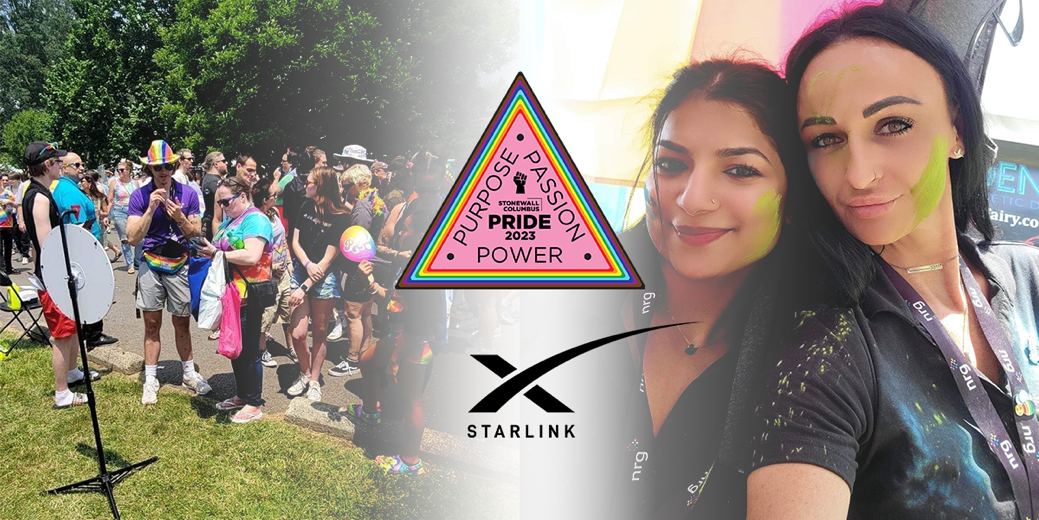
We contract with companies that are owned and managed by entrepreneurs – these entrepreneurs all have proven track records in sales and are who we choose to outsource campaigns on behalf of our clients with. These independent companies are constantly executing on innovative ideas and driving change. This story comes from one such company: Trig Inc., which adopted satellite technology to succeed at PRIDE in Columbus, Ohio.
To succeed in entrepreneurship, you have to be open to change and be ready to innovate. Beyond that, you have to be willing to execute – as new technologies, approaches, and strategies only become useful once they’re acted upon.
We are always being inundated with stories of change, innovation, and execution – which inspire us to do the same thing within our own business.
One of these stories occurred recently, when business owner Adrienne Peddicord, President of Trig, Inc., and her team attended PRIDE in Columbus, Ohio, to work on a campaign. They had been there the year prior – and a turnout of 1.7 million people had put such a load on the cell towers that the entire area lost service.
Because the Trig Inc. team uses contactless enrollment, last year’s outage had deterred their efforts. This year, determined to succeed at 2023 PRIDE, Peddicord and her team sought to evolve their services.
Be Open to Change:
The network connectivity provided by cell towers works - most of the time. But those who create change and push the envelope as leaders and entrepreneurs, don’t just accept when something only works most of the time.
Elon Musk is one of those people - and Starlink, one of his many companies, continues to expand our understanding of how network connectivity can work.
Starlink offers internet, mostly in remote areas, using satellites flying in low orbit. With the ability to bring internet access to places where cell towers aren’t even present, surely the service could serve as a reliable backup in the likely event service went down at Columbus PRIDE.
This year’s event ended up drawing a whopping 2.3 million people from the LQBTQ+ and ally community - over half a million more than the crowd that had shut down service at the prior year’s PRIDE.
The first step is to be open to change - and while Starlink isn’t a widely adopted technology (and still needs work to rival the low latency of cellular), Peddicord and her team at Trig Inc., knew that they needed to do something different. They went into the PRIDE event ready to give the satellites a shot.
Be Ready to Innovate:
This openness to change paid off.
“As the parade came to an end,” Peddicord recalls, “so did our service - as people swarmed in. But despite the towers going down, we were still in business!”
But introducing a new way of doing things means bringing up a whole new set of problems. That’s why innovation requires a readiness to solve problems as they come up.
“There were two very small hiccups where we lost the satellite connection,” Peddicord says. When this happened, her team got in touch with us, via our Cydcor help desk.
The companies we contract with operate independently, but we are around to provide consultation related to our clients’ sales orders to help optimize the sales campaigns. The two times that the Trig Inc. team’s connection to the Starlink satellites went down, Cydcor’s support team were able to collaborate on a solution.
“Moments after opening a ticket,” Peddicord says, “Cydcor’s IT team reached back out and within minutes - both times - we were back up and running.”
Instead of being phased by curveballs, the Trig Inc. team kept problem solving. The result was a day of innovation.
Execute:
In the end, you can be open to change and ready to innovate, but if you’re not willing to execute - it’s all one big waste.
Entrepreneurship requires doing - and that’s what the Trig Inc. team did - for the entire Columbus pride event. It doesn’t matter if you have every satellite in space working for you - if there isn’t a team on the ground ready to put in the work of serving people, these innovations would be worthless.
All in all, the Trig Inc. team secured over 500 enrollments that day - furthering the reach of the client, bringing solutions to the client’s customers, and celebrating PRIDE along with the rest of the Columbus community.
“We came together and were able to pull off this success,” Peddicord says. “This wouldn't have been possible without everyone being so open minded to this new idea.”
We continue to be inspired by the independent businesses we contract - and the entrepreneurs behind them. Learning from this story, how will you be open to change, ready to innovate, and willing to execute?