
How to Be a Successful Brand Ambassador in Retail
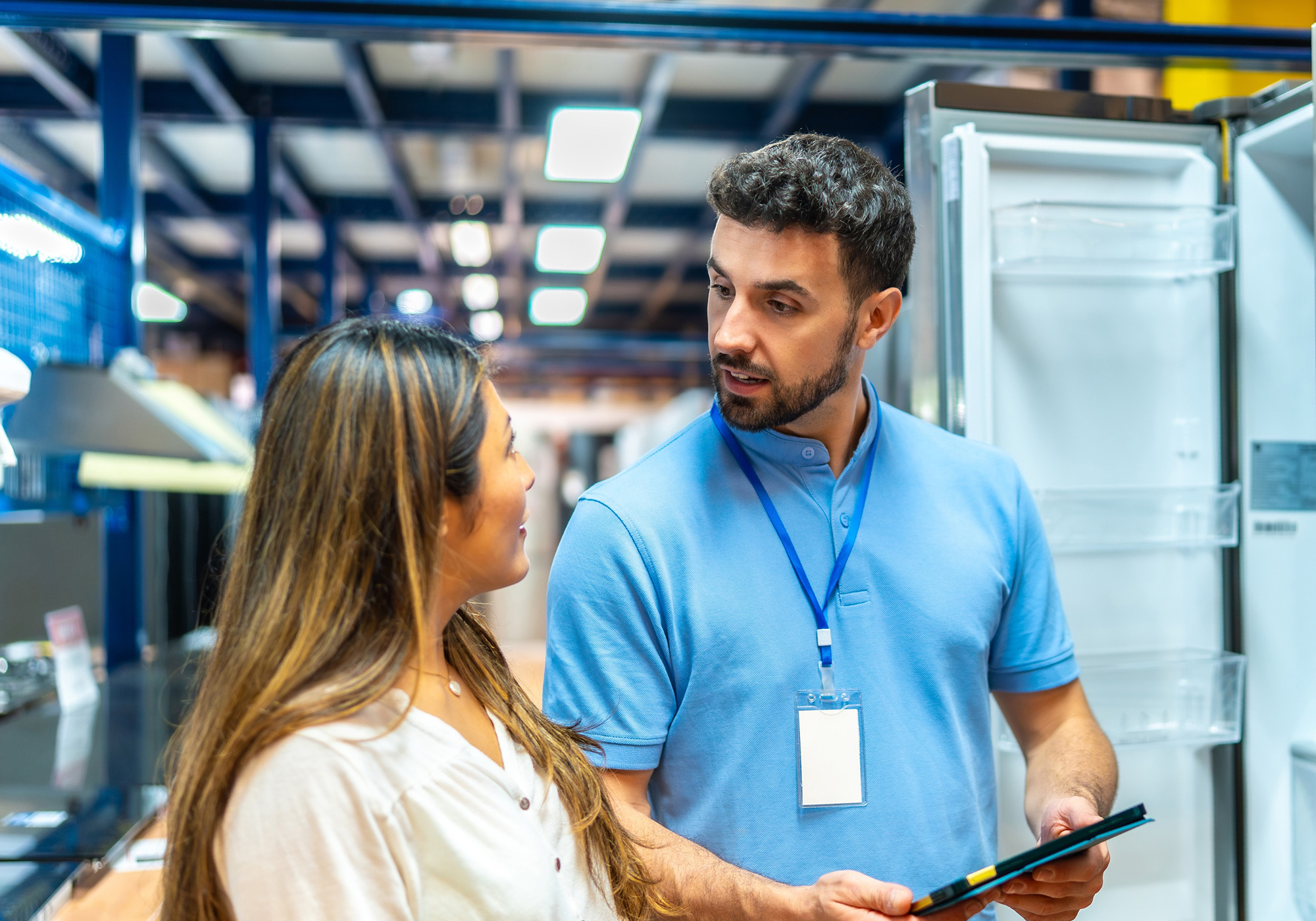
Successful retail brand ambassadors do far more than demonstrate products or hand out samples. They create meaningful customer experiences, represent brands professionally inside retail environments, and directly influence purchasing decisions. But showing up inside a retailer's environment and actually succeeding there are two different things. Retail brand ambassador work demands a specific combination of skills, professional habits, and situational awareness that most brands underestimate when launching in-store programs.
This guide helps professionals learn how to be a successful brand ambassador by improving in six key areas:
How to Be a Successful Brand Ambassador: Retail Framework
"The best brand ambassadors know how to turn everyday customer interactions into meaningful brand experiences."
Tip 1: Master Product Knowledge Before You Enter the Store
Shoppers in a retail environment expect the brand ambassador in front of them to know more about the product than they do. When that expectation is met, purchase consideration rises. When it is not, shoppers return to the shelf or move on entirely. One of the fastest ways to lose customer trust is by being unable to respond to a simple question about your product.
Product mastery means more than reciting features. It means understanding how the product compares to competitors on the same shelf, knowing which concerns come up most often, and demonstrating with confidence. Hands-on product experience is the fastest path to that kind of authority. Representatives who have personally used or tested the product engage with a natural credibility that scripted knowledge rarely matches.
That knowledge is only useful if the ambassador is fully prepared to apply it. Successful retail brand ambassadors treat preparation as part of the job: reviewing retailer-specific guidelines ahead of time, confirming parking and check-in procedures, and verifying inventory and sampling supplies before the shift begins. Ambassadors who show up prepared spend their shift engaging shoppers instead of solving avoidable problems, like tracking down missing samples, figuring out store layout, or asking staff questions that should have been settled beforehand.
Tip 2: Engage Shoppers With Purpose, Not Pressure
Research from Cornell University found that face-to-face requests are 34 times more persuasive than email-based communication.² That advantage holds only when the interaction feels genuine rather than rehearsed or forced.
Retail shoppers are sensitive to sales pressure. The most effective brand ambassadors often open with value: a product demonstration, a relevant question, or a comparison that helps the shopper decide. They read body language to assess when a shopper is open to dialogue and when a brief, non-intrusive introduction is more appropriate. The goal of the first exchange is to earn a few more seconds of attention, not to close the sale immediately.
Tip 3: Maintain Professionalism Across Every Shift
Retailers grant floor access based on trust. A brand ambassador who arrives late, presents inconsistently, or behaves differently when management is absent reflects poorly on the brand that placed them there. Lost retail placements damage the brand's retailer relationship and limit future program opportunities.
Professionalism covers appearance, punctuality, communication with store management, and conduct throughout the shift, including how a representative handles slow traffic periods. High performers stay engaged during quiet stretches rather than visibly disengaging, and they treat the post as something to maintain, not a place to step away from. Leaving the post unattended and indulging in personal distractions are among the fastest ways to undo an otherwise strong shift. Keeping displays clean, restocking materials properly, and following store-specific protocols signals respect for the retailer's environment and strengthens the brand as a reliable long-term partner.
Tip 4: Build Working Relationships With Store Staff
Store associates are not obstacles to work around. They are one of the most direct paths to higher foot traffic at a brand ambassador station. Associates who understand what is being demonstrated, and who have a positive impression of the representative, will direct relevant shoppers their way throughout the shift.
Successful retail brand ambassadors introduce themselves to department managers and floor staff at the start of every visit, explain what they are demonstrating, and position themselves as a resource rather than a distraction. For multi-visit programs, that investment compounds: managers who trust a representative advocate for better placement and support expanded access and future activations over time. That goodwill is what turns a single successful shift into a stronger, longer-running retailer relationship. For a closer look at how these relationships shape consumer behavior and long-term program performance, see The Impact of Brand Ambassadors on Consumer Behavior.
Tip 5: Adapt Your Approach to Each Retail Environment
No two retail environments operate the same way. A big-box store has different traffic patterns and shopper expectations than a specialty retailer. A warehouse club operates differently than a pharmacy chain. Retail brand ambassadors who apply the same approach everywhere will underperform in most locations.
Key variables to assess at each location include shopper pace, average dwell time near the relevant category, and how competitive products are positioned nearby. Adaptability also applies within a single shift. Morning traffic, weekend patterns, and pre-holiday conditions all call for different energy levels and approaches.
Merchandising awareness is another factor worth watching: high performers observe shelf placement, competitor activity, pricing, displays, and out-of-stock situations, then report those insights back in the recap. This provides value that goes beyond the customer interaction itself. Brand ambassadors who read current conditions and adjust in real time consistently produce stronger results than those who hold to a fixed style throughout the day.
Tip 6: Follow Store Policies and Brand Compliance
Retail brand ambassadors represent both the brand and the retailer at once, which means the rules of the space aren't optional. Following store-specific procedures, safety standards, and state or local regulations protects the retailer relationship and ensures every activation is executed with excellence and in full compliance with policy. This matters in every retail category, but it's especially critical in regulated categories like adult beverages, where compliance is one of the clearest signals of a well-executed and trustworthy program.
Tip 7: Track Your Performance and Report Observations
Field data is one of the most underutilized assets in retail brand ambassador programs. Tracking key metrics each shift gives program managers the intelligence needed to optimize placement, timing, and training. Numbers alone don't explain why a shift performed the way it did. Pairing them with the kind of on-the-ground observations covered earlier in this guide, like competitor activity or shopper hesitation, gives program managers the context to act on the data, not just see it.
Representatives who report structured observations become valuable beyond their direct sales contribution and strengthen the long-term program as a result. The second internal link on Cydcor's retail services shows how this kind of performance-based structure operates at scale.
What Separates Retail Brand Ambassadors From Event Staff
Event brand ambassadors and retail brand ambassadors share surface-level similarities, but the operational realities are meaningfully different. Event staff typically work in controlled, brand-owned environments where the primary goal is awareness or lead capture during a fixed window of time.
Retail brand ambassadors work inside someone else's environment, under someone else's rules, alongside staff who have their own priorities and performance pressures. That additional layer of accountability changes the role fundamentally. Research confirms that 88% of global consumers trust recommendations from people they know more than any other advertising channel.³ Retail brand ambassadors who develop genuine rapport with regular shoppers and store staff over time become the local authority on their brand, a position that compounds in value across every subsequent visit, which is something a one-time event presence often cannot replicate.
Why Does it Matter?
Poor brand ambassadors lead to lost sales, damaged retailer relationships, reduced renewals, inconsistent brand representation. This hurts the store, the brand, and the individual ambassador. Great, high-effort brand ambassadors lead to higher conversions, better shopper experiences, retailer trust, and expanded retail programs that bring in more money for every party involved.
As a result, brand ambassador performance and effort is directly connected to measurable business outcomes.
Bottom Line
Learning how to be a successful brand ambassador involves combining deep product knowledge, purposeful customer engagement, consistent professionalism, genuine store staff relationships, and environmental adaptability. These qualities are not a default outcome of enthusiasm or general sales experience. They are built through structured training and programs designed specifically around the demands of in-store brand representation.
Brands that invest in that foundation see the difference shift after shift. Whether you're launching a national big box roadshow, staffing retail demonstrations, or expanding into new retailers, experienced retail brand ambassadors can dramatically improve customer engagement and in-store sales.
Learn how Cydcor helps brands scale high-performing retail ambassador programs nationwide.
Sources
- U.S. Census Bureau via MIT Sloan Management Review, "The Future of Physical Retail," 2025. https://mitsloan.mit.edu/ideas-made-to-matter/future-physical-retail-5-actions-to-elevate-customer-experience
- Bohns, V., "A Face-to-Face Request Is 34 Times More Successful Than an Email," Harvard Business Review, April 2017. https://hbr.org/2017/04/a-face-to-face-request-is-34-times-more-successful-than-an-email
- Nielsen, "Trust in Advertising Study," 2021. https://www.nielsen.com/insights/2021/trust-in-advertising-evolves-as-media-formats-change/
To find out more about Cydcor, check us out on Facebook, LinkedIn, Instagram, and X.
We are Cydcor, a recognized leader in outsourced sales and marketing services located in Agoura Hills, California. From our humble beginnings as an independent sales company to garnering a reputation for consistently exceeding client expectations and driving outstanding revenue growth, Cydcor has been helping Fortune 500 and emerging companies achieve their customer acquisition, retention, and business goals since 1994. Cydcor takes pride in the unique combination of in-person sales, call center, and digital marketing services we offer to provide our clients with proven sales and marketing strategies that get results.