New Client Acquisition Strategies for Enterprise Growth
Some of the strongest new client acquisition strategies connect four decisions: who you want to reach, where those buyers are most likely to purchase, how you’ll measure success, and how you will scale your model if it works. This guide will break down how to evaluate each question, and what channels tend to work best based on the answers.
Note for clarification: In this article, “client” refers to the B2B account your company wins. “Customer” refers to that client’s end buyer.
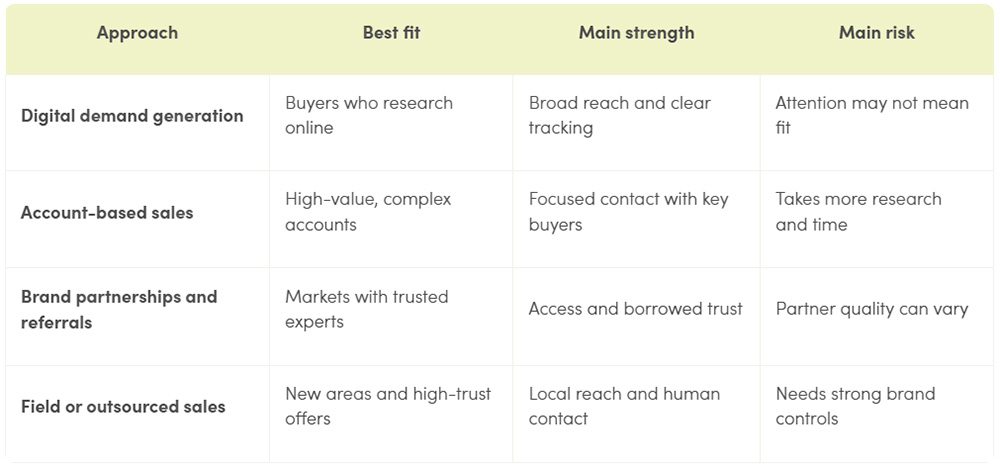
New Client Acquisition Strategies: The Enterprise Matrix
No method wins in every market. Digital marketing helps buyers discover your brand, understand your offer, and take an early step. Account-based sales focuses on a smaller list of valuable companies and builds relationships with the people involved in each decision. Brand partnerships create introductions through trusted advisers. Field sales adds a human conversation when buyers need live answers, demonstrations, or local support. Every channel has its place, you just have to do some digging to determine which is best for your goals.
1. Start With the Client You Want to Reach
The best new client acquisition strategies start with a clear client profile. Define the industries, locations, company size, buyers, use cases, likely revenue, and service needs of your ideal customer so you can begin to identify their needs and whether they are a fit for your firm.
It is just as important to define what accounts are not a good fit. Warning signs may include weak market economics, service needs your team cannot support, or an offer that does not solve a clear problem. Knowing what type of clients to exclude with your marketing strategy can cut costs by improving conversion rates and reducing the time wasted on prospects that were never going to turn into clients in the first place.
Use a simple scorecard before choosing a strategy:
*ROI: Return on Investment; LTV: Customer Lifetime Value
This step guards against a common mistake: treating every new contract as a good win. An account may look attractive at signing but become expensive if it needs too much support, cancels early, or never expands.
A smaller group of better-fit clients can bring more referrals, steadier revenue, and less service strain than a larger group of weak-fit accounts. The goal is not to close as many contracts as possible, but to build a book of business that is profitable and sustainable.
2. Meet Them Where They Are
Different buyers take different paths to a decision. The more complex, local, or trust-based the offer, the more useful direct human contact can be in bridging gaps between seller and client.
Digital marketing works well when buyers can understand the offer quickly and compare choices online. Account-based sales fits when a decision involves several people, a long review period, or a large contract. Partnerships help when a trusted expert already has access to the market. Field sales can help with all of the above, as well as when buyers need live answers, product demos, or confidence in a local team.
Outsourced sales combine a planned campaign process, client support, and robust sales networks. Many programs can launch within weeks after the strategy is set, especially with an experienced sales partner with a focus on quality and a tried-and-true campaign process.
The outsourced model can help an enterprise brand test their reach in a market before building every sales function in-house. It can also show which messages, locations, and buyer groups respond before the company commits to a wider launch.
3. Measure Quality, Not Just Volume
Many teams track leads, meetings, and short-term wins. These numbers demonstrate activity, but they don’t show whether those new clients become lasting, valuable clients.
For example, one channel may deliver a low cost per lead but attract buyers who rarely complete onboarding. Another may produce fewer leads but bring accounts that renew, expand, and refer others. If both channels are judged only by lead volume, leaders may end up putting more money into the weaker lead source.
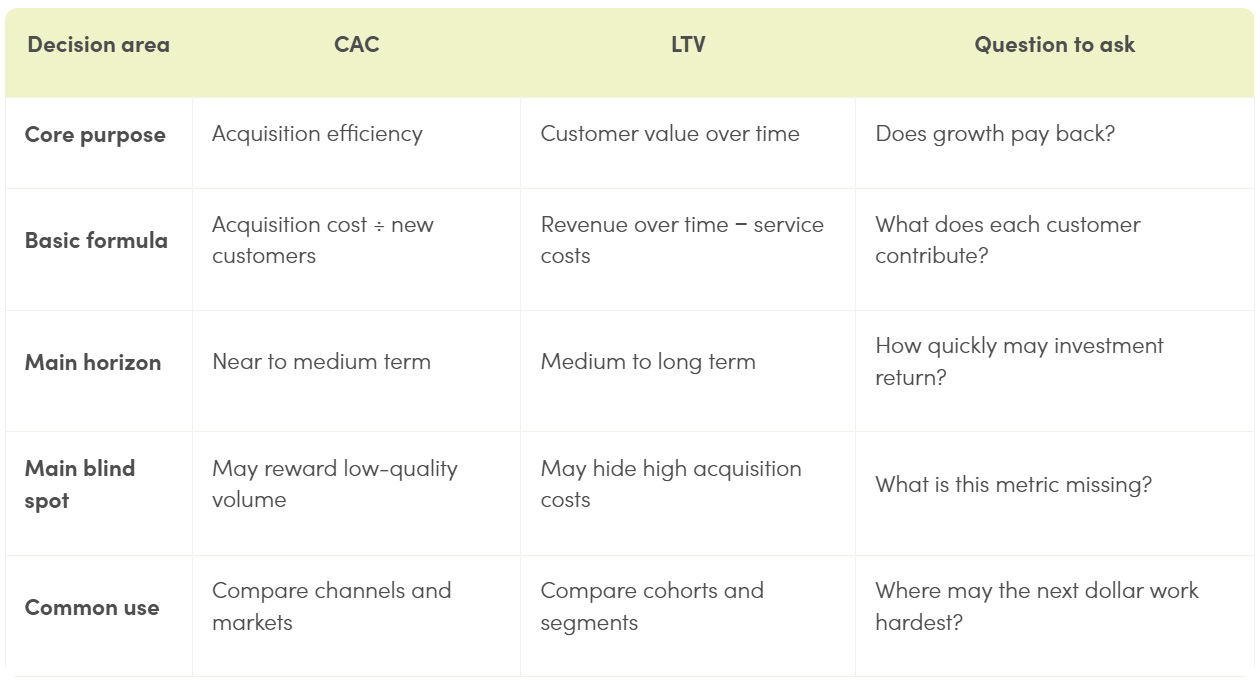
Track each channel across four levels:
Customer acquisition cost (CAC), or the average amount spent to win one new customer is a great metric to measure, but isn’t enough on its own to pick the right new customer acquisition strategy. Compare CAC with the revenue, margin, retention, and growth potential of the accounts each channel brings in, and that calculation should give you a better idea of which to choose. Check out our acquisition KPI guidance for a deeper dive into how to measure success in sales, and do not scale a channel until its results justify the spend.
Retention should shape the first sales conversation. Set clear expectations, sell the right use case, and give the post-sale team the information it needs. That work helps prevent a fast win from becoming a costly loss.
4. Build a Model That Can Scale
A growth plan works at scale when everyone knows their role, and there is clear ownership of every task. Decide who sets the target, approves the message, runs the program, reviews results, and can pause work when quality drops or brand rules slip.
This matters even more when several teams or outside partners are involved. Without clear ownership, :leads can go unanswered, reports can use different terms, and problems can remain hidden until they affect revenue or the brand so much that they’re impossible to ignore.
If you outsource part of your sales process, confirm that your provider applies these controls as rigorously as you would. For example, Cydcor provides clients with dedicated campaign managers, regular performance reporting, compliance oversight, and strategic guidance backed by more than 30 years of customer acquisition experience across numerous industries, including telecommunications, energy, office supplies, home services, and more. That matters because acquisition is both a sales task and a brand development one, so every conversation with a prospect reflects on the company behind the offer.
Explore New Client Acquisition Strategies with Cydcor
The strongest new client acquisition strategies prioritize long-term customer value over short-term volume. Start with the client profile, match the channel to the buying process, measure quality after the sale, and scale only when your process can protect results.
Cydcor helps businesses break into new markets by delivering high-quality field sales programs, including B2B, retail, residential, and event services and staffing. With over 30 years of cross-industry customer acquisition experience, we can help businesses reach any ideal customer profile.
For large brands assessing field sales, market expansion, or a wider acquisition plan, Explore Cydcor’s Customer Acquisition Services.
To find out more about Cydcor, check us out on Facebook, LinkedIn, Instagram, and X.
We are Cydcor, a recognized leader in outsourced sales and marketing services located in Agoura Hills, California. From our humble beginnings as an independent sales company to garnering a reputation for consistently exceeding client expectations and driving outstanding revenue growth, Cydcor has been helping Fortune 500 and emerging companies achieve their customer acquisition, retention, and business goals since 1994. Cydcor takes pride in the unique combination of in-person sales, call center, and digital marketing services we offer to provide our clients with proven sales and marketing strategies that get results.